




Researchers from the University of Illinois Urbana-Champaign posted AutoPILOT: A Visual Agent Harness for Real-Time Gameplay on Hugging Face with project site autopilot-harness.github.io. The paper summary and arXiv:2611.28202 listing are the primary sources.
TL;DR
| Question | Answer |
|---|---|
| Problem | Turn-based harnesses fail when games keep simulating during inference |
| Fix | Macros and closed-loop visual controllers between model calls |
| Bench | AFK-Bench — 120 real-time browser games |
| GPT-6.1 Sol real-time | 68.6% AutoPILOT vs 38.3% VISTA (paper summary) |
| GameWorld real-time | 80.0% vs VISTA 42.9% when clock runs (paper summary) |
| Cost | ~5× lower API spend to match VISTA final success (paper summary) |
Why harness design is the bottleneck
Multimodal models play turn-based games well because the environment waits. Real-time games advance while the API round trip runs. The authors argue existing harnesses like VISTA improve perception and memory but still map each model call to at most one action, so the agent only acts as often as the model thinks.
AutoPILOT changes execution semantics:
- Primitive action — classic single-step control.
- Open-loop macro — a scripted burst the model triggers once.
- Closed-loop controller — model-written code that reads pixels and acts until done, without further LLM calls.
That pattern applies outside games — any UI that animates while your agent deliberates shares the problem Greptile T-rex computer use hits in desktop benchmarks.
AFK-Bench in plain language
AFK-Bench ships 120 browser games classified by how they punish inaction. You can run them real time or paused, so papers cannot hide behind clock-stop hacks.
If you evaluate game agents or interactive demos, AFK-Bench is a name to cite the way OSWorld names desktop tasks.
Reported results (vendor paper)
From the Hugging Face abstract and summary:
| Setting | AutoPILOT | VISTA |
|---|---|---|
| Real-time aggregate | 68.6% success | 38.3% |
| GameWorld paused | (VISTA 84.1% baseline cited) | 84.1% |
| GameWorld real-time | 80.0% | 42.9% |
The authors also claim AutoPILOT matches VISTA final success at ~20% API cost — treat as paper experiment, not your invoice, until you replicate on your stack.
Connection to OpenAI model names in the paper
The summary names GPT-6.1 Sol as the evaluated model. That situates the harness beside GPT-6.2 Astra hands-on tests readers already follow — harness engineering can move scores without a weight release.
Design lessons for non-game agents
| Lesson | Non-game use |
|---|---|
| Batch actions | IDE agents running multi-file edits as one macro |
| Closed-loop control | Browser agents using pixel loops for drag gestures |
| Real-time benches | Copilot-style UIs that animate while LLM thinks |
Compare Mihoyo Gamer VLA for game-native foundation models — AutoPILOT is the opposite bet: keep the model, fix execution.
Risks and open questions
- Paper-stage — check autopilot-harness.github.io for code release status before production claims.
- Browser-only games — transfer to AAA titles is unproven in the abstract.
- Safety — closed-loop controllers that read pixels need sandboxing like any computer-use agent.
Three execution modes explained
Primitive actions are the baseline: one keydown or click per API call. They are easy to debug but cannot keep pace with platformers or timers.
Open-loop macros run deterministic sequences the model triggers once — think "press right five times" without re-inference. They fail when RNG or physics diverge, but they are cheap.
Closed-loop controllers are model-authored programs that read frames in a loop. They amortize API latency across dozens of frames, which is why real-time success jumps in the paper table.
Desktop agent builders can map the same triad to IDE macros, playwright scripts, and pixel loops for drag-resize widgets.
VISTA versus AutoPILOT failure mode
VISTA improved what enters context and how memory persists, but still coupled simulation speed to LLM RPM. When the game does not pause, the agent plays blind between calls.
AutoPILOT decouples thinking frequency from action frequency. That is the same insight as AWS Strands Decider routing — cheap loops for frequent micro-decisions, expensive model for sparse planning.
GameWorld paused versus real-time split
The paper’s GameWorld numbers are the teaching moment: VISTA looks strong paused (84.1%) but halves when the clock runs (42.9%). AutoPILOT holds 80.0% real time.
Any demo that stops the environment while the model thinks is not evidence for production copilots where UI animations continue.
Cost claim mechanics
Matching VISTA final success at one-fifth API cost implies fewer model calls per episode, not necessarily cheaper tokens per call. Finance should track:
- Calls per minute during macro execution
- Controller crash rate causing re-planning spikes
- Fallback to primitives when macros miss
Authors and institution
UIUC-CS Hugging Face organization hosts the paper. Mark Zhao, Pengcheng Wang, and Rui Yang appear on the author list with Manling Li, Tong Zhang, and Huan Zhang among coauthors — a mix of vision, RL, and safety names readers may recognize from prior agent benchmarks.
Building AFK-Bench into CI
Treat AFK-Bench like Harbor sandboxes:
- Pin browser game seeds in CI
- Run real-time mode nightly, paused mode on PRs if flaky
- Store replay files when controllers fail — debug harness, not weights first
How to follow the release
- Read arXiv 2611.28202 and the Hugging Face paper page.
- Watch the project page for AFK-Bench assets and AutoPILOT install steps.
- Reproduce one game in real-time mode with your existing VLM before retuning weights.
- Log API spend per episode — the paper's 5× cost claim is the metric CFOs will ask about.
Robotics parallel
Robot arms and browser games both need control loops faster than LLM latency. AutoPILOT’s closed-loop controller idea rhymes with Allen AI Robotrack point-tracking evals — continuous control versus discrete API steps.
Safety sandboxing for generated controllers
Closed-loop code that reads pixels can exfiltrate or click through consent dialogs. Run controllers in browser profiles with network disabled except the game origin, similar to **Harbor isolation` guidance.
Implications for Copilot and IDE agents
Microsoft Copilot Autopilot and game AutoPILOT share a name but not a codebase. The research point still lands: always-on agents must act between LLM turns. Read Copilot Autopilot rollout for product guardrails while this paper covers harness math.
Multimodal model choice under AutoPILOT
The paper holds model weights fixed and still gains 30+ points real time. Before upgrading to a bigger VLM, fix execution. That order of operations saves budget in agent eval programs.
Limitations the abstract admits
Authors hope AutoPILOT helps worlds that do not wait — multiplayer, live dashboards, physical simulators. They do not claim solved AGI. Scope stays browser games with controlled DOM.
Paper metadata and reproducibility
Hugging Face lists published Nov 20 with daily spotlight Nov 24 and #2 paper of the day. 24 upvotes on HF is early signal, not consensus. Wait for arXiv v2 if code tarball changes.
Metric glossary for readers
| Term | Meaning in paper |
|---|---|
| Real-time success | Game clock runs during inference |
| Paused success | Environment frozen while model thinks |
| Open-loop macro | Fixed action burst without re-query |
| Closed-loop controller | Pixel-driven loop until handoff |
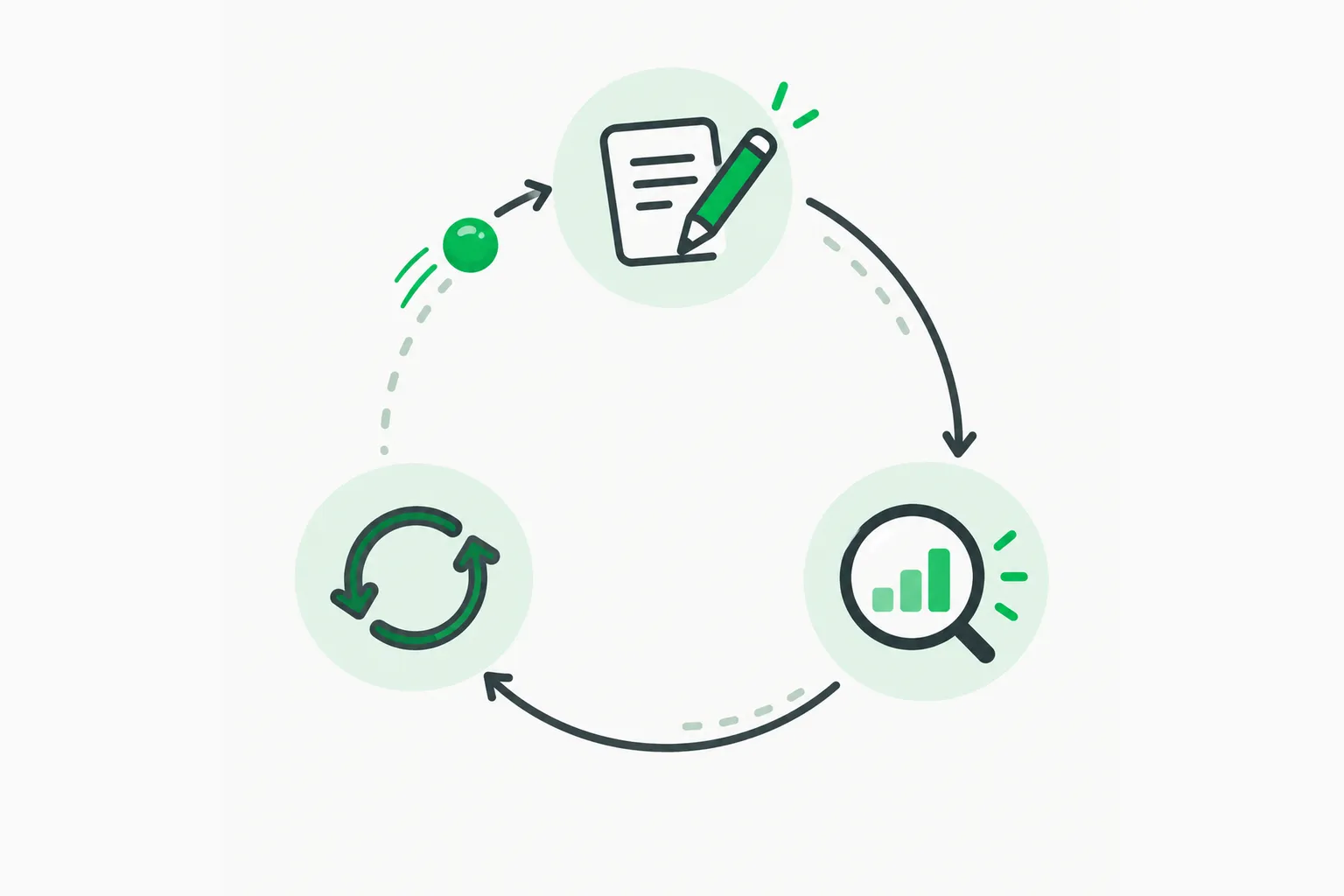 Real-time agent loop diagram with macro steps between model calls
Teaching harness design in workshops
If you run agent skills workshops, add one AFK-Bench episode where students compare primitive-only versus macro-enabled policies on the same VLM. The score delta teaches systems design faster than loss curves.
Future work readers should watch
Watch the project repo for controller DSL stability, macro language safety, and cross-game transfer. Those three releases determine whether AutoPILOT becomes library or paper only.
Until code drops, cite arXiv 2611.28202 in RFCs as harness requirement, not vendor dependency — the ideas are portable even if reference implementation lags.
Eval leads should publish side-by-side replays (macro on versus off) on one AFK-Bench level. Video evidence convinces exec sponsors faster than accuracy tables alone when budgeting harness engineers.
Platform teams can prototype macro APIs in existing browser agents before AutoPILOT code lands: expose run_macro(steps) and run_controller(code) hooks, log divergence from primitive-only baselines, and only then adopt official AFK-Bench tasks for regression. Treat harness PRs as first-class releases alongside model version bumps.
What to measure first if you adopt the pattern
Start with three numbers per episode: model calls, wall-clock time spent inside macros or controllers, and the share of episodes that fall back to primitive actions. Together they show whether gains come from the harness or from luck on easy levels. Report them next to success rate, so reviewers can see the cost side of every improvement.
Related on explainx.ai
- Greptile T-rex OSWorld computer use
- Mihoyo Gamer VLA foundation model
- Future OpsD video foresight training
- Hugging Face Harbor agent eval guide
- GPT-6.2 vs Claude Fable hands-on
- Allen AI Robotrack benchmark
Latency budgets should separate planning calls from control-loop time; mixing them hides harness wins in dashboards.
If controllers can call network APIs, treat them like untrusted extensions and sandbox accordingly.
Student labs can reproduce the GameWorld paused versus real-time gap with browser throttling before full AFK-Bench setup ships to CI runners.
Hugging Face paper summary text is accurate as of November 24, 2026.