




Anthropic added a vp-vnp project to formal-math on GitHub on November 23, 2026 claiming VP ≠ VNP over every field — the algebraic analogue of P vs NP that Valiant posed in 1979. The drop includes a Hexagon preprint credited to Claude (Anthropic), about 324 Lean files, and a README that says no human mathematician has checked the proof. This is major research news if it holds, but November 2026 status is claimed plus machine-checkable, not peer-reviewed — the same discipline we applied to Alpöge's Riemann archive and OpenAI's ETH Lean collaboration.
TL;DR
| Item | Detail |
|---|---|
| Claim | Superpolynomial arithmetic circuit lower bound for permanent (char ≠ 2) and Hamiltonian cycle polynomial |
| Conclusion stated | VP ≠ VNP over every field; VNP not in closure of VP |
| P vs NP | Still open per paper and README |
| Author line | Claude (Anthropic); internal research model discovery |
| Human review | None yet, per README |
| Primary artifacts | GitHub vp-vnp, Hexagon 2611.00954v1 |
Agents that act on your behalf need rules. See how explainx helps secure your agents →
VP and VNP in plain language
Arithmetic circuits compute polynomials using addition and multiplication gates. Unlike Boolean circuits, they must be correct for every field element (and extensions), not only 0 and 1.
- VP — polynomial families computable with circuit size polynomial in the number of variables.
- VNP — start from a VP family and sum over exponentially many 0/1 assignments (the algebraic version of "guess and verify").
- Permanent — the classic VNP-complete family (except in characteristic 2, where it collapses to the determinant).
Valiant's conjecture is that some VNP problems, notably the permanent, need superpolynomial circuit size. Proving that separates VP and VNP. The paper abstract on Hexagon claims a bound of more than m^(c (log m)^(1/3)) gates for m×m permanents and, in char 2, the same for Hamiltonian cycle instead.
Readers arriving from Buckmaster–Alpöge Navier–Stokes chatter or Physical Superintelligence quantum claims should note: this is a different conjecture, with different completeness objects, but the same verification playbook — read Statement.lean, run checkers, wait for humans.
What Anthropic posted
The vp-vnp README states:
- Result discovered by an internal research Claude model.
- Paper and Lean formalization written by AI models.
- No human mathematician has checked the proof.
- Folder is a research artifact, not maintained, no contributions accepted.
Artifacts:
| File | Role |
|---|---|
| paper.pdf | ~70-page write-up, appendix holds full proof |
| Statement.lean | Mathlib-only statement of main theorems |
| Challenge.lean / Solution.lean | Palomar template layout for comparator CI |
| comparator-check.sh | Compares statements and runs nanoda kernel |
Build instructions match other formal-math subprojects: lake build, PrintAxioms should show only propext, Classical.choice, Quot.sound.
Independent watchers already spun up statement-check repos — treat those as community hygiene, not journal peer review.
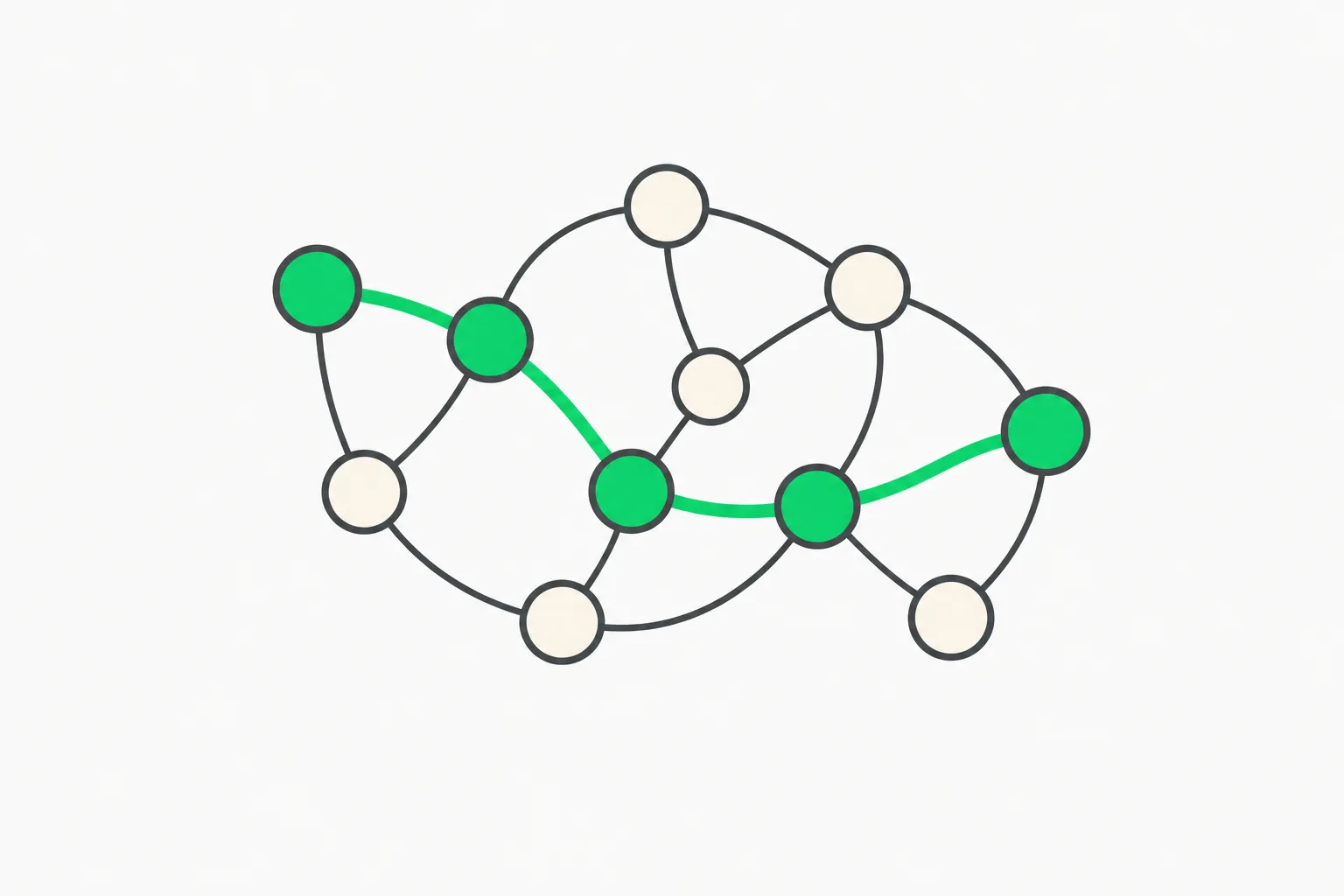 Arithmetic circuit lower bounds for VP not equal VNP sit behind Anthropic Claude formal-math proof claims
What machine checking does and does not do
Lean can confirm that Solution.lean proves the theorems in Statement.lean relative to Mathlib axioms. It does not automatically confirm that Statement.lean encodes the informal permanent you learned in a linear algebra course — the same gap Jenny Nielsen raised on Riemann definitions and that François Fleuret discussed on X when comparing AI-checked vs human-refereed mathematics.
Appendix Q of paper.pdf (per README) maps numbered statements to Lean counterparts and notes differences. That appendix is the first human reading assignment for anyone citing the result.
Anthropic's own neuron interpretability research shows the lab invests in inspecting models; vp-vnp is the opposite publicity shape — trust but verify the artifact, not the press headline.
Why this is not P vs NP
The abstract and README repeat that Boolean P vs NP remains open. Known connections:
- VP = VNP over suitable fields would imply P/poly = NP/poly for Boolean circuits (Bürgisser citation in preprint).
- No known implication from arithmetic lower bounds to full P ≠ NP.
Policy memos and crypto twitter will blur the headline anyway. Builders should copy the exact claim from Statement.lean when writing security assessments — same discipline as Cisco Shirudo eBPF shields docs that separate marketing from mechanism.
How this fits Anthropic's 2026 math arc
| Prior formal-math drop | Relationship |
|---|---|
| ETH false Lean project | Same repo family; competing labs posting checkable complexity claims |
| 3SUM/APSP folder (formal-math README table) | Word-RAM algorithms, not circuit lower bounds |
| zeta23/ | Riemann zeros density, adjacent to Alpöge GRH drama |
| Gemini quantum Lean agents | Different org, same Lean-as-receipt culture |
If comparator-check.sh passes in CI, you have reproducible syntax — not Fields Medal acceptance.
What to do this week
Researchers:
- Read Statement.lean end-to-end.
- Run
lake buildon a clean machine with pinned Mathlib. - Compare theorem names to Table 3 in the PDF.
Engineering managers:
- Do not retitle roadmap slides "P ≠ NP solved".
- Do update AI safety reviews if teams auto-trust GitHub green checks.
Journalists:
- Quote README human-review sentence every time.
Community 2opremio statement check and explainers like Anchor Terminal's walkthrough help developers; they do not replace expert audit of mathematical content.
Permanent, determinant, and why characteristic 2 is special
The permanent of an m×m matrix is like the determinant but without the sign alternation from permutations. For 0/1 matrices, the permanent counts perfect matchings — a classic #P-hard flavor even when determinants are easy.
Over the reals, Valiant showed the permanent is VNP-complete. The determinant, by contrast, sits in VP. Proving the permanent needs superpolynomial arithmetic gates would separate VP and VNP.
In characteristic 2, minus one equals one, so permanent and determinant coincide — and determinant has polynomial circuits. Anthropic's README therefore shifts the lower bound statement to the Hamiltonian cycle polynomial over every field, keeping the same gate bound shape m^(c (log m)^(1/3)) in the formal text.
Hamiltonian cycle here is a multilinear polynomial built from cyclic permutations — not the Boolean decision problem alone. The Hexagon abstract ties VP ≠ VNP to separating these polynomial families, not to proving NP ≠ P for single-bit outputs.
Inside the formal-math repository layout
Anthropic pins formal-math projects to Palomar-style roots:
| File | Purpose |
|---|---|
| Statement.lean | Mathlib-only imports; encodes headline bounds |
| Challenge.lean | States theorems without proofs for comparator flows |
| Solution.lean | Contains proof scripts CI must replay |
| comparator.json | Config for statement matching |
| formalization.yaml | Metadata for external checkers |
The vp-vnp README promises sorry warnings only from Challenge.lean during build — Solution should be complete relative to Statement.
CI path bash ../.github/scripts/comparator-check.sh is the same discipline as OpenAI math repo releases: Challenge statements must match Solution theorems before nanoda replay.
Comparator, nanoda, and trust boundaries
Comparator answers: "Did we prove exactly the challenge theorem?" nanoda answers: "Does the kernel accept the exported proof object?" Neither answers: "Is Statement.lean the right mathematical sentence?"
That three-layer model is why AGMAI responsible release rules and Viola's CACM P vs NP essay both warn against headline inflation. A green CI badge is necessary for publication-grade formal math in 2026; it is not sufficient for journal acceptance or Clay prizes.
Quasipolynomial lower bounds vs exponential upper bounds
The preprint notes the lower bound is quasipolynomial 2^Ω((log n)^(4/3)) in one formulation while best upper bounds remain exponential. Tightening that gap is decades of complexity work even if this proof survives.
Builders should not encode "AI solved arithmetic complexity" into risk models — cite the precise inequality from Statement.lean if you must mention it in research notes.
Comparison to the Riemann formalization week
| Dimension | Riemann (Alpöge Nov 20) | VP ≠ VNP (Nov 23) |
|---|---|---|
| Human paper | Missing; Lean-first | PDF on Hexagon plus Lean |
| Human mathematician review | Community certified Mathlib statement | README says none |
| Size | 17M+ line library | ~73k Lean lines in 324 files (per community clone counts) |
| Prize / conjecture | Millennium optics | Valiant 1979 conjecture settled if correct |
| P vs NP headline risk | Medium (GRH fame) | High (algebraic P vs NP analogy) |
Read both timelines together when superintelligence essays argue proof velocity implies near-term AGI.
Educators teaching complexity theory should use vp-vnp as a case study in epistemic hygiene: assign students to diff Statement.lean against textbook definitions of VP and VNP before they social-post the result. That assignment costs one afternoon and prevents years of misinformed policy slides.
Journalists should cite Hexagon 2611.00954v1 and the GitHub tree in the first paragraph, not aggregator rewrites, so corrections attach to durable URLs when Statement.lean changes. Anchor Terminal and community check repos are secondary; lead with primary artifacts so edit chains stay traceable.
 Mechanistic circuit diagram illustrating VP not equal VNP formal verification layers in Anthropic Claude math research
Related reading on explainx.ai
- Riemann Hypothesis claimed vs verified
- OpenAI ETH Lean collaborations
- GPT-6.2 Astra Smoktunowicz gap theorem Lean
- Physical Superintelligence quantum Lean claims
- Buckmaster–Alpöge Navier–Stokes claim
- DeepMind Gemini quantum Lean agents
Claim and repository layout follow Anthropic's vp-vnp README and Hexagon 2611.00954v1 as accessed November 24, 2026.