Effortlessly deploy static sites with EdgeOne Pages—an easy, scalable alternative to Amazon website hosting for fast, re
Add new capabilities to Claude beyond text generation
Example: Access external data sources, execute code, interact with tools and services
Transform Claude from chatbot to action-taking agent
Provide Claude with access to relevant context and data
Example: Load project documentation, access knowledge bases, query databases
Get more accurate, context-aware responses
Automate multi-step workflows combining AI and external tools
Example: Research → Summarize → Create document → Send notification
Complete complex tasks end-to-end without manual steps
Time estimate: 15-60 minutes depending on server complexity
Prerequisites
Asana
MCP server for Asana — enables Claude to interact with Asana data and workflows.
Google Calendar
MCP server for Google Calendar — enables Claude to interact with Google Calendar data and workflows.
Monday.com
MCP server for Monday.com — enables Claude to interact with Monday.com data and workflows.
Google Workspace MCP
Control Gmail, Google Calendar, Docs, Sheets, Slides, Chat, Forms, Tasks, Search, and Drive with AI. Comprehensive Googl
Specif-ai
Specif-ai ensures secure web API access and robust error handling, making it a top choice among API security companies f
According to our notes, Tencent EdgeOne Pages benefits from clear Model Context Protocol framing — fewer ambiguous “AI plugin” claims.
We wired Tencent EdgeOne Pages into a staging workspace; the listing’s GitHub and npm pointers saved time versus hunting across READMEs.
Tencent EdgeOne Pages is among the better-indexed MCP projects we tried; the explainx.ai summary tracks the official description.
Tencent EdgeOne Pages has been reliable for tool-calling workflows; the MCP profile page is a good permalink for internal docs.
Strong directory entry: Tencent EdgeOne Pages surfaces stars and publisher context so we could sanity-check maintenance before adopting.
Useful MCP listing: Tencent EdgeOne Pages is the kind of server we cite when onboarding engineers to host + tool permissions.
Tencent EdgeOne Pages is a well-scoped MCP server in the explainx.ai directory — install snippets and categories matched our Claude Code setup.
We wired Tencent EdgeOne Pages into a staging workspace; the listing’s GitHub and npm pointers saved time versus hunting across READMEs.
Tencent EdgeOne Pages reduced integration guesswork — categories and install configs on the listing matched the upstream repo.
Strong directory entry: Tencent EdgeOne Pages surfaces stars and publisher context so we could sanity-check maintenance before adopting.
showing 1-10 of 48
Share your MCP server with the developer community

Select a client to integrate this server.
Claude Desktop configuration
{
  "mcpServers": {
    "edgeone-pages-mcp-server": {
      "url": "https://mcp-on-edge.edgeone.site/mcp-server"
    }
  }
}Effortlessly publish HTML, folders, or zip files with instant public URLs using EdgeOne Pages MCP. This service streamlines rapid deployment of your static content via EdgeOne Pages, leveraging serverless edge functions and key-value storage for fast, reliable delivery. Users can quickly deploy content and receive shareable links, making it ideal for web developers and teams needing easy, scalable web hosting.
Tencent EdgeOne Pages is an official MCP server published by tencentedgeone that provides AI assistants with tools and capabilities via the Model Context Protocol. Effortlessly deploy static sites with EdgeOne Pages—an easy, scalable alternative to Amazon website hosting for fast, re It is categorized under cloud infrastructure, productivity. This server exposes 1 tool that AI clients can invoke during conversations and coding sessions.
You can install Tencent EdgeOne Pages in your AI client of choice. Use the install panel on this page to get one-click setup for Cursor, Claude Desktop, VS Code, and other MCP-compatible clients. This server supports remote connections over HTTP, so no local installation is required.
An MCP service for deploying HTML content, folders, or full-stack projects to EdgeOne Pages and obtaining publicly accessible URLs.
<a href="https://glama.ai/mcp/servers/@TencentEdgeOne/edgeone-pages-mcp"> <img width="380" height="200" src="https://glama.ai/mcp/servers/@TencentEdgeOne/edgeone-pages-mcp/badge" alt="EdgeOne Pages MCP server" /> </a>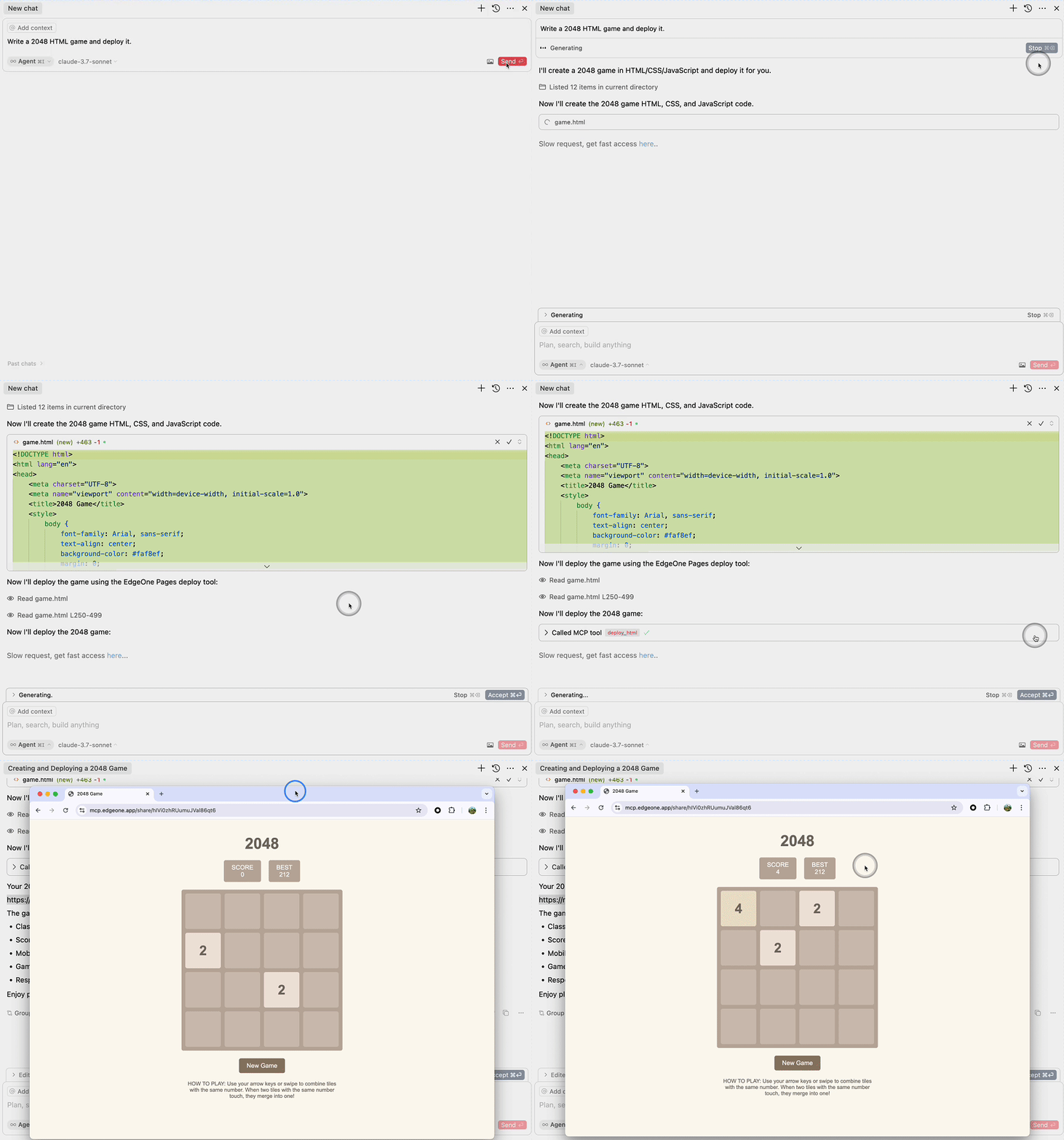
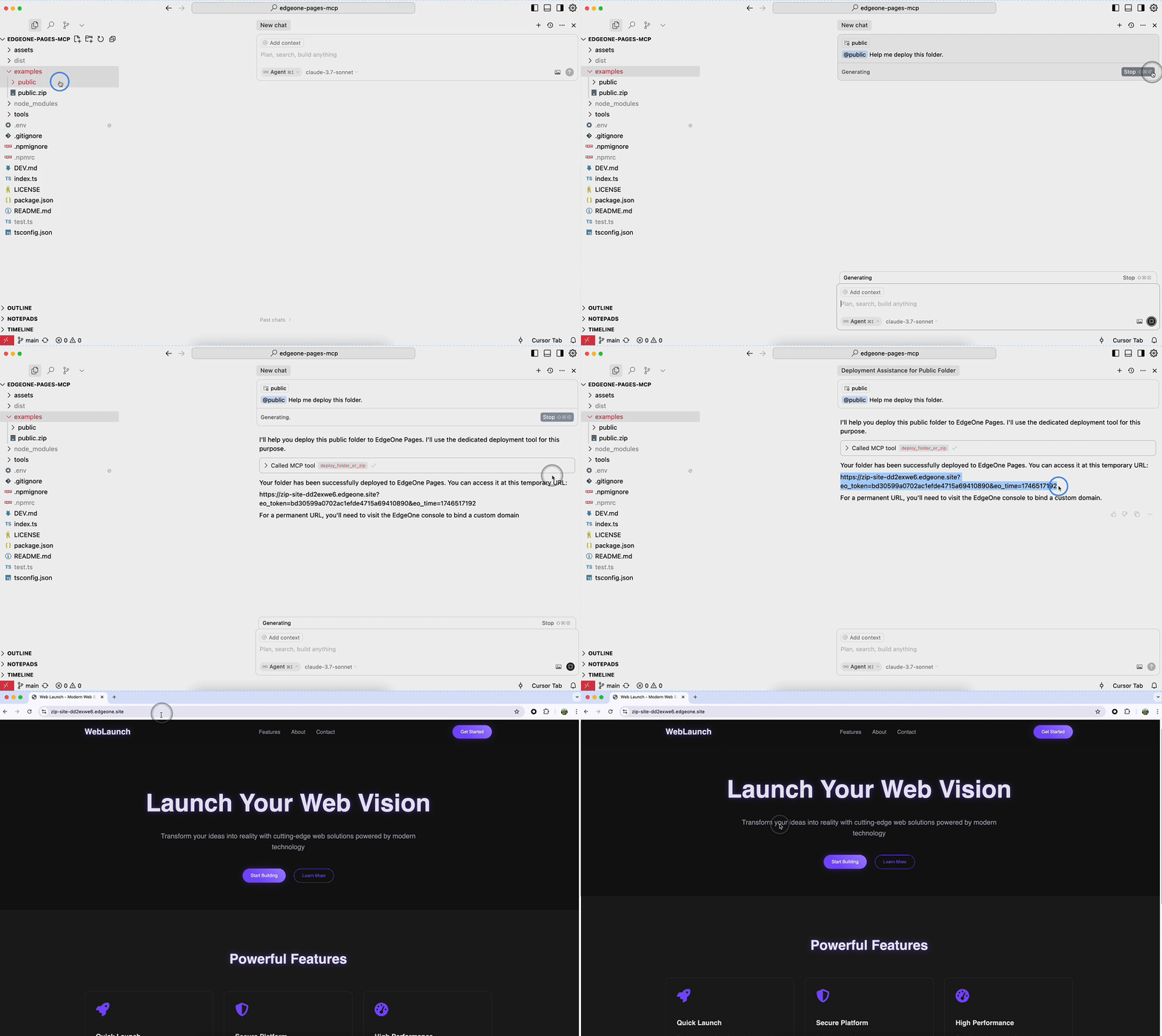
Full-featured MCP service that supports the deploy_folder tool for deploying full-stack projects.
// Tencent Cloud International (Default)
{
  "mcpServers": {
    "edgeone-pages-mcp-server": {
      "timeout": 600,
      "command": "npx",
      "args": ["edgeone-pages-mcp-fullstack@latest"]
    }
  }
}

// Tencent Cloud China
{
  "mcpServers": {
    "edgeone-pages-mcp-server": {
      "timeout": 600,
      "command": "npx",
      "args": ["edgeone-pages-mcp-fullstack@latest", "--region", "china"]
    }
  }
}
The following MCP Server will be deprecated soon:
Supports both deploy_html and deploy_folder_or_zip tools.
{
  "mcpServers": {
    "edgeone-pages-mcp-server": {
      "command": "npx",
      "args": ["edgeone-pages-mcp@latest"],
      "env": {
        // Optional.
        // If you need to deploy folders or zip files to
        // EdgeOne Pages projects, provide your EdgeOne Pages API token.
        // How to obtain your API token:
        // https://edgeone.ai/document/177158578324279296
        "EDGEONE_PAGES_API_TOKEN": "",
        // Optional. Leave empty to create a new EdgeOne Pages project.
        // Provide a project name to update an existing project.
        "EDGEONE_PAGES_PROJECT_NAME": ""
      }
    }
  }
}
For MCP clients that support HTTP streaming, only supports the deploy_html tool.
{
  "mcpServers": {
    "edgeone-pages-mcp-server": {
      "url": "https://mcp-on-edge.edgeone.site/mcp-server"
    }
  }
}

The architecture diagram shows the complete workflow of the deploy_html tool:
This tool integrates with EdgeOne Pages Functions to deploy static HTML content:
EdgeOne Pages Functions - A serverless computing platform that supports executing JavaScript/TypeScript code at the edge
Core Implementation Features:
How It Works:
deploy_html toolFor more information, refer to the EdgeOne Pages Functions documentation and EdgeOne Pages KV Storage Guide.
The source code is open source and can be self-deployed with custom domain binding: https://github.com/TencentEdgeOne/self-hosted-pages-mcp
This tool supports deploying complete projects to EdgeOne Pages:
MIT
Steps
Troubleshooting
✓ Do
✗ Don't
💡 Pro Tips
Architecture
Model Context Protocol standardizes how AI hosts (Claude, Cursor) communicate with external tools and data sources through server implementations.
Protocols
Compatibility
✓ Use when
Use when you need Claude to access external data, execute actions, or integrate with tools. Best for extending AI capabilities beyond conversation.
✗ Avoid when
Avoid when native integrations exist (use official APIs directly), for real-time critical systems, or when security/compliance requires zero external dependencies.
Cloud Run MCP Server
Deploy and manage MCP-compatible AI apps on Google Cloud Run — automate Cloud Run deployments, list services, and manage



