



The Financial Times reported that Anthropic's strongest generally available model was struggling to attract business use while cheaper tools gained ground. The number behind the headline is striking: Claude Fable 5 had plateaued near 11% of model-attributed Anthropic spend, more than two months after launch. A Hacker News discussion drew more than 200 points and 180 comments around the obvious question: if Fable is the best model, why is it not the default?
The direct answer is that the best model and the best default solve different optimization problems. A frontier model wins by handling the hardest available task. A default wins by being affordable, available, compliant, predictable, and good enough across thousands of ordinary tasks. Fable 5 has a strong case for the first job and several structural disadvantages in the second.
That makes this a model-routing story, not a verdict that Fable is bad. It also extends explainx.ai's earlier Fable 5 benchmark comparison: raw capability is one input to a production decision, not the decision itself.
TL;DR: should Fable 5 be your default?
| Question | Direct answer |
|---|---|
| What did Ramp measure? | Fable 5 was 6% of Anthropic tokens and 11.4% of model-attributed spend in July |
| Is Fable 5 still Anthropic's strongest public model? | Yes for the ambitious, long-running work Anthropic positions it for; that does not make it the cheapest workhorse |
| What is the price gap? | Fable 5 is $10/$50 per million input/output tokens; Opus 5 is $5/$25 |
| What happens on subscriptions? | Max and premium seats get Fable for up to 50% of shared weekly limits; Pro and standard seats use credits |
| What blocks enterprise adoption? | Fable business traffic requires 30-day retention, so strict-ZDR workloads cannot use it |
| What about guardrails? | Safety classifiers can fall back on benign security, biology, chemistry, distillation, coding, or debugging requests |
| What is the practical role? | Default routine work to a cheaper model; escalate genuinely difficult, high-value cases to Fable |
What the 11.4% figure actually measures
Ramp's August AI Index gives the cleanest first-party version of the data. In its July model-level sample, Fable 5 produced 6% of tokens businesses bought from Anthropic and 11.4% of the dollars spent on Anthropic models. GPT-5.6 Sol, by comparison, represented 25% of OpenAI tokens and 23% of OpenAI spend. Fable generated about 75% as much model-attributed spend as Sol.
Ramp's broader business-adoption data is drawn from its corporate payments network. The model-level Fable chart is narrower: it comes from Ramp's token-spend management product and, by Ramp's own caveat, skews more technical than its typical AI Index sample. It is not Anthropic's full revenue ledger, consumer subscription usage, or proof that every industry behaves the same way.
That caveat cuts both ways. Technical firms are among the buyers most likely to find Fable's long-horizon coding abilities valuable. If even that sample routes most tokens elsewhere, the result deserves attention. But the responsible conclusion is about workload mix, not a global market-share claim.
The more useful split is already visible in the two percentages:
- Fable's spend share is nearly twice its token share because its tokens are expensive.
- Most Anthropic tokens still go to other models because most business tasks do not require the maximum capability tier.
- A premium model can be commercially useful without becoming the default, much like an escalation engineer is valuable without handling every support ticket.
Price is the first filter, not the full explanation
Anthropic lists Fable 5 at $10 per million input tokens and $50 per million output tokens. Opus 5 costs $5 and $25, exactly half at both ends. Anthropic itself describes Opus 5 as the everyday model that comes close to Fable's frontier intelligence at half the price.
For a simple workload using one million input tokens and 200,000 output tokens, the list-price arithmetic is:
| Model | Input cost | Output cost | Total |
|---|---|---|---|
| Fable 5 | $10 | $10 | $20 |
| Opus 5 | $5 | $5 | $10 |
That is not a cost-per-completed-task benchmark. A smarter model may solve a hard problem in one run that a cheaper model retries three times. Prompt caching, batch processing, effort settings, and different output lengths also move the bill. This is why explainx.ai's token-pricing guide and price-per-token warning both push teams toward accepted outcomes rather than sticker rates.
The right metric is closer to:
cost per accepted result =
  (initial runs + retries + fallbacks + review cost) / accepted results
Fable earns the premium when its higher success rate more than offsets the 2x list price. Routine summaries, small edits, extraction, support drafts, and straightforward code changes rarely clear that bar. Difficult migrations, architecture work, scientific reasoning, and stubborn production failures sometimes do.
Availability and usage limits make defaults fragile
Defaults need boring availability. Fable's first two months were anything but boring.
Anthropic launched Fable on June 9, suspended access globally on June 12 after a US government directive, and restored it on July 1. Subscription access then moved through several promotional deadlines before Anthropic settled on its current structure. The official Fable subscription guidance now says:
- Max and premium Team or legacy Enterprise seats may use Fable for up to 50% of regular weekly limits.
- Fable draws from the same shared weekly allowance and uses it faster than other Claude models.
- Pro and standard Team seats use pay-as-you-go usage credits from the start.
- After the included Fable allowance is exhausted, users must buy credits or switch models.
This is more stable than the launch period, but it still tells users that Fable is a capped specialty lane. explainx.ai's Fable usage-limits coverage documented why repeated deadline changes created a trust problem even when each individual change was announced.
The HN thread turned that into an electricity analogy: people want a utility that is simply there, not a weekly negotiation over whether the highest tier will remain available. That sentiment is anecdotal, but the operational principle is sound. A team will not rewrite its workflow around a default whose entitlement, reset window, or legal availability can interrupt ordinary work.
Enterprise ZDR is a hard exclusion, not a soft preference
Price can be justified. A missing compliance requirement cannot.
Anthropic requires 30-day retention of business traffic on Fable 5 and other covered Mythos-class models, across first-party and third-party surfaces. Anthropic says this retained data is used for safety monitoring, not model training, and is deleted after 30 days in almost all cases. For enterprises whose policy, contract, or regulator requires zero data retention, the purpose limitation does not change the answer: Fable is ineligible.
This is the most important corrective to the headline's cost-only framing. A bank, healthcare provider, defense contractor, or source-code platform may happily pay Fable's rate and still be unable to approve it. The full policy implications are covered in explainx.ai's Anthropic 30-day retention and ZDR guide.
Opus 5 has a cleaner enterprise-default position here. Anthropic states that Opus 5 does not have the covered-model retention requirement for general access. That gives it a deployment advantage no benchmark can recover after the fact.
Guardrails change the model you actually receive
Fable 5 launched with separate classifiers around cybersecurity, biology and chemistry, and potential model distillation. Anthropic said the deliberately cautious system sometimes catches harmless requests and routes them to a fallback model. At launch, the company reported that more than 95% of sessions had no fallback, which sounds small in aggregate.
Aggregate rates hide concentration. A security team, authentication platform, biologist, or malware-analysis group can live inside the part of the distribution where intervention is common. After Fable's redeployment, Anthropic said an improved cyber classifier also increased benign flags during routine coding and debugging. Its safeguards framework explains why some high-risk dual-use work remains blocked even when it has defensive value.
The production question is not merely “How accurate is Fable?” It is:
- How often does this workload trigger a fallback?
- Is the fallback disclosed and logged?
- Does the fallback model preserve the expected price, latency, and quality?
- Can a verified defensive team obtain an approved access path?
That is also why complaints about Opus 5's day-to-day behavior belong in a separate evaluation from benchmark scores. The delivered experience includes routing, refusal behavior, verbosity, latency, and the harness—not only the weights named in the model picker.
The operating model is a router, not a winner
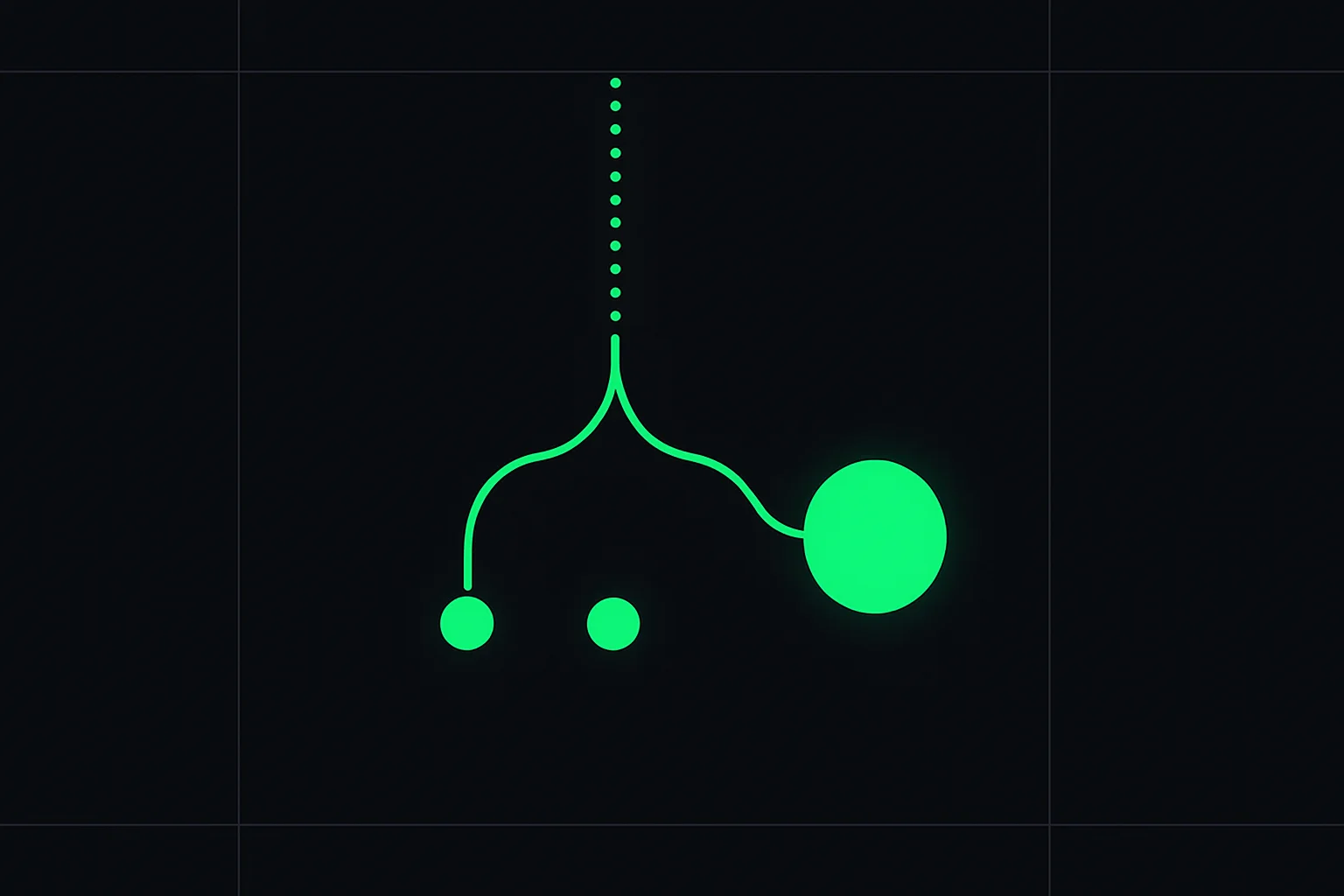
The HN discussion repeatedly converged on a split workflow: Fable for architecture, difficult reviews, and stubborn problems; Opus, Sol, or cheaper models for implementation and daily work. That is not a consolation prize for Fable. It is a sensible production architecture.
Start with a policy like this and replace the labels with results from your own evaluation:
default_model: claude-opus-5
specialist_model: claude-fable-5

escalate_when:
  - the default model fails the same verified test twice
  - the task spans architecture, migration, or multi-day planning
  - a one-shot error costs more than the Fable price premium

never_route_to_fable_when:
  - zero_data_retention_is_required
  - the workload repeatedly triggers covered-domain fallbacks
  - the weekly Fable allocation is near its reserve threshold

measure:
  - accepted_result_rate
  - cost_per_accepted_result
  - fallback_rate
  - p95_latency
  - human_review_minutes
This is the same practical model-selection pattern behind explainx.ai's enterprise routing guide and open-weight versus closed-model decision framework. The default handles volume. The specialist handles the expensive tail. Sensitive workloads take a separate approved path.
What people are asking after the FT headline
Does low usage prove Fable is not worth its training cost?
No. Ramp measures visible customer token purchases, not Anthropic's total return on the research. Work used to train Fable can improve later Opus and Sonnet models, internal systems, safety techniques, and future products. The defensible claim is narrower: customers in this sample are not paying to run Fable as the routine default.
Are open-weight and Chinese models replacing Fable?
They are increasing price pressure, but Ramp explicitly says first-time AI buyers still tend to start with US labs. The current shift is more about advanced buyers adding cheaper alternatives and routing work across providers. Grok 4.6's Fable comparison shows how quickly a near-frontier score paired with a much lower list price can force this conversation, while the best sub-$20 coding subscription comparison shows the same pressure in consumer plans.
Should every company use Opus 5 instead?
No universal default survives contact with real workloads. Sonnet may be enough for high-volume structured work. An open-weight model may win where local control matters. Fable may be the economical choice when a difficult task would otherwise consume senior-engineer hours. The selection unit should be a workload and acceptance test, not a provider slogan.
Is the 11.4% number bad for Anthropic?
It is a warning about the ceiling on frontier-model pricing, not proof of company-wide weakness. Ramp's same August report put Anthropic at 43.5% of US businesses paying for AI in July, ahead of OpenAI's 39.7% in that dataset. Anthropic can lead vendor adoption while its most expensive model remains a minority product.
The bottom line
Claude Fable 5 may be the best model Anthropic can broadly sell and still be the wrong default for most buyers. At twice Opus 5's list price, behind a separate subscription cap, subject to stricter fallback behavior, and unavailable to strict-ZDR workloads, it has to win by enough on a task to pay for every one of those constraints.
That bar is supposed to be high. Route ordinary work to the cheapest dependable model. Escalate the difficult tail to Fable. Judge both on accepted results, not token price alone—and never let a benchmark winner override an availability or compliance requirement.
Related on explainx.ai
- Claude Fable 5 and Mythos 5 launch
- Fable 5 vs Grok 4.6 vs GPT-5.6 Sol vs Qwen3.8-Max
- Anthropic's 30-day retention policy for enterprise ZDR users
- Why Claude Opus 5 feels worse to work with
- Best frontier AI coding subscription under $20
- Enterprise AI model routing and cost optimization
- Choosing an open-weight or closed AI model
- Opus 5 overtook Fable 5 in Ramp enterprise spend
Official and reported sources: Ramp AI Index, August 2026 · Anthropic Fable 5 pricing and positioning · Anthropic Fable subscription rules · Financial Times report · Hacker News discussion
Spend shares reflect Ramp's published July 2026 token-management sample and the Financial Times report available on August 23, 2026. Pricing, subscription rules, safeguards, and retention policies are accurate as of August 24, 2026 and may change.