



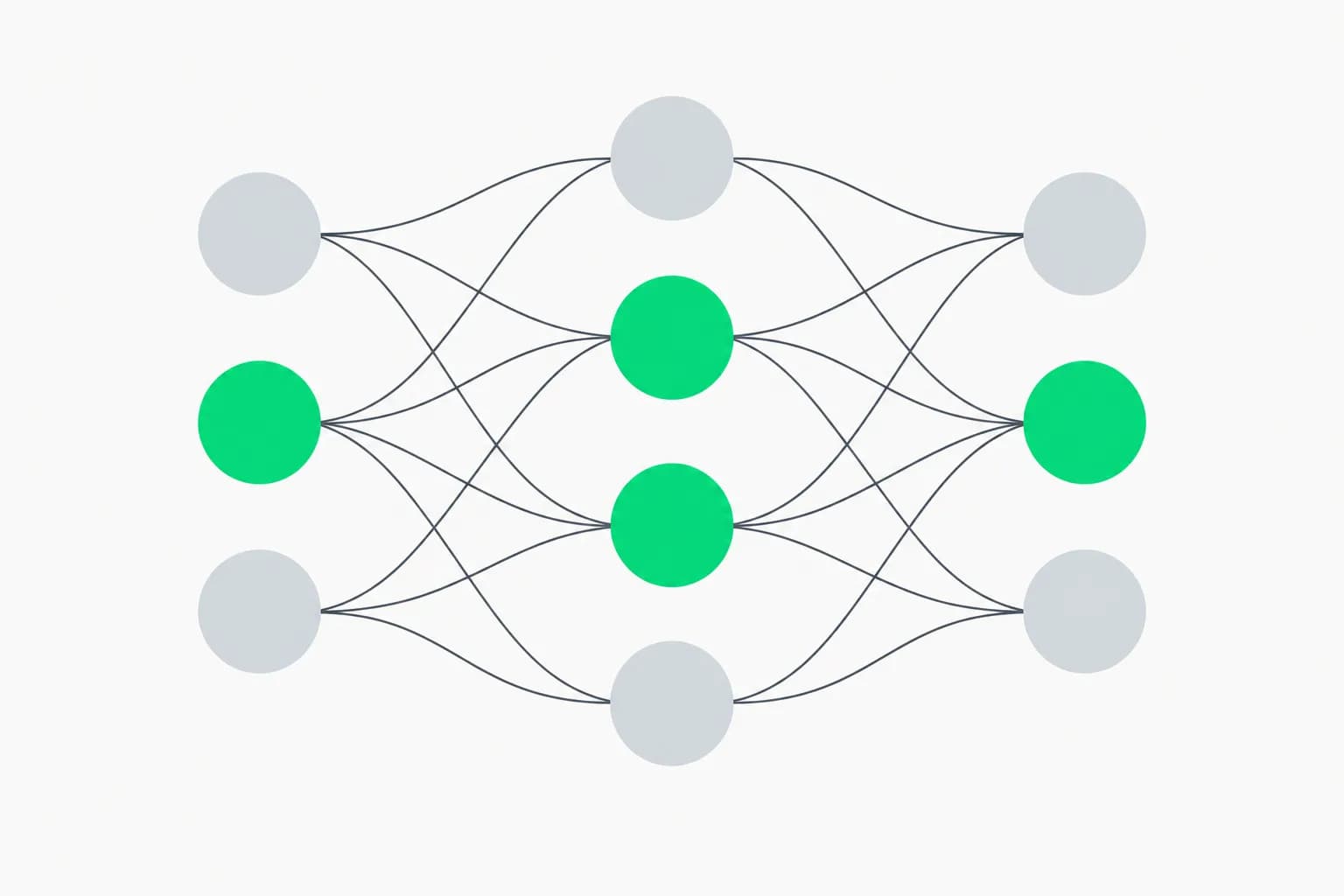
POSTECH researchers Hyunjong Ok and Jaeho Lee released Weight-Space Programming Doesn't Need Transformers on November 17, 2026, asking what architecture frontier LLMs pick when they write neural network weights by hand instead of running gradient descent. On ARC science multiple-choice questions, every tested writer—Claude Opus 5.5, GPT-6.1 Sol, and GPT-6 Astra—compiled plain-text facts into sparse lookup tables, reaching up to 54.4% test accuracy and beating the Transformers they wrote with about 1,800× fewer parameters.
The result does not retire Transformers for pretraining. It sharpens a practitioner question explainx.ai flagged when MIT CSAIL reported GPT-6 Astra editing Qwen weights: if the optimizer is an LLM with a text paper trail, should the target still look like a stack of attention blocks? Pair this read with Anthropic's Circuits update, evil-qwen two-neuron steering, and how KV cache routing changes inference cost.
Quick answers
| Question | Short answer |
|---|---|
| Do LLMs still pick Transformers when they write weights? | Not in the free-design regime — all three writers built sparse fact tables. |
| How much data do writers see? | Ten labeled ARC questions (five Easy, five Challenge); no test labels during writing. |
| Best table accuracy reported? | Up to 54.4% on ARC test; Claude's written table lands in the 49.6–54.4% band in the paper's summary table. |
| Size vs Transformer baseline? | About 1,800× fewer parameters than the most accurate Transformer the same LLM wrote. |
| GPU speed? | Proposed associative-memory reader up to 17× faster than a same-sized Transformer on their setup. |
| Does this beat GPT-6 Astra answering ARC directly? | No — pretrained LLMs still win on harder open-ended tasks; the paper tests written micro-models. |
Why Transformers were the default — and when that logic breaks
Transformers became the default because they train well with gradients and map cleanly to GPU matmuls. The paper's Table 1 contrasts that world with weight-space programming (WSP):
| Property | Gradient descent | Weight-space programming |
|---|---|---|
| Who sets weights | Optimizer, jointly | LLM, line by line |
| Facts stored as | Dense, overlapping directions | Named rows a human can read |
| Needs large datasets | Usually yes | Ten labels in this protocol |
| Fix one wrong fact | Retrain or adapter | Edit one row |
That table explains why builders chasing loop removal in tiny Qwen models care about traceability: if every mistake maps to one readable sentence, an LLM can patch weights the way a human edits a spreadsheet.
Experimental setup: writers, sandbox, and two regimes
The authors evaluate WSP on 3,530 four-option ARC test questions (Easy + Challenge combined). Each writer gets:
- File, search, and shell tools in an isolated sandbox; the host verifies no disallowed data or network before each run (Appendix A)
- Ten training examples only during a single generation
- Optional lineage: each new generation refines the parent's best validation model
They compare two regimes:
- Fixed architectures — the writer fills weights for released stacks (Transformers, SSMs, RNNs) or a provided two-layer Transformer skeleton.
- LLM-designed models — the writer ships an architecture file, build script, and plain-text knowledge compiled to tensors on CPU.
Three frontier models act as writers under identical prompts: Claude Opus 5.5, GPT-6.1 Sol, and GPT-6 Astra, matching the model families named in the paper's methods section and citations to Anthropic's Opus 5.5 announcement and OpenAI's GPT-6 Astra system card.
 Transformer block stack illustrating weight-space programming versus dense gradient-trained layers
What the writers actually built
When unrestricted, all three LLMs converged on the same pattern:
- Express domain knowledge as short declarative sentences.
- Run a build script that turns each sentence into a row in a sparse table (thousands of rows, tens of thousands of non-zeros in Claude's first-generation model described in the paper).
- Answer with a fixed lookup procedure that matches question and option tokens against rows, applies negation and word-order rules, and scores each choice.
The paper contrasts that design with a given two-layer Transformer where attention and MLP blocks are dense matrices. In Claude's runs, deleting a single table row changes roughly one test prediction, while dense Transformer keys interfere enough that BM25 over the same sentences sometimes beats the written Transformer—evidence that gradient-friendly density is the wrong shape when facts must remain locally editable.
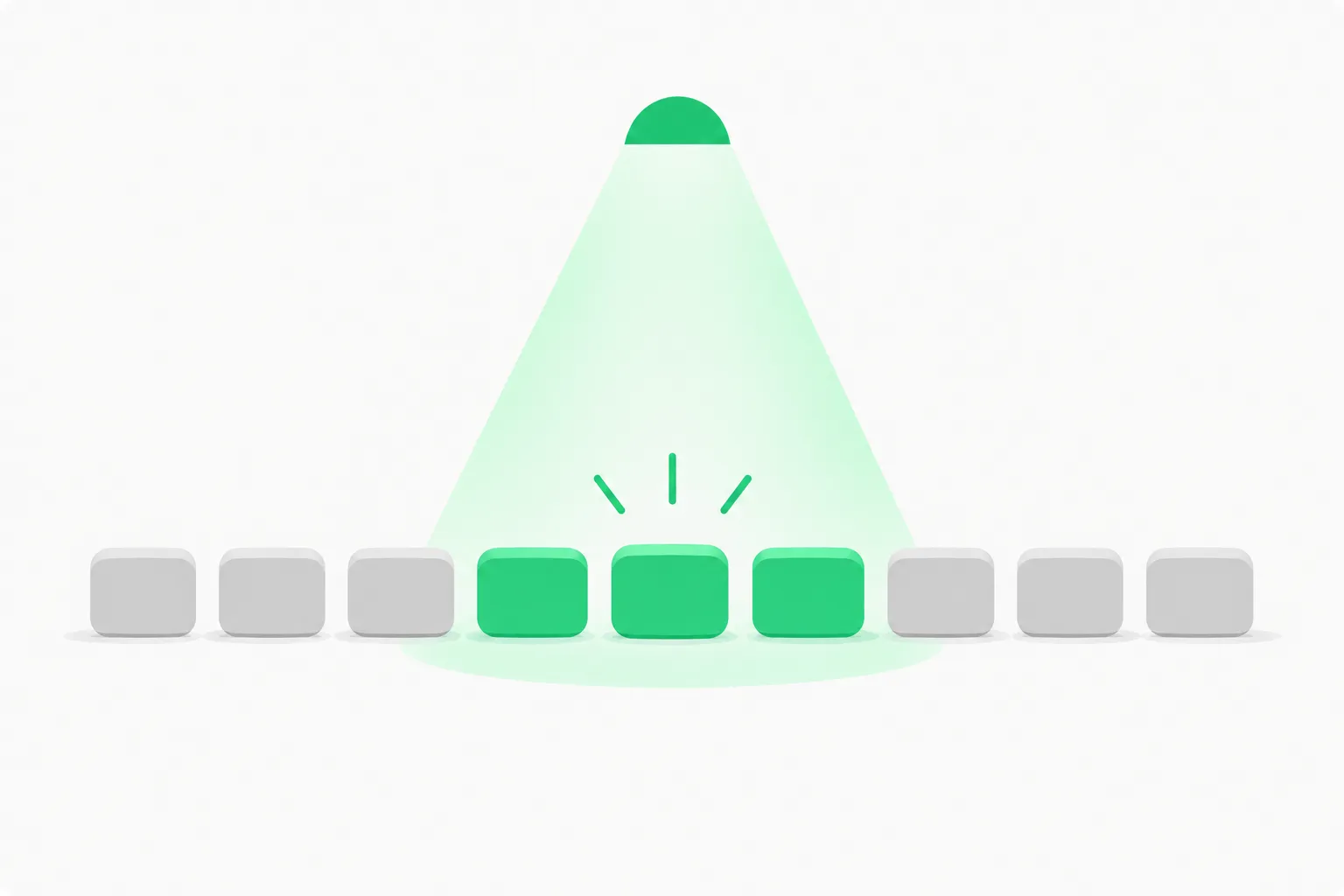 Attention spotlight on a few facts illustrating traceable rows in weight-space programming tables
Associative-memory reader the authors propose
Writer-designed tables score every stored fact per question, which hurts GPU throughput. Ok and Lee add a bounded-read associative-memory model that keeps the written table but limits how many rows each query touches. It stays within about three percentage points of writer accuracy while delivering up to 17× faster answers than a same-sized Transformer in their GPU benchmarks.
That connects to interpretability essays the paper cites, including Alex Wang's associative-memory view of Transformers (October 2026), without claiming pretrained Transformers should be thrown away.
Numbers practitioners quote — and what they do not prove
Headline metrics from the arXiv abstract and HTML preprint:
- 54.4% ARC test accuracy for an LLM-designed table (best reported in the abstract narrative).
- ~1,800× parameter reduction versus the same writer's best released Transformer.
- 17× GPU speedup for the proposed associative-memory reader versus a same-sized Transformer.
- Claude Opus 5.5 two-layer Transformer written from scratch: 36.1% ARC vs 29.8% when the same facts are trained with 3,358 labeled questions via gradients—showing WSP can beat few-shot gradient training in their controlled setting.
The authors also extend beyond ARC to math, open-ended generation, and vision, and report that pretrained LLMs remain more accurate overall. Treat the paper as a design guide for WSP targets, not as evidence that tables replace GPT-6 Astra in production chat.
How this differs from MIT's Qwen weight edit
MIT CSAIL's weight-space programming blog (cited heavily in the POSTECH paper) shows GPT-6 Astra subtracting a looping direction from 0.016% of Qwen3.5-0.8B weights, lifting MATH-500 after fixing runaway generation. That work edits an existing Transformer.
POSTECH asks a prior question: when building from ten labels without backprop, should the skeleton be a Transformer at all? Their answer is sparse tables, then a hand-designed fast reader.
Teams experimenting with Heretic-style weight plugins or tree-ising bit repair should read both papers as complementary: MIT shows surgical edits to shipped models; POSTECH shows greenfield compilation into non-Transformer tensors.
What people building with WSP should do next
- Replicate on ARC first — download arXiv:2611.22055 and reproduce the ten-example protocol before claiming table superiority on your domain.
- Measure traceability — log which table rows fired per answer; if you cannot attribute mistakes to rows, you lose the main debugging win.
- Budget inference — writer tables are slow when they scan all facts; profile the bounded reader idea before shipping micro-models beside a frontier API.
- Keep pretraining and WSP separate — use WSP for targeted patches and toy compilers, not as a drop-in replacement for speculative decoding stacks.
What ARC measures in this study
AI2's ARC science exams split into Easy and Challenge multiple-choice items. The POSTECH protocol hides all but ten training questions, so writers must compile general science knowledge into weights without seeing test labels—a stress test for sample-efficient compilation, not for chat reasoning.
That matters when you compare scores to frontier models answering ARC in prompt space. A 54.4% written table can beat a written two-layer Transformer yet still lose to GPT-6 Astra with chain-of-thought—exactly the gap the authors report when they move to open-ended generation.
Builders evaluating education integrity tools should not confuse exam-facing lookup with classroom tutoring; the architectures optimized here are micro-compilers, not student copilots.
Lineage runs: how writers iterate without gradients
Beyond single-shot writes, the paper studies lineages: each generation starts from the parent's best validation checkpoint and may edit architecture files, build scripts, or table rows. Because edits are local to rows, writers can run the same failure attribution loop humans use in spreadsheets—find the row tied to a missed question, patch one sentence, recompile.
That workflow rhymes with Heretic 2.0's push for reproducible weight edits, but swaps human-in-the-loop plugins for fully autonomous LLM writers. If you ship agentic auto-tuners atop open weights, measure whether they discover table-like structures before they burn GPU hours fine-tuning attention heads.
Fixed-architecture regime: when Transformers still appear
When forced to fill released architectures, writers still touch Transformers, SSMs, and RNNs. The paper's shock is not that Transformers are unusable—it is that free-design runs never pick them. Under the fixed two-layer Transformer baseline, Claude's writer reaches 36.1% ARC versus 29.8% when the same facts are instilled with 3,358 gradient steps, implying WSP can beat small-data fine-tuning in their sandbox.
Yet dense Transformer keys underperform BM25 keyword search over the same plain-text facts in some Claude runs—strong evidence that attention-style interference fights line-by-line authorship. Teams training tiny edge models should notice: if your deployment pipeline will include LLM-authored patches, you may want export formats that preserve row addresses, not only safetensors blobs.
Limits the authors flag
The paper is a work-in-progress preprint (authors list {hyunjong.ok, jaeho.lee}@postech.ac.kr). Sandboxes disable network access during writes except to the writer model, so results depend on in-model knowledge of science facts. Multiple-choice ARC rewards lookup-friendly structures; generative tasks in the paper still favor pretrained Transformers.
Replication checklist before you cite the 1,800× figure in a deck:
- Confirm whether your writer uses the same sandbox tool policy (no sneaked benchmark files).
- Log parameter counts for both the table and the best released Transformer from the same lineage, not cross-writer comparisons.
- Report GPU timing separately for full-table scans versus the bounded associative reader—latency and accuracy trade off.
Secondary context: the Hugging Face daily paper entry mirrors the abstract but is not an additional empirical source—cite arXiv and MIT's weight-space programming blog for replication.
Related reading
- MIT CSAIL: GPT-6 Astra edits Qwen weights
- RAG in a Trenchcoat: minimal agent memory
- What is KV cache
- vLLM vs SGLang for inference
- NVIDIA sparse attention co-design
- Anthropic Circuits tooling
Sources: arXiv:2611.22055; MIT CSAIL weight-space programming blog; Anthropic Opus 5.5; GPT-6 Astra system card.
Figures and version numbers follow the November 17, 2026 arXiv v1 preprint.