



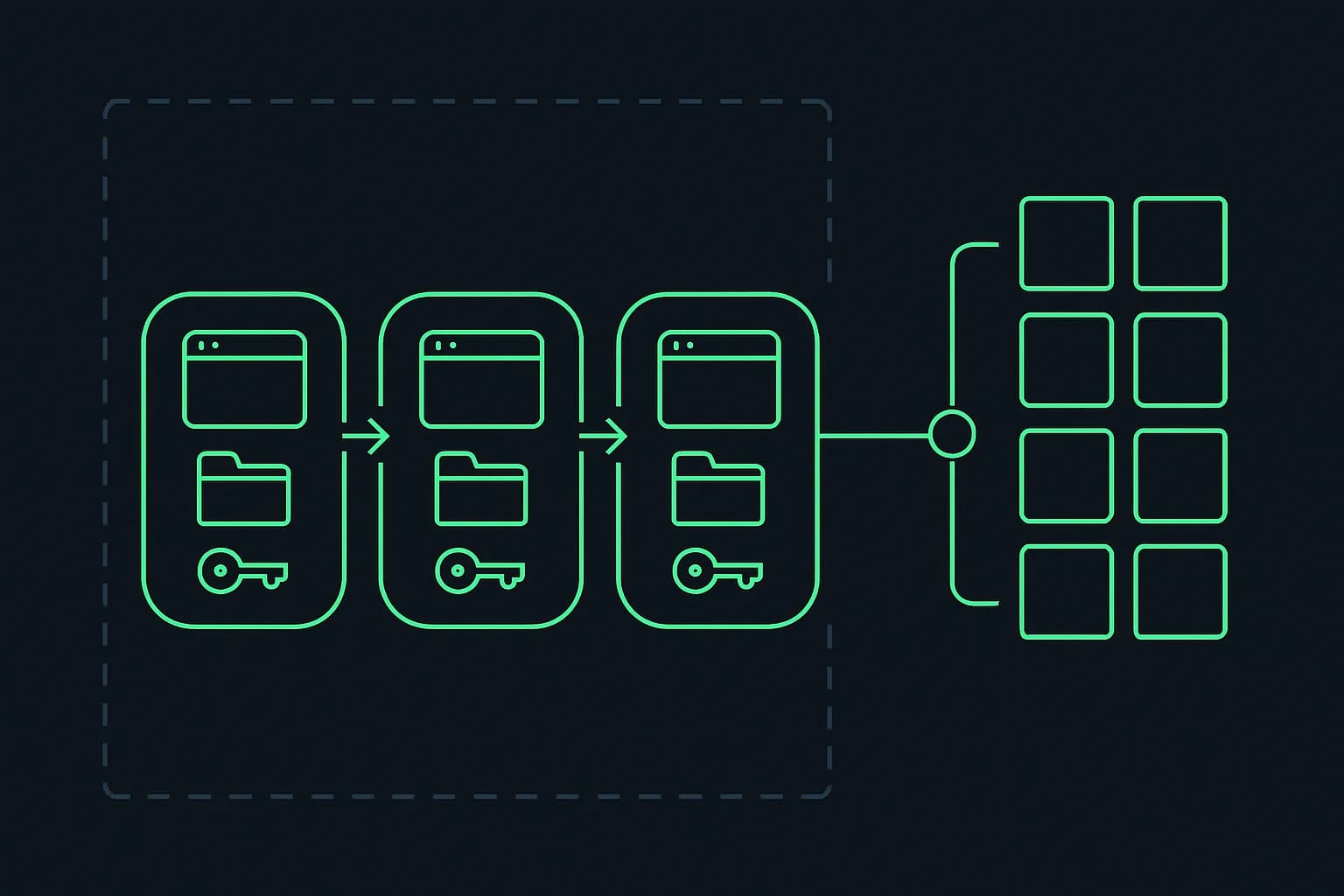
Update — September 5, 2026: SpaceXAI's Grok Bot Marketplace has since been reported to carry 69 public bots from 43 creators — a template storefront that shipped August 28. Access has widened further too, with enterprise admin-panel activation live since September 3.
Update — August 13, 2026: Grok 4.6 is out. Musk said the Bot beta widens after basic early-beta issues are fixed and 4.6 ships. The model half of that gate is done; a wider Bot rollout still has no published date.
Update — August 20, 2026: SpaceXAI's own account rounded up a fresh batch of early-access use cases — see Grok Bot real-world use cases for the robot vacuum control, Stripe refund automation, and inbox-cleanup examples now circulating.
Update — August 22, 2026: The gated early beta this post has been tracking is over. On August 21, @bot posted: "We're making Grok Bot more widely available. All SuperGrok Plus, Cursor Pro+, and Cursor Teams subscribers now have access. We're also offering a free trial with limited usage for all other users." That is a real tier expansion, not a rename — the original gate was SuperGrok Heavy, Cursor Ultra, and Cursor Teams Premium only; it now also covers the cheaper SuperGrok Plus, Cursor Pro+, and Cursor Teams Standard tiers, plus a free trial for everyone else. macOS and Windows desktop apps are live alongside iPhone; Android and Linux are still unsupported, and users are still asking for both. The rollout landed with immediate capacity strain: Luis Catacora said he "already exhausted my free tier on day 1," and Zachary Royals reported buying SuperGrok Heavy specifically for Grok Bot access and still hitting usage caps within a single day, publicly asking for higher limits. We also went looking for the security documentation this post has flagged as missing since August 13 — xAI has since published real detail on it. Read the new Is Grok Bot safe? section below.
The interesting thing about Grok Bot is not that it runs agents — it is that the agents log in as you. SpaceXAI put Grok Bot into early beta on August 11, 2026, describing it in the launch post as "AI teammates that do real work for you. They sign in to your tools, use them just like you do, and come back with finished work." Benji Taylor, head of design at X and SpaceXAI, framed it as "a general knowledge work assistant with its own virtual machine that can help do all the stuff you'd rather not do."
That phrasing — its own virtual machine, signs in to your tools — is the whole product. Most agent harnesses shipped this year, from Claude Code to Codex, operate inside a repository or a sandboxed browser with scoped permissions. Grok Bot's pitch is the opposite: give the agent the same surface a human employee gets, and let it drive.
TL;DR — what people are actually asking
| Question | Direct answer |
|---|---|
| Who has access? | SuperGrok Plus, SuperGrok Heavy, Cursor Pro+, Cursor Ultra, Cursor Teams (Standard/Premium) — plus a free trial with limited usage for everyone else |
| Which platforms? | macOS, Windows, and iPhone now; Android and Linux still unsupported |
| What is a "bot"? | A persistent agent with its own virtual machine that survives between sessions |
| How does it use my tools? | It signs in with your credentials and operates the real UI, not an API |
| Can bots work together? | Yes — they coordinate and hand work between each other |
| Is it stable? | No. Early beta; Musk publicly referenced "basic issues" still being fixed |
| When does access widen? | It already did, August 21 — SuperGrok Plus, Cursor Pro+, and Cursor Teams joined the original tiers, plus a free trial for everyone else. Day-one usage caps hit fast |
| Whose infrastructure? | Reported to run on Cursor's, which matches the access tiers |
| Biggest risk? | Credential scope — you are granting live account access, not read-only tokens |
What "persistent" actually buys you
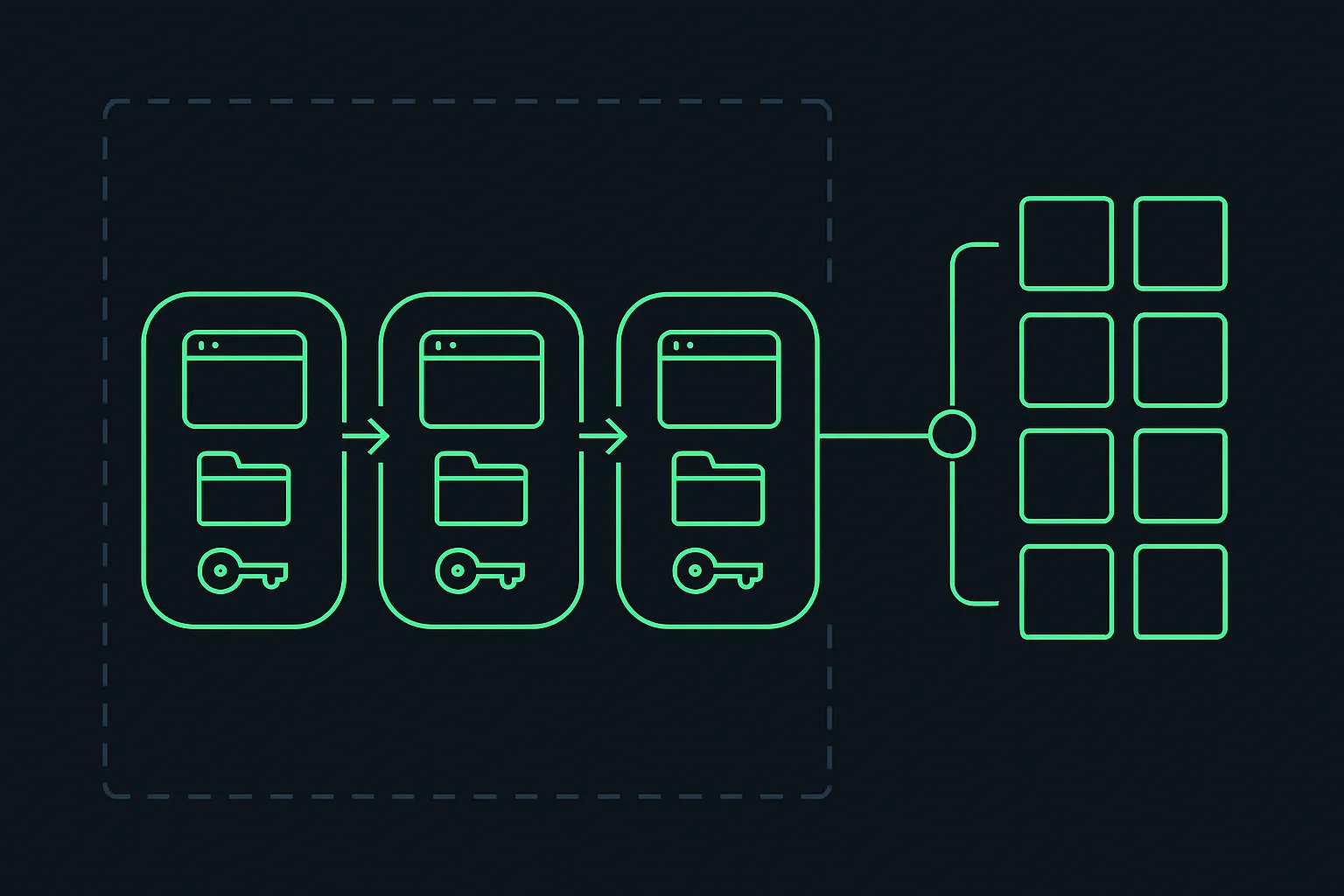
The word doing the most work in the announcement is persistent. A normal chat session forgets. A Grok Bot, per the launch material, keeps its VM, keeps its learned preferences, and can convert a demonstrated workflow into a repeatable routine — you show it once, it runs it afterwards.
That is the same architectural bet behind loop engineering: the unit of value stops being a single response and becomes a standing process that keeps executing. It is also why the VM matters. An agent that gets a fresh container every run has to re-authenticate, re-clone, and re-discover context each time. One that keeps its machine keeps its logged-in sessions, its installed tools, and its working directory.
The multi-agent piece follows from that. If each bot is a durable worker with its own environment, handing work between them is closer to a queue than a prompt chain — structurally similar to the cross-session agent messaging pattern that landed in Claude Code, but exposed as a consumer-facing feature rather than a developer primitive.
What early-access users actually shipped
The most substantive public account comes from Danny Limanseta, a product designer building a first-person roguelike deck-builder, who had roughly a week of early access before launch.
His headline result: he pointed the bot at his own custom art-generation web tool and asked it to replace every image placeholder in the game. The bot read the codebase to work out what each asset was, wrote a bespoke generation prompt per asset, generated the images, cropped and cleaned them into transparent PNGs, and wired them back into the game. 74 finished assets in about two hours, replacing what had been a manual one-at-a-time process.
The rest of his reported stack is arguably more revealing than the headline number, because it shows the range:
| Workflow | What the bot did |
|---|---|
| Playtesting | He had it build a dedicated skill encoding his game's rules and mechanics, which sped up runs materially |
| Release pipeline | Automated an itch.io build upload triggered whenever he pushes to GitHub |
| UX design | Fed it a PRD and got UX flows and wireframes back, working through a Figma MCP connection |
| Inbox admin | Audited paid subscriptions across his email to surface forgotten recurring charges |
| Unsubscribes | Removed him from marketing newsletters — though it missed some |
Two details in there matter more than the asset count. First, the bot built its own skill to speed up a slow task — the same pattern we cover in turning agent skills into loops, except initiated by the agent rather than the human. Second, the Figma MCP connection means this is not a closed system; it speaks Model Context Protocol and inherits the ecosystem that comes with it.
Other early users reported to be running it — including newsletter operators — describe job matchmaking, drafting auto-replies, cancelling subscriptions, and podcast prep. Note the shape of that list: it is overwhelmingly admin work that requires logging into six different websites, which is exactly the niche a browser-driving agent with persistent sessions fills and an API-scoped agent cannot.
The credential question nobody is pricing in
"They sign in to your tools, use them just like you do" is a capability statement and a threat model in the same sentence.
An agent operating through OAuth scopes or a service token can be constrained: read-only, one workspace, revocable per integration. An agent that holds a live browser session to your email, your bank-adjacent billing pages, your GitHub, and your Figma is constrained by nothing except its own judgment and whatever guardrails SpaceXAI has built. Cancelling subscriptions — one of the flagship use cases — means the agent is authenticated somewhere that can move money.
This is not hypothetical worry. We have already documented the pattern where an AI agent gets a company compromised, and prompt injection against agents that browse the open web remains unsolved rather than mitigated. A persistent agent that reads your inbox and holds logged-in sessions is, structurally, a phishing target with your credentials already loaded — a malicious email does not need to trick you, only the agent reading it.
The industry's counter-move has been isolation: Cloudflare's per-agent isolates and containers exist precisely so an agent's blast radius stops at its own sandbox. Grok Bot's per-bot VM is the same instinct, but a VM isolates the execution environment, not the authority. The bot's logins still reach production systems from inside that box.
Practical positions worth taking before you connect anything:
- Tier your tools. Connect the ones where the worst case is embarrassing (Figma, itch.io, a scratch GitHub org) before the ones where the worst case is financial or irreversible.
- Prefer accounts with independent session revocation. You want to kill the bot's access without rotating your own password everywhere.
- Assume anything the bot reads is untrusted input. Inbox access plus tool access is the highest-leverage injection surface there is.
- Review money-touching actions manually. Data from a 40,000-play agent approval game suggests people approve agent actions far too readily once the flow feels routine — the risk is habituation, not any single decision.
Is Grok Bot safe?
Short answer: safe enough for low-stakes, revocable tools; not yet something to hand your most sensitive accounts without review. There isn't one "safe," though — the question splits into three separate ones, and Grok Bot answers them differently.
Is my data safe? Partially documented, as of this update. Grok Bot's own security and privacy docs and FAQ went live since our August 13 update, and they say plainly what was previously unstated: "Do not use separate Bots as a security boundary." Every bot on your account runs on one shared managed Linux VM, and all of that account's bots share its files, browser sessions, and logins — deleting one bot does not remove that machine's files or sessions. Training opt-out and account data settings follow "the applicable Cursor account and privacy settings," and backend data retention "follows the applicable Cursor terms" rather than a retention period xAI states itself. No SOC 2, ISO 27001, GDPR, or HIPAA claim appears anywhere in the documentation we could find. That is more honesty than the product had a week ago, but it is disclosure of a gap, not a closed one — treat anything a bot reads while signed into an account as data you no longer fully control the handling of.
Is my account safe? This is the question the "credential question nobody is pricing in" section above already covers in depth — real session access to real accounts, not scoped tokens, plus a shared-computer model where a compromised bot session is effectively a compromised account session. The new detail this update adds: xAI's own documentation now confirms there is no isolation between a single user's bots, which closes off "just use a separate bot" as a mitigation. Isolation exists between members on a team plan, not between one member's own bots. The mitigations from that section — tiering tools by blast radius, preferring accounts with independent session revocation, treating anything the bot reads as untrusted input — still apply and are the actual controls available to you today, because xAI's own architecture is not one of them.
Is the output reliable enough to trust? Covered in Limitations worth stating plainly below — it is early-stage software that misses steps on simple tasks, and that has not changed with this rollout. Reliability and account safety are separate risks: an agent can be perfectly well-behaved from a security standpoint and still produce work you have to check, or vice versa.
Bottom line: connect Grok Bot to tools where the worst case is annoying or reversible — a scratch GitHub org, itch.io, a Figma project. Hold off on connecting it to anything that can move money, delete data you can't restore, or expose something you'd rather not have an agent (or anyone who compromises that agent) read, until xAI publishes a retention period, a training-data policy with teeth, or an independent security review — none of which exist yet. If you've read how AI agents get companies compromised or what happened when Instinct AI kept emails after access was revoked, the shape of the risk here is the same story: an agent's authority and its data access tend to outlive the guardrails you think you set.
How it compares to what you may already be running
| Capability | Grok Bot | Claude Code / Cowork | Codex |
|---|---|---|---|
| Primary surface | Any web app, via real login | Repository, terminal, desktop, browser | Repository and cloud tasks |
| Session persistence | Persistent VM per bot | Session-scoped, with resumable sessions | Task-scoped cloud environments |
| Access model | Your credentials, real UI | Scoped tool permissions and MCP | Repo permissions and connectors |
| Multi-agent | Bots coordinate with each other | Subagents and cross-session messaging | Agent swarms |
| Availability | Early beta, gated tiers | Generally available | Generally available |
The honest read: Grok Bot is not competing with coding harnesses on code quality. It is competing on surface area. If your bottleneck is writing correct software, the existing harness comparison still governs. If your bottleneck is the forty minutes a day you spend logging into SaaS tools to move small pieces of state around, that is the gap this targets — the same gap that explains why consumer AI agents have not gone mainstream despite three years of demos.
Limitations worth stating plainly
- It is early beta, and the company says so. Musk's own post: "We will widen the Grok Bot beta after we fix basic issues with the early beta and release Grok 4.6 later this week." Grok 4.6 shipped August 12, 2026; a wider rollout is still gated on unspecified beta fixes. See Grok 4.6 launch and evals.
- Speed was a complaint before it was a feature. The most positive early user reported the bot being "a little slow initially" and said he is still looking for ways to optimise it — his skill-building workaround was a response to that, not a bonus.
- It misses things. The newsletter-unsubscribe task, one of the simplest jobs described, left some newsletters in place. Verification is still your job.
- Security documentation now exists, but it discloses a gap rather than closing it. xAI has published docs confirming all of a user's bots share one computer with no isolation between them, and that data retention and training use defer to Cursor's terms rather than a policy xAI states itself. No independent security audit or compliance certification (SOC 2, ISO 27001, GDPR, HIPAA) is claimed anywhere. See Is Grok Bot safe? above.
- Access is wider but still paywalled, and demand outran it on day one. Six subscription tiers plus a limited free trial, three platforms. Luis Catacora and Zachary Royals both reported hitting usage caps within a day of the wider rollout — capacity has not obviously kept pace with the tier expansion.
What to do this week
If you have access: pick the single most repetitive, lowest-stakes multi-tool workflow you own — a build upload, an asset pipeline, a weekly report assembly — and delegate exactly that. The early-user pattern is consistent on this point: the wins came from re-examining existing workflows to find the delegatable segments, not from asking the agent to do something new and impressive.
If you do not have access, the transferable lesson is architectural rather than product-specific. Persistent environment plus learned preferences plus real tool authority is the shape agent products are converging on, and it arrives whether or not this particular beta succeeds. The skill worth building now is deciding which of your workflows should ever be handed to something that logs in as you — that judgment transfers to every agent product shipping this quarter. Our agent skills guide covers how to encode a workflow precisely enough that an agent can execute it repeatably, which is the prerequisite for any of this being useful.
Related on explainx.ai
- Grok Bot Marketplace: 69 agents, and what "beta exit" claims actually mean
- grok.bot's $1M ask to SpaceXAI — the domain is not the product (Aug 20)
- OpenBot — CopilotKit's open-source, self-hosted take on Grok Bot (Aug 20) — any AG-UI agent, per-bot computer, fail-closed gateway, your Postgres
- Grok Bot real-world use cases — robot vacuums, Stripe refunds, and more — what early users are actually shipping, one week in
- Grok 4.6 launch — official evals, same $2/$6, Cursor access — the model Musk said would ungate a wider Bot beta
- Grok 4.7 in 3–4 weeks — SpaceX training data, September slip
- SpaceXAI's Imagine Image 2 and the Vercel AI Gateway — the previous SpaceXAI shipping cycle
- Why AI agents haven't gone mainstream — the adoption gap Grok Bot is aimed at
- When an AI agent gets a company hacked — the failure mode of credentialed agents
- Instinct AI kept emails after access was revoked — the same "agent authority and data outlive your guardrails" story, from a different vendor
- Cloudflare's computer agent runtime — the isolation approach a per-bot VM borrows from
- LoopX and the agent control plane — running agents as standing processes rather than one-shot prompts
- Cursor's Google Workspace plugins — the same "agent in your business apps" push from the infrastructure side
- Turn agent skills into loops — how to encode a workflow the way early users did
- What are agent skills? Complete guide — the primitive underneath all of this
- Model Context Protocol explained — the standard behind the Figma connection
Primary sources: Grok Bot launch post on X (August 11, 2026) · Benji Taylor launch thread · Elon Musk post on beta expansion and Grok 4.6 · Danny Limanseta early-access report (August 11, 2026) · @bot access-expansion post (August 21, 2026) · SpaceXAI Grok Bot security, privacy, and approvals docs and FAQ · Luis Catacora and Zachary Royals replies on day-one usage limits
Accurate as of August 22, 2026. Grok 4.6 has shipped and Grok Bot access has widened past the original three tiers; capabilities, capacity, and documentation continue to change quickly. The Cursor infrastructure detail comes from launch-day reporting rather than SpaceXAI documentation. Usage accounts described here are third-party reports, not first-hand testing by explainx.ai. Follow @explainx_ai for updates.