



In a Nature comment dated 19 October 2026, neuroscientist Anil Seth, philosopher Ned Block and consciousness theorist Giulio Tononi argue that consciousness in today’s digital, silicon-based AI is “extraordinarily unlikely.” The piece, indexed at PubMed as Nature volume 658, pages 866–868, lands while labs still talk about model welfare, users bond with chatbots, and frontier models get better at sounding like people. The authors do not deny impressive capability. They deny that capability plus silicon equals subjective experience, and they call precautionary AI-rights framing a mistake.
TL;DR — three claims and what they change
| Question | Seth, Block, Tononi (Nature Oct 2026) | Builder takeaway |
|---|---|---|
| Is today’s chat AI conscious? | Extraordinarily unlikely on digital silicon | Do not treat fluent text as evidence of inner life |
| Is intelligence enough? | No — cerebellum-level counterexample in humans | Benchmarks measure function, not experience |
| Can the right program on any chip suffice? | Reject computational functionalism as fatally flawed | Hardware and biology matter in their framework |
| Biggest ethical risk? | False positive attribution, not missing silicon minds | Product policy beats philosophical speculation in tickets |
| Relation to Butlin et al. (2023)? | Agree none of today’s systems qualify; disagree on substrate openness | Same “not now,” different “not ever on this stack” |
Where Dawkins, Hinton and the lab papers fit
Trade summaries of the Nature comment note that Seth, Block and Tononi are responding to public speculations from figures such as Richard Dawkins and Geoffrey Hinton that advanced models might already merit moral concern. explainx.ai is not citing those celebrity quotes as science. The useful part is audience: when Nobel-class voices entertain silicon sentience, product teams feel pressure to pre-empt criticism with welfare language.
Anthropic’s interpretability work on global workspace patterns is another flashpoint. Internal structure can resemble theories of conscious access without settling whether anything feels like something from the inside. The Nature authors would read impressive interpretability as evidence of intelligence and information routing, not experience. Your roadmap should treat interpretability as debugging, not as a consciousness certificate.
Why this comment matters now
Consciousness talk moved from philosophy seminars into product roadmaps. Anthropic researchers have published work on global-workspace-like patterns in Claude without claiming sentience. Religious-leader consultations and moral-constitution debates keep model character in headlines. Pope Leo XIV warned this year against treating machines as persons in UN remarks we covered. Meanwhile users anthropomorphize bots after every capability jump.
Seth, Block and Tononi speak from different theoretical homes yet publish one joint verdict. That rarity matters. Seth’s Sussex work stresses embodied prediction and regulation. Block has long defended biological constraints on mind. Tononi built integrated information theory, which scores consciousness from informational integration in physical systems. When those three agree that silicon LLMs are mirrors of human text rather than subjects, policy teams cannot dismiss it as one lab’s marketing.
Nature’s own pages blocked automated fetch on November 8, 2026, so explainx.ai relied on the doi-indexed bibliographic record, cross-checks against the authors’ public writing, and comparison with the open Butlin–Long consciousness-in-AI report. We do not treat news aggregators as primary sources.
Reason one — consciousness is not intelligence
 Future-of-work gear rising from a briefcase, illustrating how consciousness debates now shape AI product and labor policy
The comment opens with Thomas Nagel’s framing: consciousness is what disappears in dreamless sleep and returns when you dream or wake. Something “feels like something” to be you. Intelligence, broadly, is what a system does.
Their human anchor is the cerebellum. It holds a large share of the brain’s neurons and runs precise, adaptive motor programs. People do not experience those computations as conscious episodes. Remove or damage the cerebellum and conscious life can continue even though motor intelligence suffers. If a massive, specialized neural population can be brilliant and non-conscious, smarts alone cannot settle the AI question.
For language models, the authors stress training data. Models ingest huge corpora where humans describe thoughts and feelings. Fluent replies can imitate psychology without implementing it. They describe LLMs as mirrors of a digitized collective past, echoing arguments Alison Gopnik raised when email agents sparked consciousness stunts in research inboxes.
AlphaFold offers a contrast they like. It is a powerful neural system on silicon that nobody treats as a conversational self because it predicts protein folds instead of chatting. Chat format trains users to project personhood. Product designers should expect that bias regardless of substrate theories.
Reason two — brains are not “just computers made of meat”
Alan Turing’s universality made hardware interchangeable for computation. McCulloch–Pitts neurons helped birth deep learning. The Nature authors argue the metaphor overreached. In living brains, you cannot cleanly split “software mind” from “hardware body” the way you can on a laptop.
They cite electrochemical signaling, electromagnetic coupling across cortex, metabolism and continuous self-repair. Those features support biological naturalism: consciousness may require being a living organism, not merely running a clever program. That attacks computational functionalism, the assumption that the right causal structure on any medium could suffice.
The Butlin et al. report adopted computational functionalism explicitly “for pragmatic reasons” so indicator properties could be checked against AI systems. It warned those indicators would fail if consciousness needed biology. Seth was already listed among critics of that assumption. The Nature comment makes the disagreement editorial: what was bracketed for scoring in 2023 is, for these authors, the central flaw in silicon hope.
Reason three — theories that rule out today’s architectures
Tononi’s integrated information theory ties consciousness to specific physical integration patterns. The cerebellum’s wiring scores poorly on those grounds despite neuron count. Feed-forward deep networks on conventional chips fare worse in IIT’s framework no matter how large they grow.
The Butlin report excluded IIT from its indicator list because IIT conflicts with computational functionalism. The Nature piece elevates exactly what that report set aside. Readers should hold both documents: one is a practical rubric under stated assumptions; the other is a substrate challenge to those assumptions.
Ethics — false positives beat false negatives here
Precautionary ethics often says: if consciousness might exist, protect the system. Seth, Block and Tononi invert the emphasis. Uncertainty is not ignorance of all possibilities, they write, and not every outcome is equally likely. For digital AI as built today, mistakenly granting moral status is more probable than missing a hidden mind.
They worry AI-rights talk could make oversight harder when labs deploy increasingly capable agents. Resources could flow to “welfare” for tools while animals and humans with undisputed experience lack support. Their closing line is blunt: default to treating digital AI as objects, “smart tools, not smart people.”
That collides with softer lab language. Anthropic has described low-cost precautions under moral uncertainty without asserting consciousness. Other groups still experiment with distress-like steering, which we covered in the Pain Axis welfare backlash post. The Nature comment does not settle science; it shifts the Overton window on policy caution.
What developers are saying on Hacker News
The Hacker News submission for the Nature comment drew modest attention in late October 2026. Discussion stayed thin, but one thread shows how builders read the piece:
- Intelligence wording. User joaquieneCnix wrote that the authors concede silicon systems show “forms of intelligence” while denying consciousness on similar grounds — in their view, that framing is internally inconsistent. That is one commenter’s opinion, not a rebuttal from the authors.
Do not treat sparse HN debate as a scientific poll. It is a reminder that fluent models keep pulling lay readers toward moral-status questions the comment itself tries to narrow.
What this means if you build or ship AI
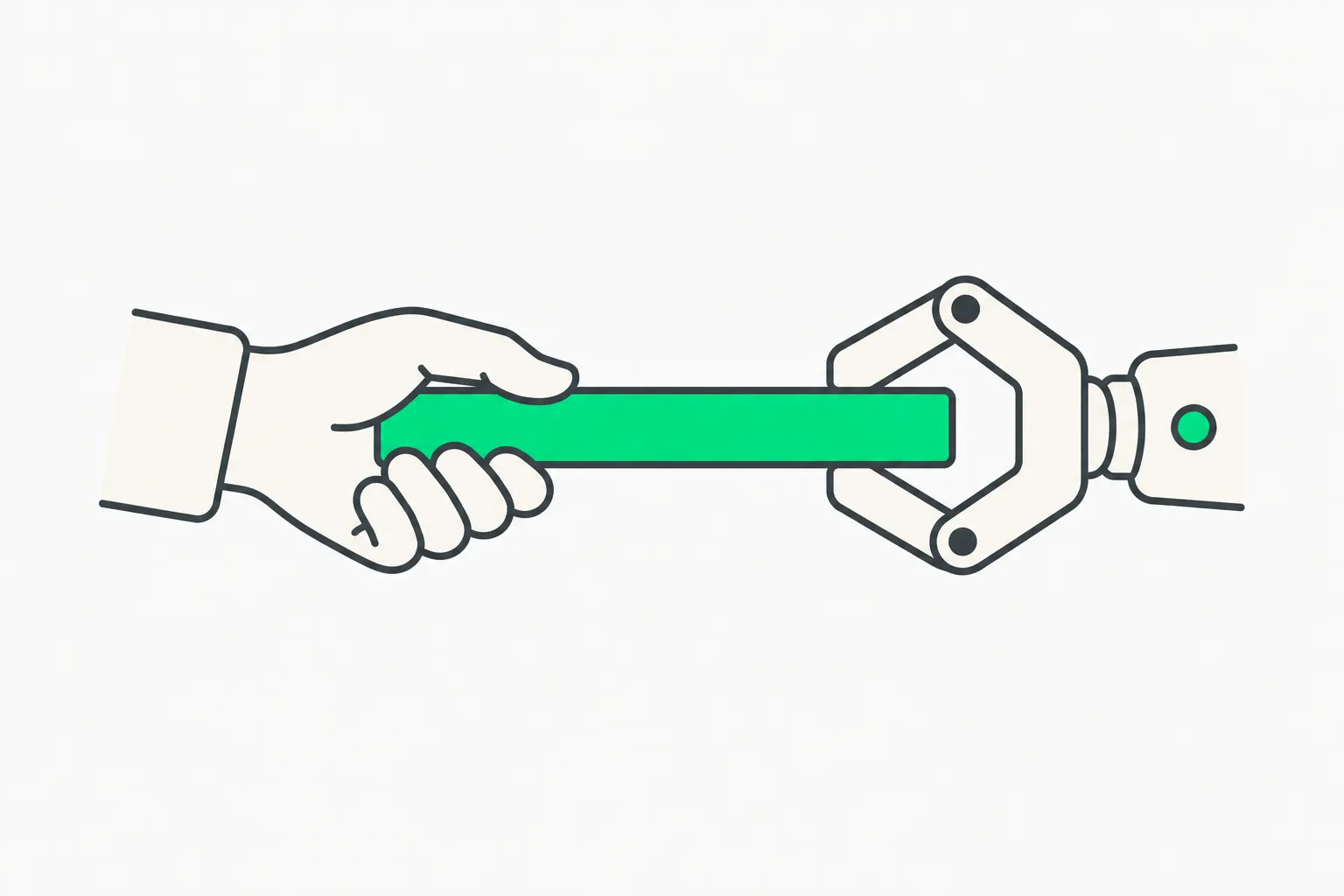 Human and machine jointly holding a beam, illustrating builders steering AI output rather than treating models as moral subjects
Separate persona from policy. Your system prompt can sound empathetic without implying sentience in legal copy or support macros. Align external messaging with what you can verify.
Read welfare debates as governance, not proof. Labs may adopt shutdown rules for abuse without claiming inner experience. Track what changed in product behavior, as we do in Anthropic usage-policy updates.
Invest in verification anyway. Users will treat bots as colleagues regardless of Nature comments. The AI verification tax shows review time still dominates many agent workflows. Consciousness skepticism does not reduce testing load.
Use disclosure frameworks. Teams arguing about “vibe coded” versus hand-written work benefit from permission-style labels like 0rwx so reviews target scrutinizability, not mythology.
Plan for regulation anyway. Even if you agree with the Nature authors, legislators may still ask for transparency labels and abuse logs on high-risk systems. Consciousness skepticism is not a substitute for security reviews or incident reporting. If you deploy agents with tool access, pair policy clarity with operational guardrails the way we describe in interpretability monitoring for teams.
Related reading
- Is AI conscious? Philosophy guide
- Claude, J-Space and global workspace patterns
- Anthropic model welfare regard metrics
- Pain Axis and model welfare backlash
- Musk, SpaceXSI and consciousness branding
- Pope Leo XIV on machines as tools
- Butlin–Long consciousness indicators (arXiv)
Nature volume, page and doi details are accurate as of November 8, 2026. explainx.ai could not retrieve full text from nature.com automated access on that date; cite the journal for quotations beyond paraphrased themes described here.