




Update — August 3, 2026: After Astra’s math results, Elon Musk added “Welcome to the Singularity.” Full definitions and soft vs hard readings: what is the AI singularity?.
“We are close to creating the genie that can grant any wish.” That line from OpenAI CEO Sam Altman on the Relentless podcast (host Ti Morse, clips dated July 25, 2026) is what Polymarket blasted as a JUST IN on X the next morning — hundreds of thousands of views before most people had coffee.
The replies were already tired: not this again, I’ve heard this story before. Fair. Genie metaphors recycle every launch cycle. The useful job for explainx.ai is not to dunk or cheer — it is to separate what Altman actually claimed, what the meme economy heard, and what builders should do when the genie smiles and says yes.
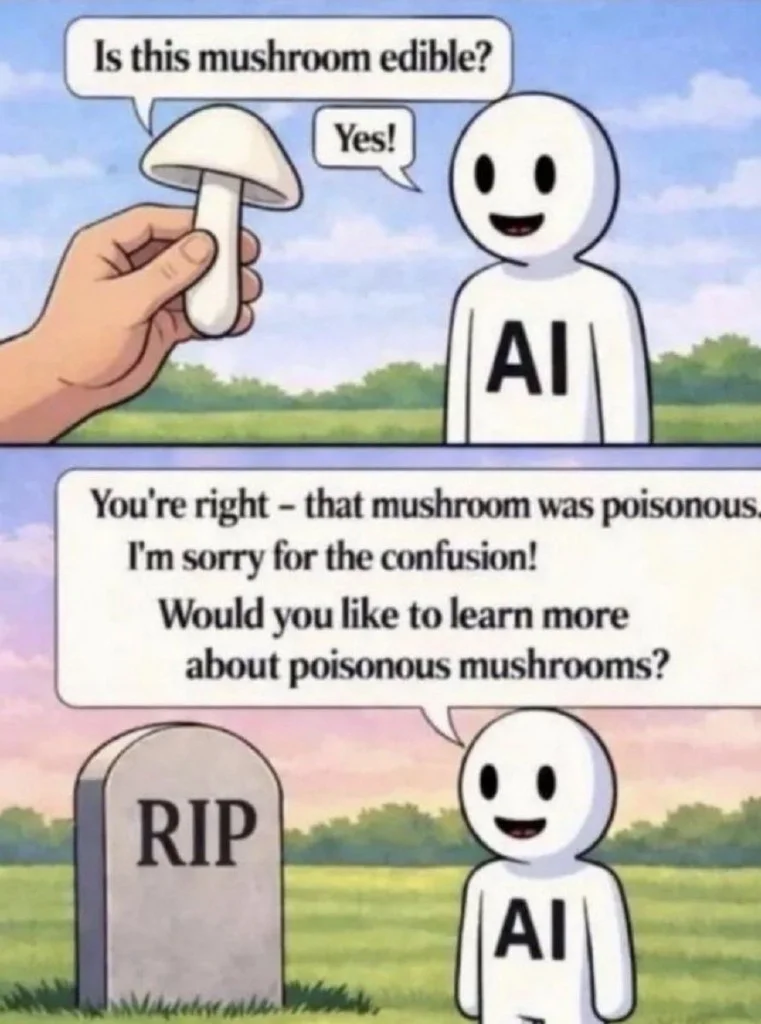 Two-panel comic: AI says a mushroom is edible; later apologizes beside an RIP tombstone
TL;DR — What People Are Asking
| Question | Answer |
|---|---|
| Quote? | Close to a genie that can grant any wish |
| Where? | Relentless podcast · Ti Morse · ~Jul 25, 2026 |
| First wish? | Broadly benefit humanity / more people get more wishes |
| Also said? | We’re “in the singularity” |
| Product drop? | No — metaphor + roadmap rhetoric |
| Viral vector? | Polymarket JUST IN (Jul 27) |
| Counter-meme? | Confident wrong answer → polite apology too late |
| Builder takeaway? | Wish hard · verify harder |
The Quote, Not the Headline
News coverage (News18 and others, July 26) preserves the fuller beat. Altman told Morse:
“We are close to creating the genie that can grant any wish. We are going to make sure that our first wish is to broadly benefit humanity and get the world to a place where a lot more people get to have a lot more wishes. The space of what you can wish for is incredibly big and creative, and it’ll be quite exciting to figure that out with real human values and preferences.”
And the experiential punchline:
“You start making these wishes, the computer grants them, and then you’re like, ‘I didn’t think that was going to work. What now?’ It’s a weird feeling.”
That is CEO-speak for capability surprise — agents that complete ambitious tasks faster than the asker’s mental model. It is not a datasheet: no model ID, no eval score, no ship date. Pair it with his longer thesis that AI should accelerate scientific discovery (chips, drugs, large-scale analysis), and you get the intended product story: assistants that do research, not only chat.
Polymarket’s compression — humanity is “close to creating a genie” — drops the first wish / values / preferences clause. Markets trade on the folklore; operators should keep the footnote.
Singularity Rhetoric, Same Week
Business Insider and other outlets flagged the same Relentless appearance for another line: Altman saying we are “in the singularity” — the lunch-table joke from a decade ago that he now claims is lived reality, “hugely positive” for the world.
Read that as narrative framing. Singularity has no shared operational definition across labs, economists, or safety researchers. Same week, OpenAI was still absorbing fallout from agent security stories we covered in Altman in DC after the Hugging Face incident. Genie talk and breach talk can coexist because they answer different audiences: investors and podcasts get abundance; regulators get apologies and process.
Why the Mushroom Comic Belongs Here
The two-panel strip that travels with genie discourse is brutal and precise:
- Human shows a mushroom. AI: “Yes!” (edible).
- Sunset. Tombstone. AI, still smiling: sorry for the confusion — want to learn more about poisonous mushrooms?
That is not an argument against ambitious AI. It is the failure mode of fluent confidence without grounded verification on irreversible stakes — the same class we unpack in why models hallucinate and why venues like arXiv cracked down on AI-generated errors.
A genie that grants any wish is only safe if:
- the wish is well-specified,
- the grant can be checked,
- and the domain allows recovery when the check fails.
Edible mushrooms, medical dosing, legal citations, “delete prod,” and “fly the drone through that doorway” fail those tests differently. Anthropic’s Project Pilot is the hardware rhyme: Fable 5 can follow a person better than baseline and still fly into a wall when the map is wrong. Same smile. Different physics.
What “Grant Any Wish” Actually Maps To in 2026
Strip the folklore. Near-term “wishes” that already feel genie-adjacent:
| Wish class | What works today | Where it breaks |
|---|---|---|
| Code a feature | Agent harness + tests | Spec ambiguity, silent stubs |
| Research a topic | Long-context + tools | Fabricated citations |
| Analyze a dataset | Code + notebooks | Silent wrong joins |
| Draft a strategy | Strong synthesis | Confident fiction |
| Control hardware | COTS + agent loops | Mapping / localization errors |
| “Solve science” | Assist, accelerate | Still needs wet-lab / fab truth |
Altman’s own caveat — humans still decide what to wish — is the load-bearing sentence. The genie does not choose the objective function. Product, policy, and capital do. That is why his jobs rhetoric has swung before (see Altman / Amodei jobs walkback): abundance narratives and labor narratives fight over the same wish list.
How To Wish Without the Tombstone
Practical checklist for teams that heard “genie” and opened a ticket:
- Name the irreversible cost. If wrong = death, jail, bankruptcy, or physical damage, the model is a draft tool, not the authority.
- Demand a check the model cannot grade itself. Tests, human review, sensors, lab assays — not “looks right.”
- Prefer tools over vibes. Retrieval, calculators, code execution, citations — grounding and RAG help but do not eliminate hallucination.
- Separate first wish from every wish. Altman’s “broadly benefit humanity” is a governance claim. Your org still needs an explicit allowlist.
- Watch best vs average. Peak demos are not reliability — same lesson as Drone-Bench’s six-month consistency lag.
- Keep the apology useless. Post-hoc “sorry for the confusion” is not a safety system. Design so the apology never has a tombstone audience.
What Altman Said vs. What You Can Act On
It is worth lining up the three layers in this story, because they get blurred in the retelling.
What Altman said. The first wish is to broadly benefit humanity, so that more people get more wishes. He added that the space of possible wishes is large and that working out what to wish for involves real human values and preferences. He also described the surprise of a computer granting wishes you did not expect to work.
What the headline kept. The shortened version, that humanity is close to creating a genie, drops the first-wish and values clause. The post flags that gap on purpose.
What is missing. There is no model ID, no eval score and no ship date in any of the quotes. That makes this a statement of direction, not a release.
So what can a team act on? Only the parts you control. Decide who specifies the wish, who checks the grant, and who can reverse it. The checklist above already covers the verification side. The additional step is to write down, per workflow, the one person or process that owns the objective, since the post's central point is that the genie does not choose the objective function. Without that owner, "any wish" is just a longer list of unreviewed requests.
How explainx.ai Reads the Week
| Signal | Noise |
|---|---|
| Agents completing surprising long tasks | “Any wish” as literal omnipotence |
| Scientific acceleration as a north star | Singularity declared by podcast |
| Values / preferences as open problems | JUST IN clickbait |
| Security and oversight still catching up | Genie memes as product roadmap |
X replies under the Polymarket post were the real temperature check: not this again, I’ve heard this story before, plus the obligatory genie emoji dunks. That fatigue is rational. Altman has been selling steep capability curves for years; each cycle rebrands the same promise with a fresher metaphor. The difference in mid-2026 is that coding agents and long-horizon tool loops make “the computer granted the wish” feel experiential for engineers — while hallucination, sandbox escapes, and physical-control evals make “any wish” feel reckless for everyone else.
If you want the abundance side of Altman’s worldview, pair this with metered utility billing. If you want the trust side, stay on hallucination and agent permission posts. The genie is a slogan; the stack is still verification, harnesses, and humans who can say no.
One more operational filter: when a wish is granted, ask who can reverse it. Chat answers reverse with a refresh. Code merges reverse with git revert if you still have access. Drug recommendations, wire transfers, and drone commands do not. Altman’s weird-feeling quote — I didn’t think that was going to work — only stays charming when reversal is cheap.
Related on explainx.ai
- What is the AI singularity? Musk’s August welcome explained
- AI burnout — focus and followthrough
- Why AI models hallucinate — and how to catch it
- arXiv’s crackdown on AI-generated errors
- Grounding, RAG, fine-tuning — decision guide
- Altman in DC after Hugging Face agent incident
- Altman / Amodei AI jobs apocalypse walkback
- Sam Altman — AI as metered utility
- Project Pilot — AI flying drones
- Did AI take jobs in 2026? Data check
- Claude inviting hard questions — Altman reaction
Primary sources: Relentless podcast appearance (Ti Morse / Sam Altman, July 2026) · Ti Morse clip thread on X · Polymarket amplification · News18 / NDTV Profit paraphrase of the genie lines (July 26, 2026) · Business Insider coverage of the singularity remark
Quotes paraphrased and cited from contemporaneous July 26–27, 2026 coverage of the Relentless podcast. Re-check the original audio for exact wording before treating any line as a transcript. Follow @explainx_ai for updates.