



Replica is a free set of eleven Claude skills that take an existing app and walk Claude Code through reverse-engineering its features, rebuilding them, testing the result, rebranding it and putting it live. The GitHub repository, made by Jake Schincariol, is MIT licensed and had about 1.9k stars and 272 forks within roughly a week of its first commit, which is why it surfaced on GitHub's list of new repositories with real traction. It is the latest in a wave of installable skill libraries that package a whole workflow rather than a single trick, like the ones in our agent skills guide.
The pitch is blunt: "Eleven Claude skills that clone any app. Free, MIT, no signup, no API key, nothing to connect." The more interesting part is the twist. One skill, the Entrepreneur, reads what the original app's users hate in real reviews and bakes fixes into your version. Below we explain how the pipeline works, what is concrete versus marketing, and where the legal and quality traps are.
TL;DR
| Question | Answer |
|---|---|
| What is it? | Eleven chained Claude skills plus six small Python tools |
| Cost and license? | Free, MIT |
| Needs an API key? | No; the tools need Python 3.8 or newer and nothing to pip install |
| Where do I run it? | Claude Code, as a plugin or copied skills; any single SKILL.md also works pasted into a chat |
| Does it copy code? | No; it claims clean-room, features and flows only |
| Biggest risk? | Trademark, terms-of-service and quality problems, not installation |
| Maturity? | One commit in the repo history when we looked; treat as early |
What are the eleven skills?
The README lists them as a pipeline you run in order: recon, architect, design, build, backend, test, diff, entrepreneur, brand, launch, deploy. Each reads what the last wrote into a replica/ folder in your project.
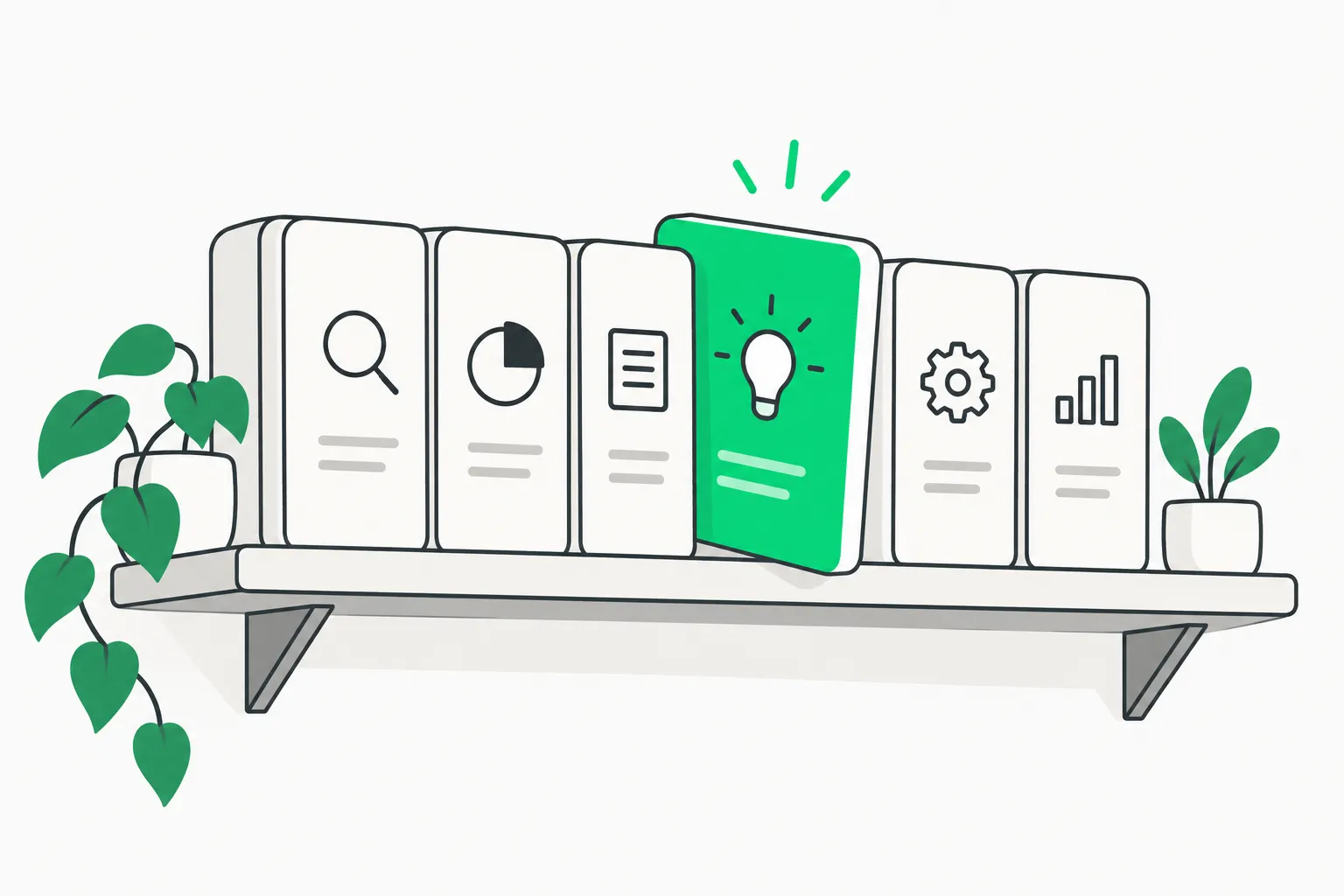 A library of skills, illustrating the replica skill pipeline from recon through build to deploy
| Command | What it does |
|---|---|
/replica-recon | Reverse-engineers an app's screens, flows, components and data model from public pages, screenshots, store listings and your own account |
/replica-architect | Plans the stack, database schema and API |
/replica-design | Rebuilds the design system as tokens: colours, type, spacing, components, with your own assets |
/replica-build | Rebuilds the app screen by screen from the recon map |
/replica-backend | Auth, database, payments and integrations |
/replica-test | Clicks through every flow and tests for bugs |
/replica-diff | Compares clone against the original and gives a parity score and missing list |
/replica-entrepreneur | Reads user reviews and turns complaints into fixes and a positioning angle |
/replica-brand | Names and rebrands your version |
/replica-launch | Landing page, pricing and App Store listing |
/replica-deploy | Ships it live on your own domain |
You can run any one alone. The README suggests /replica-entrepreneur on an app you are only thinking about cloning "is a good way to find out if you should."
How do I install Replica?
The README gives three routes. The simplest is to paste the repo URL into Claude and ask it to install the skill. As a Claude Code plugin:
/plugin marketplace add Jakeschincariol/replica-skill
/plugin install replica-skill@replica-skill
Claude Code namespaces plugin skills, so they appear as /replica-skill:replica-recon. If you want the plain /replica-recon command, copy the folders:
git clone https://github.com/Jakeschincariol/replica-skill.git
cp -r replica-skill/replica-* ~/.claude/skills/
Copy the same folders into your repo's .claude/skills/ for project-local use. Without Claude Code, paste any single SKILL.md at the top of a chat and it runs as a mode, though you lose the Python tools. For background on how skills load and how to vet them, see the Matt Pocock skills guide and our text-to-cad skill library write-up, which follow similar install patterns.
What does a worked example look like?
The README walks through cloning a scheduling app, the kind where you share a link and people book a time. Its numbers are an illustration from the repo, not a verified benchmark:
- Recon produces
replica/recon.mdwith 18 screens, 7 flows, components, an inferred data model and afeatures.csv. A partner marketplace is marked out of scope as the original's network, not a feature. - Architect picks Next.js, Postgres, Stripe and Resend and writes a schema with a constraint so two guests cannot book the same slot.
- Test writes Playwright specs for happy paths and edge cases such as time zones, a slot taken mid-booking and double submit, logging bugs by severity until no S1 or S2 is open.
- Diff reports features 86, booking page layout 91, missing round-robin and the website embed.
- Entrepreneur reads 140 reviews across the App Store, G2, Capterra and Reddit and finds complaints about per-seat price jumps, no text reminders and confusing time zones, producing a plan for flat pricing, SMS reminders and a time zone confirmation step.
 Speech bubbles with star ratings, illustrating how the Entrepreneur skill mines app reviews for complaints to fix
What are the six Python tools?
All are standard-library Python and, per the README, none touch the network.
| Tool | Job |
|---|---|
imgdiff.py | Turns two screenshots into edge maps and compares layout while ignoring colour |
parity.py | Weights must, should and could features, counts partial as half, and says "not shippable" if must-haves are missing |
reviews.py | Drops reviews without links, copies quotes from your rows with URLs, marks themes under three reviews or one source as thin |
contrast.py | WCAG contrast on your design tokens |
sweep.py | Finds the original's name, domain and colours left in your code |
listing.py | Checks store limits and copycat issues in your listing |
The design choice worth noting is the review tool: because it refuses unlinked reviews, a model cannot invent a complaint, which targets a known failure mode of AI market research. It is also a small instance of a general lesson: put deterministic scripts around the model wherever a claim can be checked.
 Magnifying glass over sticky notes, illustrating review analysis in the replica entrepreneur workflow
What are people going to ask?
Is cloning an app legal?
It depends, and the README is cautious. It rebuilds "what an app does, never what it owns" and says clean-room means no source code, assets, logos, trademarks, copy or private APIs. It reads only what you are allowed to read, never scrapes behind a login or a paywall, and, if your own account's terms forbid building a competitor, it says so and sticks to public sources. It also states that rebranding is mandatory before launch and that /replica-deploy will not ship until the sweep is clean. Even so, features can be protected by patents, trade dress and terms of service. You can rebuild a music app's player and playlists but not its catalogue. The README closes with "talk to a lawyer before launch if there is money on the line," and we agree. This is not legal advice.
Will the clone actually be good?
Probably not at the complexity of real products. The README says a booking tool is weeks of work and a spreadsheet engine is not, and that recon "sizes it honestly" before you start. The parity score is a useful discipline, but a score against a feature list does not measure reliability, performance or support. See our vibe-coding trust debate for why generated apps still need review.
How does it compare with reverse-engineering as a prompt?
Replica formalizes a related idea. Our reverse engineering as a prompt case studies show agents rebuilding software from observed behaviour, and the reverse-engineering MCP server covers the tooling and its security implications. Replica adds product steps around that core: design tokens, tests, brand sweep and launch assets.
Is it safe to install?
Skills are instructions plus scripts that run on your machine, so read them first. Here the Python files are described as network-free standard-library code, which is a good sign but not a guarantee. Review deploy and backend skills especially, because they touch payments, DNS and production. Pin a commit rather than tracking main, particularly for a repo with a single commit and a viral star curve.
What this means for builders
The technical novelty is modest: eleven prompts and six scripts. The signal is that workflow-in-a-repo skills are becoming the way indie developers distribute entire products processes, and that star counts spike when the pitch is "ship a sellable app." The risk is a flood of near-identical clones with the same stack choices, which tests the limits of app-store review and of trademark enforcement.
Use it where it is strongest: as a structured way to analyze a category before building. Run recon and entrepreneur on a market, read the complaint themes with their links, and decide whether a better product is possible. Then build something differentiated rather than a lookalike. If you want to test your own skill discipline first, our Ponytail skill guide shows how small, strict skills keep agents honest.
Limits and caveats
- Early project. One commit and a young repo mean sparse issue history and unproven edge cases.
- Claims come from the README. The 86 and 91 scores and the 140 reviews are an example, not our test. We did not run the skills end to end.
- Terms of service. Using an app's public pages is not the same as having permission to build a competitor.
- Review mining bias. Reviews skew to complainers, and
reviews.pymarks thin themes but cannot fix selection bias. - Testing is a start. Playwright happy-path and edge specs do not replace security testing, especially for auth and payments.
Related reading
- What are agent skills? The complete guide
- Matt Pocock's agent skills for real engineers
- text-to-cad: CAD skills for Claude Code and Codex
- SwiftUI Pro agent skill
- Reverse engineering as a prompt: case studies
- Reverse-engineering MCP server and agent security
- Ponytail: a lazy senior dev skill
- Official: replica-skill on GitHub, Playwright
Star counts and repository details are accurate as of October 12, 2026 and may change quickly for a new project.