



OpenAI is putting its models on a rival's cloud. In an announcement dated October 21, 2026, OpenAI said it is partnering with Google Cloud to bring its frontier models and Codex agentic workflows into Google Cloud's Model Garden. Customers will buy them through Google Cloud Marketplace, and companies with Google Cloud spend commitments can use that committed spend to pay for them. General availability is planned "in the coming weeks," and OpenAI states plainly that Microsoft remains its primary cloud partner.
This post covers what the two companies actually said, what outside coverage adds, and the questions a buyer or developer should still ask before treating this as a switch they can flip.
TL;DR: what is confirmed
| Item | Status |
|---|---|
| OpenAI frontier models in Google Cloud Model Garden | Announced by OpenAI; GA planned in coming weeks |
| Codex agentic workflows on Google Cloud | Announced |
| Purchase path | Via Google Cloud Marketplace |
| Billing | Enterprises can draw down existing GCP spend commitments |
| Google Antigravity and Gemini Agent | OpenAI models "soon" available; no date |
| Microsoft's role | Remains OpenAI's primary cloud partner |
| Per-token pricing | Not published in the announcement |
What exactly did OpenAI announce?
The OpenAI post describes an integration that gives customers "native access" to OpenAI models inside Google Cloud, to power agentic workflows "at scale, backed by Google Cloud's data governance and high-performance infrastructure." The pitch for regulated industries is control: access permissions, centralized data governance and the infrastructure controls a company already uses on Google Cloud apply to the OpenAI models as well.
Two commercial details carry most of the weight. First, purchase happens through Model Garden and is "transacted through the Google Cloud Marketplace." Second, enterprises with Google Cloud spend commitments "will be able to draw down their GCP commitments for these purchases." Together these mean a Google Cloud customer does not need to sign a separate OpenAI contract to get started.
There is also a developer-tool angle. OpenAI says its models will soon be available in Google Antigravity and the Gemini Agent, "providing enterprise customers with model choice flexibility and the best model for each task." Antigravity already hosts several non-Google models, as we covered in Antigravity adding Claude Opus 5.5 and Sonnet 5.5, so OpenAI models there would continue a pattern of Google presenting itself as a neutral shelf.
Greg Brockman, OpenAI's president and co-founder, said the partnership is "an important step in making our most capable models and Codex available where customers are already building." Google Cloud CEO Thomas Kurian said Google is focused on "a broad selection of models, including those from OpenAI, so they can choose the right model for any given job, helping to deliver optimal quality and lower costs."
Which models, and when?
The OpenAI post says "frontier models" without listing them, and it points to an access request form until general availability. No model names, versions or preview terms are confirmed on OpenAI's page, so check the Model Garden catalog when it opens.
For readers who want to know what those models are, our launch coverage is the best starting point: GPT-6 Astra launch, benchmarks and pricing and GPT-6.1 Sol launch, pricing and benchmarks. If you are choosing between them, the model-versus-model comparisons matter more than the cloud wrapper, for example Claude Sonnet 5.5 against GPT-6 Astra.
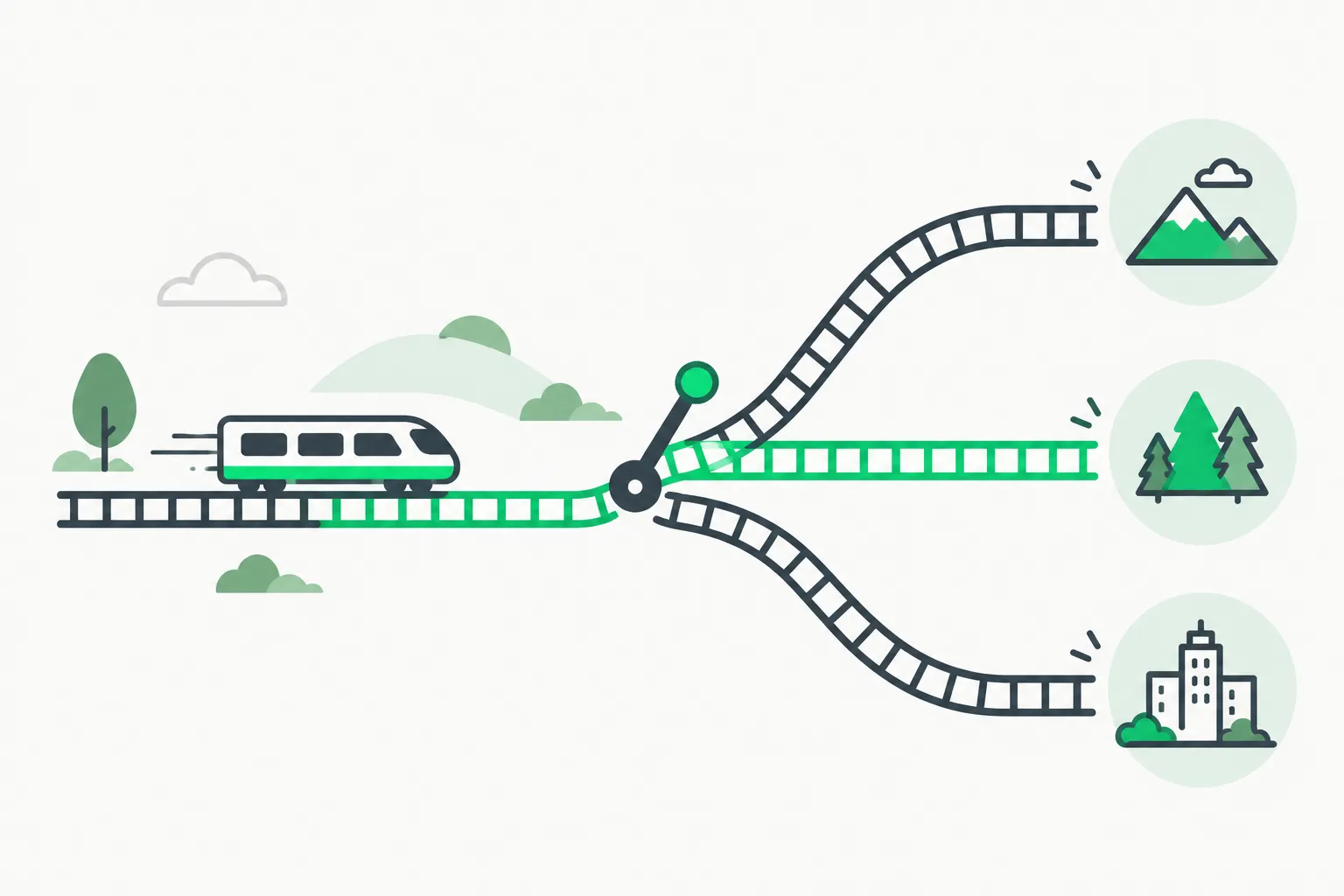 Model routing switchboard sending a request to one of three destinations, illustrating model choice inside Google Cloud Model Garden
Why would OpenAI sell through a competitor's cloud?
Because enterprise AI is increasingly bought through the cloud contracts companies already have. A chief information officer who has committed to a large annual Google Cloud spend has a strong incentive to put AI purchases inside it: the money is already approved, security review is already done for the platform, and the cloud vendor's sales team is already in the room.
The OpenAI post makes the argument itself, saying Google Cloud is "a destination for AI workloads" and that the integration offers "a path from evaluation to broader adoption." The mechanism is the same one that made the other hyperscalers attractive. OpenAI's own page lists earlier work along these lines, including access to models and Codex through an Oracle cloud commitment in June 2026 and Zero Data Retention for frontier models in August 2026 (our write-up: OpenAI private safety processing and zero data retention). For Google, the benefit is just as clear. Google Cloud already sells Gemini and, through Model Garden, third-party models. Adding OpenAI means a customer who prefers GPT models for some jobs and Gemini for others does not have to leave the platform. It also weakens an argument rivals have used, that a customer on Google Cloud has to go elsewhere for OpenAI.
How does this relate to the Microsoft relationship?
The announcement is careful: "Microsoft remains OpenAI's primary cloud partner." That sentence is doing real work. OpenAI's finances and compute are tightly bound to Microsoft, a relationship we have examined in our look at circular AI revenue and GPU depreciation. What the Google deal changes is distribution, not the underlying training and hosting arrangement. The announcement does not say where the models run for Google customers, whether on Google infrastructure, on Microsoft Azure or on OpenAI's own capacity, and that is a question worth asking a sales representative, because it affects data residency, latency and which provider's outage takes you down.
What should buyers check before adopting?
The announcement leaves open several things that determine real cost and risk. A short checklist:
- Price per token and Marketplace fees. The post gives no rates. Compare the Model Garden price with OpenAI's direct API price for the same model, and ask whether Marketplace purchases carry any markup or discount.
- Commitment drawdown rules. Some Marketplace purchases count fully against a commitment and some only partly. Google's own commitment drawdown page lists exclusions and says the list can change. Get the percentage in writing.
- Where inference runs and what is logged. For regulated workloads, ask about data residency, retention, and whether Zero Data Retention terms carry over to the Google Cloud channel.
- Feature parity. New model features often reach a vendor's own API first. Ask whether tool calling, long context, batch and fine-tuning match the direct API on day one and how long a lag to expect.
- Rate limits and quota. Quotas on a cloud marketplace listing are usually negotiated separately from direct API limits.
- Support path. If an agent run fails, who owns the ticket: OpenAI, Google, or both?
What changes for developers using Codex?
Codex is named in the announcement alongside the models, so Google Cloud customers should be able to run Codex-style agentic coding workflows against OpenAI models inside their own cloud account. For teams that already keep source code and build systems in Google Cloud, that can simplify security review: the agent's model calls stay in a procurement and audit path they already control. We covered how Codex is moving into business settings in Codex Sites, roles and plugins for enterprise, and the way Google positions its own agent for company use in Gemini Agent for work.
If you are a solo developer or a small team, little changes today. You can keep using OpenAI's API directly. The deal matters most when a procurement team, not an engineer, is the gatekeeper.
How does it compare with buying direct or through other clouds?
There are now three ways an enterprise can typically reach a frontier OpenAI model: directly from OpenAI, through Microsoft, or through another hyperscaler marketplace. Each trades a little control for convenience. Buying direct usually gives the earliest access to new features and the cleanest support line. Buying through a cloud marketplace gives consolidated billing, commitment drawdown and the cloud's identity and logging tools, in exchange for possible feature lag and a second vendor in the support chain.
The practical advice is to pilot on the channel where your data and identity already live, and to keep your code portable. Teams that call models through a thin abstraction layer, rather than hard-coding one vendor's SDK, can move a workload between channels when price or quota changes. That portability is also the best defense against the one risk this kind of deal introduces: a pricing or availability change in one channel that you cannot route around.
For model comparisons that are independent of the channel, see our running coverage of the small and mid-size tiers in Haiku 5.5, GPT-6 Luna, DeepSeek V4.1 Flash and others compared, which is the quickest way to judge whether the cheapest tier is enough for your job before you pay frontier prices.
What is not known yet
- The exact list of models and versions at general availability.
- Per-token and Codex pricing on Google Cloud, and any Marketplace fees.
- The general availability date beyond "coming weeks."
- Whether the models run on Google hardware, and what the data-handling terms are.
- A date for Antigravity and Gemini Agent support.
Until those are published, the safe reading is that this is a distribution agreement with a clear commercial hook (commitment drawdown) and a vague launch timeline. The people who benefit first are large Google Cloud customers already trying to consolidate AI vendors.
Related reading
Details reflect OpenAI's announcement of October 21, 2026; availability, models and pricing may change.