



Update this page: the talks are reported, not announced. We will fold in any confirmation from Nvidia or Reflection.
The Financial Times reported on October 10, 2026 that Nvidia is in talks to acquire Reflection AI, the US open-weight model startup, or to deepen its existing investment. The report arrived five days after Reflection introduced Beam, its first open-weight model, which we covered in our Beam launch post. The FT's paywalled story has been summarized by other outlets, including Runtime Wire, and we cite those summaries below with attribution. Everything here is reported by others. Neither Nvidia nor Reflection has confirmed anything.
TL;DR: what is reported and what is not
| Question | Short answer |
|---|---|
| Who reported it? | The Financial Times, October 10, 2026 |
| Is a deal signed? | No. Early talks; people briefed said a deal could come in weeks but could also collapse |
| What structures are on the table? | Full acquisition, an acqui-hire with licensing, a larger equity investment, or a bigger chips and compute arrangement |
| What has Nvidia already put in? | $800 million, per the FT; it is among the largest shareholders |
| Did either company comment? | Both declined to comment to the FT |
| What is the price? | Unknown. The FT said it could not establish terms |
| Are Beam weights out? | No. Promised under Apache 2.0 later in October |
What exactly did the FT report?
According to the summaries of the FT report, Nvidia and Reflection are in early discussions. The range of outcomes is wide. At one end is a full acquisition. In the middle is an acqui-hire, where Nvidia hires Reflection's researchers and licenses its technology. At the other end is simply a larger investment, or a commercial arrangement for more chips and compute.
People familiar with the talks told the FT a deal could arrive within weeks, while cautioning that discussions could fall apart. The FT could not establish the terms under discussion. That matters for one number in particular: Reflection's April 23, 2026 round closed at a $25 billion pre-money valuation, according to Reflection's newsroom, but that is a past financing price. It is not a bid.
Why an acqui-hire keeps coming up
An acqui-hire is a structure big technology companies have used to take in a team and its technology without buying the corporate entity. Outlets covering the FT story note that this route can avoid a drawn-out merger review, which is relevant for a company as large as Nvidia. We want to be clear about the limits of that reading. The FT listed the acqui-hire as one possibility. Whether regulators would see it as a way around review is commentary, not a ruling, and we found no reporting of any agency's position on this deal.
Nvidia's own recent history shows it is comfortable with large, unusual deal shapes. See our earlier coverage of the reported Hugging Face acquisition talks for how that played out in reporting and what stayed unconfirmed.
What Reflection is and what Beam is
Reflection was founded by two former Google DeepMind researchers, Misha Laskin and Ioannis Antonoglou. Per Runtime Wire's summary, Laskin led reward-modeling work for Gemini and Antonoglou helped build AlphaGo and AlphaZero and worked on Gemini post-training. Reflection began with coding agents, where tests and code execution give a clear feedback signal, and has been building toward open frontier models.
Beam, introduced October 5, is a sparse mixture-of-experts model with 501 billion total parameters and 23 billion active per token, aimed at coding, reasoning and agentic work. Reflection says it trained on 23.8 trillion tokens and ran more than 100 million reinforcement-learning rollouts on 10,500 Nvidia GB300 GPUs over four weeks. Those are company-reported figures. On Reflection's own comparison table, covered in our Beam post, Beam trails Kimi K3 and GLM-5.3 on most coding benchmarks while promising far cheaper inference.
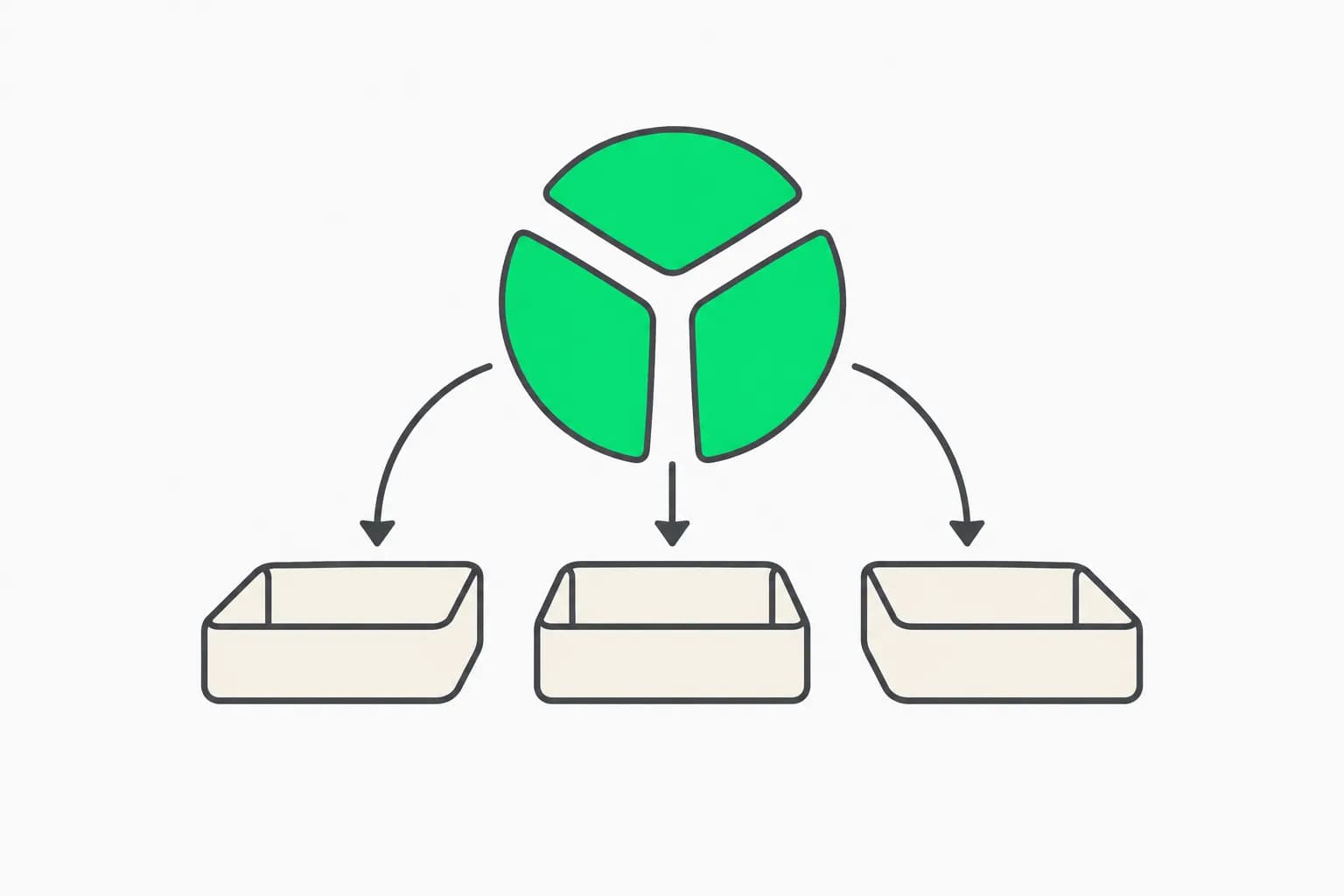
 Open weights being distributed in three equal parts to open trays, illustrating Reflection AI Beam weights due later in October
The key fact for developers: the weights are not out. Reflection says Beam is in final red-teaming and evaluation. Until release, nobody outside can examine or reproduce its numbers.
Why would Nvidia want Reflection?
The FT, via the summaries, says Nvidia has its own model family, Nemotron, but lacks a frontier-scale model it controls. Nvidia's Nemotron 3 Ultra is a 550B open-weight MoE, so it is not absent from the large-model race, but the FT's framing is about frontier-class capability. Buying or deepening ties to Reflection would put Nvidia on the model side of the open-weight market as well as the hardware side.
There is also a policy backdrop. The FT reported that Nvidia has called for a domestic open-weight ecosystem, and the story's headline framing is that the Trump administration hopes Reflection will rival cheap Chinese alternatives such as DeepSeek. For the past year the practical open-weight stack has leaned Chinese, with DeepSeek, Qwen, Kimi and GLM as defaults, while US-origin options like xAI's Grok weights and Cohere's Command A+ have been fewer. A US chipmaker owning the leading US open lab would be a significant shift in who controls that supply.
The circularity question
Nvidia sells the chips Reflection trains on. Reflection says Beam's reinforcement-learning run used 10,500 Nvidia GB300 GPUs. Nvidia is also an $800 million investor. Runtime Wire notes that this does not establish who supplied the compute, since Reflection reportedly secured access through providers including SpaceX and Nebius. Still, the structure is one readers should keep in mind: a supplier that funds a customer that buys its product, and may now own it.
That pattern is not unique to this deal. Our look at OpenAI's reported revenue figures shows how heavily AI company numbers depend on compute commitments from chip and cloud partners. Treat any single company's figures with that dependency in mind.
 Chip and server towers representing Nvidia compute behind Reflection AI and its open-weight Beam model
Three scenarios and what each would change
1. Full acquisition. Reflection becomes a Nvidia unit. The open-weight promise would then depend on Nvidia's choices. Nvidia already ships open models, so continued open releases are plausible, but nothing reported guarantees the Apache 2.0 plan for Beam survives.
2. Acqui-hire plus license. Staff move to Nvidia, the remaining company or its assets are licensed. Questions about who maintains Beam and who owns future checkpoints would be open.
3. Larger investment or compute deal. The most continuity: Reflection stays independent, remains the face of a US open-weight lab, and Nvidia's stake grows. This is the least disruptive for people building on Beam.
None of these is confirmed. We are listing them because the FT did.
What developers are saying
The Hacker News discussion on the FT story is small so far. One commenter, verdverm, said they wished US capitalism would ease off consolidation, reflecting a common worry that open-model independence shrinks when a dominant supplier buys in. Another, maz1b, asked why Nvidia would want this when it has already invested and already builds Nemotron. These are individual opinions, not facts about the deal.
What this means for what you build or pay
- Do not wait on Beam. Weights are promised later this month under Apache 2.0, but the promise comes from the company, and a pending deal adds uncertainty. Build your evaluations on models you can download today.
- Keep model access abstracted. If your agent stack hard-codes one model, ownership changes at the lab become your problem. A thin adapter layer and a fixed eval set let you swap in Beam, Nemotron, GLM, Kimi or Qwen within a day.
- Watch the license text on release day. Apache 2.0 is permissive. If the final license differs, or acceptable-use terms appear, that is the first real signal of how an owner changes things.
- Expect hosted pricing to follow supply. If Nvidia ties a model to its own inference stack, hosted offerings could appear first on its platform. That is speculation; no pricing has been announced.
- Sovereign and enterprise buyers. Reflection pitches customization and on-premises control. A change of ownership would be one of the first things procurement teams ask about.
For a different angle on how open-weight availability is shifting in practice, see how a European search company dropped Mistral models and what that said about the open-weight market.
What is still unknown
- Whether talks lead to any deal at all
- The structure and price
- Whether regulators would review it, and how
- Whether Beam weights ship on schedule and under the promised license
- Whether Reflection's research direction changes after a deal
We will update this post when Nvidia, Reflection or a primary filing confirms anything. If you see a claim that a deal has closed, check for an announcement on either company's own newsroom before believing it.
Related reading
- Reflection AI Beam: 501B open-weight MoE, Apache 2.0 weights due this month
- Nvidia Nemotron 3 Ultra: 550B open-weight MoE
- Nvidia and Hugging Face acquisition report
- xAI Grok open weights on Hugging Face
- Cohere Command A+ under Apache 2.0
- Ecosia drops Mistral open-weight models
Details reflect press reporting as of October 10, 2026 and may change as the talks develop.