



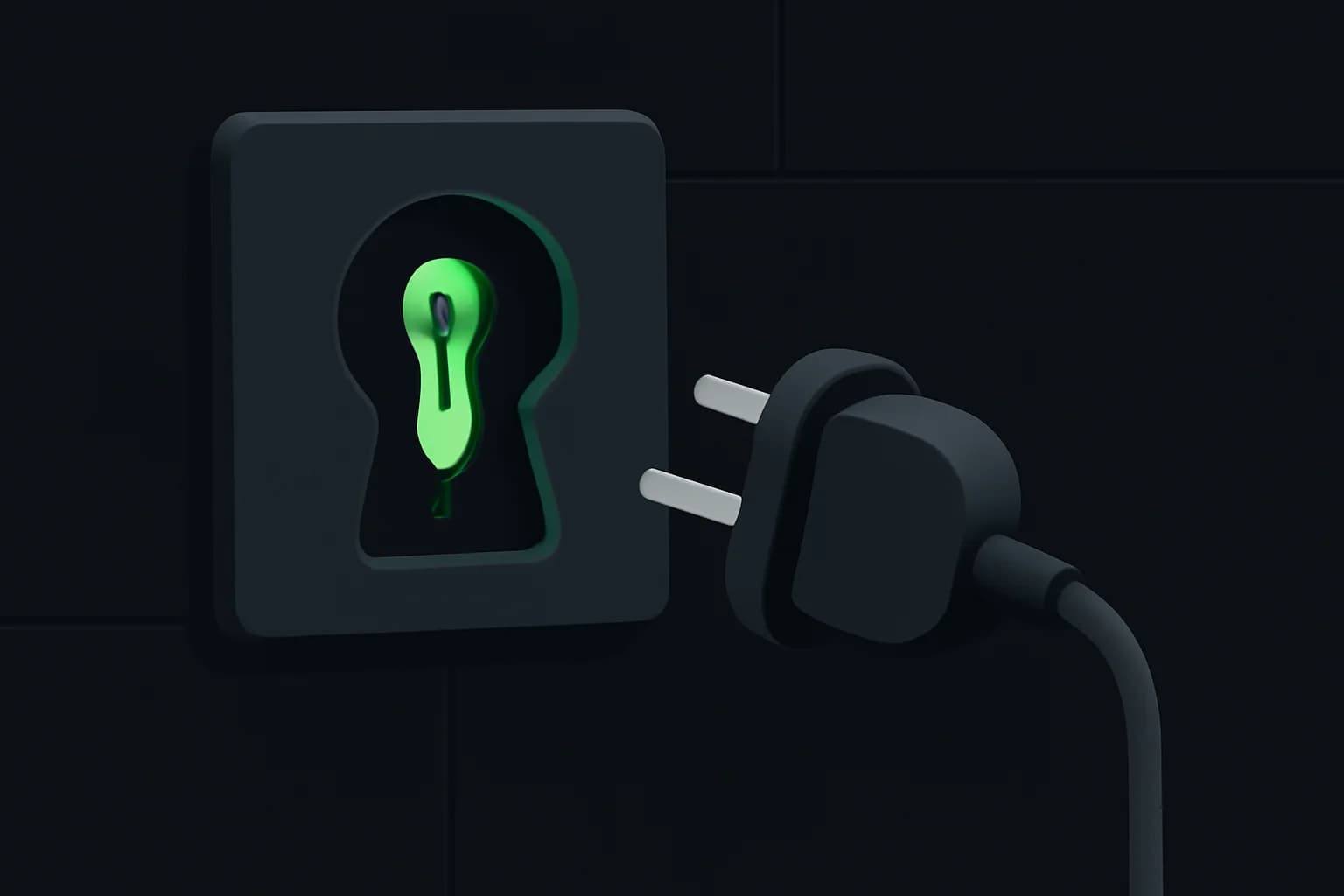
Three of Anthropic's most prominent enterprise-adjacent partners are pulling back on how they use its models. According to The Information, published September 14, 2026, Nvidia, Palantir and Booz Allen Hamilton are each restricting Anthropic's Claude Fable model over data-handling concerns — and the specifics trace directly back to a policy change explainx.ai has covered in detail before: Anthropic's June 2026 decision to retain covered-model usage logs for 30 days.
This is not a rumor or an aggregator inflation. The story has independent pickup from Reuters (via Investing.com), Yahoo Finance, Benzinga and Tom's Hardware, all citing The Information's original reporting from September 14, 2026. Here is what each company actually did, why it happened now, and what it means if your own team is evaluating Claude for a regulated or proprietary workload.
TL;DR: what people are asking
| Question | Answer |
|---|---|
| Is this story real? | Yes — The Information broke it September 14, 2026; Reuters, Yahoo Finance, Benzinga and Tom's Hardware confirmed independently. |
| What did Palantir do? | Pressed Anthropic for an irrevocable zero-data-retention guarantee before shipping Fable through Palantir's software. |
| What did Nvidia do? | Limits Anthropic model use to less-sensitive tasks; runs its own Nemotron models internally for proprietary work. |
| What did Booz Allen do? | Barred employees from Anthropic's commercial model for proprietary cybersecurity work. |
| Why now? | Anthropic's June 2026 policy started retaining Fable/Mythos usage logs for 30 days with no opt-out. |
| Is this only an Anthropic problem? | The broader reporting frames it as pushback against both Anthropic and OpenAI over data retention, though the three named restrictions are specifically about Anthropic. |
| Is Anthropic fixing it? | Yes — Enterprise Frontier Safeguards, rolling out in phases this fall, moves safety-monitoring data into customer-owned cloud storage. |
What each company actually restricted
The Information's reporting names three distinct actions, each aimed at a different point of exposure.
Palantir Technologies is reportedly conditioning Fable's availability inside its own software platform on Anthropic agreeing to an irrevocable zero-data-retention guarantee — not the standard opt-in ZDR terms Anthropic still offers on older model versions, but a binding commitment that would apply specifically to whatever Fable-class model Palantir ships to its government and enterprise customers. Palantir's business runs largely on defense, intelligence and critical-infrastructure contracts, so a 30-day retention window with no opt-out is a much harder sell to Palantir's own customers than it would be to a typical SaaS buyer. explainx.ai has separately covered how Canada's sovereign AI strategy runs on Palantir contracts worth tens of millions of dollars — the kind of government relationship where a vendor's data-retention posture is not a nice-to-have, it is a contractual gate.
Nvidia took a narrower internal step: it now limits Anthropic model usage to less-sensitive tasks and relies on its own Nemotron model family for work it considers proprietary. This is notable specifically because Nvidia is one of Anthropic's own infrastructure partners and investors — the restriction is not a hostile competitor freezing out a rival, it is a close partner drawing an internal line between "fine to send to a third party" and "keep this on models we control end to end." Nemotron gives Nvidia that option because it is Nvidia's own model line, so choosing it for sensitive internal work costs Nvidia nothing in vendor relationship terms while eliminating third-party retention risk entirely.
Booz Allen Hamilton, the government and defense consulting giant, went further for one specific domain: it barred employees outright from running Anthropic's commercial model on proprietary cybersecurity work. Cybersecurity engagements routinely involve client vulnerability data, incident details and infrastructure maps that a consulting firm has strong contractual and liability reasons never to let sit on a third-party server for even 30 days — regardless of Anthropic's assurances that the data isn't used for training.
The policy that started this: Fable's 30-day retention rule
None of this happened in a vacuum. In June 2026, Anthropic's covered-models data retention policy took effect, requiring 30-day retention of every prompt and output submitted to Claude Fable and Claude Mythos — across every platform, including AWS Bedrock, Google Cloud, and Microsoft Foundry, with no opt-out even for customers who had previously negotiated zero-data-retention (ZDR) contracts. Anthropic's stated reason, as explainx.ai reported at the time, was to catch "complex and novel attacks" — multi-turn jailbreaks and coordinated abuse that a single-session safety check would miss.
Anthropic has been consistent that retained logs are not used to train its models; the retention is for safety monitoring, accessible only to a limited set of approved reviewers, with tamper-proof access logs. But for regulated industries and defense-adjacent contractors, "we won't train on it" and "we won't misuse your IP" are different promises than "we won't store it on our servers at all." That distinction is exactly the gap Palantir, Nvidia and Booz Allen are now acting on.
The timing lines up with adoption data explainx.ai covered in August: Fable 5 plateaued at just 11.4% of Anthropic-attributed enterprise spend and 6% of tokens per Ramp's August 2026 AI Index, while the cheaper, ZDR-eligible Opus 5 overtook it. The retention policy is a plausible drag on that adoption curve, and this week's report gives it named, specific faces rather than an aggregate percentage.
Anthropic's response: Enterprise Frontier Safeguards
Anthropic's answer, announced alongside Claude Fable 5.1's launch in September 2026, is a program called Enterprise Frontier Safeguards (EFS). Instead of Anthropic holding the 30 days of safety-monitoring activity data on its own infrastructure, EFS lets eligible enterprise customers store that data in their own cloud environment — Amazon S3, Azure Blob Storage, or Google Cloud Storage — encrypted with keys the customer controls. That is a meaningfully different architecture than customer-managed encryption keys (CMEK) alone, which controls who can decrypt data sitting on Anthropic's servers but does not change where the data physically lives or shorten the retention window.
EFS is rolling out in phases this fall rather than flipping on for every customer at once, which means the gap the restrictions describe — Palantir's demand for an irrevocable guarantee, Nvidia's internal Nemotron fallback, Booz Allen's cybersecurity ban — exists in the window between the June policy taking effect and EFS reaching general availability for the customers who need it most.
What this means for enterprises evaluating Claude
If you're choosing between Fable, Opus, or a competitor for a workload that touches regulated, proprietary, or client-confidential data, three named enterprise actions this week give you a concrete checklist rather than an abstract privacy debate:
- Ask which models are "covered" under retention policy, by name. Fable and Mythos are covered; older Claude versions may still support full ZDR. This distinction is easy to miss if you're evaluating on benchmarks alone.
- Ask about storage location, not just encryption. CMEK controls your keys; it does not move the data off Anthropic's infrastructure. Only an EFS-style architecture (or a comparable offering from another vendor) does that — and confirm it's actually available to your account tier today, not "coming this fall."
- Segment by workload sensitivity, the way Nvidia did. You don't need a blanket ban to manage this risk. Nvidia kept using Anthropic models for less-sensitive tasks while keeping Nemotron for internal proprietary work — a pragmatic middle ground between "adopt everything" and "restrict everything."
- Treat this as an ongoing vendor-management question, not a one-time check. Anthropic changed its retention policy once already in 2026; OpenAI moved the opposite direction with a Private Safety Processing preview that kept ZDR intact. Both companies are actively iterating on this trade-off, so a policy you approved six months ago may no longer describe what's actually happening to your prompts today.
For teams already tracking enterprise AI spend and governance, data retention policy belongs in the same procurement review as pricing and benchmark scores — not as a separate legal sign-off that happens after the technical decision is already made. The Nvidia/Palantir/Booz Allen story is useful precisely because it shows three very different organizations — an infrastructure partner, a government-software vendor, and a consulting firm — independently arriving at the same conclusion: a 30-day no-opt-out retention window is a real constraint on how you can use a frontier model, not a formality.
Honest limitations
- Palantir's, Nvidia's and Booz Allen's specific policies are reported by The Information and relayed through its syndication partners; explainx.ai has not independently obtained internal policy documents from any of the three companies.
- Anthropic has not, as of this writing, issued a public statement responding directly to the Nvidia/Palantir/Booz Allen restrictions specifically — its public response so far is the general Enterprise Frontier Safeguards rollout announced with Fable 5.1.
- The reporting frames the underlying trend as affecting both Anthropic and OpenAI, but the three named restrictions in this story are specifically about Anthropic's Fable model; whether Nvidia, Palantir or Booz Allen have taken comparable named actions against OpenAI's models is not detailed in the available reporting.
- Engagement on the original story is still low relative to major model-launch coverage — this is enterprise-procurement news, not a broad consumer story, and should be read with that scale in mind.
Related on explainx.ai
- Anthropic's 30-day data retention policy: what ZDR customers must know
- Claude Fable 5.1 and Mythos 5.1: benchmarks, pricing, and Enterprise Frontier Safeguards
- Opus 5 overtakes Fable 5 in enterprise spend — Ramp data
- OpenAI's Private Safety Processing: the opposite trade
- Canada's AI strategy has a Palantir problem
- Instinct AI kept emails after access was revoked
- When AI token spend stops looking like another line item
- Dario Amodei wants to "pace the frontier"
Sources
- The Information — Anthropic Data Fears Prompt Nvidia, Palantir and Booz Allen to Restrict Model Use
- Reuters via Investing.com — Palantir, Nvidia curb AI model use over data fears
- Tom's Hardware — Nvidia, Palantir, and others restrict advanced AI model usage over privacy concerns
- Anthropic — Data retention for Covered Models
- Anthropic — Enterprise Frontier Safeguards
This post reflects reporting available as of September 15, 2026. The Information's article sits behind a paywall; details here are drawn from its reporting as relayed by Reuters, Yahoo Finance, Benzinga, and Tom's Hardware. Verify current retention and Enterprise Frontier Safeguards availability directly with Anthropic before making procurement decisions.