



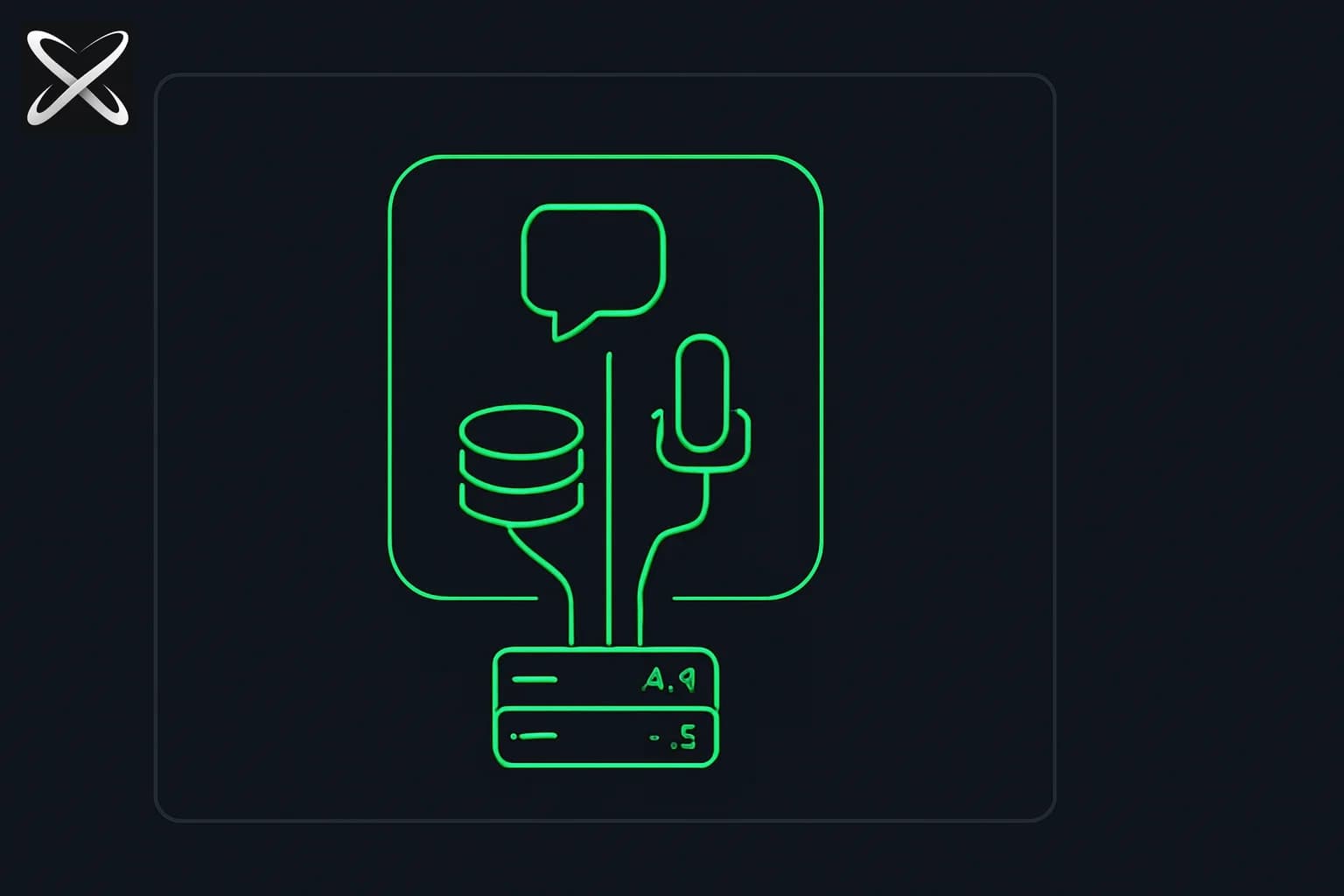
NVIDIA announced PAIR — Personal AI Router — at IFA 2026 on September 3, one day after confirming its $12.9 billion deal to acquire Hugging Face. PAIR is free, open source, and does one specific thing: it finds every compatible PC and Mac on your home network and routes AI inference requests to whichever one has spare GPU capacity, so a swarm of AI agent subtasks does not all pile onto the one machine you happen to be typing on.
It is not a home Folding@home for AI, and it is not distributed training. It is closer to a load balancer for the idle GPUs that are almost certainly already sitting in your house.
TL;DR
| Question | Answer |
|---|---|
| What does PAIR stand for? | Personal AI Router |
| What does it do? | Auto-discovers RTX PCs/Macs on your LAN, routes independent inference requests to whichever has capacity |
| Is it training or inference? | Inference only — no model splitting, no distributed training |
| Hardware required | RTX 20-series or newer, RTX PRO, DGX Spark, or Apple M4+; two or more devices |
| What engines does it use? | Ollama and LM Studio, already installed on the host machines |
| Is it free? | Yes, free and open source |
| Where do I get it? | github.com/NVIDIA/Personal-AI-Router — beta installers for Windows, macOS, and a Linux package |
| Does it replace cloud GPU rental? | For agentic/parallel workloads on hardware you already own, largely yes; for a single large model that needs more VRAM than any one of your machines has, no — that's a different problem (see Petals/Mesh LLM below) |
What PAIR actually does
Modern agent harnesses fan a task out into several subagents running in parallel — reading files, browsing, drafting, checking each other's work. If you run five of those subagents against one local Ollama instance, they queue behind the same GPU and everything slows down, even if the laptop sitting three feet away is idle.
PAIR's job is to make that laptop not idle. Per NVIDIA's own developer blog and product FAQ, it:
- Uses mDNS discovery to find compatible devices on the local network automatically — no manual IP configuration
- Secures pairing with mTLS encryption between nodes
- Schedules requests based on live signals: node readiness, which inference engine is running, whether the target model is already loaded, and current GPU utilization
- Lets devices join or leave mid-session — it adapts rather than requiring a fixed cluster topology
- Exposes an Ollama-compatible and OpenAI-compatible proxy endpoint, so existing tools and agent harnesses that already speak either API don't need to change anything to use it
It doesn't reserve dedicated capacity on the other machines — it's elastic, using whatever headroom exists at that moment and backing off as those machines get busy with their own work.
NVIDIA's own demo, cited by The New Stack and wccftech, ran a five-subagent workload through Hermes Desktop and Ollama: 8 minutes 48 seconds across a three-device PAIR cluster versus 18 minutes on a single RTX Spark laptop alone — roughly a 2x speedup by spreading the same work across machines you already own.
Hardware and software requirements
| Requirement | Detail |
|---|---|
| GPUs | GeForce RTX 20-series or newer, RTX PRO workstation cards, NVIDIA DGX Spark |
| Non-NVIDIA support | Apple silicon, M4 generation and newer |
| OS | Windows, macOS, Linux (beta) |
| Inference engines | Ollama and LM Studio at launch |
| Minimum cluster size | Two devices on the same LAN (more helps, doesn't gate functionality) |
This is meaningfully narrower than "any old PC in the closet." A pre-RTX-20 GPU, or a pre-M4 Mac, doesn't qualify — which matters for judging how many households can realistically use this on day one versus how many could in principle.
What people are actually asking
Is this the same as Petals or BitTorrent-style LLM inference? No, and this distinction matters more than it looks. Petals and Mesh LLM exist to run one model that's too big for any single GPU by splitting its layers across multiple machines — every device holds a slice of the same forward pass, and network bandwidth between them becomes the binding constraint. PAIR solves the opposite problem: each machine already runs a complete copy of a model through Ollama or LM Studio, and PAIR just decides which complete copy handles the next independent request. There's no cross-machine tensor communication mid-inference, which is exactly why PAIR can tolerate consumer home Wi-Fi speeds where Petals-style layer-splitting cannot.
Does this let me run a 400B-parameter model I couldn't run before? No. If a model doesn't fit on your biggest single GPU, PAIR doesn't change that — you'd still want Mesh LLM or a quantization approach like the ones covered in our llama.cpp guide. PAIR's win is throughput on models that already fit, not capacity for models that don't.
Does this compete with RunPod or Vast.ai? Only at the margins. Cloud GPU rental exists for workloads that outstrip what any home network can supply — long fine-tuning runs, large-batch generation, anything needing data-center-class VRAM or uptime SLAs. PAIR's target is the much more common case: someone running an agent harness with several subagents in parallel, on hardware they already paid for, who was previously either eating the queueing delay or paying per-token API fees for work a local model could handle. It reduces the cases where cloud rental or API spend was the only option — see our breakdown of cloud vs. local AI tradeoffs for the fuller picture.
Is this decentralized training, like Prime Intellect? No — worth being explicit here because "distributed AI compute" gets used loosely. Prime Intellect's decentralized runs coordinate training across geographically separate, often untrusted nodes contributed by strangers over the internet — a genuinely harder problem involving gradient synchronization and fault tolerance across a volunteer network. PAIR is inference-only, LAN-scoped, and assumes every device belongs to the same household. It's a smaller, much more tractable problem, which is part of why NVIDIA could ship it as a polished beta rather than a research preview.
Honest limitations
- Beta status. This shipped September 3, 2026, as a public beta — expect rough edges, and don't build production infrastructure on it yet.
- Narrow hardware floor. RTX 20-series-or-newer and Apple M4-or-newer is a real cutoff; older GPUs and older Macs are excluded even if they have usable VRAM.
- Only two inference engines at launch. Ollama and LM Studio are covered; users on vLLM, llama.cpp directly, or other serving stacks aren't yet first-class citizens, though one early tester on XDA Developers reported getting an unsupported engine partially working anyway.
- Same-network only. PAIR explicitly targets devices on one LAN — it is not a way to pool compute with a friend's PC across the internet, unlike volunteer networks such as AI Horde.
- No official numbers on adoption or GitHub star count yet at time of writing; this is a same-week launch and coverage is still primarily first-look pieces from NVIDIA's own blog and hands-on outlets rather than independent long-term reviews.
Why NVIDIA is giving this away
NVIDIA hasn't announced a monetization path for PAIR itself, and there isn't one to infer directly from the release. But the strategic shape is worth naming rather than pretending it doesn't exist: a free tool that makes a second or third RTX-equipped machine meaningfully more valuable than the first one gives consumers and small studios a concrete reason to buy more NVIDIA hardware — not because any single task demands it, but because parallel agent work scales with device count once PAIR is running.
That's the same demand dynamic that made consumer GPUs valuable during the crypto-mining boom, except this time NVIDIA itself is shipping the software that creates the incentive, rather than the incentive arriving as an external market accident. Read alongside the Hugging Face acquisition and Wall Street's read of NVIDIA compute as its own asset class, a pattern emerges: NVIDIA is investing simultaneously in owning where open models get distributed from (Hugging Face) and in software that makes owning more NVIDIA silicon pay off at home (PAIR). Neither move requires the other to succeed, but together they reinforce the same flywheel — more GPUs sold, more models pulled through NVIDIA-adjacent infrastructure, more reason to buy the next GPU.
How to try it
- Confirm you have at least two qualifying devices on the same home network — RTX 20-series+/RTX PRO/DGX Spark, or Apple M4+.
- Make sure Ollama or LM Studio is already installed and has at least one model pulled on each machine you want in the cluster.
- Download the installer from the GitHub releases page — double-click on Windows, drag to Applications on macOS, install the package on Linux.
- Point your agent harness or app at PAIR's Ollama-compatible or OpenAI-compatible endpoint instead of the single-machine one — no code changes needed if it already speaks either API.
- Run a parallel-subagent workload and watch PAIR spread requests across the cluster as machines report availability.
For anyone experimenting with agent harnesses at home — the same audience covered in our personal AI system guide and DGX Spark buyer's guide — PAIR is a low-cost way to test whether a second machine actually helps before spending on dedicated server-grade hardware like the setups in our RTX 6000 Pro coverage.
Update — September 4, 2026: PAIR just got its first real ecosystem partner — see Hermes Desktop's one-click local model setup and RTX Spark hardware shipping from Lenovo in October.
Update — October 3, 2026: NVIDIA added a 64GB OEM DGX Spark at $4,999 (Oct 23) — PAIR still pools whatever Spark you buy with other home GPUs; Sync clustering is the two-Spark path. DGX Spark 64GB details.
Related on explainx.ai
-
Pamir AI's Lapis One: a $359 Linux computer built for AI agents
-
NVIDIA is buying Hugging Face for $12.9 billion — what changes for you
-
Petals resurfaces: why BitTorrent-style LLM inference still struggles
-
Mesh LLM v1.0 — split 235B models across your LAN with iroh P2P
-
NVIDIA DGX Spark: the best setup for running local LLMs in 2026
-
Prime Agent RLM: Prime Intellect's continual-learning harness
Primary sources: NVIDIA Personal AI Router product page · NVIDIA developer blog announcement · github.com/NVIDIA/Personal-AI-Router · NVIDIA blog: Sparks Fly at IFA 2026
This post reflects PAIR's public beta status and documentation as of September 4, 2026. It is a same-week launch — verify current supported hardware, engines, and GitHub activity directly before depending on it.