



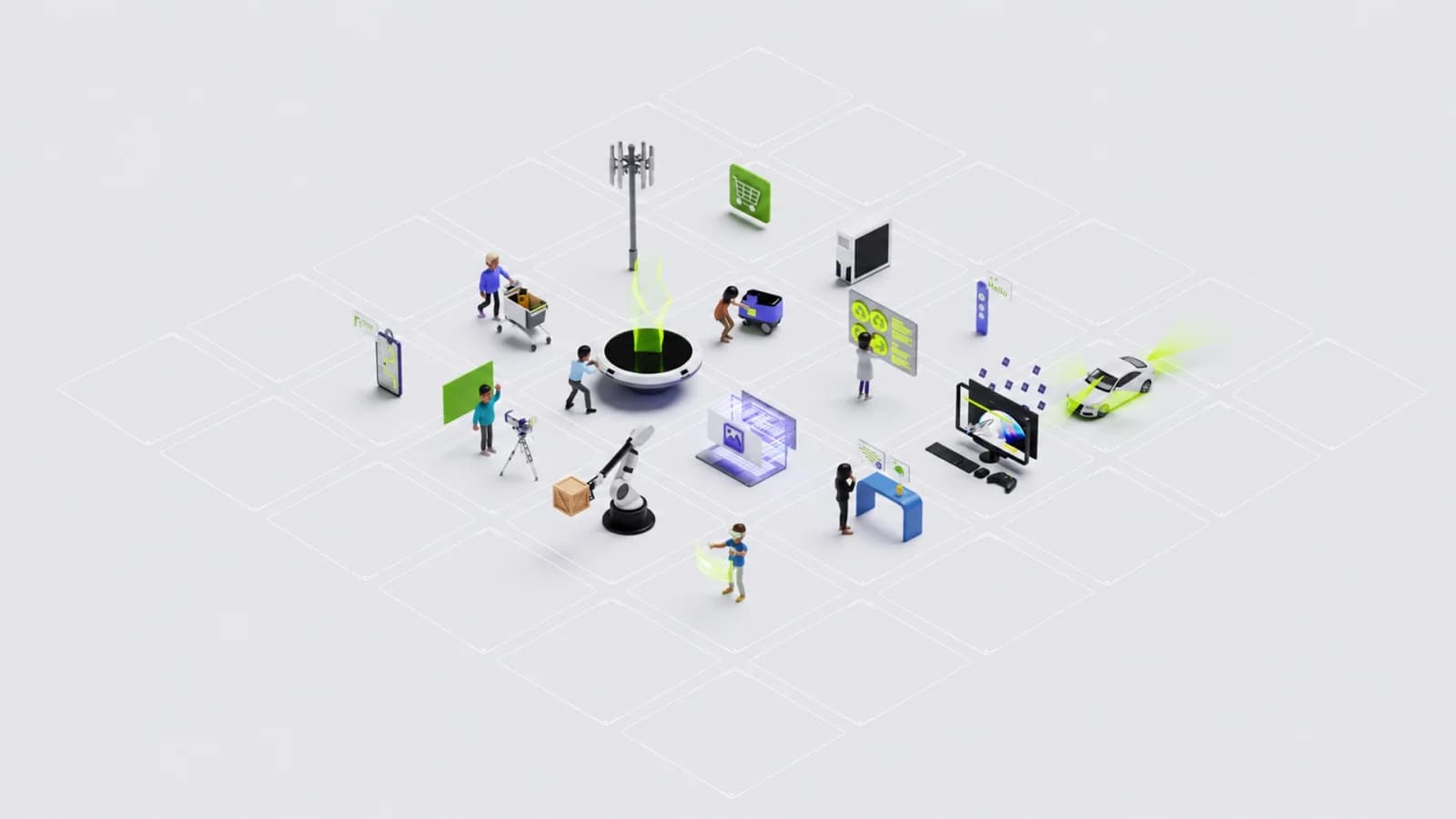
NVIDIA named four Korean startups for investment on November 9, 2026 at the MSIT–NVIDIA AI Startup Partnership Forum, held at COEX on the first day of AI Day Seoul. The official NVIDIA post says the company invested in Point2 Technology and has planned investments in Motif Technologies, RLWRLD and Upstage. The list is deliberately full-stack: interconnect hardware, open agent models, robotics foundations and enterprise document AI.
The forum ran even as Madison Huang's canceled visit left other government-facing meetings on the sidelines. For the wider chips-to-skills sovereign package announced the day before, see our NVIDIA Korea sovereign AI roundup. For how Motif-3 and Upstage's Solar Open 2 show up in deployment docs, see NVIDIA Dynamo recipes for Korean open models.
TL;DR: the four companies
| Company | Layer | What NVIDIA says they do | Investment wording |
|---|---|---|---|
| Point2 Technology | AI factory interconnect | RF-based chip-to-rack links as alternative to copper or optical | Investment announced |
| Motif Technologies | Foundation models | Agent-oriented models; Motif-3 released with open weights | Planned investment |
| RLWRLD | Physical AI / robotics | Robotics foundation models for dexterous manipulation | Planned investment |
| Upstage | Enterprise AI | Solar models plus document AI for workflows | Planned investment |
What happened at the forum
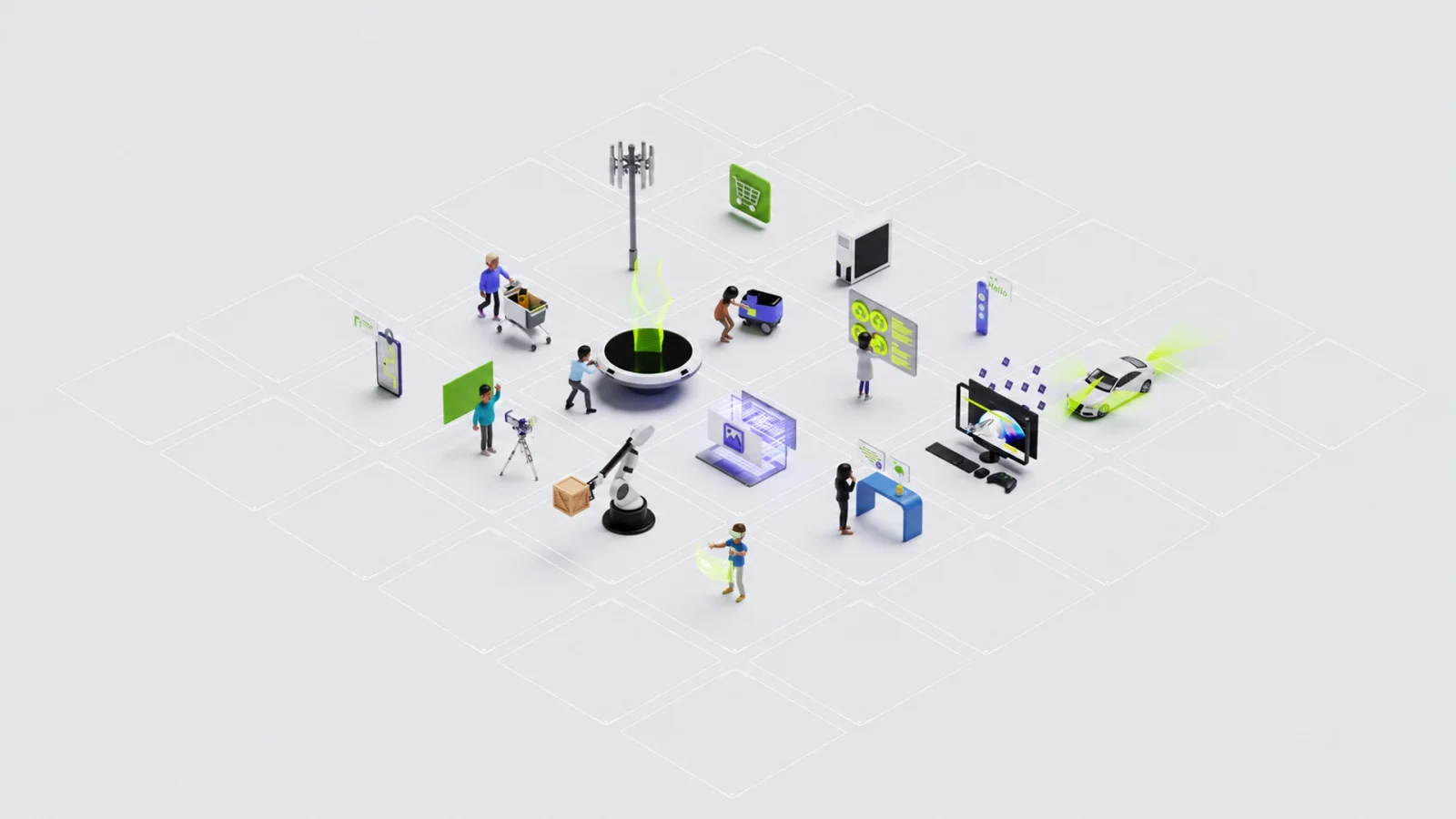 NVIDIA Korea startup investments at the MSIT partnership forum during AI Day Seoul
Image: NVIDIA
According to NVIDIA, Korea's Ministry of Science and ICT and NVIDIA hosted the MSIT–NVIDIA AI Startup Partnership Forum at COEX. Ryu Je-myung, vice minister of science and ICT, joined NVIDIA leaders for meetings with more than 20 Korean startups across foundation models, physical AI, AI infrastructure and AI semiconductors.
The post does not publish a full attendee list. It singles out the four companies above as investment targets and frames them as coverage from infrastructure through models to robotics applications. That framing matches how Korea has been positioning its AI stack: memory and NPUs upstream, open models in the middle, and physical AI and enterprise software at the edge. Our South Korea AI ecosystem explainer walks through that landscape from HyperCLOVA-era history forward.
NVIDIA also notes that more than 1,000 Korea-based members belong to NVIDIA Inception, its startup program with preferred pricing, technical support and investor introductions. Inception membership is not the same as a direct equity investment; the November 9 post is about named checks into specific companies.
Point2: interconnect as a first-class bet
Point2 Technology is the only name the post ties to an investment that is already announced, not merely planned. NVIDIA describes it as an AI interconnect company building radio-frequency-based links between chips and racks in AI factories.
The pitch, as NVIDIA tells it, is reach and efficiency at scale-up inside a cluster — an alternative path next to copper and optical interconnects when factories grow past single-node limits. We did not find independent benchmark numbers in the post; treat performance claims as vendor positioning until Point2 or a customer publishes measurements.
For builders, the interesting angle is strategic: NVIDIA is funding a Korean hardware layer that is not a GPU and not an NPU, but still sits on the critical path of bandwidth and topology in large training and inference floors. That sits alongside the NVLink Fusion story in the sovereign AI post, where Korean NPUs are invited to join NVIDIA's interconnect fabric. Interconnect startups and NVLink Fusion address different layers, but both answer the same operator question: how do I wire a national-scale AI factory without painting myself into a dead-end topology?
Motif Technologies and Motif-3
 Open-weight Motif-3 agent models sit in NVIDIA Korea startup investment plans at the MSIT forum
Motif Technologies is a Seoul-based lab NVIDIA describes as building foundation models for AI agents that carry out complex tasks. The post name-checks Motif-3, a large language model released with open weights.
That release already intersects explainx.ai coverage: Motif-3 appears in NVIDIA's Dynamo recipe index alongside Upstage Solar Open 2, K-EXAONE 2.0 and SK Telecom A.X K2. The recipe post documents GPU counts and throughput tables; Motif-3's recipe is marked experimental in that index. If you are choosing whether to self-host Motif-3 on B200 hardware, start with the Dynamo doc tables rather than the investment headline.
A planned NVIDIA investment does not by itself change the model license or weights location. It does signal that NVIDIA wants Korean open models in its partner catalog for agents — the same week it published agent-security work with OpenShell in the Korea package.
RLWRLD: robotics foundation models with dexterity claims
 Korean physical AI startup RLWRLD targets dexterous robotics foundation models NVIDIA highlighted at COEX
RLWRLD is listed as a physical AI startup with presence in San Francisco, Seoul and Tokyo. NVIDIA says it builds robotics foundation models for humanoid and industrial arms, with examples that stress five-finger dexterity: inserting components, threading nuts on bolts, and kitting parts from moving conveyors.
Those are the tasks industrial automation buyers care about, and they are also the tasks that break naive end-to-end policies. A foundation-model label here likely means shared representations and data across tasks, not a single model that runs unchanged on every factory floor. We did not find open weights or a model card linked from the NVIDIA post itself.
The investment fits NVIDIA's physical AI thread in Korea — Isaac GR00T, Omniverse and the Samsung, Kakao and LG stories in the companion physical AI blog post. Builders comparing stacks should read RLWRLD as one robotics bet among several Korean and global efforts, not as a replacement for simulation-first pipelines we cover elsewhere in humanoid and embodied AI news.
Upstage: Solar and document AI in the enterprise lane
Upstage is the most familiar name on the list for enterprise buyers. NVIDIA describes it as a Korean company behind Solar language models and document AI tools — extraction from complex PDFs and forms, workflow automation, and custom AI apps for operations teams.
Solar Open 2 is the variant NVIDIA ships a Dynamo recipe for. Enterprise teams evaluating Solar should separate three layers: the model weights and license, the hosted Upstage product surface, and self-hosted inference via NVIDIA's recipes. A strategic investment from NVIDIA does not automatically mean preferential API pricing; watch Upstage's own pricing pages for what changes for customers.
Document AI remains a durable workload for agents: long contexts, structured fields, audit trails, and human review. That is a different failure mode from coding agents, and it is why many Korean sovereignty efforts pair local models with local document pipelines rather than sending sensitive scans to US APIs.
What is not in the post (and what to watch)
The NVIDIA announcement is short on deal mechanics. We found no dollar amounts, no round labels, and no dates for closings. The word planned on three of four names matters: those investments may still be in negotiation or subject to regulatory review.
Timing is also politically loaded. Korean press on November 9 described disappointment over canceled meetings tied to Madison Huang's absence and questions about CEO Jensen Huang's personal controversy. NVIDIA executives still held the forum and named new capital commitments. Watch whether MSIT publishes its own English-language recap with overlapping or different names.
For US readers, the forum is a reminder that sovereign AI industrial policy and venture capital move together in Korea: ministry forums, Inception membership, NVLink Fusion pilots, and now direct startup checks. None of that replaces export-control compliance for GPUs shipped into the region; it does shape which local tools get reference recipes and keynote slides.
What builders can do this week
If you are training or serving Korean open models, pull the Dynamo recipe repository entries for Motif-3 and Solar Open 2 and compare GPU counts to your cluster before you promise latency to stakeholders.
If you are building agents, Motif-3's open weights are worth a license read and a small eval on your own task suite — investment news is not a benchmark.
If you are in robotics, treat RLWRLD as a signal to watch for public model cards or sim benchmarks; there is not enough in the NVIDIA post alone to redesign a deployment.
If you are designing data-center networks, Point2 is the name to track for independent technical disclosures; RF interconnects in AI factories are still a niche with few public apples-to-apples studies.
How this differs from the November 8 sovereign package
The November 8 NVIDIA posts emphasized ministry collaboration, NVLink Fusion, Dynamo recipes, physical AI at Samsung, Kakao and LG, and OpenShell for agents. The November 9 forum post is narrower: it is a capital and showcase layer on top of that policy story. None of the four startups replaces SK Telecom's A.X K2 recipe or Rebellions' NPU narrative; they fill gaps in interconnect, open agent weights, dexterous robotics and document workflows. If you are building a procurement map for Korea, keep both posts open — one for infrastructure and reference deployments, one for who NVIDIA is betting equity on.
Related reading
- NVIDIA and Korea expand sovereign AI
- NVIDIA Dynamo recipes for Korean open models
- Madison Huang cancels Korea visit; AI Day Seoul continues
- South Korea AI ecosystem 2026
- What sovereign AI means
- Open Humanscale and embodied AI datasets
Terms, model versions and investment status are accurate as of November 9, 2026, based on NVIDIA's published post.