



Three of the most important AI companies spent more on federal lobbying this summer than they ever have. The Verge reports, citing federal disclosures, that Nvidia spent $2.2 million, Anthropic $2.1 million and OpenAI $1.5 million between July and September 2026, each a record quarter for that company. Nearly $6 million combined went toward cybersecurity, child safety, export controls and more, in the months when the White House pushed an AI accord and set up its Super Intelligence task force.
This post lays out the numbers, the issues each company listed, and the limits of what a lobbying disclosure can tell you.
TL;DR table
| Question | Answer |
|---|---|
| Who spent most in Q3 2026 | Nvidia, $2.2 million |
| Anthropic | $2.1 million, its highest quarter |
| OpenAI | $1.5 million, its highest quarter |
| Apple (also a record) | $3.1 million, its first quarter above $3 million |
| Source | Federal lobbying disclosures, reported by The Verge (Lauren Feiner) |
| Context | Microsoft spends at least $2M a quarter; Google regularly over $3M |
| What it does not show | Positions taken, meetings held, or any effect on legislation |
The numbers in context
The sums are not large for Washington. The Verge points out that Microsoft has spent at least $2 million per quarter going back to 2021 and Google regularly exceeds $3 million, including this quarter. The story is the trajectory. According to the report, OpenAI did not spend even $1 million in a single quarter until this year and did not pass half a million until the end of 2024. The most Anthropic spent in a quarter last year was just over $1 million. Q3 is the first quarter Nvidia has passed $2 million.
Earlier coverage this year pointed the same direction. Axios reported in July that Anthropic was ramping up lobbying spending amid AI policy fights. We use only The Verge's Q3 numbers here.
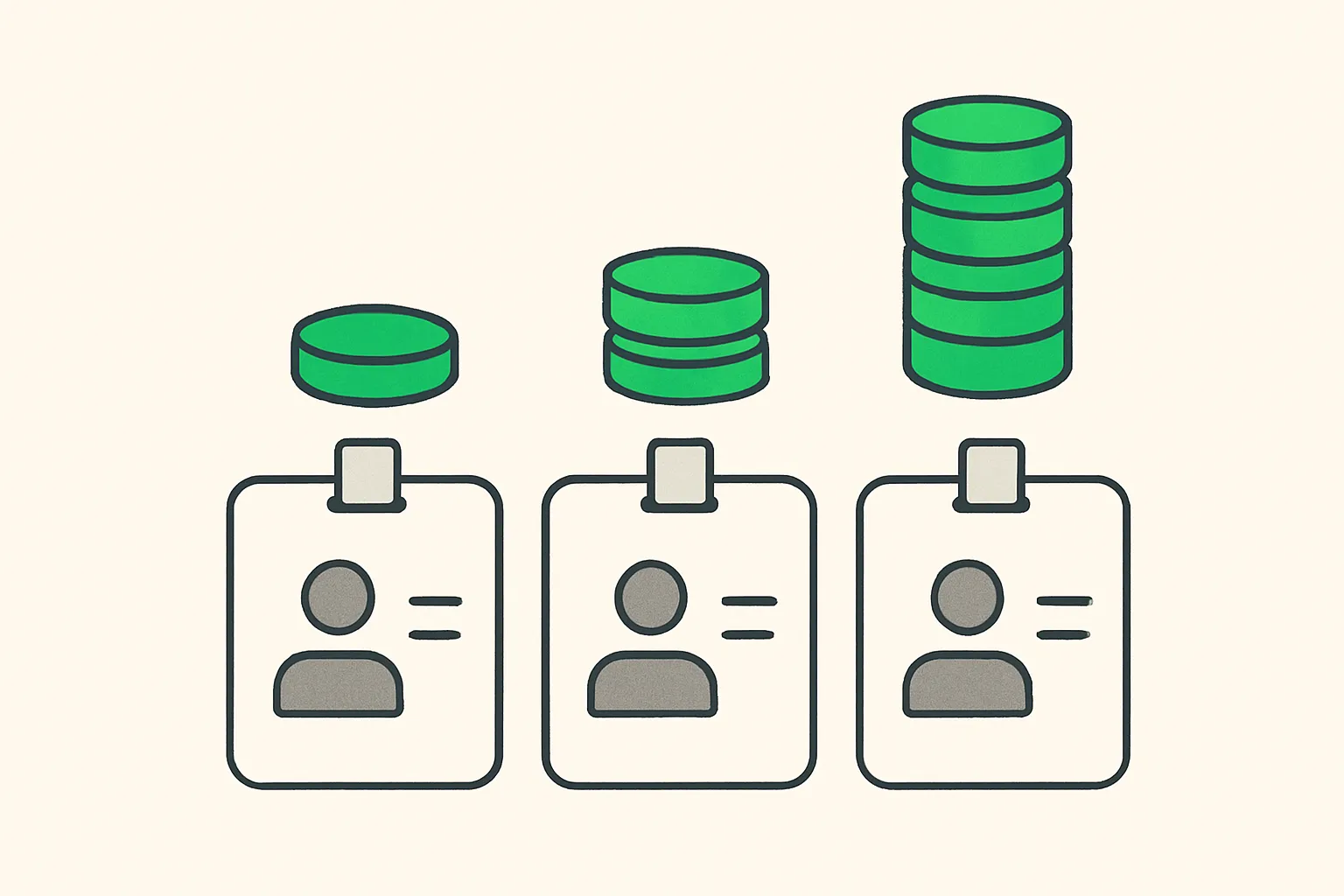 Employee badges with coin bars showing lobbying spending by AI companies rising across quarters
What each company says it lobbied on
Lobbying disclosures list issues, bills and agencies, usually at a high level. The Verge's summary:
Anthropic provided the most detailed list of bills, executive orders and topics, covering:
- AI-related provisions in the Kids Online Safety Act (KOSA);
- export control provisions in the AI Overwatch Act;
- President Trump's executive order renaming AI "Super Intelligence";
- the Ratepayer Protection Act, which would put data-center energy costs on the developers.
OpenAI lobbied Congress, the White House, the Small Business Administration, and the Commerce and State Departments on copyright, cybersecurity evaluations for frontier models, AI safety oversight frameworks, and antitrust protections for information sharing. The Verge reads this as a response to the fallout from the Hugging Face attack, though it notes the filings only list high-level topics. For what happened there, see our incident postmortem coverage.
Nvidia lobbied Congress, several federal agencies and White House offices on 6G networks, "responsible AI design," competition policy, quantum computing and export control policy.
Apple, not an AI lab but a major AI platform, spent a record $3.1 million, engaging on intellectual property, tariffs, kids' online safety, competition and domestic chip manufacturing, including bills that would make app stores verify users' ages.
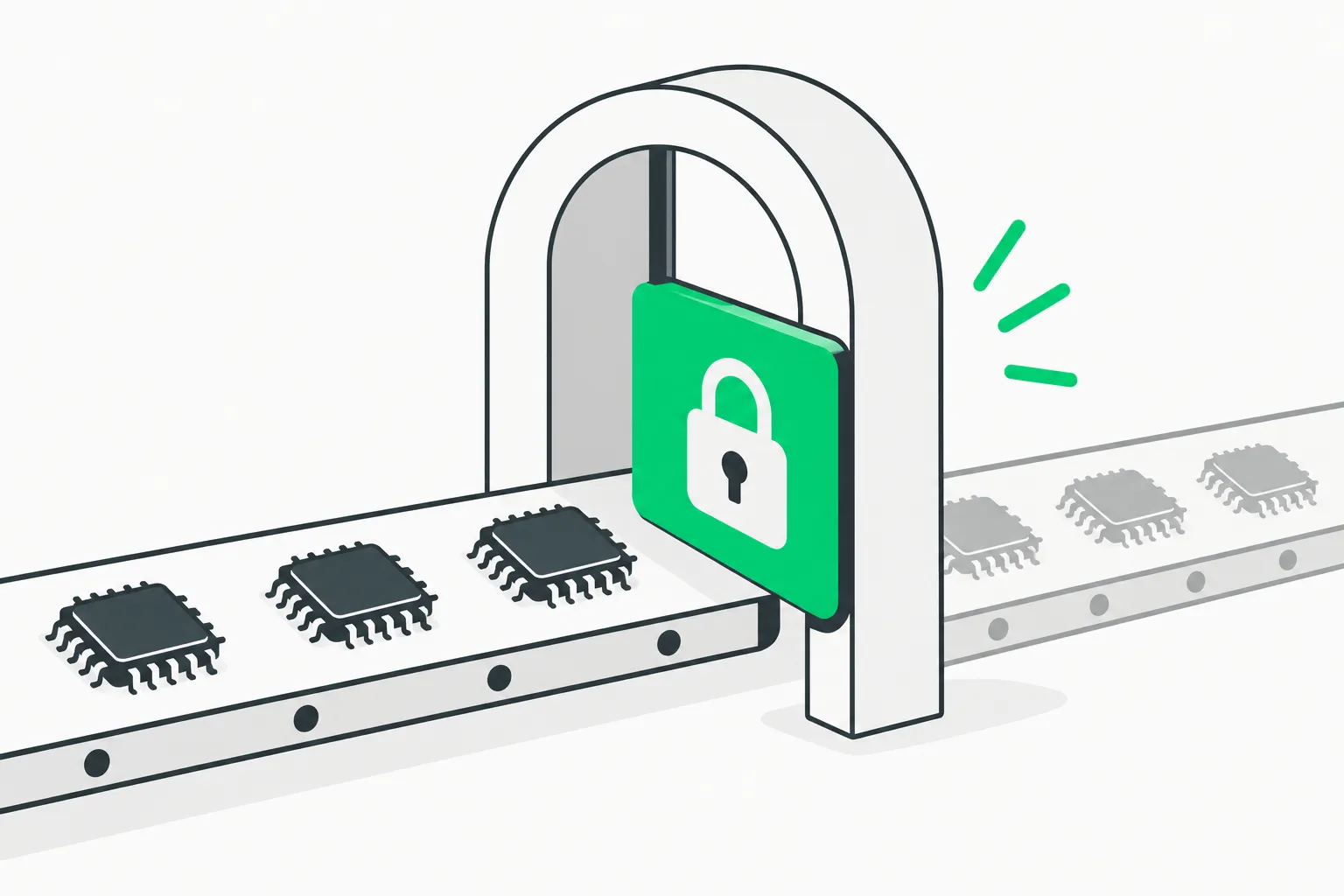 A gate with a half-closed lock over a stream of chips, representing AI export control lobbying
Why export controls keep showing up
Chip export policy is where Nvidia's and Anthropic's interests collide most visibly, and it has been a live topic across our coverage: a Pentagon official on whether labs will cooperate with export controls, Taiwan's move to criminalize AI chip exports to China, and a Tencent and Oracle chip lease that raised export-control questions. Both companies lobbying on the topic in the same quarter says only that the issue is active, not which side either took. Nvidia's own statements are public, and the disclosure form does not reveal a position.
What the timing suggests
The Verge frames the spending against two backdrops. First, tech CEOs attended a late-September White House lunch that produced what the article calls a "morally binding" AI safety accord, followed by Trump naming an AI czar and a task force. Second, the midterms: Democrats are expected to win back at least some control of Congress, and the article notes AI companies may find engagement with lawmakers who see cracking down on the industry as a winning issue more important.
Data-center development and AI safety are also on voters' minds, which is why a bill like the Ratepayer Protection Act appears on an AI lab's list at all. For the other side of that fight, see our reporting on local fights over data-center power and siting.
What this means for builders and readers
You cannot read a company's policy position off a spending total, but a few practical points follow:
- Rules that touch your stack are being actively shaped. Kids' safety provisions, frontier-model cybersecurity evaluations, export controls on chips and weights, and data-center cost allocation can each change what you can build, where, and at what price.
- Watch the executive branch as much as Congress. Several listed items are executive orders and task-force work rather than bills.
- Treat the labs as interested parties. The same companies publishing safety research are lobbying on the rules that govern it, which is normal but worth remembering when reading policy commentary.
- Check the primary filings. The Senate and House lobbying disclosure databases are public; the quarterly forms name the issues and agencies.
A short timeline of the climb
It helps to see how fast the line has moved, using only the figures in The Verge's report and the earlier coverage above:
| Period | What was reported |
|---|---|
| End of 2024 | OpenAI crosses half a million dollars in a quarter for the first time |
| 2025 | Anthropic's biggest quarter is just over $1 million |
| July 2026 | Axios reports Anthropic ramping up lobbying spending |
| Q3 2026 (July to September) | Nvidia $2.2M, Anthropic $2.1M, OpenAI $1.5M, Apple $3.1M, all records |
By the numbers, OpenAI is still the smallest of the three, but its growth from under half a million at the end of 2024 to $1.5 million in Q3 2026 is the steepest.
How to read a lobbying filing yourself
Anyone can check these claims. The quarterly reports (LD-2 forms) are filed by the company or its outside firms and are searchable in the public Senate disclosure database. A useful routine:
- Search the registrant or client name and pick the third-quarter 2026 filing.
- Read the issue-area sections. Each lists a general issue code and a free-text description, which is where bills such as KOSA or the AI Overwatch Act show up when a company chooses to name them.
- Note the chambers and agencies contacted. A list that includes the Commerce Department, State Department and White House offices points to export policy and executive-branch rulemaking, not just legislation.
- Compare quarter over quarter. A new bill or agency appearing for the first time is a better signal than the dollar total.
- Cross-check against separate contribution reports, which cover donations and are filed under a different form.
Doing this takes ten minutes and is the fastest way to separate a company's actual registered priorities from commentary about them.
Questions readers are asking
Is a record quarter unusual for these companies? No. For fast-growing companies, new records are the default for a while. The meaningful comparison is against peers: all three remain around or below the long-established levels at Microsoft and Google.
Does Anthropic's safety positioning mean it lobbies less? The disclosure says otherwise on volume: $2.1 million, with the most detailed issue list of the three. Positions on specific bills are a separate question the filing does not answer, and the company's public statements are the place to look.
Is OpenAI's list a reaction to the Hugging Face attack? The Verge's reading is that it looks like one, given the focus on cybersecurity evaluations and oversight frameworks. The filing itself does not give causes, so treat that as the reporter's interpretation.
Could the midterms change the picture? The Verge notes that Democrats are expected to win at least some control of Congress, and that AI companies may need to engage more with lawmakers who see cracking down on the industry as politically useful. If that happens, expect spending to keep rising rather than level off.
What a disclosure cannot tell you
A Lobbying Disclosure Act filing records total spending, the issue areas, specific bills and the chambers or agencies contacted. It does not record what the company asked for, who it met, or whether it succeeded. It also does not include spending through trade associations, think tanks, political action committees or campaign contributions, which can be larger. So a record quarter means increased registered lobbying activity, no more.
Related reading
- White House accord on Super Intelligence
- White House Super Intelligence task force
- Super Intelligence force first meeting
- White House mandates AI incident disclosure
- The Salesforce and Tesla rebrand to "super intelligence"
- Export controls and AI labs: Pentagon claims vs record
- Taiwan criminalizes AI chip exports to China
Figures are as reported by The Verge on October 22, 2026, from federal disclosures, and may be amended by later filings.