



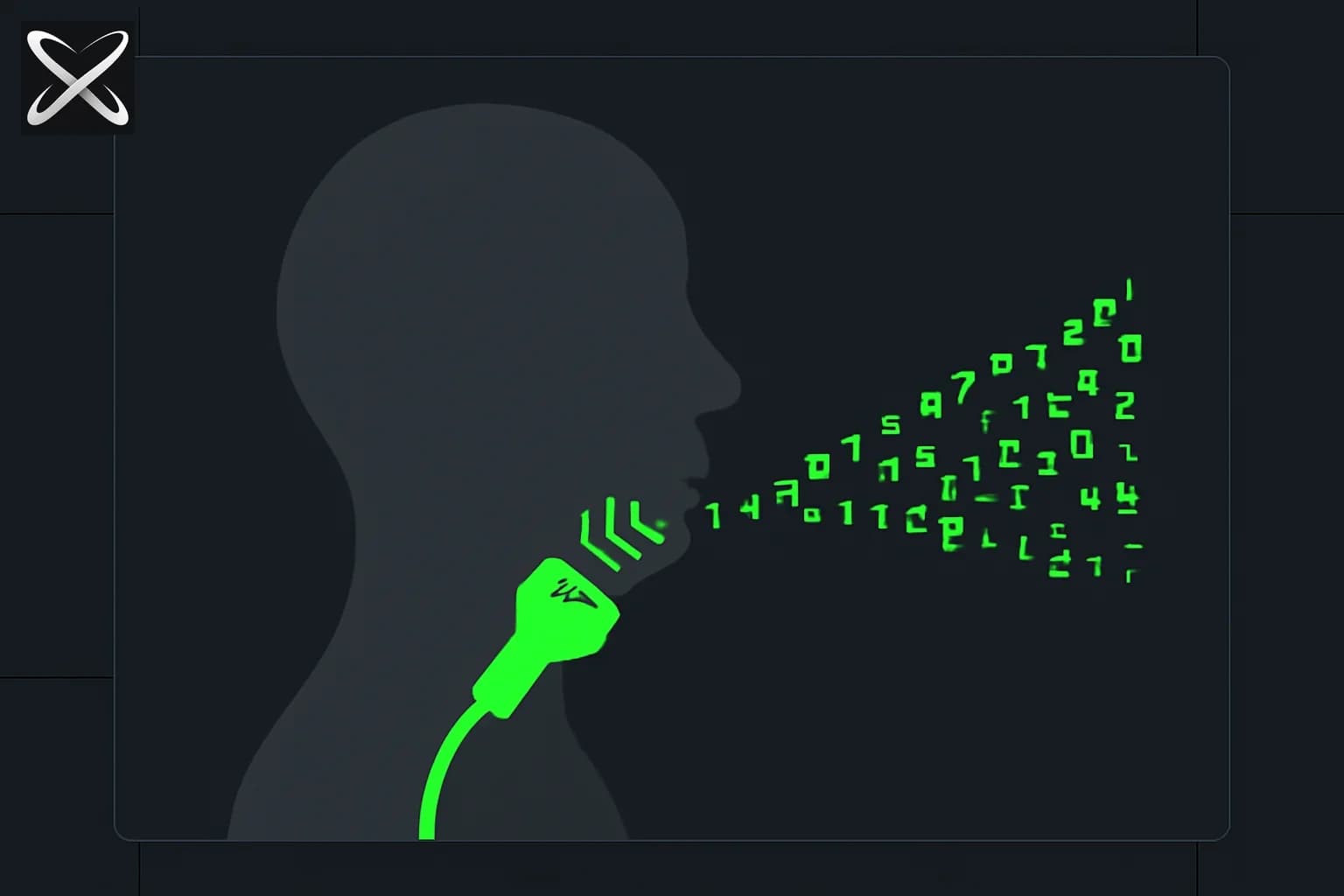
September 17, 2026 — Neuralink posted a short video captioned "A beautiful surprise," showing a paralyzed clinical trial participant using the company's brain-computer interface to speak. Commentary around the post — including from Neuralink's own team — frames the participant's first words as "I love you," said to a loved one. The moment has generated an unusually warm reaction for a company whose updates typically center on engineering benchmarks rather than human moments.
TL;DR — what people are asking
| Question | Answer |
|---|---|
| What was shared? | A video of a paralyzed trial participant producing speech via Neuralink's implant |
| What were the reported first words? | "I love you," per replies and framing around the post |
| Is the device FDA-approved? | No — explicitly investigational, per Neuralink's own disclaimer |
| Is this a commercial product? | No — an active clinical trial, one voluntary participant's experience |
| How does the implant produce speech? | Records neural signals, decodes intended speech via ML, outputs synthesized speech |
| Is Neuralink hiring for this work? | Yes — the company's own reply pointed to open BCI roles |
| Does this represent all trial participants? | No — Neuralink's disclaimer explicitly says outcomes may not generalize |
What Neuralink actually shared — and what it didn't claim
The post itself is minimal: a 23-second video and the caption "A beautiful surprise." Neuralink's standard regulatory disclaimer accompanies the post, as it does with prior participant videos: "Neuralink devices are investigational and have not been approved by the FDA or other regulatory authorities. This video features voluntary clinical trial participants sharing their personal experiences, which may not reflect all participants or future outcomes."
That disclaimer is doing real work, and it's worth reading carefully rather than skipping past as boilerplate. Neuralink is not claiming this outcome is typical, guaranteed, or representative of what every implant recipient should expect — it's documenting one participant's experience inside an ongoing trial. The emotional resonance of "I love you" as a first restored sentence is genuine and worth acknowledging, but it's also precisely the kind of single-data-point moment that's easy to over-generalize into "the technology works" without qualification.
How brain-to-speech decoding works, at a high level
Neuralink's implant records electrical signals directly from neurons in the brain — an invasive approach, requiring surgical implantation, that trades procedural risk for higher-fidelity signal access than non-invasive alternatives can achieve. Machine learning models trained on that signal data learn to decode intended speech (or, in Neuralink's earlier demonstrations, intended cursor movement and typing) from the raw neural activity, then output it as synthesized speech or on-screen text.
For a person with paralysis who has lost the physical ability to speak — due to conditions like ALS, brainstem stroke, or spinal cord injury — this restores a communication channel that would otherwise depend on much slower assistive methods: eye-tracking keyboards, single-switch scanning interfaces, or caregiver interpretation of limited movement. The gap in bandwidth and naturalness between those existing methods and direct speech restoration is the actual significance of a moment like this one, independent of any single quote.
Not the only approach to brain-to-speech
Neuralink's invasive, implanted approach is one of several active research directions for restoring communication via neural signal decoding, and it's worth situating alongside the others explainx.ai has covered:
| Approach | Method | Invasiveness |
|---|---|---|
| Neuralink | Implanted electrodes reading neural signals directly | Invasive — surgical implant required |
| Meta Brain2Qwerty | Decodes typed text from external brain signals | Non-invasive |
| Aleph Neuro | Ultrasound-based silent speech detection | Non-invasive |
| Augmental MouthPad | Tongue-controlled interface | Non-invasive, intraoral |
Each trades signal fidelity for practical deployment complexity. Invasive implants like Neuralink's generally achieve richer, more precise signal access — which is likely why full natural speech restoration, rather than typed-text output, is achievable here — but require surgery, ongoing device maintenance, and the regulatory scrutiny that comes with an implanted medical device. Non-invasive approaches sacrifice some signal fidelity for accessibility, since they don't require surgery at all, which matters enormously for how many people could realistically access the technology if and when it's approved.
The reaction, and the obvious caveats worth naming
Replies to the post split into two clear categories. Most were straightforwardly moved — a Neuralink team member framed the underlying work plainly: "All that engineering, and the first thing he chose to say was 'I love you.' That tells you what the technology is for." Members of the spinal-cord-injury community responded with direct personal recognition of what the milestone means for people living with similar conditions.
The caveats worth stating plainly, without diminishing the moment itself:
- This is one participant. Neuralink's own disclaimer says explicitly that this experience "may not reflect all participants or future outcomes."
- The device remains unapproved. No regulatory body has cleared this for anything beyond investigational trial use.
- Surgical and long-term risks of implanted BCIs are still an active area of study — infection risk, electrode degradation over time, and long-term biocompatibility are ongoing research questions for any implanted neural device, Neuralink's included.
- A demo video is not a peer-reviewed trial result. Neuralink has not published detailed data alongside this specific video — accuracy rates, latency, vocabulary size, or comparison against baseline assistive methods.
Why speech restoration is a harder problem than cursor control
Neuralink's earlier public demonstrations centered on cursor movement, typing via thought, and — in a prior update — a telepathic wheelchair control demo. Decoding intended speech from neural signals is a meaningfully harder machine learning problem than decoding intended cursor movement or discrete button presses, for a structural reason: speech is a continuous, high-bandwidth motor task involving dozens of articulatory muscles moving in rapid, overlapping sequences, while cursor control or typing can be decomposed into a much smaller, more discrete set of intended actions (move up, move down, select).
That difference shows up directly in model architecture. Speech-decoding BCIs generally need to model the temporal structure of intended phonemes or words unfolding over time, closer to a sequence-to-sequence translation problem than a classification problem — translating a continuous stream of neural activity into a continuous stream of audio or text, with all the alignment and timing challenges that implies. Getting that translation to run in real time, fast enough for a natural back-and-forth conversation rather than a noticeable lag between intending to speak and hearing output, is itself a nontrivial systems engineering achievement layered on top of the core decoding problem — and one Neuralink's video suggests, without providing supporting latency data, has been solved well enough for at least this one participant's use case.
What "voluntary participant" means for interpreting the video
It's worth being explicit about what a "voluntary clinical trial participant" video actually represents as evidence. Clinical trials for investigational devices typically involve a small number of enrolled participants, each tracked individually rather than reported in aggregate until the trial reaches a stage where statistically meaningful outcome data can be published. A single participant's video, however moving, sits earlier in that evidence pipeline than a peer-reviewed outcomes paper — it's closer to a case study than a clinical result. That's not a criticism of the participant's genuine experience or the underlying engineering; it's simply where this kind of update sits on the path from "engineering demo" to "FDA-reviewed medical device with published efficacy data," and readers evaluating brain-computer interface progress broadly should locate any single update on that spectrum before drawing conclusions about the technology's overall readiness.
Honest limitations
- No trial data accompanies the video — word accuracy, latency, or session-to-session consistency for this specific participant isn't published alongside the post.
- Single-participant anecdote, not a study result. Extrapolating "the technology works" from one video overstates what's been shown.
- Regulatory status unchanged. This remains an investigational device — no FDA approval timeline is implied by this post.
- Long-term safety data for implanted BCIs is still accumulating industry-wide, not just for Neuralink specifically — this is inherent to how early invasive neurotechnology trials work, not a Neuralink-specific gap.
- No comparison to competing invasive BCI programs (e.g., other implanted speech-restoration trials) is offered in Neuralink's own post.
What this means for builders and researchers
AI/ML engineers working on speech decoding models: the interesting technical story here isn't the implant hardware — it's the neural-signal-to-speech decoding model doing real-time translation from noisy biological signal to intelligible output, a genuinely hard multimodal decoding problem with parallels to any low-signal, high-noise sequence-decoding task.
Accessibility and assistive-tech builders: this is a data point worth tracking alongside non-invasive alternatives — the right approach for a given person depends on their specific condition, risk tolerance, and access to surgical care, not a single "best" technology across the board.
Anyone evaluating BCI hype vs. reality: hold this alongside Neuralink's own disclaimer. A moving demo video and a regulatory-approved, broadly available medical device are two very different things, and conflating them does a disservice to the actual, harder work still ahead in the clinical trial process.
Related on explainx.ai
- Meta Brain2Qwerty v2: non-invasive brain-to-text decoder
- Aleph Neuro: silent speech via ultrasound
- Augmental MouthPad: tongue-controlled interface
- Brain implant restores AI-assisted voice for paralyzed patient
- Neuralink's telepathic wheelchair and mind control demo
- Google's SL2T: ASL sign language to text on Pixel
Official source: @neuralink on X (September 17, 2026)
Details reflect Neuralink's September 17, 2026 post and its stated regulatory disclaimer. The device remains investigational and is not approved by the FDA or other regulatory authorities as of publication.