




Mistral and NVIDIA want to settle a question that engineering teams keep asking about AI agents: can they actually do CAE and chip-design work correctly? In a post on October 21, 2026, Mistral announced a collaboration with NVIDIA on "AI-native engineering workflows," including public benchmarks and open datasets for physics models and for agents that use engineering software. The announcement was published the same day as NVIDIA's GTC Berlin keynote, where Europe's industrial AI push was a major theme.
Most of the announcement is a plan rather than a release, so this article separates what exists today (Mistral Large 4 in preview, NVIDIA's libraries) from what is promised (benchmarks, datasets, integrations), and explains why shared evaluations may matter more than the partnership itself.
TL;DR: what is announced and what is real
| Item | Status in the post |
|---|---|
| Mistral Large 4 as the model base | Exists in public preview; about 1 trillion total and 49 billion active parameters |
| Mistral Large 4 weights | Planned for release at the end of October 2026 |
| Faster simulation with CUDA-X and NVIDIA Warp | Stated goal of the collaboration |
| Closed-loop workflows linking simulation, model development and design | Stated goal |
| Integration with NVIDIA Omniverse libraries for 3D scene generation and SimReady assets | Planned |
| Public benchmarks and open datasets for physics models | Planned; no names or dates |
| Agent benchmarks for CAE and EDA | Planned; will measure tool use, multistep workflows, correctness, time and cost |
| Compute | Additional NVIDIA-powered infrastructure coming online toward a 1 GW target by 2030 |
What exactly are Mistral and NVIDIA building?
The post describes three threads. The first is physics AI: combining Mistral Large 4 with Mistral's data generation and physics modeling pipelines, accelerated by NVIDIA CUDA-X libraries and NVIDIA Warp, to speed up engineering simulation. Warp is NVIDIA's framework for writing GPU-accelerated simulation code in Python; the idea is that AI models trained on simulation data can approximate expensive solvers, and that the pipeline closes the loop between simulation, model training and design changes.
The second is 3D asset generation: integrating Mistral's models with NVIDIA Omniverse libraries for GPU-accelerated 3D scene generation and SimReady asset creation. SimReady assets are 3D models prepared with physical properties so that they can be used directly in simulations.
The third, and the most concrete deliverable, is evaluation. Mistral says it will develop "public benchmarks and open datasets for evaluating physics models," giving researchers, developers and industrial teams "a shared foundation to compare model accuracy and performance and build and validate automated CAD-to-simulation workflows."
Why do the benchmarks matter more than the announcement?
Engineering work has a property that most chatbot tasks lack: answers are checkable against physics. A mesh either converges or it does not; a circuit either meets timing or it does not. That makes engineering a good test bed for agents, and also a domain where plausible-looking wrong answers are costly.
Mistral's vice president of computational engineering, Neil Ashton, put it this way: "For too long, the pace of engineering has been set by the pace of simulation," and the goal is open benchmarks "rigorous enough to validate agents on real CAE and EDA work." The agent benchmarks are described as assessing whether agents can "use engineering tools, complete multistep workflows and produce technically correct results, while measuring execution time and computational cost."
That last clause is notable. Many agent benchmarks report only pass rate. Adding wall-clock time and compute cost lets buyers compare an expensive frontier model against a cheaper specialized one on the same task, which is the comparison engineering managers actually need. We have seen the same measurement gap in other domains, for example the OR-License benchmark for operations research agents and the Terminal-Bench audit dispute, where benchmark quality itself became the story.
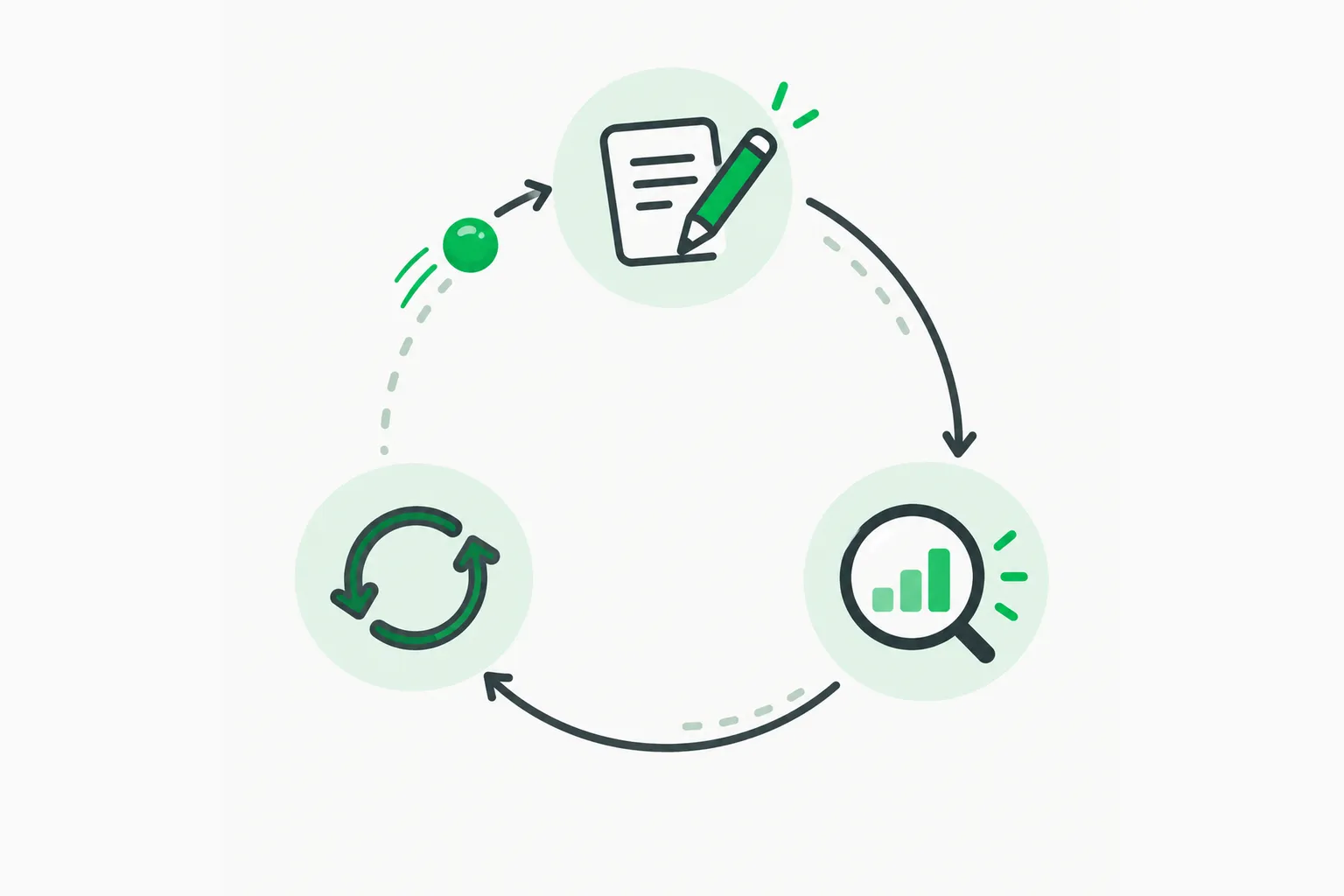 Agent loop cycle illustrating closed-loop engineering workflows from simulation to design
How does this connect to Mistral Large 4 and the Nemotron Coalition?
The post anchors the work to the model Mistral calls Le Chonk. Mistral Large 4 is in public preview with roughly 1 trillion total parameters and 49 billion active, is multimodal, and was trained on 3,800 NVIDIA Grace Blackwell GPUs in Mistral-operated data centers in Europe. Mistral says it advances coding, agentic workflows and multimodal understanding, with weights planned for the end of October. Our earlier explainer covers the preview: Mistral Large 4, Le Chonk.
The partnership is older than this announcement. Mistral and NVIDIA co-developed Mistral NeMo, and they are now working through the NVIDIA Nemotron Coalition to build a frontier base model meant to push the open-weight frontier, with members contributing data, evaluations and domain expertise. For NVIDIA's own open models, see Nemotron 3 Ultra.
There is also an adjacent physics thread: CERN has explored a Mistral Large based model for collider data, which we covered in CERN, Mistral and the physics foundation model statement of intent. Together these suggest Mistral is positioning itself as the European open-weight option for scientific and industrial work, not only chat.
What is the compute behind it?
Mistral says it is bringing additional NVIDIA-powered AI infrastructure online in support of a compute roadmap targeting 1 GW of capacity by 2030. No site, GPU count or financing was given for the new capacity. For context on how European capacity is being framed, see Europe's AI landscape in 2026 and our explainer on what sovereign AI means.
 Chips and server towers representing the NVIDIA infrastructure behind Mistral's engineering AI work
What are CAE and EDA, and why are they hard for agents?
CAE (computer-aided engineering) covers the simulation side of product design: meshing a part, setting boundary conditions, running a solver for airflow, heat or stress, and reading the result. EDA (electronic design automation) is the equivalent for chips and boards: synthesis, placement, routing and timing checks. Both are long pipelines of specialized tools with strict file formats, and a single wrong setting early on can quietly corrupt every later step.
That is why the benchmark design matters. A general coding agent can write a script that runs, yet still produce a simulation that is physically meaningless. A benchmark that checks technical correctness, not just whether the workflow finished, would catch exactly that failure. It would also show whether an agent recovers when a solver fails to converge, which is the normal state of real engineering work rather than an edge case.
For teams that want to prepare now, three steps cost nothing: write down a handful of your own CAD-to-simulation tasks with known-good answers, record how long a human expert takes on them, and note the licensing limits of your solver vendors on automated use. Those become your private test set the day the public one appears, and they let you judge whether the shared tasks resemble your daily work.
What are the limits and open questions?
- No dates for benchmarks or datasets. The post uses "will develop" and "will work together." Until a repository or Hugging Face page appears, there is nothing to download or run.
- No licenses. Whether the datasets will be permissively licensed, and whether the benchmarks will be independently hosted, matters for trust. A benchmark run by its builders can be gamed or tuned to the builders' models.
- No results. The post gives no measured speed-up over conventional solvers and no accuracy numbers for physics models. Any claim that AI surrogates beat solvers should be checked per problem class.
- Vendor tooling in the loop. Using CUDA-X and Warp ties the reference workflows to NVIDIA GPUs. That is natural for the partnership but worth noting if you run other hardware.
- Weights timing. The end-of-October release of Large 4 is a plan; check Mistral's channels for the license and size before assuming it runs on your hardware.
A related warning from the same ecosystem: other companies are also pushing engineering world models, and claims there often outrun evidence, as in Skyfall's engineering world model, claimed vs verified.
What does it mean for what you build or pay?
If you work in simulation-heavy fields (aerospace, automotive, semiconductors), the useful part is not yet a product. It is a signal that a shared yardstick for engineering agents is coming, with cost and time as first-class metrics. When it ships, the practical steps are simple: run your own model and any candidate agent against the public tasks, compare cost per correct result, and check whether the tasks resemble your own CAD and solver stack before trusting the scores.
If you build agents generally, borrow the design: score tool use, multistep completion, technical correctness, time and compute together rather than pass rate alone.
If you only follow open models, the item to watch is Large 4's weights at the end of October, including license terms and active-parameter footprint.
Related reading
- Mistral Large 4 (Le Chonk) open-weights preview
- GTC Berlin 2026: everything announced
- CERN and Mistral physics foundation model
- NVIDIA Europe AI-in-science pledge
- Skyfall engineering world model, claimed vs verified
- Voxtral 3 and Mistral's voice agent SDK
Sources: Mistral's announcement and NVIDIA's GTC Berlin keynote blog.
Details reflect Mistral's announcement of October 21, 2026; release timing, benchmarks and licenses may change.