



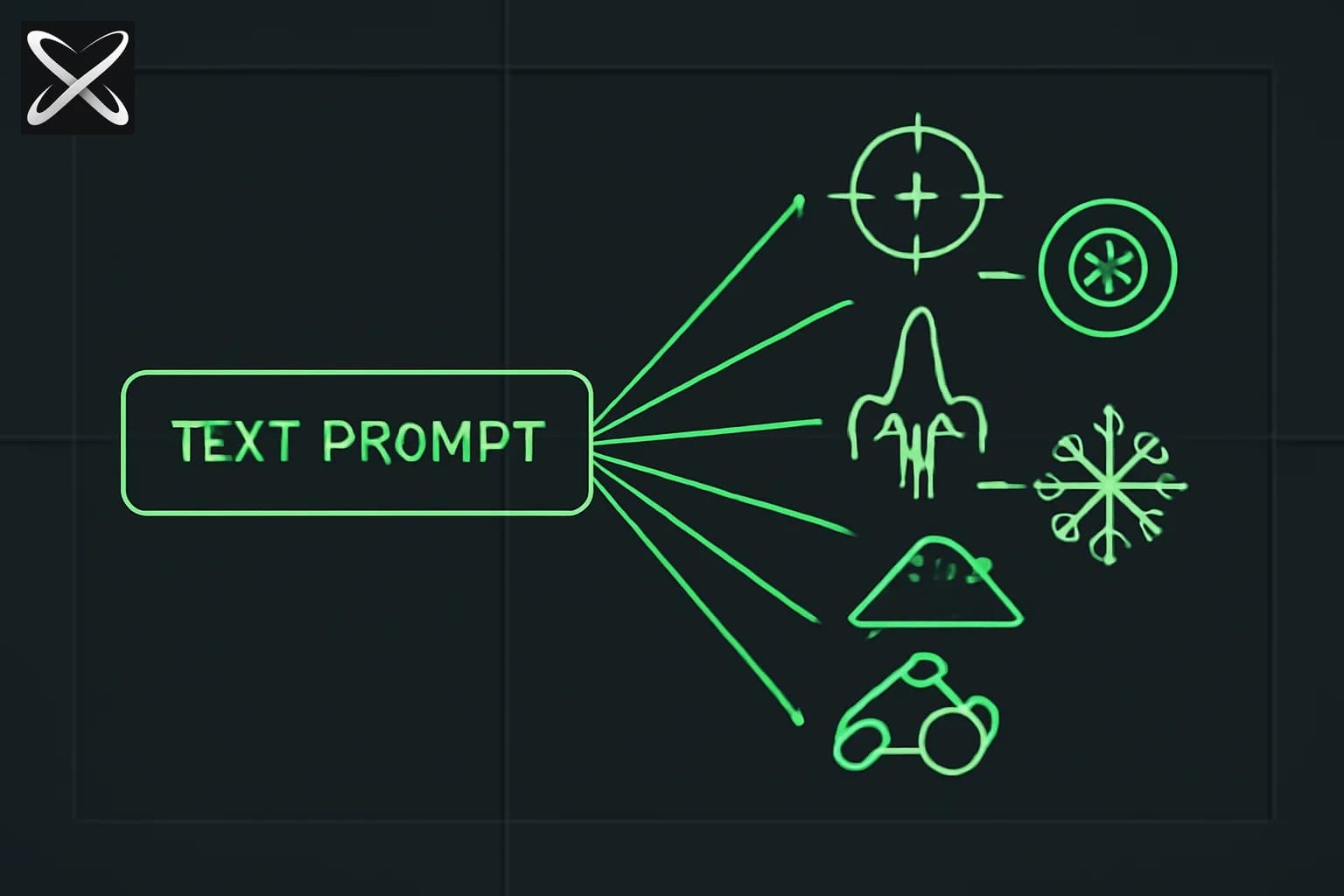
Meta used Connect on September 24, 2026 to announce Horizon Create and Horizon Studio, two AI game-creation tools that turn a described idea into a playable 2D or 3D mobile game and publish it into Horizon, Instagram and Facebook. It is the biggest consumer-scale entry yet in the prompt-to-game race we have tracked through Roblox Build and Astrocade.
The real story is not that Meta can generate a game. Plenty of tools can, including Claude Opus 5 in a chat window. The story is that Meta owns the feeds where the finished game can be played in one tap. This post covers what was actually announced, how to get in, how it compares to the other routes, and what Meta has not said.
TL;DR: the questions builders are asking
| Question | Short answer |
|---|---|
| What is it? | Two tools on the Meta Horizon Engine: Horizon Create (mobile app) and Horizon Studio (browser). |
| What does it make? | Complete 2D or 3D mobile games from a natural-language description. |
| Do I need a gaming PC? | No. Studio runs in the browser with no install; Create runs on your phone. |
| How do I get in? | Open early-access waitlist, rolling out gradually. |
| Where do games run? | Horizon, Instagram and Facebook, including multiplayer sessions launched from a feed clip. |
| What does it cost? | Not announced. |
| Revenue share? | Not announced in detail. Monetization and Creator Fund eligibility were mentioned; terms were not. |
| Can I export my game elsewhere? | Not announced. |
| Best alternative today? | Depends: Claude-built browser games for full control, Roblox Build for a kids-and-teens catalog, Astrocade for a dedicated AI-game platform. |
What did Meta actually announce?
The official Meta Developers session, "Introducing Horizon Create and Horizon Studio", was uploaded on September 24, 2026. Its description frames the pitch:
"Horizon is building a new way to go from idea to players, without the barriers. Describe what you want to make, and AI-assisted creation tools work with you to build it. When you publish, your game reaches players across Horizon, Instagram, and Facebook. In this session, you'll learn what's changing, how the platform works, and how to start creating."
Both tools sit on the Meta Horizon Engine and share a backend, so assets and systems carry between them. Coverage from Unite.AI, eWeek, WERSM and TweakTown converges on the same core facts.
Saxs Persson, Meta's VP of Horizon, put the goal this way, as reported by Unite.AI: "If you have a great idea for a game, you should be able to build it and get it in front of players without spending months navigating tools, hardware, and marketing."
Horizon Create vs Horizon Studio: which one do you open?
| Horizon Create | Horizon Studio | |
|---|---|---|
| Surface | Mobile app | Browser, no install |
| Input | Describe a game in natural language | Prompting plus manual visual controls |
| Good for | First draft, quick tests, refining from your phone | Detailed edits, placing scenes, swapping assets, managing the game's lifecycle |
| Hardware | Your phone | Any browser; no gaming PC needed |
Think of Create as the sketchpad and Studio as the workbench. In Create you describe the game, get a playable version, then test and refine it on the phone. Unite.AI reports you can start from a blank canvas or a template and that builds can generate in the background while you play other titles.
In Studio you keep the prompt but gain hands-on control: place scenes manually, swap assets from a library, adjust script parameters, tweak spatial layout. That mix of chat and direct manipulation is the same pattern we described in Claude Code plus Unity MCP, except Meta hosts the whole loop.
How does the generation work?
Meta says the engine's agentic creation capabilities produce the parts that usually take a team: progression systems, balanced difficulty, art direction and multiplayer support. Creators then refine element by element, for example asking for a style change across environments, characters and lighting with a single prompt.
Two caveats from our practitioner read. First, "balanced difficulty" is a claim, not a benchmark; Meta has not published any evaluation, so expect first drafts that need playtesting. Second, the agentic loop is a black box. Unlike prompting a coding agent, where you can read the source, we do not yet know how much of a Horizon-generated game you can inspect or edit as code. That matters if you care about production polish beyond the demo.
How do I get on the waitlist and start?
Meta describes early access as rolling out gradually via an open waitlist, with testing under way with its creator community and broader access to follow. As of September 24 there is no public availability date. Practical steps while you wait:
- Sign up through the waitlist linked from Meta's Horizon creator pages and the official session.
- Draft your game brief now: genre, core loop, win and lose conditions, art style, player count.
- Write it as short, testable sentences. A prompt like "two-minute co-op obstacle run, 2 to 4 players, one button, bright low-poly style" is easier to refine than a paragraph of vibes.
- Plan your feed-native hook: what does a 10-second clip of this game look like in an Instagram feed?
That last point is the real design constraint. If distribution is a tap on a clip, your game has to be understandable and joinable in seconds.
Why the distribution angle matters more than the model
Every other tool in this space solves creation. Meta is betting on the harder half. Published games are eligible for distribution across Facebook, Instagram and Horizon; the example Meta gives is tapping a game clip in the Instagram feed and joining a multiplayer session without downloading another app.
Compare that to our earlier reads. In the Roblox post we argued that generation commoditizes while distribution and moderation become the moat. Meta is the sharpest test of that thesis: it has an enormous social graph but a historically small games catalog. The friendslop wave showed that small, shareable multiplayer games spread through group chats, which is exactly the shape a feed-launched session rewards.
Meta also says generated content passes through safety systems, games are reviewed before publishing, an automated age rating gates titles into age-appropriate tiers, and youth protections include Family Center supervision. Expect review latency and content limits to shape what you can ship.
How does it compare to other AI game routes?
| Route | You get | Distribution | Control | Cost |
|---|---|---|---|---|
| Horizon Create / Studio | Hosted prompt-to-game, mobile and browser | Instagram, Facebook, Horizon | Visual controls in Studio; code access unknown | Not announced |
| Roblox Build | Prompt-to-game on mobile, shared Studio backend | Roblox catalog | Roblox Studio for deeper edits | Free base tier reported at alpha |
| Astrocade | AI-native creation and play platform | Astrocade's own feed | Platform tools | Per company |
| Claude Opus 5 browser games | Single-file HTML/JS games from chat | Wherever you host it | Full source | Your model subscription |
| bunpav | Procedural 3D, Game Lab, Audio Lab | Its own site | Lab tools | Beta |
| Claude Code + Unity MCP | Agent inside a real engine | Any store | Full project | Model plus Unity |
Our rule of thumb: pick Horizon when your goal is reach inside Meta's apps, pick a coding agent when you need ownership of the code and portability, and pick Roblox or Astrocade when you want a built-in audience without the Meta ecosystem.
What are people asking (and what is still unknown)?
Will this flood feeds with AI slop? Possibly. Roblox's answer was retention-ranked discovery rather than quality gates at generation time, and Meta has not said how it will rank games in Instagram or Facebook. Watch that space.
Can I own and move my game? Not stated. Until Meta publishes terms, assume the game lives on Horizon.
What about monetization? Press coverage mentions in-game monetization and eligibility for the Meta Horizon Creator Fund, with details still to come. No revenue share, payout schedule or fees were announced.
Is it only for hobbyists? Meta pitches it at creators without game-dev backgrounds, but Studio's visual controls and lifecycle management suggest it also targets semi-pro teams that want to skip hardware and tooling.
How good are the games? Unknown. No public builds we can verify yet. We will update this post once we can test access.
What this means for what you build or learn
If you teach or learn AI, this is a concrete case study in agentic creation with a human refining element by element. The skills that transfer are writing testable specs, playtesting fast, and thinking about distribution as part of design. Those are the same habits we cover in our live workshops.
If you build products, the lesson is that the tool is the easy part and the audience is the scarce resource. A game that plays well as a 10-second clip has an edge in this channel.
Related reading
- Roblox Build: prompt-to-game on mobile
- Astrocade $56M and AI game creation
- Claude Opus 5 games viral wave
- Friendslop browser games built with Claude Opus 5.5
- Claude Code and Unity MCP guide
- bunpav procedural 3D and Game Lab
- Official: Meta Developers session on YouTube
Details reflect Meta's September 24, 2026 announcement and press coverage as of September 26, 2026. Access, pricing and monetization terms may change as the waitlist rolls out.