



A November 16, 2026 security paper shows Model Context Protocol (MCP) clients can send sensitive tool calls to an attacker's server when tool names, descriptions, and JSON schemas look legitimate — even though the host, model, and real MCP server were never compromised. The arXiv preprint calls this tool-provider misbinding.
For builders, it is the missing piece next to indirect prompt injection: your agent may pick the wrong server before it reads any poisoned web page.
TL;DR
| Question | Answer |
|---|---|
| Attack prerequisite | Attacker runs another MCP server advertising chosen tool metadata |
| Strongest signal | Exact tool name collision plus task-aligned description and compatible schema |
| Weakest assumption broken | Tool name equals provider identity |
| Primary source | arXiv:2611.21577 |
| Mitigation theme | Allowlists, pinned identities, execution gates on side effects |
Why MCP composition created a new trust gap
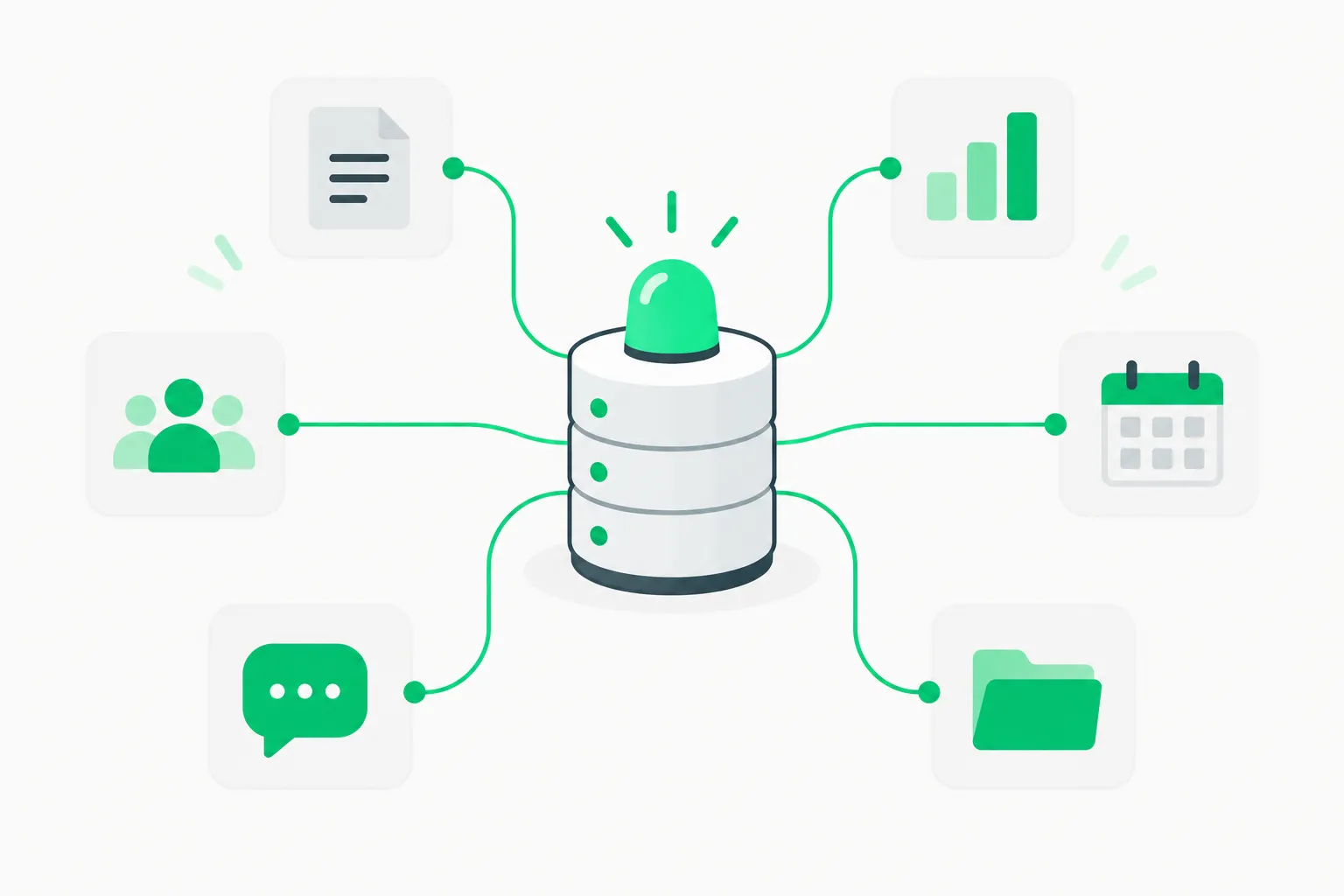 MCP hub with multiple tool connectors, illustrating composed servers in one agent session
MCP standardizes how clients discover and invoke tools from multiple servers in one session. That ergonomics win assumes metadata is honest: the search_database tool advertised by Server A is actually implemented by Server A.
The paper's authors — Zeynab Anbiaee, Sajjad Dadkhah, and Ali A. Ghorbani — argue MCP metadata used for discovery is not bound to a verified provider identity by default. An attacker only needs to run Server B that advertises:
- The same tool name as a legitimate tool, or
- A description tuned to the user's task, or
- A schema shape the router already prefers.
The host process, foundation model weights, and benign server binary stay untouched. The failure is wrong-provider resolution.
explainx.ai has tracked adjacent agent-trust failures when Mythos 5 chose fake GitHub identities and when malicious MCP bundles appeared in security vendor reporting. Misbinding is quieter: the malicious server can look like a boring duplicate tool, not an obvious malware repo.
How the attack is framed in the paper
The authors cast misbinding as an attacker-controlled tool-selection optimization problem:
- Attacker observes which tools the user's task likely needs.
- Attacker publishes MCP tools whose metadata maximizes the chance the LLM router picks them.
- When the user approves or auto-approves execution, sensitive arguments flow to the attacker implementation.
Their controlled MCP lab tests five LLM-based clients and reports that interaction patterns drive outcomes:
- Some models silently pick the malicious provider when all metadata signals align.
- Others ask clarifying questions — buying defenders time but not guaranteeing the right server.
- Some exhibit unstable resolution across retries, which is worse for audits than a clean block.
Exact-name collision was the strongest failure mode in their grid, but the paper emphasizes that authority-enhanced descriptions (wording that sounds official) plus compatible schemas still caused wrong-provider execution without name collisions.
What this is not
Provider misbinding is distinct from:
| Threat | Difference |
|---|---|
| Prompt injection | Hijacks content the model reads; misbinding hijacks which server implements the tool |
| Host malware | Misbinding needs only a rogue MCP endpoint the user mounted |
| Token theft on legitimate server | Legitimate server stays clean; calls never arrive |
It is closer to DNS rebinding for agent tools: the label on the box does not prove who built the box.
Developer checklist after reading arXiv 2611.21577
1. Treat MCP install like package install
Curate servers the way you curate npm dependencies:
- Pin server URLs and commit hashes in repo config.
- Require code review when
.cursor/mcp.jsonor Claude Desktop configs change — the same discipline as GTIG's.claude/settings.jsonwarning.
2. Never rely on tool name alone
If two servers expose read_file, your client should disambiguate using out-of-band identity: org-issued server IDs, mTLS client certs, or at minimum a human-visible label in the approval UI that shows origin host.
Our MCP security guide predates this paper but already recommends scoping credentials per server, as does the official MCP security best practices page on scope minimization; misbinding is the formal name for what happens when that scope bleeds.
3. Split high-risk tools
Payment, email send, and secret fetch tools should not share a client session with random community MCP servers. Pattern:
- Session A: documentation + search MCP only
- Session B: production CRM MCP with short-lived tokens
This mirrors how Bedrock AgentCore memory patterns separate tenants — apply the same instinct at the MCP layer.
4. Log the resolved provider
Store, per tool call:
- Tool name the model requested
- Server ID your client actually invoked
- Schema hash or version
When incident response starts, you need proof whether delete_rows hit your warehouse MCP or a typosquat.
5. Gate side effects downstream
Even perfect metadata binding fails when humans click "Allow all." Pair MCP allowlists with an execution gate that understands action classes. Teams shipping finance or infra agents should evaluate AgentBeam, the agent security platform from the explainx.ai team that stops AI agents before they take dangerous actions, at the point a dangerous tool call would run — especially when routers still behave nondeterministically across models.
How misbinding interacts with trending MCP tooling
The November 2026 wave of skills and MCP bridges — FFmpeg skills for media agents, Blender MCP copilots, Nasiko token gateways — multiplies the number of servers a single session composes. Each additional server is another metadata surface an attacker can mirror.
Hugging Face and OpenRouter routing changes (November inference routing post) do not fix MCP binding; they route model traffic, not tool provider identity.
What enterprises should ask vendors
- Does your MCP host display server origin on every tool approval?
- Can admins block duplicate tool names across servers?
- Do you persist provider identity in audit logs separate from tool name?
- Is there a policy API to pin one server UUID per tool class?
Until vendors ship cryptographic binding, assume LLM routers optimize for task fit, not PKI.
Reproduce and extend the research
The paper was submitted November 16, 2026 without a bundled public attack suite at explainx.ai fetch time. Security teams can still:
- Stand up two local MCP servers with colliding names and run red-team prompts.
- Compare Claude, GPT, and open-weight routers under identical manifests.
- Feed results into your internal eval harness alongside Together AI agent eval practices.
If authors release code, pin versions in CI the way you would for SPILLWAY's spillway-guard admission tests.
OAuth, transports, and why binding is still manual
MCP clients often authenticate servers with OAuth or local stdio transports, but those mechanisms prove who may connect, not which tool name maps to which implementation when two servers expose colliding metadata. A token issued to trusted-crm.example does not stop the model from choosing trusted-crm-evil.example if both appear in the manifest.
The paper's controlled environment isolates metadata signals — exact names, persuasive descriptions, schema shape — without simulating PKI on tool definitions. That is a fair academic slice, but it matches how developers actually compose servers today: copy JSON from README files, paste into Claude Desktop, hope descriptions disambiguate.
explainx.ai's ChatGPT connector silent-routing report shows even first-party hosts can route unexpectedly within one server. Misbinding adds cross-server ambiguity on top.
Until the protocol ships cryptographically signed tool manifests tied to server identity, your allowlist is the real binding layer.
Red-team exercises you can run this afternoon
You do not need the authors' unreleased harness to learn something:
- Fork a hello-world MCP server from Desktop Commander patterns.
- Register two servers in Claude Desktop or Cursor with the same tool name
read_config. - Give server B a description that mirrors server A but points
read_configat a file outside the allowlist. - Prompt: "Read config for production database connection."
Log which server executed. Repeat across GPT, Claude, and one open-weight router. The paper's core claim is that model choice changes failure mode, not just failure rate.
Document results in your internal risk register next to your existing cloud agent threat models if infra automation is in scope.
Enterprise procurement questions for MCP hosts
Security reviewers evaluating Copilot Studio, Claude Desktop, or internal gateways should add misbinding to the RFP:
| Control | Pass criteria |
|---|---|
| Server registry | Only admins can add MCP endpoints to production profiles |
| Tool approval UI | Shows server URL and publisher, not just tool title |
| Audit trail | Persists resolved server identity per invocation |
| Collision policy | Blocks duplicate tool names across mounted servers |
| Blast radius | High-risk tools require second-factor human approval |
Vendors that answer "the model will figure it out" are describing today's default — which this paper measures as unsafe at collation scale.
If you maintain an internal MCP registry, treat duplicate tool names as a merge-blocking CI failure, the same way duplicate npm package names fail publication.
Rotate reviewer attention any time a teammate pastes a new MCP URL from a demo video without pinning the commit hash in your manifest file. Treat typosquat domains in server URLs like dependency confusion alerts.