



Donald Knuth, the Stanford computer scientist behind The Art of Computer Programming, has stopped looking at new error reports. A short notice on his moratorium page says he will not review reports submitted after November 25, 2026, until he posts an updated list of known errors for the relevant book. The reason: large language models have raised the number of reports faster than he can check them.
For more than fifty years, Knuth has welcomed readers who find mistakes in his books. That open channel is now paused. It is one of the clearest examples yet of AI-sped submissions overwhelming a trust system built for a slower world, and it landed on the Hacker News front page, where the discussion reached 171 points.
Quick answers
| Question | Answer |
|---|---|
| What did Knuth announce? | He will not review error reports submitted after November 25, 2026 |
| Until when? | Until he posts an updated list of known errors for the book in question; no date is given |
| Why? | LLMs raised report volume faster than he can verify it; sampled reports mostly repeat known issues |
| Is the book list open? | The page's list of books accepting errata is currently empty |
| Is it a bug bounty? | The page says error reports; the HN title says bounties |
| Where is the source? | Knuth's own page on the Stanford computer science site |
What the moratorium page actually says
The page is short, and its facts are worth stating carefully because several reposts blur them. According to the text, Knuth has welcomed reader error reports for over fifty years. LLMs have increased the reports faster than he can verify them. He is pausing for now.
Three specifics stand out:
- A cutoff date. Reports submitted after November 25, 2026 will not be reviewed until he posts an updated list of known errors for the book concerned.
- A stated reason. Random sampling suggests that most recent reports repeat issues already submitted. In his words, the amount of available time is now less than zero.
- An empty list. The page's list of books accepting errata is currently empty. Knuth says he is swamped but hopes to add items soon.
Nothing on the page says he blames any one tool or user. It describes a volume problem. It also does not say how many reports arrived or how many were wrong. Treat any specific count you see attached to this story as unverified.
Why LLMs make this worse than ordinary spam
Error reports for a book are a small, old, well-run version of a bug bounty. A reader finds a mistake, writes to the author, the author checks it. The system worked because finding a real error was hard and the number of careful readers was small.
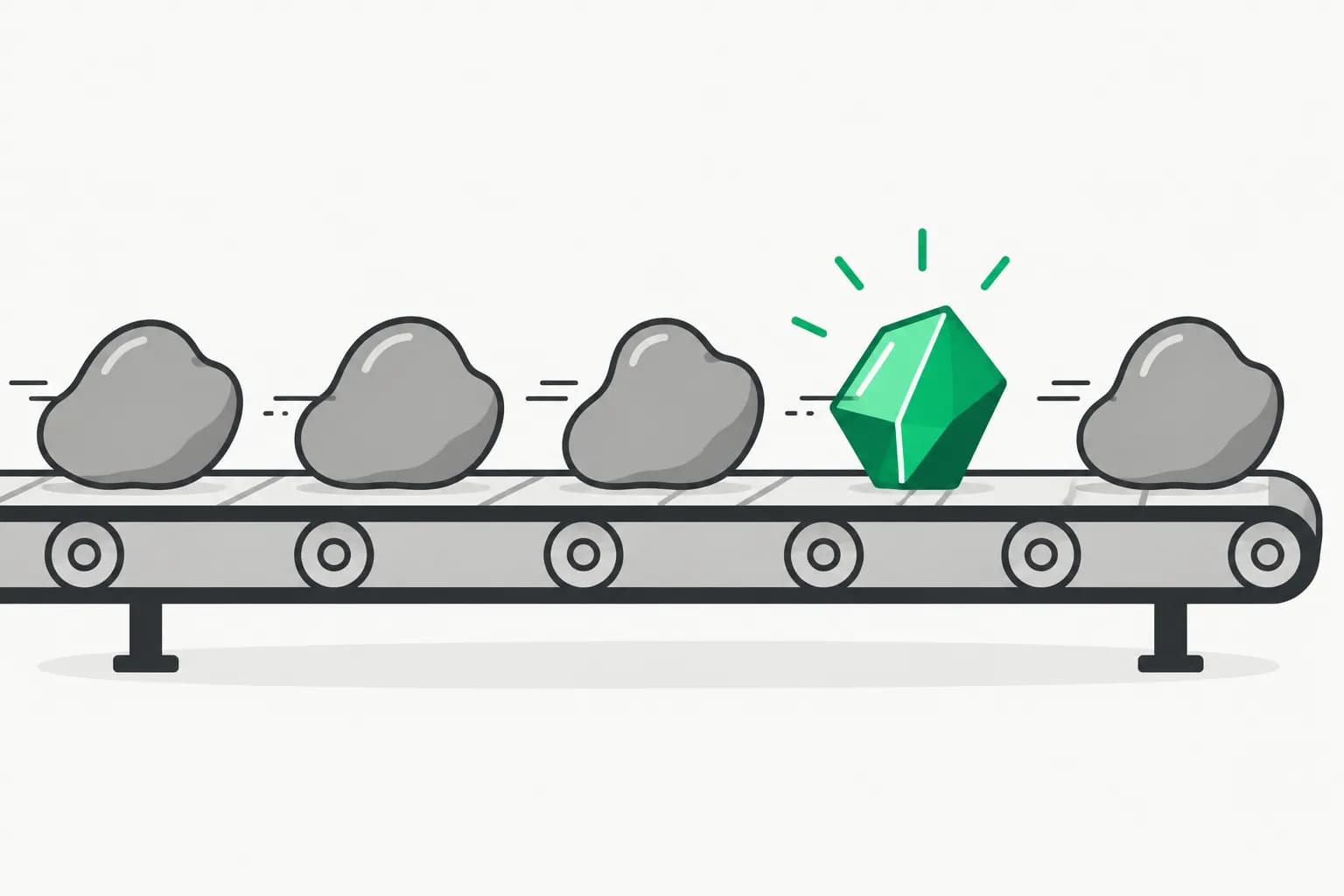
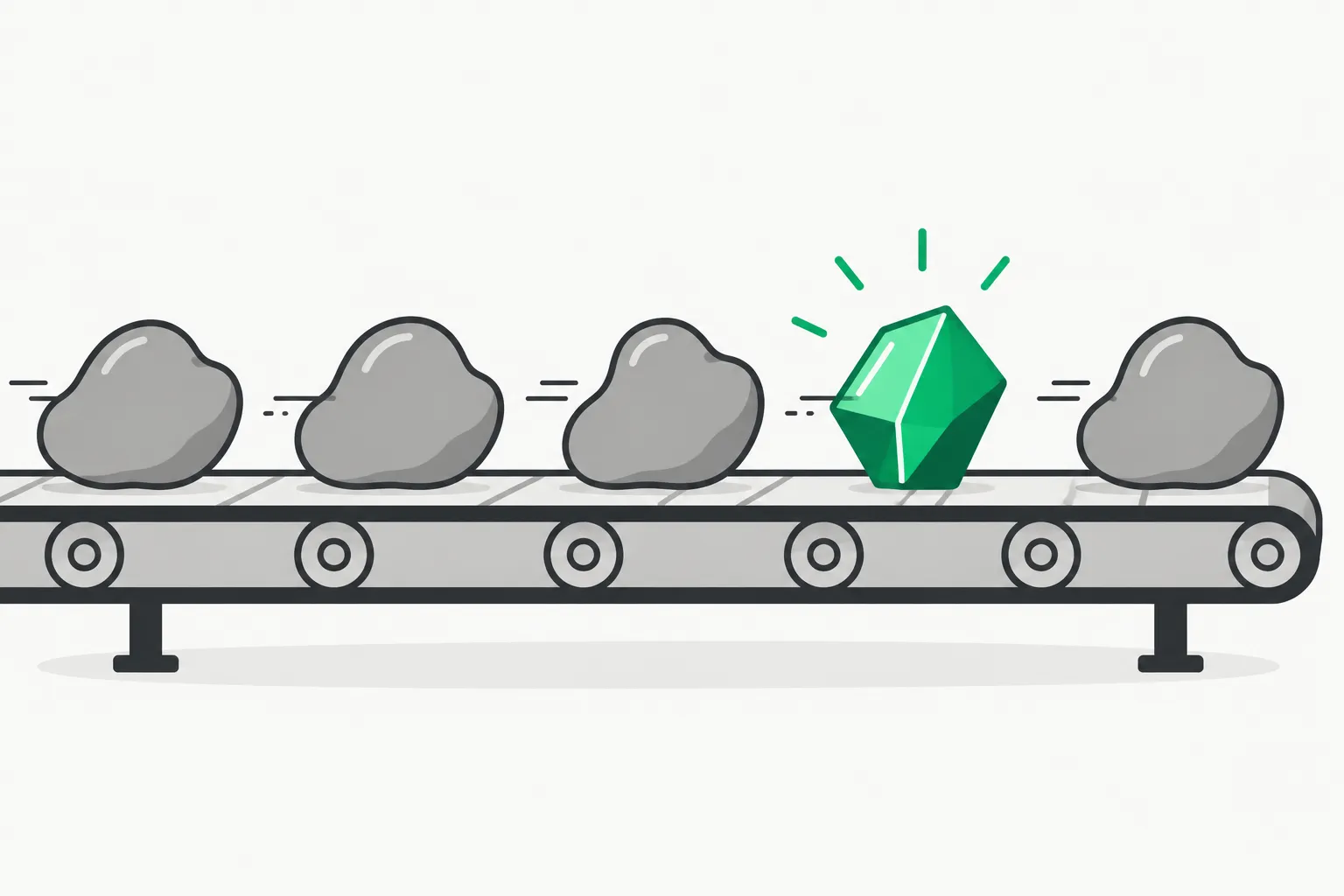
An LLM changes the cost on both sides. Asked to proofread a chapter, a model can produce a list of "errors" in seconds. Some will be real. Many will be misreadings, differences of convention, or items already on the public list. Each still costs the author time, because someone with the expertise must read it and decide. The sender's effort fell to nearly zero while the receiver's effort stayed the same.
That asymmetry is the whole story. Knuth's note that most sampled reports repeat known issues fits it: a model, or a person pasting a model's output, has no easy way to know what is already on the errata list unless they look, and looking takes effort the tool was meant to save.
 AI-generated reports arriving on a conveyor belt as identical gray blobs, with one green gem, for the Donald Knuth error reports story
What developers are saying
The Hacker News thread was modest in size, 24 comments at the time of writing, and mixed in tone. One commenter, CaliforniaKarl, pointed out it duplicated another front-page submission on the same story. Others reacted to the idea itself.
- giancarlostoro described a "blessing and curse": many bugs could be fixed, but some submitters do not understand the bug or the software and want a payday. They said that if they ran a bounty program they would require the claimant to explain the bug and how it fits the software, in person.
- stogot wished people showed some respect before sending spam to Knuth.
- MBCook said a portion of AI people ruin everything.
- Pet_Ant joked that Knuth could use LLMs to help finish his long-running series.
These are individual commenters' views, not measurements. The thread has no first-hand report from anyone who sent Knuth an AI-assisted error report, so it tells us how readers feel more than what happened inside his inbox.
The wider pattern: maintainers closing the door
Knuth is not the first to close or narrow a submission channel. The pattern across 2026 is consistent:
- curl ended its bug bounty at the start of 2026 after a flood of low-quality, LLM-generated vulnerability reports, as Hackaday reported in January. We have followed its maintainer's views in Daniel Stenberg on agentic Rust curl rewrites and in the VulnCheck curl triage update.
- Google froze part of its open-source vulnerability reward program, citing invalid AI submissions; see our Google OSS VRP freeze coverage and Tom's Hardware's report.
- Libreboot adopted then dropped an anti-AI policy within a month, keeping measures to reduce slop; see our write-up.
Knuth's case differs in one way. It is a book, not software. There is no CVE, no payout in the page's wording, no security incentive. That makes it a cleaner signal: even without money on the table, the volume of AI-assisted submissions is enough to shut a channel.
What this means for people who run submission channels
If you maintain a project, a bounty, a docs site, or a public errata list, Knuth's note is a free case study. The pressure points are predictable.
Deduplication is the first cost. Knuth's sampling found that most reports repeated known issues. A public, searchable known-issues page, linked at the top of the submission form, cuts that cost for everyone. It only works if senders must confirm they checked it.
Evidence beats assertion. Ask for a reproduction, a page and line, or a failing test. A model's confident paragraph is cheap. A working reproduction is not.
Disclose assistance. Some projects ask whether an LLM helped. That does not ban AI help. It lets triage treat unreviewed model output differently from a checked finding.
Cap the rate. Limits per person per week keep a single enthusiastic sender, or a script, from filling the queue.
Plan for the pause. Knuth's approach is the bluntest tool: stop reading until the backlog is cleared and the public list is current. For a solo maintainer, that may be the only honest option.
What is confirmed and what is not
Confirmed by the primary page: the November 25, 2026 cutoff, the reason given (LLM-driven volume and repeat reports), the empty list of books accepting errata, and Knuth's hope to add items soon. Not confirmed anywhere we could find: how many reports he received, what share were wrong, which tools senders used, and whether the pause covers every book or only some. The Hacker News title calls the change a suspension of "error bounties," but the page itself talks about error reports. Until Knuth says more, read the story as an author protecting his time, not as a policy aimed at any one tool.
A book is also a harder case than software in one respect. A maintainer can add an automated test, a template, or a bot that closes duplicates. An author of a printed work has none of that. Every claimed error needs a person who knows the material to read the passage, check the argument, and decide whether the text is wrong or the reader is. That judgment cannot be handed to a script, which is why the only lever left is the amount of incoming volume.
What it means if you use LLMs to review other people's work
There is a fair side to this. Used well, a model can help a careful reader prepare a report: check a claim against the text, draft a clear description, find the right page. The failure is sending the unchecked output. If you want to report an error to any maintainer, the rule from this story is simple: verify it yourself, look for it on the known list, and say how you found it.
Teams that want to build this habit into daily work can look at our AI workshops, which cover reviewing and verifying model output before it leaves your desk.
What to watch next
Knuth says he hopes to add books back to the accepting list soon. The signal to watch is that page: when the list of books accepting errata is no longer empty, and a new known-errors list is posted, the channel has reopened. We will not guess a date. Until then, sending a report adds to a queue he has said he will not read.
Details are as published on Knuth's page and the linked threads as of November 28, 2026. The page may change.
Related reading
- Google OSS VRP bug bounty freeze over AI slop reports
- Daniel Stenberg on agentic curl rewrites vs maintenance
- VulnCheck Glasswing November update and curl triage
- Libreboot drops its anti-AI policy, keeps slop reduction
- Workslop backlash and anti-AI-slop policies
- What is AI slop: SEO and content quality