



IFM published K2-Horizon on November 15–17, 2026 as a six-model open fleet scaling from a 0.9B dense checkpoint to a 375B-A23B mixture-of-experts, with training data, intermediate checkpoints, and infrastructure code—not just inference weights.** The Hugging Face paper page summarizes modeling contributions (MoVA, softplus attention gating, Uno diffusion adapters) and states four models trained on a shared 22 trillion-token corpus.
For builders comparing open stacks this week against Qwen Code agents or Tencent Hy4 API drops, K2-Horizon’s pitch is radical reproducibility: IFM says it releases the pipelines that produced roughly 10T synthetic pretraining tokens, not only the merged checkpoints.
TL;DR
| Model (IFM) | Role in fleet |
|---|---|
| 375B-A23B MoE | Enterprise flagship for coding and agentic work |
| 36B-A4B MoE | Cost-efficient agentic MoVA / gating stack |
| 32B dense | Largest dense model in family |
| 7.0B / 3.7B | Mid-size reasoning and scientific coding |
| 0.9B | Ultra-small edge and tool-use focused |
| Transparency claim | What IFM says ships |
|---|---|
| LLM360 standard | Checkpoints per stage, data, logs, eval code |
| Training stacks | xLLM (dense + MoE), RL360 post-training |
| Synthetic data | ~10T tokens with pipeline documentation |
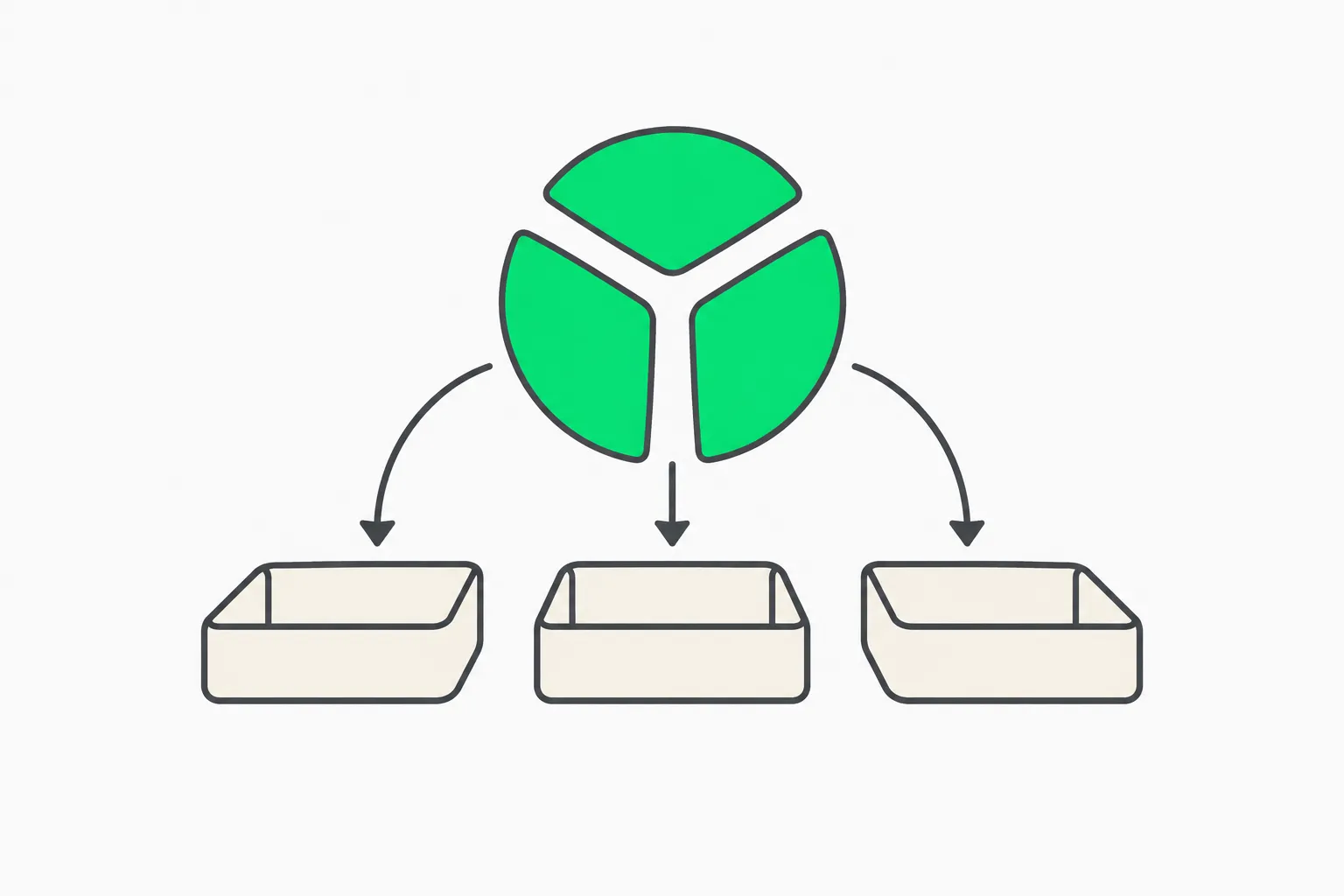
| Shared science | Four models on one 22T corpus for scaling studies |
What changed versus older K2-Horizon mentions
explainx.ai first encountered K2-Horizon as secondhand social commentary around a rumored six-model drop. IFM’s November 2026 materials close that gap:
- A public sizing ladder with deployment guidance per parameter class.
- Architecture notes on MoVA and softplus attention gating in the paper abstract.
- Uno integrated into the fleet narrative—extending the standalone Uno speedup release we documented in September.
- Links to Hugging Face, vLLM, SGLang, and Ollama paths.
The IFM K2 timeline places Horizon after K2 Think V2 (January 2026) in the institute’s public lineage, signaling this is a generation refresh with heavier openness obligations, not a silent weight bump.
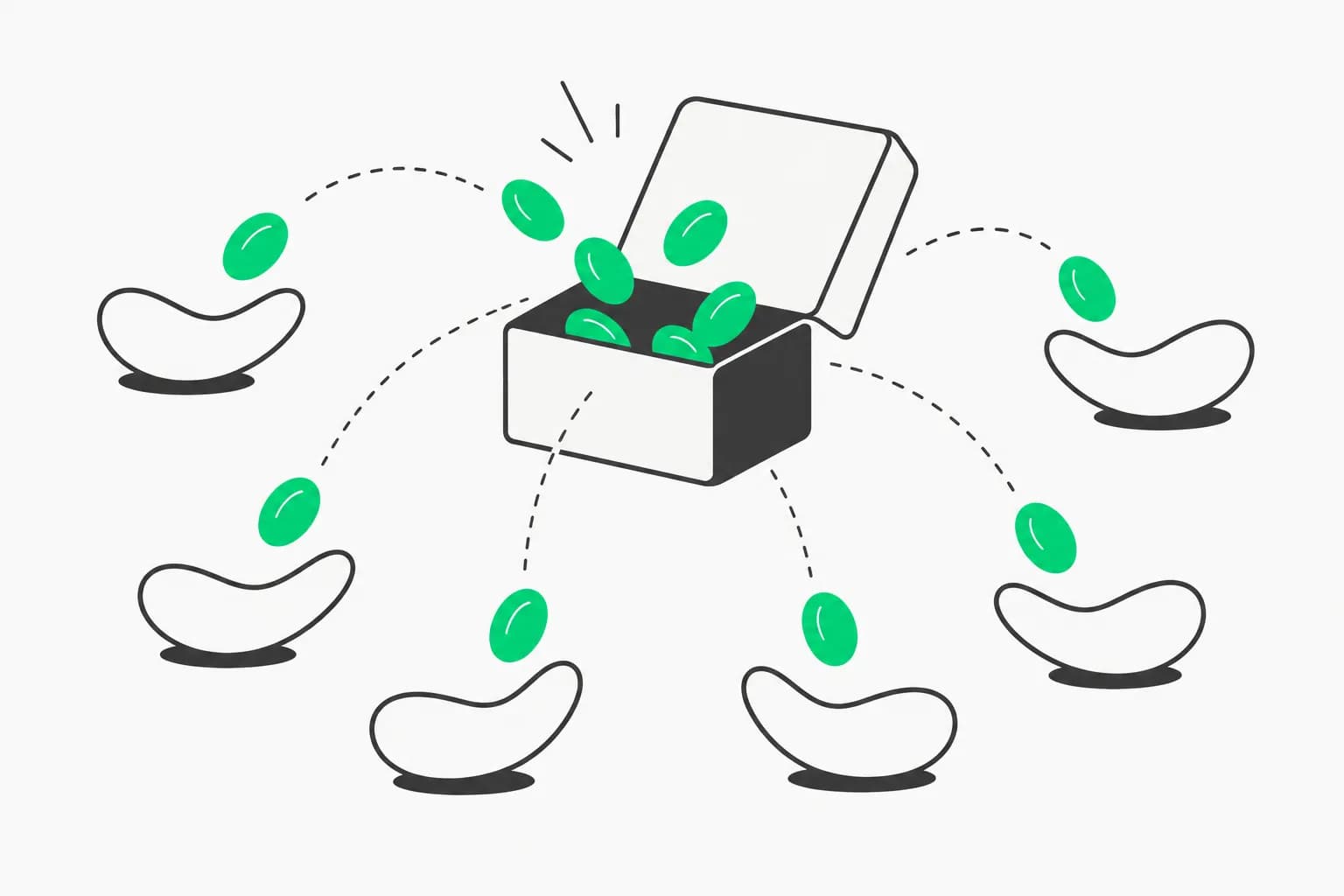
 K2-Horizon open-weight release as seeds leaving a shared box toward builder hands
Modeling ideas builders will actually touch
Mixture-of-Value Attention (MoVA)
Standard MoE routes feed-forward experts. IFM’s MoVA applies mixture-of-experts logic to attention value projections, aiming to strengthen reasoning without growing every active parameter. The paper claims a 36B-A4B MoVA model nearly matches a 32B dense model trained on the same data while activating about one-seventh the parameters—a claim to validate on your agent harness, not in a leaderboard screenshot alone.
Softplus attention gating
IFM describes softplus gating as a more flexible, theoretically grounded alternative to hard attention switches. For practitioners, the practical question is whether gating stabilizes long-horizon tool loops; IFM positions Horizon models for deep research and office automation alongside coding.
Uno decoding adapters
Uno adds a lossless diffusion adapter to speed decoding up to 2.2× without maintaining a separate speculative draft model. IFM already shipped K2-Horizon-7B-Uno weights on Hugging Face earlier; Horizon folds Uno into the fleet story rather than an isolated technique demo.
The openness package: what to clone first
IFM’s marketing uses "glass box, not black box" language. Concretely, the project page promises:
| Artifact | Why builders care |
|---|---|
| Pretraining corpus | Audit data mix and contamination risk |
| Stage checkpoints | Study collapse, emergent capabilities, early stopping |
| xLLM code | Reproduce dense and MoE training at production scale |
| RL360 stack | Compare post-training recipes against open RL tooling you already run |
| Synthetic pipelines | Replicate or criticize 10T-token synthetic generation IFM highlights |
That depth differentiates Horizon from weights-only drops that still dominate social feeds. It also raises hosting cost: publishing terabytes of data and checkpoints helps researchers but burdens mirrors—plan partial mirrors if you only need one size class.
 K2-Horizon checkpoint branches showing staged training lineage for open MoE models
Performance claims and honest benchmarking
IFM states Horizon models lead or stay competitive with strong open models at each size class on agentic and coding benchmarks. The Hugging Face paper page does not replace a harness you trust—run Horizon checkpoints against your repo tests, agent evals, and cost caps.
Comparison anchors elsewhere on explainx.ai:
- Marin Mochi 535B open MoE pretraining narrative for another full-stack openness pitch in 2026.
- DeepSeek free-tier limits for how API economics push teams back toward self-hosted open weights.
- Baseten frontier inference guide when you operationalize large MoE on rented GPUs.
How to try K2-Horizon this week
- Pick a size class — start 7B or 32B if you lack a 375B rack; use 0.9B only for edge prototypes IFM documents.
- Read the data card — IFM’s released corpus metadata matters for license and redistribution if you fine-tune commercially.
- Use listed runtimes — IFM names vLLM, SGLang, and Ollama; match your existing local inference workflows before porting agents.
- Log active parameters — MoE models punish naive VRAM planning; MoVA adds another knob versus dense baselines.
- Compare Uno on/off — if latency dominates, reproduce IFM’s Uno adapter path instead of bolting generic speculative decoding.
Limits and verification gaps
Enterprise flagship load. A 375B-A23B MoE is not a laptop download. Treat IFM’s headline as infrastructure news unless you operate a cluster or a host that already serves comparable open MoE.
Benchmark sourcing. Until independent labs publish harness logs, treat leaderboard cells as vendor-reported unless IFM linked raw eval artifacts you reproduced.
Geopolitical hosting. IFM is Abu Dhabi–based; some teams must map data residency and export rules before mirroring full corpora—separate from model quality.
Name collision. “K2-Horizon” appeared in rumors before primary docs existed. Anchor citations on ifm.ai/k2 and the 2611.21003 paper slug, not repost threads.
What developers are asking
| Question | Practical answer |
|---|---|
| Is this Apache or a custom license? | Read the license files bundled with each checkpoint on Hugging Face before production use—we do not substitute for legal review here. |
| Does Horizon replace K2-Think? | IFM’s timeline keeps Think as a prior line; Horizon is a new fleet with overlapping branding—pick weights by release tag, not name alone. |
| Synthetic 10T tokens—real or marketing? | IFM says pipelines and documentation ship to verify; skepticism is healthy until you inspect recipes. |
Related reading
- IFM Uno lossless diffusion speedups on K2-Horizon-7B
- Abu Dhabi IFM six-model rumor vs primary docs
- Qwen Code open terminal agent trending on GitHub
- Baseten efficient frontier LLM inference
- Marin Mochi open MoE pretraining transparency
- Loop engineering for coding agents
- DeepSeek compute limits pushing self-hosting
Model-by-model: who each Horizon size is for
IFM’s public sizing page is unusually explicit about deployment intent. Summarizing the narrative (not a substitute for reading IFM’s own cards):
375B-A23B MoE — Positioned as the enterprise flagship for coding and agentic workloads where latency and dollar-per-task matter less than ceiling capability. Expect multi-GPU or hosted inference; this is not the model you quantize for a laptop experiment.
36B-A4B MoE — IFM’s efficiency play: MoVA and gating aim for agentic quality with far fewer active parameters per forward pass. Teams comparing cost per successful tool loop should benchmark this against dense 32B–70B rivals on identical prompts.
32B dense — The largest dense checkpoint in the ladder. Dense models remain easier to reason about for fine-tuning shops that do not want to debug expert routing on day one.
7.0B and 3.7B — Mid-tier options IFM ties to scientific coding and math at sizes that still fit serious fine-tuning jobs. Useful when you need Horizon’s data recipe transparency without Horizon’s hosting bill.
0.9B — IFM mentions watches, glasses, and constrained environments—a rarity among “frontier fleet” launches. Treat it as a probe for on-device tool use, not a replacement for phone-class models from larger vendors.
Synthetic data at 10T tokens: why builders should read the pipelines
Horizon’s abstract emphasizes pipeline documentation for synthetic pretraining—roughly 10T tokens generated through disclosed flows. That is a direct response to critics who say open releases hide data laundering behind opaque mixtures.
If you are building domain-specific corpora, IFM’s release is a template for what “open” might mean next: not only dedup stats, but generators, filters, and stage logs. The burden on you is time: auditing pipelines takes longer than pulling weights.
Pair that transparency debate with China–US distillation policy fights: synthetic and distilled data are now geopolitical objects, not ML trivia.
xLLM and RL360: infrastructure you can diff against your stack
Horizon bundles xLLM for dense and MoE training and RL360 for post-training. Even if you never rerun full pretraining, these repos matter when you ask:
- Does IFM’s MoE routing match your internal trainer assumptions?
- How does RL360 schedule tool-use rewards compared with loop engineering patterns you already run on Claude Code or Codex?
Open training code lets you diff recipes, not only download logits.
Risk checklist before production
| Risk | Mitigation |
|---|---|
| License ambiguity on data shards | Read HF license + data card before commercial fine-tunes |
| MoE serving cost spikes | Cap concurrent experts; monitor active-parameter billing on hosts |
| Benchmark overfitting | Hold out your own agent eval suite; ignore leaderboard screenshots |
| Mirror bandwidth | Stage only the size class you need; avoid terabyte mirrors “just in case” |
| Security reviews on Abu Dhabi origin | Map procurement rules separately from model quality review |
What people search after a Horizon announcement
| Query shape | Answer in one line |
|---|---|
| K2 Horizon vs K2 Think | Horizon is the November 2026 fleet release with six sizes; Think lines are earlier generations on IFM’s timeline |
| Is K2 Horizon on Ollama? | IFM lists Ollama among deployment paths on ifm.ai/k2—verify model tags before scripting pulls |
| LLM360 meaning | IFM cites LLM360-style openness: checkpoints, data, logs, and code—not weights-only |
Model cards, checkpoint counts, and inference partner listings change as IFM updates ifm.ai/k2. This article reflects materials linked from that site and Hugging Face paper 2611.21003 on November 17, 2026 UTC.