



Update (October 9, 2026): The Verge's hands-on puts Instinct against Meta Muse and OpenAI's Dots
The Verge's Allison Johnson tested Instinct for a couple of weeks alongside Meta's Muse and OpenAI's Dots, and concluded it "has held its own." Instinct runs entirely over iMessage, WhatsApp or email, with no app and no cute mascot, and still has no subscription fee: it is free for invite-only users, and Johnson was approved from the waitlist within hours.
What worked: vague requests (it identified an Ikea product from a loose description), emailing a doctor's office, starting a return, and proactively flagging a calendar conflict. What did not: it missed a prerequisite class hidden in a pop-up when finding swim lessons, a reminder that agents are only as good as the web data they read. For logins it sends a link to a "secure vault," the flow this post analyzes.
On money, Verge quotes analysts expecting the free ride to end: Avi Greengart (Techsponential) says the aim is growth first, and Greg Ireland (IDC) expects advertising to play a role; Instinct has already tested pushing "recommended products." For Meta's side of the race, see our coverage of the Muse Windows app.
Update — September 28, 2026: Instinct announced a $1B Series C at a $10B valuation (TechCrunch) — one month after the $2.5B round this post originally referenced. Monday digest: September 28 coverage gaps.
Update — September 24, 2026: Related coverage — Meta Muse's trust week: human callers and a Mac zero-day.
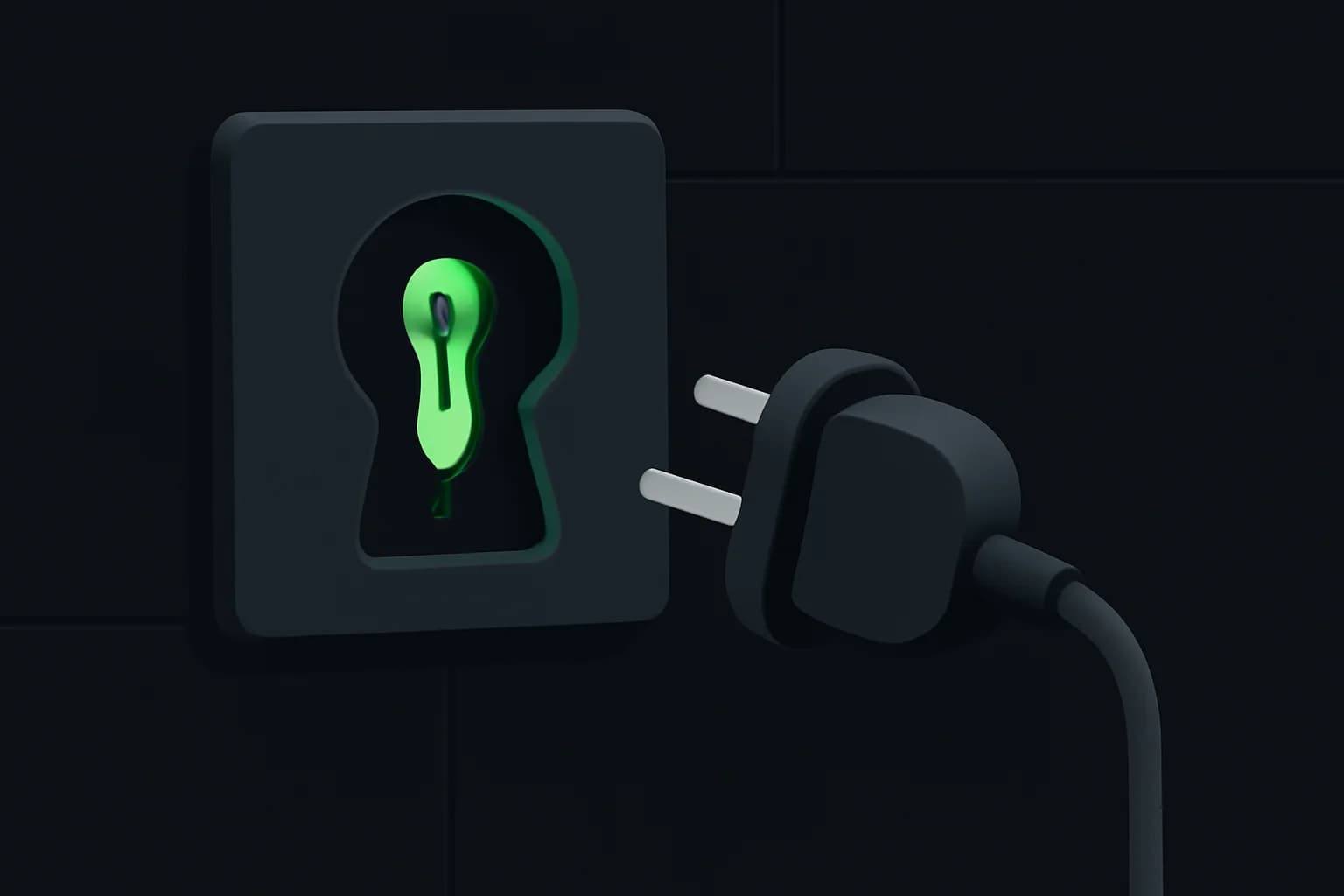
Noah Shinn's Instinct went from a $50 million valuation to $2.5 billion in a matter of months, on the strength of a simple pitch: text or call an AI agent and it handles your life — emails, calendars, travel, subscriptions, account logins. That pitch runs into a hard wall the moment it requires real credentials, and on September 4, 2026, Shinn posted on X that Instinct is partnering with 1Password to broker the credentials it needs, rather than only relying on the "Vault" it built itself. It's a genuinely important move for anyone tracking what agent security actually looks like once agents leave the sandbox — but the announcement itself is one social post, and it's worth being precise about what's confirmed versus assumed.
TL;DR
| Question | Answer |
|---|---|
| What is Instinct? | A personal AI agent from Spear Street Technology (founder Noah Shinn), reached by text/call, in private beta, valued at $2.5B after a $250M Series B (Aug 2026) |
| What did it announce? | A product integration with 1Password so users can share account credentials via 1Password instead of (or alongside) Instinct's own built-in Vault |
| Is it live? | Rolling out to Instinct's early access group only, per the announcement |
| Does the agent see plaintext passwords? | Not confirmed either way for this specific integration — 1Password's general "Unified Access" architecture is built to avoid it, but no technical spec for the Instinct integration has been published |
| How many Instinct users already share credentials? | 32%, via Instinct's own pre-existing Vault feature, per Shinn's post |
| Has Instinct had security incidents before? | Yes — data retention after access revocation, plaintext email storage, unauthorized sends, and a broad perpetual-license ToS, per TechCrunch reporting |
The core tension: agents need credentials, and credentials are the risk
An agent that can only describe what to do isn't autonomous — it's a chatbot with opinions. To actually check out a purchase, log into a healthcare portal, cancel a subscription, or pull a tax document, an agent needs something that looks a lot like your login. That's the entire premise behind Instinct's "Vault" feature, which Shinn says 32% of users already rely on to sign into loyalty programs, streaming and software subscriptions, reservations systems, healthcare portals, and payroll services.
The problem is that an LLM-driven agent is not a deterministic script. It reads untrusted content constantly — emails, web pages, search results — and text embedded in that content can manipulate its next action. This is indirect prompt injection, and explainx.ai has covered how it hijacks agents in detail: an attacker doesn't need to breach anything, just plant text the agent will read and follow. If that agent is holding a raw, plaintext password when it gets manipulated, the attacker doesn't get "the agent's session" — they get the actual account. TechCrunch's own reporting on Instinct from August 24, 2026 shows this isn't hypothetical: one tester found Instinct kept summarizing emails and storing them in plain text after access was supposedly revoked, and researcher Alex Cohen demonstrated the agent could be phished, concluding "I don't think we're at the point where it's safe to give AI read/write access to your inbox." explainx.ai covered a related Instinct incident in August — product leader Claire Vo revoked Instinct's Google access and still had 36 Gmail messages sitting in its records three hours later, with deletion requiring a manual request rather than a button.
What the 1Password integration is supposed to fix
Based on Shinn's post, the mechanism is: instead of typing credentials directly into Instinct's own Vault, users route them through 1Password acting as a credential broker, and Instinct requests access to what it needs rather than storing raw secrets itself. That maps to how 1Password positions its broader "Unified Access" platform, launched in March 2026 for partners including Anthropic, OpenAI, Cursor, GitHub, Vercel, and CoreWeave — notably, Instinct is not named as a partner in that original 1Password document, which suggests this specific integration is newer and separately announced.
1Password's own description of Unified Access centers on three claims, verified directly from their published post:
- Just-in-time delivery — credentials are provided "at the moment they're needed, evaluating access in context when it's requested," rather than living as long-lived secrets an agent holds continuously.
- Unified audit trails — a single system of record shows "which credential was used, by whom or what, and when," across both human and agent (non-human) identities.
- No secret exposure — security teams can "take ownership of a credential and enable its use without ever exposing the secret itself" to the party requesting access.
That's a real, published architecture, but it describes 1Password's platform in general — not a confirmed technical spec for what Instinct specifically implements. Shinn's post is a single, partially truncated tweet announcing a partnership and a forthcoming "product integration," with no architecture diagram, no documentation, and no statement from either company about whether Instinct's agent process ever touches plaintext at any point in the flow. Given Instinct's track record — the data-retention issues, the ToS granting itself a "perpetual and irrevocable" license to user materials, the unauthorized email TechCrunch reported — the responsible read is: this is what good looks like on paper, and it remains to be verified in Instinct's actual implementation once it's live outside early access.
How this compares to other agent-credential patterns explainx.ai has covered
This isn't the first time the "how much access should an agent get, and how do you prove it later" question has come up on this blog. A few genuinely relevant threads:
- MCP Security Guide 2026 covers the same underlying problem for tool-calling agents generally — least-privilege design, authentication patterns, and audit logging for any system where an agent reaches into real infrastructure. The credential-broker pattern 1Password describes is a specific instance of the least-privilege principle that guide argues for.
- Claude Code Permission Modes Explained is the closest existing analogue for scoped, revocable access control, just applied to filesystem and shell actions instead of account logins —
default,acceptEdits, andbypassPermissionsmodes are effectively different trust tiers, the same concept 1Password is trying to bring to credential access. - The viral "AI agent browsed NSFW content" claim, covered on explainx.ai earlier this week, is the same underlying lesson from the opposite direction: an agent given open-ended autonomy with no scoped guardrails will eventually do something nobody approved. Credential vaults are the account-access version of the same navigation-guardrail problem.
- What Is Indirect Prompt Injection? is the attack vector that makes any of this matter in the first place — an agent with standing, unscoped credential access is exactly the target that makes injection attacks worth the effort.
What builders should insist on before wiring an agent to a vault
If you're integrating a similar pattern — an agent that needs to authenticate as a user against third-party services — the specifics matter more than the marketing phrase "integrates with a password manager." Insist on:
- Scoped, short-lived grants, not standing access. The agent should request a credential for one task and lose it when the task ends, not hold a persistent session token indefinitely.
- An audit log you can actually read. Which credential, used by which agent run, for what stated task, at what timestamp — and a way to see it without filing a support ticket.
- A human-approval gate on high-risk actions. Logging into a loyalty account is low stakes; authorizing a payment, changing account recovery details, or sending an email on your behalf is not. Those should require an explicit confirmation, not just "the agent decided to."
- A direct answer to "does the agent process ever see the raw secret." Not "we integrate with 1Password" — the actual architectural claim. If a vendor can't answer that specifically, assume the answer is closer to plaintext than to a broker.
- Revocability that actually revokes. Instinct's own reported failure to stop processing email after a tester revoked access is the exact failure mode a credential broker is supposed to prevent — verify that revoking access at the vault level actually cuts off the agent mid-task, not just for future requests.
None of this makes the pattern wrong to pursue — brokered, scoped credential access is a real improvement over typing a password into a chat box. It just isn't automatically true because a company announced a partnership on X.
Related reading
- Instinct AI Kept Emails After Access Was Revoked — The Real Lesson
- MCP Security Guide 2026: How to Secure AI Agent Tool Access
- What Is Indirect Prompt Injection? How Web Content Hijacks AI Agents
- Claude Code Permission Modes Explained
- The Viral "AI Agent Browsed NSFW Content" Claim: Browser-Agent Guardrails
- Claude Enterprise-Managed Auth: Zero-Touch MCP via Okta
- Is Claude Cowork Safe? Security Vulnerabilities
- 1Password for Agents (October 22, 2026): approval-based sign-in that lists Instinct as a partner working on support
- 1Password: Introducing Unified Access (official)
- TechCrunch: Instinct's powerful AI assistant is raising privacy and security concerns (official reporting)
Version specs, funding figures, and product details in this post reflect what was publicly available as of September 5, 2026. Instinct is in private beta and its 1Password integration is limited to an early access group — both are likely to change as the rollout widens.