



On November 11, 2026, Helsing — the Munich-based defense-AI company — launched Clarity, an agentic intelligence platform that routes satellite, drone, signals, and report data through hundreds of military-tuned AI agents before a human authorizes any strike. Helsing's newsroom post frames it as Europe's sovereign alternative to Palantir's Maven and Anduril's Lattice: same battlefield data flood, different political requirement that models, logs, and hosting stay under European customer control.
For AI builders, Clarity is less about drones — Helsing already sells uncrewed systems — and more about how to wire many agents without letting any one model shortcut the chain of evidence.
Agents that act on your behalf need rules. See how explainx helps secure your agents →
TL;DR
| Topic | Helsing says (Nov 11, 2026) |
|---|---|
| Product | Clarity agentic intelligence platform |
| Agents | Hundreds of parallel specialists |
| Inputs | Satellites, drones, SIGINT, OSINT, unit reports |
| Outputs | Threat map, effector-ready engagement packages |
| Human role | Review every target; authorize every weapon hand-off |
| Hosting | Customer-owned infrastructure; EU-built models |
| Competitors named in press | Palantir Maven, Anduril Lattice |
| Deployment status | Not disclosed in CNA/Reuters day-one coverage |
Why militaries want agent swarms now
Ukraine's drone war taught planners that data volume, not lack of sensors, breaks staff workflows. On its Clarity product page, Helsing cites recon flights recording more than a billion radar pulses per pass and daily satellite stacks too large for manual triage — a scale problem NATO Maven discussions already acknowledge.
Clarity's pitch is parallel specialists instead of one monolithic model:
- Wide-area watch agents track vessels and convoys across satellite passes.
- Signals agents correlate emitters.
- Written-source agents ingest field reports.
- A master agent merges disagreements into one map picture.
That mirrors commercial multi-agent orchestration benchmarks like WorkflowArena, but with classified ACLs and kinetic stakes.
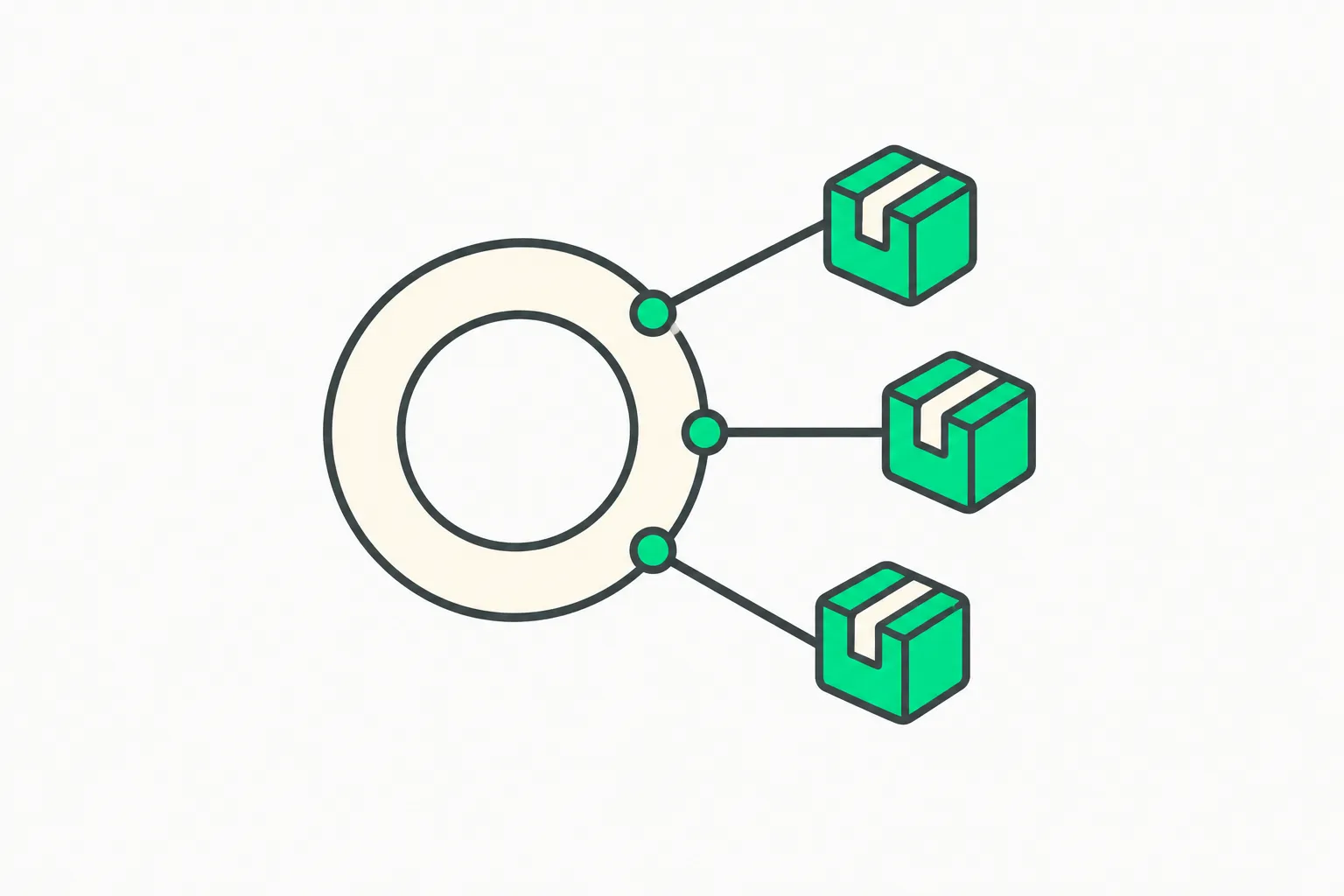 Helsing Clarity military AI agents fusing battlefield intelligence data in parallel
What Clarity does step by step
Helsing's product page breaks the loop into three commander-facing stages:
Synthesise intelligence
Agents ingest feeds the unit already owns — plus connectors Helsing ships — and flag what changed since the last pass. The design goal is a single operational picture without forcing analysts to alt-tab across vendor portals.
Identify threats
Assets earn confidence only when independent sources agree. Clarity ranks candidates against the commander's plan and attaches evidence traces so a reviewer sees why an icon appeared, not just that a model said so.
Prepare engagements
Different weapons need different fields: coordinates for ballistic strikes, seeker signatures for autonomous munitions, search boxes for loitering drones. Clarity packages those fields per effector type; the human still picks the weapon and presses authorize.
CTO Rob Fink's quote on the newsroom post stresses traceability, provenance, and classified-data handling — the same nouns enterprise security teams use when they demand immutable logs for AI agent audits.
Sovereignty, standards, and procurement politics
Helsing repeats three procurement keywords:
- Sovereign by design — customer owns data, models, and ops records.
- MOSA — modular open systems so effectors from multiple vendors plug in.
- NATO standards — interoperability for allied buyers skeptical of single-vendor lock-in.
That language targets European capitals funding domestic AI alongside Sakana's defense advisors hire and wider strategic autonomy debates.
Reuters notes Helsing did not name live operators on launch day. Treat battlefield efficacy claims as architecture previews until allied ministries publish evaluation contracts.
Human-in-the-loop as a product feature, not a disclaimer
Every marketing line about Clarity ends with the same constraint: humans command engagements. Operators nominate threats, see supporting evidence, and sign weapon hand-offs; Clarity blocks progression on weak or stale intelligence.
That is the credible way to sell military agents after years of autonomy backlash in autonomous-weapons diplomacy — and it is the same pattern civilian regulators ask finance and health agents to copy (see EU AI Act tiering for high-risk systems).
Builders outside defense should copy the mechanism, not the domain: separate detection agents from action agents, store per-step provenance, and require a named human credential before irreversible tools fire — the lesson repeated in felony-bench agent incidents.
How Clarity compares in the defense-agent stack
| Platform | Vendor | Positioning (public) |
|---|---|---|
| Maven | Palantir | Battlefield analytics; NATO-facing AI targeting aid |
| Lattice | Anduril | Mesh for sensors and autonomous systems |
| Clarity | Helsing | Agentic intel fusion; EU sovereign hosting |
Palantir's Maven already sits in allied exercises; Anduril markets Lattice as hardware-agnostic glue. Clarity's difference, per Helsing, is agent-native software trained on military ontologies from the first commit rather than bolting LLMs onto legacy C2 clients — a claim we cannot benchmark without classified evaluations.
What developers can learn
Even if you never touch classified nets, Clarity encodes five reusable design rules:
- Specialists beat generalists for high-volume sensor fusion.
- Confidence requires corroboration, not a single model logit.
- Effector schemas differ — one JSON blob does not fit all tools.
- Audit trails are UX, not compliance paperwork.
- Sovereign hosting is becoming a sales requirement in regulated regions, echoing European cloud AI procurement.
Agent-framework authors should read Helsing's emphasis on open SDK and third-party effector hooks as pressure to keep tool APIs stable, the same way MCP won developer mindshare in enterprise IT.
SDK, integrations, and the effector long tail
Helsing's product page promises an open SDK and hooks for effectors from multiple manufacturers. That matters because NATO buyers intentionally mix radars, drones, and strike assets from different vendors — lock-in is a political problem, not only a technical one.
Clarity's pitch is ontology-first fusion: agents share a military vocabulary so a drone track, a SIGINT hit, and a human report can merge without each vendor building custom ETL. Enterprise analogs appear in multimodal knowledge agents research, but Clarity adds classification tiers and rules-of-engagement gates as first-class objects.
For software engineers, the lesson is to design effector adapters early — one map tile is not one API call when the downstream system might be a cruise missile, a loitering munition, or an electronic-warfare pod, each with different mandatory fields.
European procurement context
Helsing's Berlin launch timing sits next to EU strategic autonomy funding and bilateral aid to Ukraine. Reuters framed Clarity as Helsing's move from hardware-only drones into the battlefield software layer Palantir already monetizes.
CNA quoted co-CEO Gundbert Scherf saying battlefield success will depend on turning information into action — language NATO staffs use when they complain Maven outputs still require too many analyst hours. Whether Clarity shrinks that gap is unproven without public exercise scores.
Germany's military has said it wants more AI-enabled systems from 2027; Clarity is marketing into that window, not claiming live Bundeswehr deployment on day one.
Civilian parallels (without the weapons)
Strip the weapons vocabulary and Clarity still describes a pattern enterprises want:
- Many narrow agents instead of one general model.
- Evidence objects attached to every recommendation.
- Human approval before irreversible actions.
- Customer-owned hosting for regulated data.
Insurance fraud desks, cyber SOCs, and grid operators are building smaller versions with Foundry-style agent services and Bedrock AgentCore patterns. The difference is kinetic effectors; the control topology rhymes.
Ethics, law, and autonomy debates
Helsing repeats that every engagement is a human decision — aligning with political red lines on autonomous weapons. NGOs will still ask whether agent-suggested targets bias humans toward confirmation, the same cognitive concern raised in autonomous targeting policy posts.
Builders exporting dual-use agent frameworks should watch Clarity as a case study in marketing human oversight while still selling speed. Your README should document who can call which tool with the same clarity Helsing gives commanders.
 European military AI agents on Helsing Clarity reviewing sensor evidence before human authorization
Limits and open questions
Launch-day reporting from CNA and Resilience Media leaves major gaps:
- No public benchmark against Maven on identical exercise data.
- No pricing or license shape for allied ministries.
- No clarity on which foundation models power which agents.
- No independent red-team results on spoofed sensor feeds.
Until those exist, treat Clarity as a procurement contender, not a proven capability leap.
What procurement officers will ask next
Expect RFP questions Clarity's launch post does not yet answer publicly:
- Export control class for models trained on allied classified feeds.
- Data residency guarantees when customers host on sovereign clouds.
- Red-team reports against spoofed AIS tracks and fabricated OSINT uploads.
- Interoperability tests with existing Palantir Maven deployments side by side.
- Liability allocation when an agent proposes a target humans reject too slowly.
Until those appear in tender documents, classify Clarity as marketing-ready architecture, not a finished procurement substitute. Journalists should cite Helsing's primary newsroom URL for product claims and Reuters or CNA for same-day context. Builders outside defense can still study the agent checklist as a template for high-stakes fusion pipelines in any domain where mistaken automation is expensive.
Related on explainx.ai
- Palantir Maven NATO kill-switch reporting
- WorkflowArena multi-agent benchmark
- Sakana defense advisors
- US–China superintelligence dialogue
- EU AI Act high-risk context
- Agent types guide
- Shadcn agent skill audit pattern
Product statements reflect Helsing's November 11, 2026 launch materials and same-day Reuters and CNA reporting.