



Google launched Dreambeans in India on Monday, November 2, 2026. It is the first market outside the US for the experimental AI app, which turns your Gmail, Calendar, Photos, YouTube and Search activity into illustrated stories. The India version supports 13 local languages plus English, TechCrunch reported. Google first described the app in its June 3 announcement.
The expansion arrives with a mixed signal: the same TechCrunch report cites Sensor Tower estimates showing US downloads fell sharply last month. This post explains what Dreambeans does, what it asks of your data, and how to read the numbers.
Quick reference
| Question | Answer |
|---|---|
| What is it? | Google Labs app that proactively writes illustrated stories from your Google data |
| What powers it? | Personal Intelligence and Nano Banana 2 (Google's June post); Veo animates some stories (TechCrunch) |
| Where is it available? | The US (adults 18+) and, from November 2, India |
| India languages | English plus 13 Indian languages, including Hindi, Punjabi, Tamil, Telugu, Bengali |
| Mixed-language stories? | No: one language at a time |
| Who can use it? | Personal Gmail accounts only; not enterprise accounts |
| Price | Not stated in the sources we read for India |
| Downloads | About 55,000 in the US since June (Sensor Tower estimate) |
What does Google Dreambeans actually do?
 An open storybook with a pencil, picturing the daily illustrated stories Google Dreambeans writes from your data
According to Google's announcement, Dreambeans "uses Personal Intelligence to connect information from your Google apps, including Gmail, Calendar, Photos, YouTube and Search history" to curate stories. It is designed as a finite collection rather than an endless feed. Google's example: a Gmail delivery confirmation for puppy treats led to training tips, and a Calendar reminder about a visiting friend led to dog-friendly restaurant suggestions. Each story has its own illustration reflecting the people and places you see most.
You can tap a story to go deeper, save favorites to a library, and give feedback to tune future collections. The app requires at least one connected service and works best with all of them. Google says the choices you make in Dreambeans do not change your Personal Intelligence settings in Gemini or AI Mode.
TechCrunch adds that the app started with static AI illustrations and recently gained a feature that uses Google's Veo video model to animate images in select stories. It opened to all eligible US users aged 18 and older less than two months before the India launch.
If Personal Intelligence is new to you, our posts on Gemini Personal Intelligence in Android Auto, Gmail, Photos and Maps and Chrome AI autofill with Gmail data show how the same system reaches into other products.
Why India, and why 13 languages?
Google product manager Gozde Oznur told reporters that India stood out because of strong user interest and a high overlap of people using Gemini, Gmail and Google Photos together, per TechCrunch. That overlap matters: Dreambeans is only as good as the data it can read.
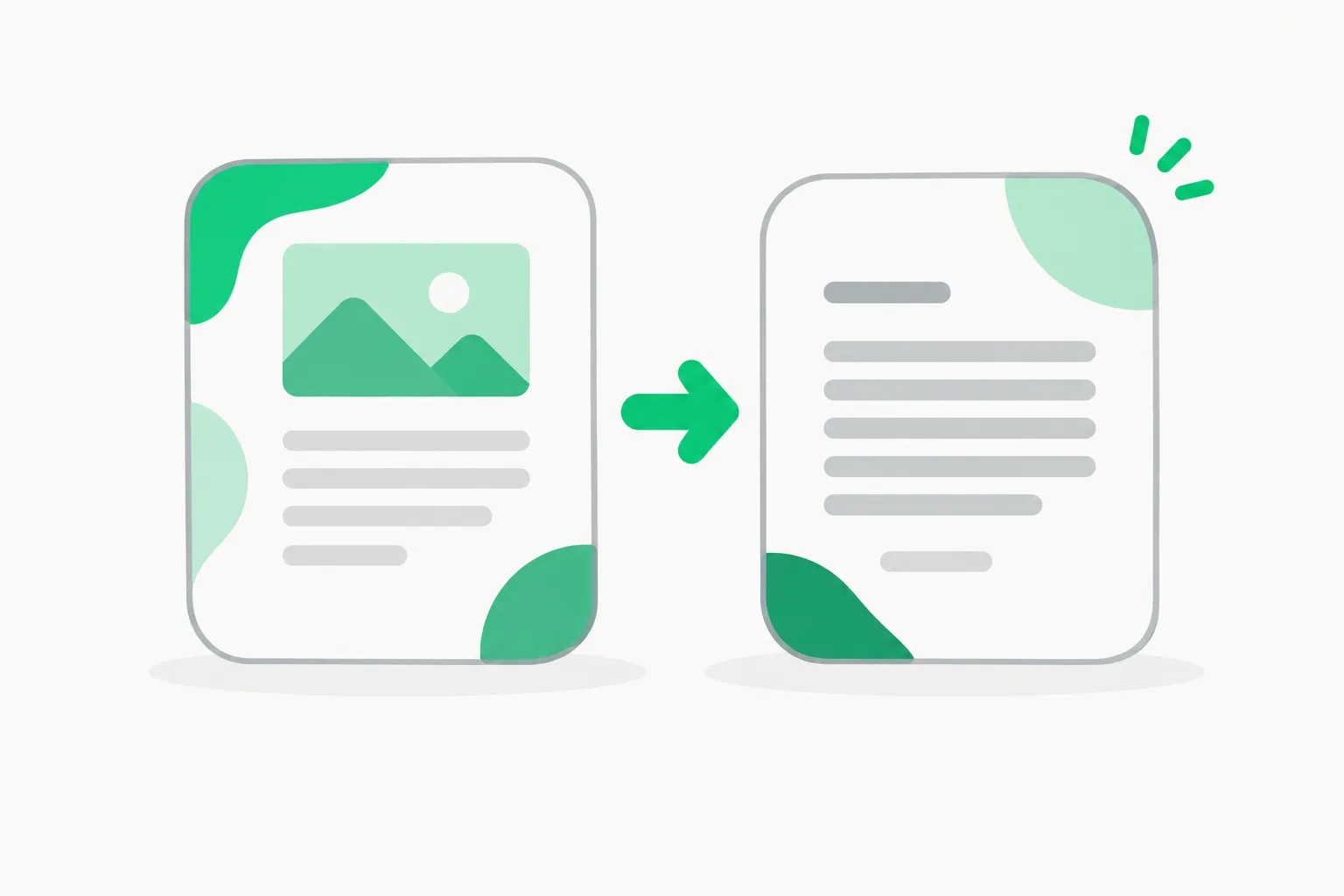 Two pages joined by an arrow, showing how Dreambeans writes stories in one of 13 Indian languages
The language support is broad but has a clear limit. Users choose one language per story set. The app can read signals across Google services in several languages, but it cannot yet write a story that mixes them. Many Indian users switch between Hindi and English in one sentence, often called Hinglish, so a one-language rule is a real gap, as TechCrunch notes. For context on how Indian language AI is developing, see our coverage of Sarvam's models and API and Sarvam's Bulbul v4 text to speech.
What are the privacy risks?
The core design is proactive: you do not type a prompt. The app reads connected services and decides what to show. That raises three issues, all covered in the TechCrunch report.
- Sensitive sources. Gmail, Photos and Search history can hold private information. Some users may not want an AI app reading it to produce entertainment.
- Controls. Oznur said users pick which services to connect, can disconnect at any time, can delete Dreambeans data in the app, and that deleting data from the underlying service also removes it from the personalization system. Users can also tell the app to avoid subjects such as business information.
- Upsetting memories. Oznur acknowledged that the app could generate stories involving people who have died. Users can tell the app to stop showing certain content.
Two boundaries help: the app is for personal Gmail accounts only, and generated stories are visible only to the account holder, per Google's statements at the briefing. These are Google's descriptions, and we have not tested the India build.
A practical checklist before you connect
- Connect only the services you want used. Start with one and add more later.
- Review the in-app controls for avoiding subjects before you open the first collection.
- Remember the data comes from your account. If a story surprises you, check what Photos or Search history contains.
- Delete Dreambeans data from the app if you stop using it.
For a wider look at AI products that read your accounts, our Gemini Personal Intelligence explainer lists the opt-in steps.
Timeline: from Ultra-only experiment to India
| Date | Event | Source |
|---|---|---|
| June 3, 2026 | Google Labs introduces Dreambeans, rolling out to eligible Google AI Ultra subscribers (18+) in the US on Android and iOS, with a waitlist for others | Google blog |
| September 2026 | Opened to all eligible US users aged 18 and older (TechCrunch says this was less than two months before the India launch) | TechCrunch; Google Labs |
| Recent weeks | Veo-based animation added to select stories | TechCrunch |
| November 2, 2026 | India launch with English and 13 Indian languages | TechCrunch |
The path is typical of a Labs experiment: a paid-tier start, a wider US release, then a first international market chosen for user overlap with Google's other services. It also shows how quickly Google moves Personal Intelligence features between products.
What are people likely to ask next?
Is it free in India? The sources we read do not say. Check the app listing and Google's Labs page before you assume.
Does it work with a work Gmail account? No. Oznur said it is available only to personal Gmail account holders, not enterprise users.
Can I stop it from showing business information? Per Oznur, you can tell the app to avoid certain subjects, including business-related information, and it will try to adjust. The word "try" matters: this is a preference, not a guarantee.
Will it replace a chatbot? No. It does not answer queries. It is closer to a curated reading feed than an assistant, which is why TechCrunch cautions against comparing it directly with ChatGPT or Claude download counts.
What does it do with a deleted email? Oznur asserted that information deleted from the underlying connected services is also removed from Dreambeans' personalization system. That is Google's statement, and we could not verify it independently.
How well is Dreambeans doing? Reading the Sensor Tower numbers
TechCrunch cites Sensor Tower estimates, not Google data:
| Metric | Figure (Sensor Tower estimate) |
|---|---|
| US downloads since June debut | Nearly 55,000 |
| Share in September, when opened to all eligible US adults | About 63% |
| October downloads | About 5,500, down 84% month over month |
| First 30 days after opening to all US users | About 29,000 |
| Meta's Muse, first 30 days | 7.4 million |
| ChatGPT, first 30 days | 2.8 million |
| Grok Bot, first 30 days | 362,000 |
| Claude, first 30 days | 155,000 |
Read these carefully. They are third-party estimates of app-store downloads. They exclude any other access paths, and they compare a niche story app with general-purpose assistants. TechCrunch itself notes that Dreambeans focuses on personalized stories instead of answering broad queries. A low download count does not mean low engagement among the people who do use it, and Google has not published usage figures in the sources we read.
Our earlier coverage of the comparison apps may help: see Grok Bot real-world use cases for one of them.
What this means for you
- If you are in India, Dreambeans is a low-stakes way to see what Personal Intelligence can do with your own data. Treat it as an experiment, and limit what you connect.
- If you build consumer AI, the lesson is the Hinglish gap. Multi-language users do not behave like single-language settings, and a one-language-at-a-time rule is easy to hit.
- If you follow Google's AI strategy, this is the same Personal Intelligence layer spreading from Gemini to Chrome to a dedicated app. Google Labs also shipped CC, an agent built for families, which draws on similar ideas.
- If you worry about privacy, the question is not whether the controls exist but whether you want proactive reading of personal data at all.
What is still unknown
- Google has not published Dreambeans usage or retention numbers in the sources we read.
- The India pricing and eligibility terms were not in the TechCrunch report.
- Download data is a Sensor Tower estimate, and the 84% drop covers one month after a rollout spike.
- We did not test the India build, so quality of the 13-language stories is unverified.
Details are accurate as of November 3, 2026, based on Google's June 3 post and TechCrunch's November 2 report.