



Google's AI Overview, asked how to donate to Texas Senate candidate James Talarico, reportedly listed lookalike fundraising pages next to the official one, and at least one of them sent money to a different campaign. The first public report we found is a September 22, 2026 Bluesky post by campaign tech strategist A.J. Carrillo; on October 22, 2026 The Atlantic's Will Oremus wrote that several people who thought they were donating to Talarico gave their money to someone else.
This post sets out what is confirmed, what is claimed, and what is not known. It is a different story from the Storm-1516 deepfake targeting Talarico, though both show how AI-mediated information can be gamed in a hot Senate race.
A note on sourcing: one aggregator summary of this story said Google's AI "picked up false data from a network of fraudulent websites." We could not trace that framing to a primary account. The primary accounts we could read describe something simpler and arguably more worrying, covered below.
TL;DR: what we know and do not know
| Question | Answer |
|---|---|
| What was reported? | Google AI Overview answers to "how to donate to Talarico" included lookalike donation pages |
| Who first reported it? | A.J. Carrillo, a campaign tech strategist, on Bluesky, September 22, 2026 |
| Where did money go? | At least one page, built by an unrelated PAC, routed donations to Sen. John Hickenlooper's reelection campaign |
| Who wrote it up later? | Blue State (September 29) and The Atlantic's Will Oremus (October 22) |
| Was Google hacked or fooled by fake news sites? | No evidence of that in the sources we read |
| Did Google comment? | We could not find a Google statement in the material we could open |
| Is the Atlantic text fully verified by us? | No. We could only read an excerpt quoted by Election Law Blog |
| Still happening? | Unknown. AI answers change by the day, so this is not something we could reproduce |
What the primary accounts actually say
Carrillo's post on Bluesky says the AI search results pointed to three ActBlue pages: Talarico's official page, Hickenlooper's page, and a joint fundraising page associated with Senator Chuck Schumer. In his words, Hickenlooper's page "was designed to look like it's Talarico's" page and all of its donations go to Hickenlooper. He adds, sardonically, "At least the scampac's split it 50/50," which we read as a reference to other PAC-run pages, though the post does not spell that out.
Blue State, a digital strategy agency, described the same observation on September 29: when asked how to donate to Talarico's campaign, Google's AI Overview returned three pages, only one of which was Talarico's official website, and one looked as if it was created to raise money for Talarico but sent donations to Hickenlooper's reelection campaign. It says Kansas Senate candidate Adam Hamilton had the same problem, with AI Overview directing potential donors to unaffiliated PACs using his name.
The Atlantic piece is quoted at the Election Law Blog's link roundup: "If you were wondering whether AI could make the midterms even more confusing, here's one data point: Several people who thought they were donating to James Talarico unwittingly gave their money to someone else." Another Election Law Blog entry carrying the article was blocked to our fetcher, and The Atlantic itself returned a 403, so we have not read the full article, including how Hickenlooper's campaign and Google responded.
Not a hack: the lookalike-page problem
The more careful reading is not that fake news sites poisoned Google's model. These were real, working donation pages on a real platform. Names, photos and a donate button made them look like exact answers to the question "how do I donate to Talarico."
Blue State's explanation of the mechanism is plain: AI answer tools "don't necessarily check who's behind those sources." They look for pages that seem credible and appear to answer the question. A page named after a candidate with the candidate's photo and a donate button matches the query well, even if it was created by a scammy super PAC trying to capture interest for its own fundraising. We should add that this is one agency's explanation of a mechanism, not a statement from Google about how its system ranked the pages.
That matters because it changes what the fix looks like. The problem is not a bad training set; it is retrieval and source selection in an answer engine that returns one blended response instead of ten links a human can scan. For the broader pattern, see our reporting on German courts holding Google liable for AI Overviews content and the Google and CNN AI partnership, which shows how heavily Google is leaning on AI answers for news.
Why political donations are an easy target
Money questions are unusually exposed to this failure for three reasons.
- The query is transactional. "How do I donate to X" asks for a place to send money, so a wrong answer has a direct cost, not just a wrong fact.
- Branded names are cheap to copy. Anyone can register a page or PAC with a candidate's name, and the legal gray zone around "independent" committees means lookalikes are often technically lawful.
- A single answer hides the choice. In a normal search results page the official domain is usually visible. In a generated summary, three links can look equally authoritative.
The risk extends past campaigns. Blue State notes that lookalike fundraising pages, outdated third-party listings and scam relief funds after disasters can all end up in an AI answer, hurting a nonprofit's revenue and reputation.
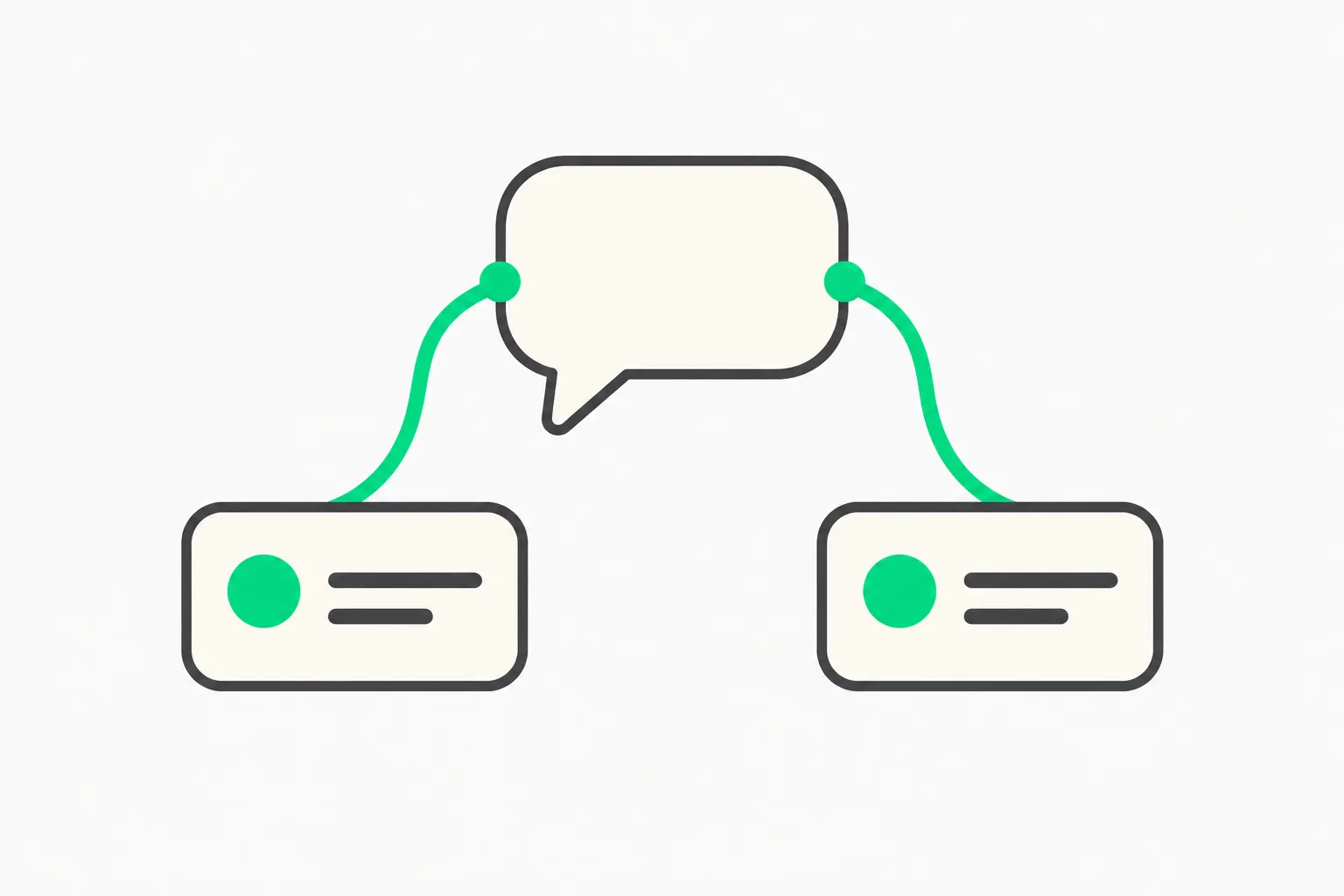 A search bar feeding one answer card with source markers, showing how an AI Overview blends sources into one answer
What is claimed but unverified
- How many donors were affected, and how much money moved. The Atlantic excerpt says "several people." We have no dollar figure.
- Whether Google has changed its answers. We could not reproduce the original responses, and AI Overviews vary between users and over time.
- Whether the lookalike pages broke any rules. ActBlue is the platform hosting the pages; we did not find a platform or FEC finding about them. Whether the pages' branding was lawful is a legal question we do not answer.
- Whether this was deliberate manipulation of search. Commentary on a podcast called it search and answer-engine optimization, but we have no evidence about the intent of the page owners beyond their fundraising goal.
How to check this yourself
Do not rely on screenshots, including ours. If you want to test your own candidate or charity:
- Ask Google, ChatGPT and Perplexity "how do I donate to [name]" and "what is [name]'s official website."
- Save screenshots with dates, because the answers change.
- Compare each linked domain with the one on the candidate's own verified social profile.
- On the payment page, read the recipient name and the "paid for by" line before entering card details.
What to do if you want to donate (or run a campaign)
For donors: skip the AI answer and navigate directly. Type the campaign's domain, or use a link from the candidate's verified account, and confirm the recipient on the checkout page. If a page splits your money among several committees, it should say so.
For campaigns and nonprofits, Blue State suggests three steps: make your official donation page the easiest answer to find with clear page titles linked from your site, bios and press releases; run brand search ads on your own name; and regularly query AI tools about yourself and report wrong answers through their feedback links. Those are an agency's marketing recommendations, but they are cheap to try.
For teams building AI products that act on user requests, the lesson is the one we keep repeating in our coverage: an answer engine that can recommend where to send money needs source verification before it recommends. If your agents can take actions like paying or submitting forms based on retrieved pages, AgentBeam, the agent security platform from the explainx.ai team, is built to stop AI agents before they take dangerous actions.
 A magnifying glass resolving scattered shapes into an orderly grid, representing verifying the recipient before donating
Why this matters beyond one Senate race
Midterm campaigns are a stress test for AI search. We have already seen AI-generated campaign ads go largely undisclosed and OpenAI report disrupting Russian and Iranian influence operations. The donation mix-up is smaller and mundane, with no foreign actor needed: a lookalike page and a system that ranks by plausibility are enough. That makes it a useful reference case for regulators and for Google, which is already under political scrutiny over its AI products, as in the Hawley and Blumenthal letter on Gemini in classrooms.
What to watch: whether Google gives an on-record explanation, whether answer engines add a "verified official site" signal for candidates and charities, and whether regulators treat payment-destination errors in AI answers as a consumer-protection issue.
Details are as reported through October 23, 2026 and based on the cited accounts; we could not read the full Atlantic article, and AI answers change frequently.
Related reading
- Storm-1516 and the Talarico deepfake: what is confirmed
- German courts hold Google liable for AI Overviews
- Google and CNN AI partnership: what is known
- AI-generated campaign ads: 220 ads, undisclosed
- OpenAI disrupts Russia and Iran false-front operations
- Hawley and Blumenthal letter on Google AI in classrooms
- Sources: Blue State, A.J. Carrillo on Bluesky, Election Law Blog