



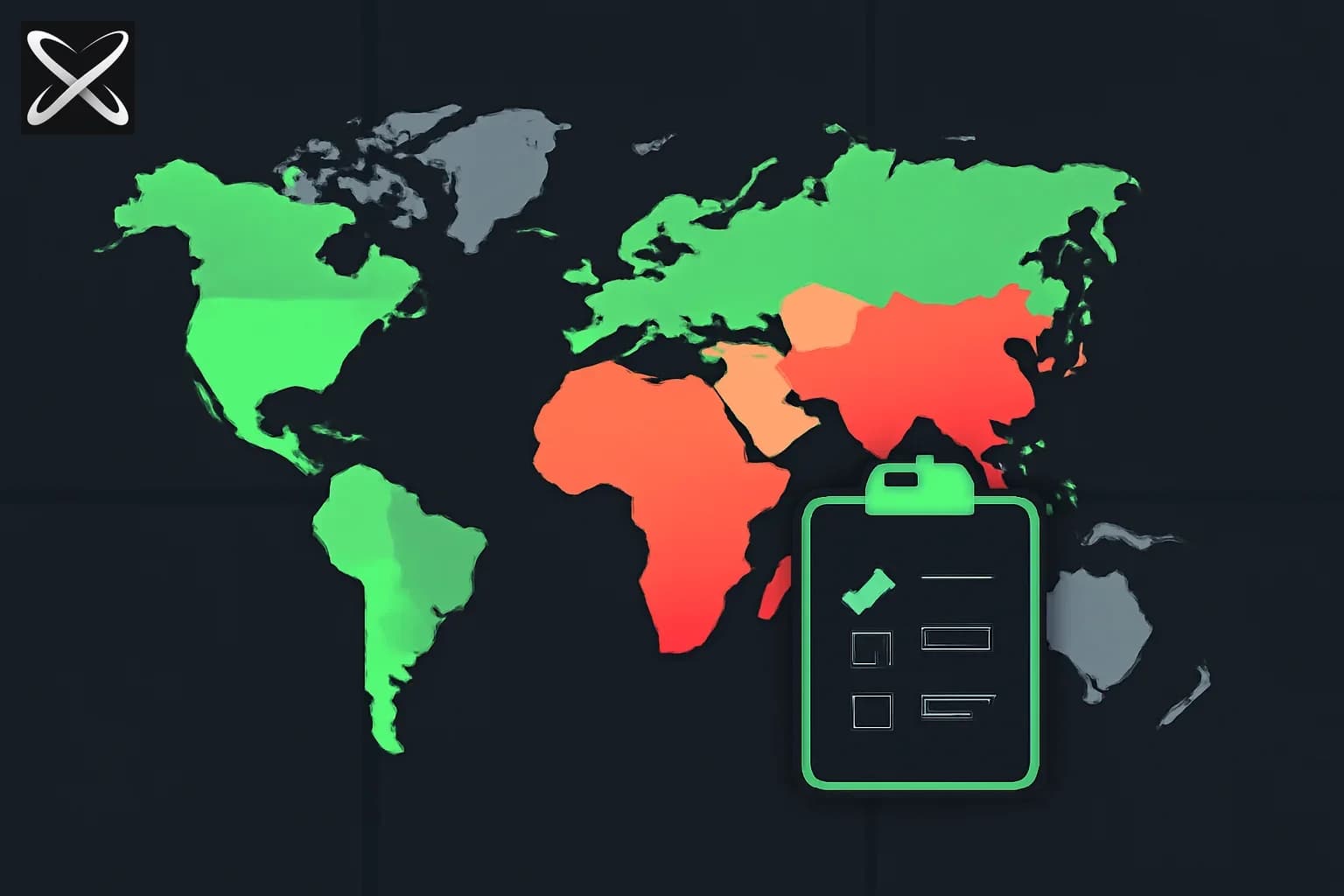
At a G20 Innovation Ministerial meeting in Chapel Hill, North Carolina, on September 1-2, 2026, the US secured broad international backing — including, notably, from China — for a light-touch AI regulatory framework it's calling the "Carolina Principles." The core ask: governments should avoid standing up new, AI-specific regulatory bodies, and instead apply existing sector rules to AI situations as they come up. Tech CEOs including Nvidia's Jensen Huang, OpenAI's Sam Altman, and Elon Musk (via video) attended; Google DeepMind's Demis Hassabis was the most notable dissenting voice.
TL;DR
| Question | Answer |
|---|---|
| What happened? | G20 Innovation Ministerial, Chapel Hill NC, September 1-2, 2026 |
| Core proposal | "Carolina Principles" — avoid new AI-specific regulators, use existing frameworks |
| Who pushed it | Commerce Secretary Howard Lutnick and White House OSTP Director Michael Kratsios |
| Did China sign? | Yes, per Kratsios — Science and Technology Minister Yin Hejun signed in a bilateral meeting |
| Notable attendees | Jensen Huang, Sam Altman, Demis Hassabis, Elon Musk (video) |
| Main dissent | Demis Hassabis called for a FINRA-style body to test powerful AI systems pre-release |
| Contrast | EU's AI Act high-risk-system requirements became enforceable August 2, 2026 — the opposite regulatory direction |
| Bonus controversy | Trump's Truth Social post calling data-center-opposing towns "backwards and poor" landed the same week |
What the Carolina Principles actually ask for
Stripped of framing, the Carolina Principles are narrower than "no AI regulation" — the actual ask is that G20 governments avoid creating new, AI-specific regulatory bodies, and instead handle AI-related issues through existing sector-specific frameworks (financial regulators handling AI in finance, health regulators handling AI in medical devices, and so on), reserving new rulemaking for genuinely novel situations existing law doesn't cover. That's a meaningfully different ask than pure deregulation — it's an argument about regulatory architecture (extend existing bodies vs. build new AI-specific ones) as much as regulatory intensity.
Michael Kratsios, the White House's tech policy adviser, made the pitch directly at the ministerial, urging countries to apply existing regulatory frameworks wherever possible rather than treating AI as automatically requiring its own new institutional apparatus.
Why China signing on is the most surprising detail here
Public alignment between the US and China on AI governance framing is rare — the two countries' actual regulatory approaches to AI differ substantially in practice, and public diplomatic messaging on AI has more often emphasized competition (export controls, chip restrictions, model-capability races) than shared principles. Kratsios telling reporters that China's Science and Technology Minister Yin Hejun signed the Carolina Principles in a bilateral meeting is worth flagging specifically for that reason — it's a rare instance of the two governments finding common rhetorical ground on how AI should be governed, even if their underlying enforcement realities remain very different.
Worth treating with appropriate skepticism, though: a signed framework principle at a ministerial meeting is a much lower bar than a binding commitment, and "avoid new AI-specific regulators" is compatible with a wide range of actual domestic policy — including policies that are, in practice, quite restrictive through existing channels (data governance, export control, platform regulation) rather than a dedicated "AI law."
The dissent that matters most: Hassabis's FINRA proposal
Not everyone in the room agreed with the light-touch framing. Google DeepMind's Demis Hassabis reportedly called for the US to create a dedicated organization to test the most powerful AI systems before they're released to the public — explicitly modeled on FINRA, the US's existing self-regulatory body for the securities industry. That's a genuinely different proposal than either "build a new AI regulator" or "use only existing frameworks" — a self-regulatory-organization model sits in between: industry-funded and industry-staffed, but with real pre-release testing authority, distinct from a government regulatory agency and distinct from pure voluntary self-governance.
Given Hassabis leads one of the labs whose models would presumably be subject to whatever pre-release testing regime eventually exists, his specific proposal is worth taking seriously as a credible middle path — not deregulation, not a heavy new government bureaucracy, but a structured, testing-focused body with real teeth, funded and run in a way that's precedented in another high-stakes American industry.
The EU contrast that gives this story its edge
The timing here is genuinely pointed: the EU's AI Act reached its most consequential enforcement milestone — requirements for high-risk AI systems becoming legally enforceable — on August 2, 2026, just weeks before the US was in Chapel Hill making the opposite argument to the rest of the G20. Elon Musk, present at the meeting, directly criticized EU tech regulation as inhibiting company progress. Whatever alignment the US secured from China and other G20 members on light-touch principles, it stands in direct tension with the largest single AI-specific regulatory regime already in force — the EU isn't a G20 outlier watching from the sidelines, it's one of the world's largest AI markets already implementing the exact model the Carolina Principles argue against.
The data-center controversy that landed the same week
Separately, but relevant to the broader "how much should governments constrain AI infrastructure" theme running through this meeting: President Trump posted to Truth Social days before/around this meeting that communities opposing AI data centers "want to end up being backwards and poor," contrasting them with towns that "let Data Reign" for lower taxes and more jobs. The comment drew significant pushback given real, documented local concerns about data centers' water use, electricity costs, and pollution — and it's a useful reminder that "light-touch AI regulation" as a G20-level talking point coexists with genuinely contentious, unresolved local fights over the physical infrastructure that light-touch AI policy is meant to accelerate.
Why "framework architecture" arguments matter more than they sound
It's worth dwelling on why the specific form of this debate — new dedicated regulator vs. extend existing sector rules — is a genuinely consequential choice, not just a rhetorical framing difference. A dedicated AI regulator tends to develop specialized expertise, a single point of accountability, and the ability to move at AI's actual pace of change, but also creates a new bureaucratic layer that can become a target for regulatory capture or a chokepoint that slows deployment uniformly across every sector. Extending existing sector regulators (financial regulators handling AI in trading, health regulators handling AI in diagnostics) keeps oversight closer to domain expertise and avoids creating a new institution from scratch, but risks exactly the gap Hassabis is implicitly pointing at: no single body has the cross-sector view or specialized technical capability to evaluate a frontier model's most general, cross-cutting risks before it's released into dozens of different sectors simultaneously.
Both models have real precedent. The US financial industry's mix of sector regulators (SEC, banking regulators) plus a self-regulatory body (FINRA) that sits alongside them is arguably a hybrid of both approaches — which is exactly the model Hassabis is citing, and it's worth noting that hybrid isn't actually incompatible with the Carolina Principles' stated goal of avoiding a brand-new government regulatory body, since FINRA itself isn't a government agency. That nuance — that "avoid new AI-specific government regulators" and "create an AI-specific self-regulatory testing body" aren't necessarily in direct conflict — is easy to miss in coverage that frames this as a clean binary between deregulation and Hassabis's proposal.
What comes next in the diplomatic calendar
G20 ministerial meetings like this one typically feed into a full G20 leaders' summit later in the year, where heads of state (not just ministers) formally adopt or decline to adopt framework agreements reached at the ministerial level. Whether the Carolina Principles survive that process intact, get watered down, or get expanded with additional commitments (potentially including something closer to Hassabis's testing-body proposal) is the next concrete milestone worth tracking — a ministerial-level signing is a meaningful signal of direction, but it's genuinely one step in a longer process, not the final word on how G20 nations will actually govern AI going forward.
Honest limitations
- G20 ministerial agreements of this kind are framework-level commitments, not binding treaties — "signing" the Carolina Principles doesn't obligate any country to specific domestic policy changes, and enforcement or follow-through isn't guaranteed.
- Reporting on China's specific commitment comes from Kratsios's own account of a bilateral meeting — we don't have an independent Chinese government statement confirming the same characterization.
- Other G20 members' specific reactions (Japan, Germany, France, India, South Korea) weren't detailed in the sources reviewed for this piece, despite their ministers reportedly attending.
- This is fast-moving policy reporting from the days immediately following the meeting — specifics may be clarified or revised as more complete readouts and country-level statements become available.
Closing
The Carolina Principles are a real, notable diplomatic win for the US's light-touch AI policy approach — broad G20 backing, including a genuinely surprising signal of alignment from China — landing at the exact moment the EU is proving the opposite model is also viable at scale. Whether "avoid new AI regulators, use existing frameworks" actually holds as durable policy across two dozen governments with very different domestic pressures, or whether Hassabis's FINRA-style testing-body counterproposal ends up being the more durable idea, is the real open question this meeting didn't resolve — it just made the two competing visions for global AI governance more visible at once.
Related on explainx.ai
- AI Regulation: EU AI Act, US Policy — Complete Guide
- AI Policy Timeline 2026: Export Controls, Distillation, Open Weights
- Can Governments Ban AI Models and Tools?
- FSB: Frontier AI Cyber Risk and Financial Stability (G20)
- Google Ad Tech Antitrust Ruling: No Breakup
- NYC Bans Generative AI for 600,000 Students
Sources
- CNBC — G20 tech takeaways: Lutnick pitches adoption of U.S. AI, pushes data center buildout
- Bloomberg — US Strikes Light-Touch AI Regulation Accord With G20 Members
- U.S. News — US Urges Hands-Off Approach to AI Regulation at G20 Tech Meeting
- Tom's Hardware — Trump says communities that reject data centers 'want to end up being backwards and poor'
This post reflects public reporting on the G20 Innovation Ministerial as of September 3, 2026. Individual G20 member country positions and full text of the Carolina Principles were not independently verified beyond the reporting cited above.