



Want to become a Forward Deployed Engineer at Google, OpenAI, Anthropic, or Palantir?
You've read about the 729% demand growth and $238K average salaries. You know FDE is the hottest engineering role in 2026.
But how do you actually prepare?
The FDE interview process is fundamentally different from traditional software engineering interviews:
- 50% of the interview isn't coding—it's case studies, customer empathy, and business judgment
- Technical questions focus on applied AI (RAG, agents, evals) not algorithms
- Behavioral rounds test if you can handle angry customers, not just "tell me about a time you faced conflict"
The problem: Most candidates prepare like it's a software engineering interview and fail the case study round.
The solution: This comprehensive 10,000+ word guide.
What You'll Learn
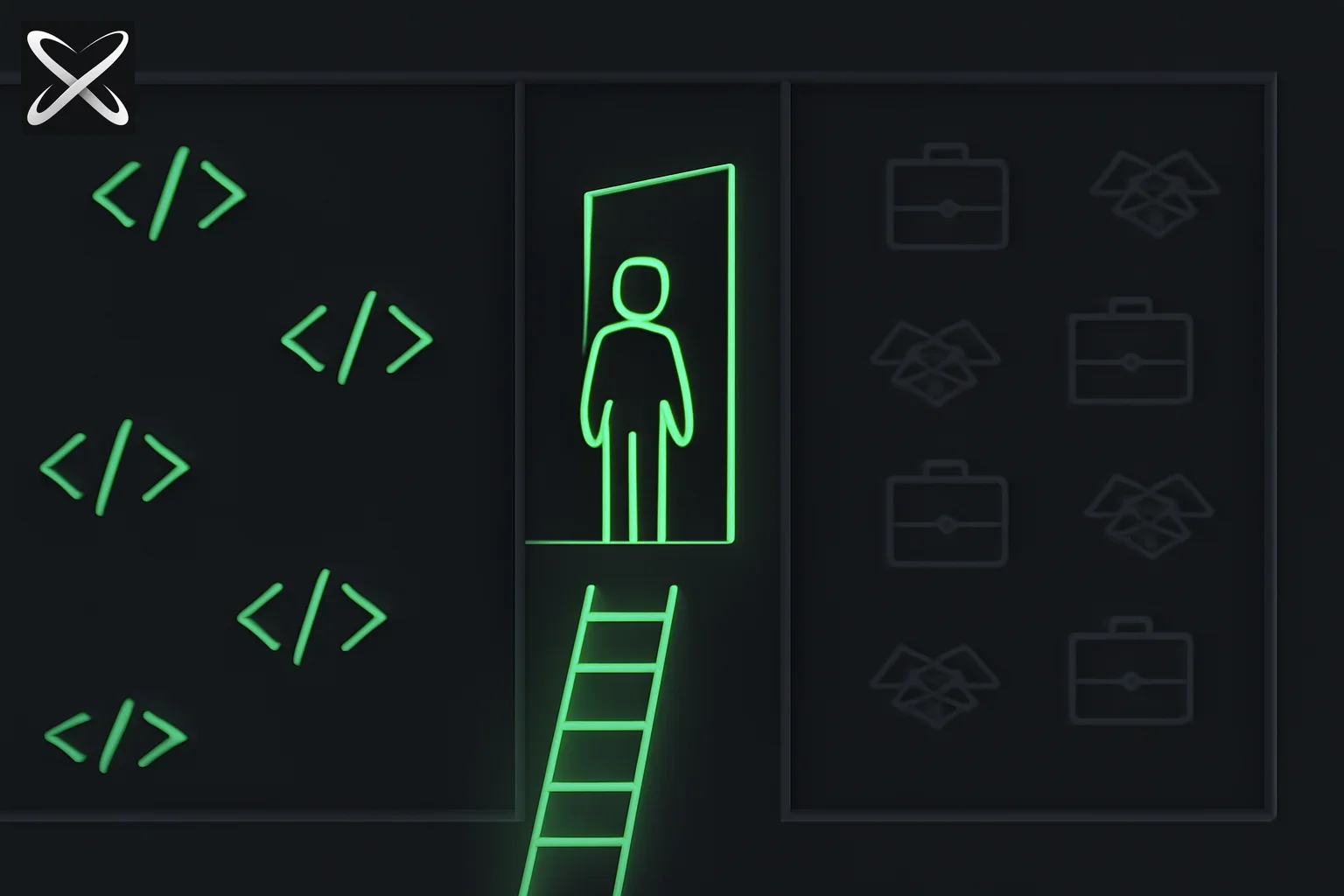 Forward Deployed Engineer preparation guide — a figure climbing rungs toward a doorway between code shapes and business icons
This complete FDE preparation guide covers:
- The 7 Core Competencies (weighted by interview importance)
- 12-Week Preparation Roadmap (customized by background)
- Case Study Mastery (frameworks, 20+ practice problems, rubrics)
- Technical Preparation (Python, SQL, system design, AI/ML)
- Behavioral Interview Strategy (STAR stories, customer empathy)
- Company-Specific Guides (Palantir, Google, OpenAI, Anthropic)
- Salary Negotiation Tactics ($200K → $400K+ strategies)
- Interactive FDE Compatibility Checker (assess your readiness)
- 50+ Practice Questions (coding, case studies, behavioral)
- Post-Offer Evaluation (should you accept? red flags)
Interactive Tool: Use our FDE Compatibility Checker to assess your current skills and get a personalized preparation timeline.
TL;DR: Quick Preparation Summary
| Your Background | Preparation Time | Focus Areas (% of study time) | Hardest Challenge |
|---|---|---|---|
| Software Engineer | 6-8 weeks | Case studies (40%), AI/ML (30%), Communication (20%), System design (10%) | Shifting from code-first to outcome-first thinking |
| Solutions Engineer | 8-10 weeks | Python coding (50%), System design (25%), AI/ML (20%), SQL (5%) | Proving technical depth (Leetcode medium/hard) |
| Data Engineer | 10-12 weeks | Case studies (35%), AI/ML (30%), Customer empathy (20%), Communication (15%) | Demonstrating customer-facing skills |
| Product Manager | 12-16 weeks | Python coding (60%), System design (25%), AI/ML (15%) | Building coding credibility (production-quality code) |
| Complete Beginner | 18-24 months | Python (40%), CS fundamentals (25%), System design (20%), Domain knowledge (15%) | Everything (start with CS degree or bootcamp) |
Universal truth: Everyone must master case studies. This is the unique FDE skill that can't be transferred from other roles.
Part 1: The 7 Core FDE Competencies (Weighted)
Interview Breakdown by Round
According to candidates who've interviewed at top companies:
| Interview Round | Weight | What's Assessed | Pass Rate |
|---|---|---|---|
| Case Study | 30% | Problem decomposition, business judgment, communication | 40% (hardest) |
| Coding (Python) | 25% | Leetcode medium/hard, code quality, debugging | 65% |
| System Design | 20% | Scalable architecture, AI systems, trade-offs | 55% |
| AI/ML Depth | 15% | RAG, agents, evals, production ML | 60% |
| SQL | 5% | Complex queries, optimization, data modeling | 75% |
| Communication | 3% | Explaining technical concepts simply | 70% |
| Behavioral | 2% | Customer empathy, conflict resolution, ownership | 80% |
Key insight: Case studies have lowest pass rate (40%) but highest weight (30%). This is where most candidates fail.
Competency 1: Case Study Mastery (30% of interview)
What it is: Given an ambiguous, real-world enterprise problem, decompose it into actionable steps in 45-60 minutes. There is no single right answer.
Example prompt (Palantir):
"A hospital system wants to reduce readmissions using AI. They have 5 hospitals, 10,000 beds, and readmission rate of 18%. What do you build?"
What interviewers assess:
-
Clarifying questions (first 5-10 minutes)
- Do you ask about data availability?
- Do you understand success metrics?
- Do you probe constraints (budget, timeline, compliance)?
-
Problem decomposition (next 15-20 minutes)
- Can you break problem into sub-problems?
- Do you prioritize (MVP vs long-term)?
- Do you identify dependencies?
-
Solution design (next 15-20 minutes)
- Is your approach technically feasible?
- Do you consider edge cases?
- Do you think about scalability?
-
Communication (throughout)
- Are you structured (vs rambling)?
- Can you pivot when interviewer challenges assumptions?
- Do you think out loud?
Framework to master: CIRCLES
C - Comprehend the situation (ask clarifying questions) I - Identify the customer (who benefits?) R - Report the problem (restate in your words) C - Cut through prioritization (MVP vs nice-to-have) L - List solutions (3-5 approaches, pros/cons each) E - Evaluate trade-offs (technical, business, timeline) S - Summarize recommendation (pick one, justify)
Preparation strategy:
- Study 10+ real case studies (see Case Study Library below)
- Record yourself solving (watch for filler words, unclear structure)
- Practice with timer (45 minutes strict)
- Get feedback from someone who's passed FDE interviews
Competency 2: Python Coding (25% of interview)
What it is: Leetcode medium/hard problems, but with emphasis on production code quality (error handling, readability, testing).
Difficulty compared to SWE interviews: Similar algorithmic complexity, but interviewers care more about:
- Can you write code a customer-facing engineer will maintain?
- Do you handle errors gracefully (customers will hit edge cases)?
- Is your code readable (you'll be onboarding customers, not just engineers)?
Example problem (Google FDE):
"Write a function that takes a video file path and returns a list of all faces detected, with timestamps. Assume you have access to a face detection API. Handle errors (file not found, corrupted video, API failure)."
Not just: "Write a function that detects faces."
What makes this FDE-specific:
- Error handling (what if file doesn't exist? what if API times out?)
- Production thinking (logging, retry logic, graceful degradation)
- Customer impact (if this fails, customer's deployment breaks)
Preparation strategy:
-
Grind Leetcode (100-150 problems)
- Focus: Medium (70%), Hard (30%)
- Categories: Arrays, hashmaps, trees, graphs, dynamic programming
- Goal: Solve medium in 25 minutes, hard in 45 minutes
-
Practice production code quality
- Add error handling to every Leetcode solution
- Write docstrings and comments
- Consider: "Would a customer-facing engineer understand this?"
-
Live coding practice
- Use Pramp or Interviewing.io (10+ sessions)
- Practice thinking out loud (silent coding fails FDE interviews)
- Get comfortable with interruptions (interviewers will ask questions mid-code)
Study resources:
- Leetcode (obviously)
- Grokking the Coding Interview (pattern-based approach)
- Cracking the Coding Interview (for fundamentals)
Competency 3: System Design (20% of interview)
What it is: Design a scalable system (API, data pipeline, AI service) that solves a customer problem.
FDE-specific twist: Unlike SWE system design (focus on scale), FDE system design focuses on:
- Customer integration: How does this fit into existing workflows?
- Deployment flexibility: Cloud, private cloud, on-prem options
- Failure modes: What happens when system breaks? (Customers are less forgiving than internal users)
- AI components: RAG pipelines, agentic systems, real-time inference
Example problem (Anthropic):
"Design a system that allows customers to search across 10 million video files using natural language queries. Queries should return results in <2 seconds. Support cloud and on-prem deployment."
What to cover:
-
Requirements clarification (5 minutes)
- Data scale (10M videos, avg 10 min each = ~100TB)
- Query volume (1000 QPS? 10 QPS?)
- Latency requirements (<2 seconds strict)
- Deployment constraints (cloud vs on-prem = different architectures)
-
High-level architecture (10 minutes)
- Ingestion pipeline (video → embeddings)
- Vector database (Pinecone, Weaviate, or self-hosted)
- Query service (API layer)
- Retrieval + reranking (RAG pattern)
-
Deep dives (20 minutes)
- How to generate video embeddings (CLIP, ImageBind)?
- How to handle 100TB storage (cloud vs on-prem trade-offs)?
- How to achieve <2 second queries (indexing, caching, approximation)?
- How to deploy on-prem (Docker, Kubernetes, air-gapped networks)?
-
Trade-offs & failure modes (5 minutes)
- What if vector DB goes down? (Fallback to keyword search)
- What if embedding generation is slow? (Async processing, queue)
- What if query is ambiguous? (Clarification UI, query expansion)
Preparation strategy:
-
Study AI system design patterns
- RAG (retrieval-augmented generation)
- Agentic workflows (LangGraph, CrewAI)
- Real-time inference (model serving, batching)
- Evaluation pipelines (offline evals, online monitoring)
-
Practice 15-20 designs
- 5 RAG systems (search, Q&A, document chat)
- 5 agentic systems (customer support, data analysis, code generation)
- 5 data pipelines (video processing, real-time analytics, batch ETL)
- 5 API designs (REST, GraphQL, webhooks)
-
Focus on deployment options
- Cloud (AWS, GCP, Azure)
- Private cloud (customer VPC, data residency)
- On-prem (air-gapped, compliance, Kubernetes)
Study resources:
- System Design Interview (Alex Xu) - Volume 1 & 2
- Designing Data-Intensive Applications (Martin Kleppmann)
- System Design Primer (GitHub)
Competency 4: AI/ML Depth (15% of interview)
What it is: Deep understanding of production AI systems—RAG, agents, evals, observability—not research or model training.
FDE-specific focus: Applied AI for customer deployments, not research:
- Can you build a RAG pipeline that works in production?
- Do you know how to evaluate AI output quality?
- Can you debug why an agent is failing?
- Do you understand AI observability (LangSmith, W&B)?
Topics to master:
1. RAG (Retrieval-Augmented Generation)
Core knowledge:
- Vector databases (Pinecone, Weaviate, ChromaDB)
- Embedding models (OpenAI, Cohere, open-source)
- Retrieval strategies (semantic, hybrid, reranking)
- Chunking strategies (fixed, semantic, recursive)
- RAG evaluation (retrieval accuracy, answer quality)
Interview questions you'll face:
- "How would you improve RAG accuracy from 60% to 80%?"
- "Customer's RAG returns irrelevant results. How do you debug?"
- "Design a RAG system for 10M documents with <2 second queries."
2. Agentic Systems
Core knowledge:
- Agent frameworks (LangGraph, CrewAI, Autogen)
- Tool calling / function calling
- Multi-agent orchestration
- Agent evaluation (task success rate, cost)
Interview questions:
- "Design an agent that analyzes customer support tickets and routes to correct team."
- "How would you evaluate an agent's performance?"
- "Customer's agent is making too many API calls. How do you optimize?"
3. Evaluation & Observability
Core knowledge:
- Offline evals (test sets, metrics, benchmarks)
- Online evals (A/B testing, human feedback)
- AI observability tools (LangSmith, Weights & Biases, Arize)
- Debugging AI failures (prompt logging, trace analysis)
Interview questions:
- "Customer says AI is giving wrong answers. How do you investigate?"
- "Design an evaluation framework for a customer support AI."
- "How would you A/B test two different RAG retrieval strategies?"
Preparation strategy:
-
Build 3-5 projects
- RAG system (document Q&A)
- Agentic workflow (research assistant, data analyst)
- Evaluation pipeline (measure accuracy, cost, latency)
-
Deep dive on production challenges
- Study LangChain Production Guide
- Read OpenAI Evals Framework
- Understand AI observability patterns
-
Practice debugging scenarios
- "RAG returns irrelevant results" (check embedding quality, retrieval strategy)
- "Agent gets stuck in loops" (add circuit breakers, state management)
- "Evals show 40% accuracy" (improve prompts, add examples, use better models)
Study resources:
Competency 5: SQL (5% of interview)
What it is: Complex SQL queries (CTEs, window functions, joins) for data analysis.
FDE-specific focus: Customer data analysis—"Show me our top 10 customers by revenue" or "Find anomalies in this usage data."
Topics to master:
- CTEs (Common Table Expressions)
- Window functions (ROW_NUMBER, RANK, LAG, LEAD)
- Complex joins (INNER, LEFT, FULL OUTER, CROSS)
- Aggregations (GROUP BY, HAVING, ROLLUP)
- Query optimization (indexes, EXPLAIN, query plans)
Example problem (Palantir):
"Given tables
users(id, email, signup_date) andevents(id, user_id, event_type, timestamp), write a query that returns users who signed up in last 30 days but haven't triggered event_type='activation' yet."
Expected solution:
WITH recent_signups AS (
  SELECT id, email, signup_date
  FROM users
  WHERE signup_date >= CURRENT_DATE - INTERVAL '30 days'
),
activated_users AS (
  SELECT DISTINCT user_id
  FROM events
  WHERE event_type = 'activation'
)
SELECT rs.id, rs.email, rs.signup_date
FROM recent_signups rs
LEFT JOIN activated_users au ON rs.id = au.user_id
WHERE au.user_id IS NULL
ORDER BY rs.signup_date DESC;
Preparation strategy:
-
Practice 50-75 SQL problems
- LeetCode SQL (50 problems)
- HackerRank SQL (Advanced tier)
- SQLZoo (all tutorials)
-
Master window functions
- These appear in 80% of FDE SQL interviews
- Practice: top-N per group, running totals, moving averages
-
Practice on real-world data
- Download sample datasets (Kaggle)
- Analyze: customer cohorts, churn, funnel analysis
Study resources:
Competency 6: Communication (3% of interview)
What it is: Explaining technical concepts to non-technical customers.
How it's tested:
- After case study: "Explain your solution to a non-technical executive."
- During coding: "Explain this algorithm to a customer."
- Behavioral: "Tell me about a time you had to explain something technical."
Framework: The Explanation Pyramid
Level 1: Executive Summary (15 seconds)
- What problem does this solve?
- What's the business impact?
Level 2: How It Works (30 seconds)
- High-level mechanism (no jargon)
- Analogy or metaphor
Level 3: Technical Details (only if asked)
- Algorithms, data structures, architecture
- Trade-offs and alternatives
Example:
Bad explanation:
"We'll use a Siamese neural network with triplet loss to encode videos into a 768-dimensional embedding space, then query a vector database using approximate nearest neighbor search with HNSW indexing."
Good explanation:
[L1] "We're building a search engine for your videos—like Google, but for video content. It'll let your team find relevant footage in seconds instead of hours."
[L2] "Here's how it works: we watch every video once, create a 'fingerprint' of what's in it, and store those fingerprints in a searchable database. When someone searches, we match their query to the closest video fingerprints."
[L3 - only if asked] "Technically, we use embedding models to convert videos into vector representations, store them in a vector database, and use approximate nearest neighbor search for fast retrieval. We can index 10 million videos and return results in under 2 seconds."
Preparation strategy:
-
Practice 10 technical explanations
- Record yourself explaining:
- How RAG works (to a non-technical person)
- How databases scale (to a CEO)
- How encryption protects data (to a compliance officer)
- Watch recording: Did you use jargon? Were you clear? Too much detail?
- Record yourself explaining:
-
Use analogies
- Vector database = Library card catalog
- Load balancer = Restaurant host seating customers
- API = Restaurant menu (you order, kitchen makes food)
-
Practice the "5-year-old test"
- Can you explain it to a 5-year-old?
- If not, you don't understand it well enough
Competency 7: Behavioral (2% of interview)
What it is: STAR stories demonstrating customer empathy, ownership, conflict resolution.
FDE-specific focus: Not just "tell me about a time you faced conflict"—interviewers want:
- Customer-facing experience (or proxy for it)
- Ownership when things go wrong (customers don't care whose fault it is)
- Balancing technical perfectionism with customer timelines
Prepare 5 STAR stories:
-
Cross-functional collaboration
- Situation: Worked with non-technical team (sales, product, customer success)
- Task: Needed to deliver technical solution they could understand/sell
- Action: How you bridged technical and business
- Result: Customer outcome or business impact
-
Handling ambiguity
- Situation: Given vague requirements or undefined problem
- Task: Had to scope and deliver without clear spec
- Action: How you decomposed problem, asked clarifying questions
- Result: Successfully delivered despite ambiguity
-
Failed project
- Situation: Project failed or didn't meet expectations
- Task: Your responsibility in the failure
- Action: What you learned, how you'd do it differently
- Result: How you applied those lessons (redemption arc)
-
Technical disagreement
- Situation: Disagreed with team/manager on technical approach
- Task: Needed to advocate for your approach or compromise
- Action: How you navigated disagreement professionally
- Result: Outcome and what you learned about influence
-
Driving impact without authority
- Situation: Needed to influence people you didn't manage
- Task: Get them to prioritize your project/request
- Action: How you built alignment (data, persuasion, relationships)
- Result: Impact delivered through influence
Interview questions to prepare for:
- "Tell me about a time you had to explain a technical concept to a non-technical audience."
- "Describe a situation where a customer was upset with your work. How did you handle it?"
- "Tell me about a project that failed. What did you learn?"
- "Describe a time you had to make a technical trade-off for business reasons."
- "Tell me about a time you disagreed with your team on how to solve a problem."
Preparation strategy:
-
Write out 5 STAR stories
- Don't memorize scripts (sounds robotic)
- Internalize: situation, task, action, result
- Practice telling them naturally (record yourself)
-
Focus on customer impact in results
- Bad result: "We shipped the feature."
- Good result: "We shipped the feature, which helped 10 customers reduce manual work from 8 hours to 30 minutes per week, saving $50K annually across our customer base."
-
Prepare for "tell me more" follow-ups
- Interviewers will drill deeper: "What specifically did you do?"
- Don't exaggerate: they can tell when you're inflating your role
- Own your contributions honestly
Part 2: 12-Week FDE Preparation Roadmap
Timeline Overview
| Week | Focus | Time Commitment | Milestones |
|---|---|---|---|
| 1-2 | Baseline assessment + Foundation | 15-20 hrs/week | Complete FDE Compatibility Checker, Set up study plan |
| 3-5 | Technical depth (Coding + SQL) | 20-25 hrs/week | Solve 50 Leetcode, 30 SQL problems |
| 6-8 | System design + AI/ML | 20-25 hrs/week | Design 10 systems, Build 2 RAG projects |
| 9-10 | Case study mastery | 25-30 hrs/week | Practice 15 case studies, Record yourself |
| 11 | Mock interviews + Polish | 20-25 hrs/week | 5 mock interviews, Refine STAR stories |
| 12 | Final prep + Applications | 15-20 hrs/week | Apply to companies, Review notes |
Total time investment: 240-300 hours over 12 weeks.
Week 1-2: Baseline Assessment + Foundation
Goals:
- Assess current skill level (use FDE Compatibility Checker)
- Identify biggest gaps
- Set up study environment and resources
- Build momentum with quick wins
Tasks:
Day 1-2: Assessment
- Complete FDE Compatibility Checker (20 minutes)
- Review results and identify top 3 skill gaps
- Set specific goals for each competency (e.g., "Solve Leetcode medium in 25 min")
Day 3-5: Study setup
- Subscribe to study resources (Leetcode Premium, Pramp, etc.)
- Set up coding environment (VS Code, Python 3.10+, SQL database)
- Create study schedule (block calendar for 15-20 hrs/week)
- Join FDE communities (Blind, Reddit r/cscareerquestions, Discord servers)
Day 6-10: Quick wins (build confidence)
- Solve 10 easy Leetcode problems (Python)
- Solve 5 simple SQL queries
- Read 3 FDE case study examples
- Watch 2 system design videos
Day 11-14: Foundation building
- Read: Cracking the Coding Interview (Chapters 1-4)
- Read: FDE Interview Guide (Hashnode)
- Write your first STAR story (draft)
- Set up Leetcode practice plan (50 problems over 3 weeks)
Week 1-2 Success Metrics:
- ✅ Completed FDE Compatibility Checker
- ✅ Solved 10 Leetcode easy problems
- ✅ Written 1 STAR story draft
- ✅ Study schedule locked in calendar
Week 3-5: Technical Depth (Coding + SQL)
Goals:
- Build Leetcode muscle (50 problems)
- Master SQL (30 problems)
- Improve speed (medium in 25 min, hard in 45 min)
- Practice production code quality (error handling, readability)
Week 3 Tasks:
Coding (15 hrs)
- Solve 15 Leetcode medium problems
- Focus: Arrays (5), Hash maps (5), Strings (5)
- Add error handling to each solution
- Time yourself: target 30 min → 25 min by end of week
- Do 2 Pramp sessions (live coding practice)
SQL (3 hrs)
- Solve 10 SQL problems (LeetCode or HackerRank)
- Focus: JOINs (3), GROUP BY (3), Window functions (4)
- Practice on real dataset (Kaggle: Northwind, Sakila)
Study (2 hrs)
- Read: Grokking the Coding Interview (Sliding Window, Two Pointers)
- Watch: 2 SQL tutorial videos (window functions)
Week 4 Tasks:
Coding (15 hrs)
- Solve 20 Leetcode medium problems
- Focus: Trees (5), Graphs (5), Dynamic Programming (5), Heaps (5)
- Improve speed: target 25 min average
- Do 2 Pramp sessions
SQL (3 hrs)
- Solve 10 SQL problems
- Focus: CTEs (3), Subqueries (3), Advanced aggregations (4)
- Practice query optimization (EXPLAIN, indexes)
Study (2 hrs)
- Read: Grokking (BFS, DFS, Backtracking)
- Review all Leetcode solutions (identify patterns)
Week 5 Tasks:
Coding (15 hrs)
- Solve 15 Leetcode medium (10) + hard (5)
- Mix of all categories (simulate real interview)
- Focus: Code quality (comments, error handling, tests)
- Do 3 Pramp sessions
SQL (2 hrs)
- Solve 10 SQL problems (mix of all types)
- Practice: "Given X table, answer Y business question"
Mock Interview (2 hrs)
- Schedule 1 mock coding interview (interviewing.io or peer)
- Review feedback, identify weak patterns
Week 3-5 Success Metrics:
- ✅ Solved 50 Leetcode problems (35 medium, 15 hard)
- ✅ Solved 30 SQL problems
- ✅ Speed: Can solve Leetcode medium in 25 min consistently
- ✅ Completed 7 live coding sessions (Pramp/mocks)
- ✅ Can write production-quality code (error handling, readable)
Week 6-8: System Design + AI/ML
Goals:
- Design 10 systems (RAG, agents, APIs, data pipelines)
- Build 2 hands-on AI projects (RAG system, agentic workflow)
- Master deployment trade-offs (cloud, private, on-prem)
- Understand AI evaluation and observability
Week 6 Tasks:
System Design Study (8 hrs)
- Read: System Design Interview Vol 1 (Chapters 1-5)
- Study: 5 common system design patterns
- Load balancing, Caching, Database sharding, CDN, Message queues
- Watch: 3 system design YouTube videos (Exponent, SystemDesignInterview.com)
AI/ML Study (6 hrs)
- Read: LangChain RAG Tutorial
- Read: Pinecone Vector DB Guide
- Study: RAG architecture patterns (indexing, retrieval, reranking)
Hands-on Project 1 (6 hrs)
- Build: Simple RAG system for document Q&A
- Use OpenAI embeddings + Pinecone
- Implement: Indexing pipeline, query API, basic UI
- Deploy: Local or Vercel
Week 7 Tasks:
System Design Practice (10 hrs)
- Design 5 systems (45 min each, timed)
- Video search engine (semantic search, 10M videos)
- Real-time analytics dashboard (streaming data, 1M events/sec)
- Customer support chatbot (RAG + agent, multi-tenant)
- Document processing pipeline (OCR, classification, extraction)
- Feature flag system (low-latency, high-availability)
- Record yourself (watch for clarity, structure)
AI/ML Deep Dive (6 hrs)
- Read: OpenAI Evals Guide
- Read: Weights & Biases LLM Monitoring
- Study: Agent frameworks (LangGraph, CrewAI)
Hands-on Project 2 (4 hrs)
- Build: Agentic research assistant
- Tools: Web search, calculator, document retrieval
- Framework: LangGraph or CrewAI
- Evaluation: Measure task success rate
Week 8 Tasks:
System Design Practice (10 hrs)
- Design 5 more systems (focus on AI-heavy systems)
- Multi-modal video analysis platform (CLIP embeddings, object detection)
- Real-time fraud detection (ML inference, event streaming)
- Personalized recommendation engine (collaborative filtering, 100M users)
- Data lake architecture (batch + streaming, PB scale)
- On-prem LLM deployment (air-gapped, compliance, GPU management)
- Practice explaining designs to non-technical audience
AI/ML Finalization (5 hrs)
- Study: AI observability (tracing, logging, debugging)
- Read: Arize AI Monitoring Guide
- Practice: "Customer's RAG is inaccurate—how do you debug?"
Mock Interview (3 hrs)
- Schedule 2 mock system design interviews
- Get feedback on structure, depth, communication
Week 6-8 Success Metrics:
- ✅ Designed 10 systems (can do any in 45 min)
- ✅ Built 2 AI projects (RAG + Agent)
- ✅ Can explain deployment trade-offs (cloud vs on-prem)
- ✅ Understand AI evaluation and debugging
- ✅ Completed 2 mock system design interviews
Week 9-10: Case Study Mastery
Goals:
- Practice 15 case studies (45 min each, timed)
- Master CIRCLES framework
- Learn to ask great clarifying questions
- Get comfortable with ambiguity
- Record and review performance
Week 9 Tasks:
Case Study Framework (4 hrs)
- Study: CIRCLES framework (see detailed guide below)
- Study: RICE prioritization (Reach, Impact, Confidence, Effort)
- Watch: 5 case study example videos (YouTube, Exponent)
Case Study Practice (12 hrs)
- Practice 8 case studies (45 min each, timed)
- Hospital readmission reduction (healthcare AI)
- Retail inventory optimization (supply chain)
- Customer churn prediction (SaaS analytics)
- Fraud detection for payments (fintech)
- Content moderation at scale (social media)
- Predictive maintenance for manufacturing (IoT)
- Dynamic pricing for ride-sharing (marketplace)
- Video content recommendation (media)
- Record yourself solving 3 of them
- Watch recordings: identify filler words, unclear thinking
Clarifying Questions Practice (2 hrs)
- For each case study, write 10 clarifying questions
- Practice asking questions naturally (not reading a list)
Feedback (2 hrs)
- Get feedback on 2 recorded case studies (from peer or mentor)
- Identify patterns: Do you jump to solutions too fast? Do you ask enough questions?
Week 10 Tasks:
Case Study Practice (14 hrs)
- Practice 7 more case studies (45 min each)
- Airport operations optimization (logistics)
- Clinical trial patient matching (healthcare + ML)
- Smart city traffic management (government + IoT)
- E-commerce search relevance (marketplace + ML)
- Supply chain disruption prediction (manufacturing)
- Energy grid load balancing (utilities + AI)
- Insurance claims fraud detection (insurance + ML)
- Record yourself solving 3 of them
- Focus: Structure (CIRCLES), communication, time management
Partner Practice (4 hrs)
- Find a practice partner (peer or mentor)
- Practice 4 case studies with live feedback
- Partner interrupts with questions (simulates real interview)
- Partner evaluates: structure, communication, insights
Mock Interview (2 hrs)
- Schedule 2 mock case study interviews (Exponent, interviewing.io, or peer)
- Get feedback on:
- Did you ask enough clarifying questions?
- Was your structure clear (CIRCLES)?
- Did you prioritize effectively (RICE)?
- Was your communication clear?
Week 9-10 Success Metrics:
- ✅ Practiced 15 case studies (45 min each, timed)
- ✅ Can apply CIRCLES framework naturally
- ✅ Can ask 8-10 great clarifying questions per case
- ✅ Recorded and reviewed 6 case studies
- ✅ Completed 4 mock case study interviews with feedback
- ✅ Comfortable with ambiguity (no single right answer)
Week 11: Mock Interviews + Polish
Goals:
- Complete 5 full mock interviews (all rounds)
- Refine STAR stories
- Practice salary negotiation
- Polish LinkedIn and resume
- Build confidence
Tasks:
Mock Interviews (10 hrs)
- Schedule 5 full mock interviews (mix of companies/platforms)
- Mock 1: Case study + behavioral (Exponent)
- Mock 2: Coding + system design (Pramp)
- Mock 3: All rounds (peer or mentor)
- Mock 4: Case study deep dive (Exponent)
- Mock 5: Technical depth (interviewing.io)
Review & Iterate (4 hrs)
- Review feedback from all 5 mocks
- Identify top 3 weaknesses
- Practice those specific areas (targeted drills)
STAR Stories Polish (3 hrs)
- Finalize 5 STAR stories
- Write them out (don't memorize)
- Practice telling them naturally
- Record yourself, watch for clarity
- Prepare for follow-up questions ("Tell me more about...")
Salary Negotiation Prep (2 hrs)
- Research: FDE salary ranges (by company, level, location)
- Use: Levels.fyi, Blind, Glassdoor
- Understand: Base, equity, bonus structure
- Practice: Salary negotiation script
- "I'm excited about this role. Based on market data for FDE roles at [company], I'm targeting $X base + Y equity. Is there flexibility?"
Professional Polish (3 hrs)
- Update LinkedIn
- Headline: "Software Engineer → Forward Deployed Engineer"
- Add projects: RAG system, agentic workflow
- Request recommendations from peers
- Update resume
- Highlight: Customer-facing work, AI projects, impact metrics
- Quantify: "Reduced deployment time by 60%", "Supported 15 customers"
Week 11 Success Metrics:
- ✅ Completed 5 full mock interviews
- ✅ Identified and addressed top 3 weaknesses
- ✅ Finalized 5 STAR stories
- ✅ Prepared salary negotiation strategy
- ✅ Polished LinkedIn + resume
- ✅ Feeling confident and ready to interview
Week 12: Final Prep + Applications
Goals:
- Apply to 10-15 companies
- Review all study materials (light refresh)
- Stay sharp with daily practice
- Manage interview pipeline
Tasks:
Applications (5 hrs)
- Apply to 10-15 companies
- Tier 1: Palantir, OpenAI, Anthropic, Google (dream companies)
- Tier 2: Scale AI, Stripe, Salesforce, ElevenLabs (strong FDE programs)
- Tier 3: Series B/C startups (less competitive, good for practice)
- Customize resume/cover letter per company
- Request referrals (LinkedIn, Blind, connections)
Light Review (6 hrs)
- Review: Top 20 Leetcode patterns (don't solve new problems)
- Review: System design notes (skim, don't deep-study)
- Review: Case study frameworks (CIRCLES, RICE)
- Review: STAR stories (practice telling once each)
Daily Maintenance (1 hr/day x 7 days)
- Solve 1 Leetcode medium per day (stay sharp)
- Review 1 system design or case study per day
- Practice 1 STAR story per day
Interview Pipeline Management (3 hrs)
- Track applications in spreadsheet
- Columns: Company, Date Applied, Status, Interview Dates, Notes
- Schedule interviews strategically
- Start with Tier 3 (practice companies)
- Schedule Tier 1 (dream companies) 2-3 weeks out
- Prepare company-specific questions (research each company)
Mental Prep (2 hrs)
- Exercise + sleep (critical for performance)
- Practice mindfulness (reduce interview anxiety)
- Visualize success (imagine yourself passing)
Week 12 Success Metrics:
- ✅ Applied to 10-15 companies
- ✅ Interview pipeline scheduled strategically
- ✅ Reviewed all materials (light refresh)
- ✅ Stayed sharp with daily practice
- ✅ Feeling calm and confident
Part 3: Case Study Deep-Dive + Practice Problems
Case Study Framework: CIRCLES (Detailed)
C - Comprehend the Situation (5 minutes)
Ask clarifying questions to understand:
- Customer: Who benefits? (End users, admins, executives?)
- Problem scope: How big is the problem? (Revenue impact, user count, frequency?)
- Data availability: What data exists? (Historical data, real-time feeds, quality?)
- Constraints: Budget? Timeline? Compliance requirements?
- Success metrics: How will we measure success? (Accuracy, latency, adoption, ROI?)
Example:
Interviewer: "A hospital wants to reduce readmissions using AI."
You: "Great, a few clarifying questions:
- What's the current readmission rate and target?
- Do we have historical patient data? (EMRs, visit history, medications?)
- What's the timeline for deployment?
- Are there compliance constraints? (HIPAA, data access limitations?)
- How do we define success? (% reduction in readmissions? ROI?)"
I - Identify the Customer (2 minutes)
Define who you're building for:
- Primary users: Who interacts with the system daily? (Doctors, nurses, patients?)
- Secondary stakeholders: Who cares about the outcome? (Hospital CFO, insurance companies?)
- Use cases: How will they use it? (During discharge, post-discharge monitoring?)
R - Report the Problem (2 minutes)
Restate the problem in your own words:
"So we're building an AI system that predicts which patients are high-risk for readmission within 30 days of discharge. The system will alert care teams during discharge planning so they can take preventive action—like scheduling follow-up appointments or arranging home health services. Success means reducing readmissions by X% while maintaining care quality."
Interviewer should confirm: "Yes, that's right" or correct your understanding.
C - Cut Through Prioritization (5 minutes)
Separate MVP from nice-to-have:
MVP (Must launch with):
- Risk prediction model (core functionality)
- Integration with EMR (to access patient data)
- Alert system for care teams (how they'll use it)
V2 (Can add later):
- Patient-facing app (self-monitoring)
- Predictive analytics dashboard (trends over time)
- Integration with home health services (automated referrals)
Use RICE framework:
- Reach: How many patients/staff impacted?
- Impact: How much does it improve outcomes?
- Confidence: How sure are we it'll work?
- Effort: How long will it take to build?
L - List Solutions (15 minutes)
Brainstorm 3-5 approaches, pros/cons each:
Approach 1: Rule-based system
- Pros: Simple, interpretable, fast to build
- Cons: Lower accuracy, doesn't learn from data
Approach 2: ML model (logistic regression)
- Pros: Better accuracy, learns from data
- Cons: Needs labeled data, some ML expertise
Approach 3: Deep learning (neural network)
- Pros: Best accuracy potential, handles complex patterns
- Cons: Needs lots of data, "black box", expensive
Approach 4: Hybrid (rules + ML)
- Pros: Combines interpretability with accuracy
- Cons: More complex to maintain
E - Evaluate Trade-offs (10 minutes)
Deep-dive on recommended approach:
Recommendation: Approach 4 (Hybrid)
Why:
- Interpretability is critical (doctors need to trust it)
- ML can improve over time as we collect more data
- Rules handle edge cases (regulatory requirements, clinical guidelines)
Technical design:
- Feature engineering: Age, diagnosis codes, medications, prior visits, social determinants
- Model: Gradient boosting (XGBoost) for accuracy + interpretability
- Integration: Real-time API called during discharge workflow
- Alert system: EMR notification + SMS to care coordinator
Deployment:
- Phase 1: Shadow mode (model runs but doesn't alert, compare to actual readmissions)
- Phase 2: Pilot (one hospital unit, manual review of all alerts)
- Phase 3: Full rollout (all units, automated alerts)
Evaluation:
- Precision/recall (minimize false positives—avoid alert fatigue)
- AUC-ROC (overall model quality)
- Clinical outcomes (actual readmission rate reduction)
S - Summarize Recommendation (5 minutes)
Concise summary:
"In summary, I recommend a hybrid approach combining ML (gradient boosting) with clinical rules. We'll start with an MVP that predicts high-risk patients during discharge and alerts care teams via EMR integration. We'll deploy in shadow mode first to validate accuracy, then pilot in one unit before full rollout. Success metrics are precision/recall (model quality) and readmission rate reduction (clinical impact). This balances accuracy, interpretability, and speed-to-market."
20 Practice Case Studies (by Industry)
Healthcare (4 cases)
- Reduce hospital readmissions using AI (above example)
- Optimize clinical trial patient matching
- Problem: Trials struggle to find eligible patients (slow enrollment, high cost)
- Goal: Build AI system to match patients to trials based on EMR data
- Detect sepsis early using real-time monitoring
- Problem: Sepsis kills 270K Americans/year, early detection saves lives
- Goal: Real-time alert system using ICU monitor data (vitals, labs)
- Improve medical imaging diagnosis accuracy
- Problem: Radiologists miss 20-30% of early-stage cancers
- Goal: AI assistant for X-ray/MRI analysis (second opinion)
Retail (3 cases)
- Optimize inventory across 500 stores
- Problem: Stores run out of stock (lost sales) or overstock (waste)
- Goal: AI demand forecasting + automated reordering
- Reduce customer churn for subscription service
- Problem: 15% monthly churn, $50M annual revenue loss
- Goal: Predict churn, trigger retention interventions
- Personalize product recommendations
- Problem: 80% of homepage visitors don't click anything
- Goal: Real-time personalized product feed (like Netflix)
Fintech (3 cases)
- Detect credit card fraud in real-time
- Problem: $28B annual fraud losses, current system has 60% false positives
- Goal: ML model that blocks fraud without blocking legitimate transactions
- Automate loan underwriting
- Problem: Manual underwriting takes 7 days, 40% of applicants drop off
- Goal: AI decision engine (approve/deny/refer in <1 minute)
- Optimize dynamic pricing for insurance
- Problem: One-size-fits-all pricing, losing customers to competitors
- Goal: Personalized pricing based on risk profile
SaaS/Tech (4 cases)
- Improve customer support chatbot
- Problem: Chatbot resolves only 30% of queries, rest escalate to humans
- Goal: Increase resolution rate to 70%+ using better AI
- Reduce data pipeline failures
- Problem: Pipelines fail 15% of the time, costing eng time + customer trust
- Goal: Predictive monitoring + auto-remediation
- Optimize cloud infrastructure costs
- Problem: Spending $2M/month on AWS, 40% waste (idle resources)
- Goal: AI-powered cost optimization (right-sizing, spot instances)
- Improve product recommendation accuracy
- Problem: Current recommendations have 5% CTR, want 15%+
- Goal: Better ML model (collaborative filtering, deep learning)
Logistics (3 cases)
- Optimize delivery routes for 1000 drivers
- Problem: Drivers take suboptimal routes, 20% of deliveries late
- Goal: Real-time route optimization (like Google Maps for delivery)
- Predict warehouse demand for inventory planning
- Problem: Warehouses run out of stock (delayed shipments) or overstock (storage costs)
- Goal: Demand forecasting + automated restocking
- Reduce truck idle time at loading docks
- Problem: Trucks wait 2 hours average (driver cost, delay)
- Goal: Scheduling system to minimize wait times
Manufacturing (3 cases)
- Predictive maintenance for factory equipment
- Problem: Unplanned downtime costs $50K/hour, happens 20x/year
- Goal: Predict failures before they happen (IoT sensors + ML)
- Quality control for production line
- Problem: 5% defect rate, manual inspection misses 30% of defects
- Goal: Computer vision QC (camera + ML, real-time)
- Optimize production scheduling
- Problem: Complex constraints (machines, materials, orders), manual planning is suboptimal
- Goal: AI scheduler that maximizes throughput + meets deadlines
Case Study Evaluation Rubric (How Interviewers Score You)
| Dimension | 1 (Poor) | 2 (Below Avg) | 3 (Average) | 4 (Good) | 5 (Excellent) |
|---|---|---|---|---|---|
| Clarifying Questions | Jumps to solution without questions | Asks 1-2 surface questions | Asks 5-7 basic questions | Asks 8-10 targeted questions | Asks 10+ insightful questions that uncover hidden constraints |
| Problem Decomposition | No structure, rambles | Lists sub-problems but no prioritization | Uses framework (CIRCLES) but mechanically | Applies framework naturally, clear priorities | Deep decomposition, identifies dependencies, MVP vs V2 |
| Technical Feasibility | Proposes infeasible solution | Solution might work but unrealistic | Technically sound but missing details | Solid solution with clear implementation | Comprehensive solution with trade-offs, deployment plan, evaluation |
| Business Judgment | Ignores business impact | Mentions business but no metrics | Identifies success metrics | Quantifies impact (ROI, time saved) | Balances technical excellence with customer timelines, revenue impact |
| Communication | Unclear, hard to follow | Somewhat clear but disorganized | Clear structure, easy to follow | Articulate, uses examples | Compelling narrative, adapts to interviewer feedback |
| Handling Ambiguity | Gets stuck, needs hand-holding | Uncomfortable with ambiguity, seeks validation | Makes reasonable assumptions | Comfortable with ambiguity, explores multiple angles | Thrives in ambiguity, clarifies constraints, makes defensible assumptions |
Passing score: 3.5+ average across all dimensions.
Top performers: 4.5+ average (hired at Senior FDE level or above).
Part 4: Company-Specific Interview Guides
Palantir FDE Interview (Most Rigorous)
Interview structure (6-7 rounds):
- Recruiter screen (30 min) - Role fit, salary expectations, travel flexibility
- Hiring manager screen (45 min) - Technical background, motivation, customer-facing experience
- Coding assessment (90 min) - Take-home or HackerRank (Leetcode medium/hard)
- Onsite Round 1: Coding (60 min) - Live coding (Python), Leetcode medium
- Onsite Round 2: Case study (90 min) - The most important round
- Onsite Round 3: System design (60 min) - Scalable systems, deployment options
- Onsite Round 4: Behavioral (30-45 min) - STAR stories, culture fit
Timeline: 4-8 weeks from application to offer.
Palantir-specific tips:
- Case study is king: 60% of candidates fail here. Practice 15+ cases minimum.
- Government/defense context: Many Palantir customers are government agencies. Understand constraints: air-gapped networks, compliance (FedRAMP, IL5), long sales cycles.
- Intensity matters: Palantir looks for high-agency, high-ownership engineers. Show you don't give up when things are hard.
- Customer obsession: Use phrase "customer outcome" not "elegant code." They care about deployed AI, not research.
Example case study:
"The Department of Defense wants to analyze satellite imagery for threat detection. How would you approach this?"
What they're testing:
- Do you ask about data classification levels? (Secret, Top Secret)
- Do you understand deployment constraints? (Air-gapped, on-prem only)
- Do you prioritize accuracy vs latency? (False negatives are catastrophic)
Palantir salary (2026):
- Base: $135K-$200K
- Stock: $40K-$215K/year (4-year vest)
- Bonus: $0-$50K
- Total comp: $175K-$465K (median: $215K)
Google FDE Interview (Most Structured)
Interview structure (5-6 rounds):
- Recruiter screen (30 min)
- Phone screen (45 min) - Coding (Leetcode medium)
- Onsite Round 1: Coding (45 min)
- Onsite Round 2: Coding (45 min)
- Onsite Round 3: System design (45 min)
- Onsite Round 4: Behavioral + Googleyness (45 min)
Unique to Google FDE:
- "Googleyness": Culture fit (collaboration, humility, adaptability)
- AI focus: Expect questions on Vertex AI, Google Cloud AI products
- Structured scoring: Interviewers use rubrics, no single interviewer can veto
Timeline: 6-10 weeks from application to offer (Google is slower than others).
Google-specific tips:
- Practice Google-style coding: Google heavily weights code quality (readability, efficiency, edge cases). Write code like it's going into production.
- Know Google Cloud: Familiarize with GCP (Vertex AI, BigQuery, Cloud Functions). They'll ask how you'd deploy on Google infrastructure.
- Behavioral focus: Google asks: "Tell me about a time you had to work with someone difficult." They care about collaboration, not lone wolves.
Example coding question:
"Write a function that processes video files and returns face bounding boxes. Handle errors (missing files, corrupt videos, API timeouts)."
What they're testing:
- Code quality (docstrings, error handling, readable variable names)
- Edge cases (what if file is empty? what if API is down?)
- Scalability thinking (what if 10M videos?)
Google FDE salary (2026):
- Level L4 (FDE II): $183K-$280K (base $127K-$183K, stock $40K-$80K/yr, bonus $15K-$20K)
- Level L5 (Senior FDE): $300K-$500K+
- Total comp: Competitive with Palantir, slightly lower stock but better work-life balance
OpenAI FDE Interview (Most AI-Focused)
Interview structure (4-5 rounds):
- Recruiter screen (30 min)
- Technical screen (60 min) - Coding + AI/ML questions
- Onsite Round 1: Coding (60 min)
- Onsite Round 2: AI/ML depth (60 min) - Critical round
- Onsite Round 3: Case study (60 min)
- Onsite Round 4: Behavioral + Mission alignment (45 min)
Unique to OpenAI:
- AI depth is critical: They expect you to understand GPT API, fine-tuning, evals, prompt engineering deeply.
- Mission alignment: They ask: "Why OpenAI?" and want genuine interest in AI safety, alignment.
- Fast-moving: OpenAI prioritizes speed. Show you can ship fast, iterate fast.
Timeline: 3-5 weeks (faster than Google/Palantir).
OpenAI-specific tips:
- Master OpenAI API: Know GPT-4, fine-tuning, embeddings, function calling, evals framework inside out.
- Study AI safety: Understand red-teaming, RLHF, alignment challenges. Show you care about responsible AI.
- Show customer empathy: OpenAI's FDEs work with major enterprises (Microsoft, Salesforce). Demonstrate you can handle high-stakes customer relationships.
Example AI/ML question:
"A customer's RAG system returns irrelevant results 40% of the time. How do you debug this?"
What they're testing:
- Do you know RAG components? (Retrieval, reranking, LLM generation)
- Do you ask about data quality? (Chunking strategy, embedding model quality)
- Do you propose eval framework? (Retrieval accuracy, answer quality metrics)
- Can you prioritize fixes? (Improve retrieval first vs improve LLM prompts)
OpenAI FDE salary (2026):
- FDE I: $280K-$400K (base $160K-$200K, stock heavy)
- Senior FDE: $400K-$600K+
- Total comp: Among highest in industry, equity-heavy (4-year vest)
Anthropic FDE Interview (Most Balanced)
Interview structure (5 rounds):
- Recruiter screen (30 min)
- Technical screen (60 min) - Coding + case study (hybrid)
- Onsite Round 1: Coding (60 min)
- Onsite Round 2: Case study (75 min)
- Onsite Round 3: System design + AI/ML (60 min)
- Onsite Round 4: Behavioral (45 min)
Unique to Anthropic:
- Balanced assessment: Equal weight on coding, case study, AI depth (no single round dominates)
- Safety focus: They ask about AI safety, alignment, responsible deployment
- Mission-driven: Want people who care about AI for good, not just salary
Timeline: 4-6 weeks.
Anthropic-specific tips:
- Understand Claude API: Know Claude's strengths (long context, function calling, thinking mode), compare to GPT.
- Safety emphasis: Be ready to discuss: "How would you red-team a customer's AI deployment?" or "How do you handle biased AI outputs?"
- Customer-first: Anthropic's FDEs work with enterprises on mission-critical AI. Show you understand stakes (healthcare, finance, legal).
Example case study:
"A law firm wants to use Claude to review contracts for risk. How do you approach this?"
What they're testing:
- Do you understand legal domain? (Confidentiality, accuracy requirements)
- Do you ask about risk tolerance? (False positives vs false negatives)
- Do you propose eval framework? (Legal expert review, accuracy benchmarks)
- Do you think about deployment? (On-prem for data privacy, access controls)
Anthropic FDE salary (2026):
- FDE I: $300K-$450K (base $170K-$210K, stock heavy)
- Senior FDE: $450K-$650K+
- Total comp: Similar to OpenAI, competitive with top tech
Part 5: Salary Negotiation Tactics
Salary Ranges by Company (2026)
| Company | FDE I (Entry) | FDE II (Mid) | Senior FDE | Staff FDE |
|---|---|---|---|---|
| Palantir | $175K-$250K | $215K-$320K | $280K-$450K | $400K-$600K+ |
| $180K-$280K | $250K-$380K | $350K-$550K | $500K-$750K+ | |
| OpenAI | $280K-$400K | $350K-$500K | $450K-$650K | $600K-$900K+ |
| Anthropic | $300K-$450K | $380K-$550K | $500K-$700K | $700K-$1M+ |
| Stripe | $200K-$300K | $270K-$400K | $380K-$550K | $550K-$800K+ |
| Startups (Series B/C) | $150K-$220K | $200K-$300K | $280K-$450K | $400K-$650K+ |
Sources: Levels.fyi, Blind, Glassdoor.
Negotiation Framework
Phase 1: Set Expectations Early
During recruiter screen:
Recruiter: "What are your salary expectations?"
Your response:
"I'm targeting the market rate for Forward Deployed Engineers at [company]. Based on Levels.fyi data for FDEs in [location], that's around $[X]-$[Y] total compensation. Is that aligned with the role's budget?"
Why this works:
- Anchors discussion to market data (not your current salary)
- Shows you've done research
- Avoids lowballing yourself
- Doesn't commit to a number (gives you room later)
Phase 2: Collect Competing Offers
Best leverage: Multiple offers.
Strategy:
- Apply to 10-15 companies (not just 1 dream company)
- Schedule interviews so offers come in similar timeframe
- Use offers as leverage: "I have an offer from [Company X] at $Y. Can you match or exceed?"
Example:
"I'm really excited about this role at Anthropic. I also have an offer from OpenAI at $450K total comp. Anthropic is my top choice because of [mission, team, etc.]. Is there flexibility to match or exceed the OpenAI offer?"
Phase 3: Negotiate Components Separately
Don't just ask for "more money"—negotiate each component:
Base salary:
- Easier to increase (no equity dilution)
- Impacts 401k match, bonuses
- Negotiate first
Equity:
- Harder to increase (dilution concerns)
- But high-leverage if company grows
- Negotiate if base is maxed out
Sign-on bonus:
- Easiest to increase (one-time cost)
- Compensates for unvested equity you're leaving
- Negotiate last
Example negotiation:
"Thank you for the offer of $200K base + $80K/year stock. I'm excited to join. Two requests:
- Can we increase base to $220K? That aligns with market data for senior FDEs.
- Can we add a $50K sign-on bonus? I'm leaving $60K unvested equity at my current company. If you can do this, I'm ready to sign today."
Phase 4: Leverage Competing Offers
If you have multiple offers:
Email to Company A (your top choice):
Subject: Offer follow-up - deadline extension request
Hi [Recruiter],
Thank you for the offer. [Company A] is my top choice because [specific reasons].
I also have offers from [Company B] at $X and [Company C] at $Y. [Company B]'s deadline is [date].
Questions:
- Is there flexibility on total comp to match or exceed [Company B]'s offer?
- Can we extend my deadline to [date] so I can make a fully informed decision?
I'm excited to join and want to make this work.
Best, [Your name]
Why this works:
- Shows you have options (leverage)
- Communicates genuine interest (not just chasing money)
- Creates urgency (competing deadline)
- Asks specific questions (easier for recruiter to act on)
Common Negotiation Mistakes
Mistake 1: Revealing your current salary
Recruiter: "What's your current salary?"
Bad response: "$120K" (anchors discussion low)
Good response: "I'm targeting market rate for FDEs, which is $200K-$300K depending on level. Is that aligned with this role?"
Mistake 2: Accepting first offer immediately
Recruiter: "We're offering $250K total comp. Does that work?"
Bad response: "Yes! I accept!" (left money on table)
Good response: "Thank you! I'm excited. Can I have 3-5 days to review the details and get back to you?"
Why: Even if offer is great, always negotiate. Companies expect it. Saying yes immediately signals you would've accepted less.
Mistake 3: Negotiating without leverage
You: "Can you increase the offer to $350K?"
Recruiter: "Why?"
You: "Because I want more money." (weak)
Better approach:
- Use competing offers: "I have an offer from X at $Y."
- Use market data: "Levels.fyi shows FDEs at [company] average $Z."
- Use your value: "I bring [specific skill/experience] that's rare for FDEs."
Mistake 4: Negotiating the wrong component
Scenario: You want more money. Company offers to increase equity from $80K/year to $100K/year.
Why this might be bad: Equity is risky (vesting, company valuation). Base salary is guaranteed.
Better: Negotiate base first. If maxed out, then negotiate equity or sign-on bonus.
Mistake 5: Being adversarial
Bad tone: "Your offer is insulting. I demand $400K or I walk."
Good tone: "I'm really excited about this role. Based on market data and my competing offers, I'm targeting $350K. Is there flexibility?"
Why: Recruiting is relationship-building. You'll work with these people. Stay collaborative.
Negotiation Email Templates
Template 1: Request more time
Subject: Offer review - deadline extension request
Hi [Recruiter],
Thank you for the offer! I'm excited about [specific aspects of role/company].
I'm currently finalizing interviews with [other companies] and want to make a fully informed decision. Can we extend my deadline from [current date] to [requested date]?
This will allow me to give [Company] the consideration it deserves.
Best, [Your name]
Template 2: Negotiate with competing offer
Subject: Offer follow-up - compensation discussion
Hi [Recruiter],
Thank you for the offer of $[X] total compensation. [Company] is my top choice because [specific reasons: mission, team, role scope].
I also have an offer from [Competitor] at $[Y] total comp. While compensation isn't the only factor, I want to make sure I'm making a sound financial decision.
Is there flexibility to match or exceed [Competitor]'s offer? If so, I'm ready to sign immediately.
I'm excited to join and contribute to [specific project/goal].
Best, [Your name]
Template 3: Negotiate without competing offer
Subject: Offer follow-up - compensation discussion
Hi [Recruiter],
Thank you for the offer. I'm excited about [Company] and the Forward Deployed Engineer role.
Based on market research (Levels.fyi, Blind, Glassdoor), the typical comp for FDEs at [Company] in [location] is $[X]-$[Y]. Your offer of $[Z] is below this range.
Additionally, I'm leaving $[unvested equity amount] at my current company, which represents a significant opportunity cost.
Can we discuss the following adjustments:
- Base salary: $[current offer] → $[requested]
- Sign-on bonus: $[current] → $[requested] (to offset unvested equity)
If we can align on these numbers, I'm ready to move forward quickly.
Best, [Your name]
Part 6: Interactive FDE Compatibility Checker
How to Use This Tool
The FDE Compatibility Checker is an interactive assessment that evaluates your readiness for Forward Deployed Engineer roles across the 7 core competencies.
What you'll get:
- Competency scores (1-10 for each of 7 areas)
- Overall readiness score (1-100)
- Personalized preparation timeline (6-24 weeks depending on gaps)
- Recommended focus areas (where to spend study time)
- Company fit recommendations (which companies match your profile)
How it works:
- Answer 21 questions (3 per competency)
- Get instant scoring and analysis
- Download personalized study plan
Access the FDE Compatibility Checker
Click here to access the interactive FDE Compatibility Checker →
The tool opens in a new page with the full interactive assessment. Results are private and not stored.
Part 7: 50+ Practice Questions
Coding Questions (Leetcode-Style)
Easy (Warm-up)
- Two Sum - Given array and target, return indices of two numbers that sum to target
- Valid Parentheses - Check if string of brackets is valid
- Merge Sorted Lists - Merge two sorted linked lists
- Best Time to Buy/Sell Stock - Find max profit from stock prices
- Contains Duplicate - Check if array has duplicates
Medium (Core FDE Level)
- Longest Substring Without Repeating Characters
- 3Sum - Find all triplets that sum to zero
- Group Anagrams - Group strings that are anagrams
- Longest Palindromic Substring
- Container With Most Water
- Letter Combinations of Phone Number
- Remove Nth Node From End of List
- Search in Rotated Sorted Array
- Permutations - Generate all permutations of array
- Rotate Image - Rotate matrix 90 degrees
Medium-Hard (FDE Interview Level)
- Course Schedule - Detect cycle in graph (topological sort)
- LRU Cache - Implement Least Recently Used cache
- Word Break - Check if string can be segmented into dictionary words
- Binary Tree Level Order Traversal
- Longest Consecutive Sequence
Hard (Senior FDE Level)
- Trapping Rain Water
- Median of Two Sorted Arrays
- Regular Expression Matching
- Edit Distance - Levenshtein distance
- Serialize and Deserialize Binary Tree
SQL Questions
Basic
- Join two tables - users and orders, return user info with order count
- Group by - Find top 10 customers by revenue
- Filter with WHERE - Find users who signed up in last 30 days
Intermediate
- Window functions - Rank users by revenue within each region
- CTEs - Calculate retention rate (users active in month 1 AND month 2)
- Self-join - Find users who referred other users
Advanced
- Moving average - Calculate 7-day moving average of daily revenue
- Cohort analysis - Group users by signup month, calculate retention by cohort
- Funnel analysis - Calculate conversion rate at each step of signup funnel
System Design Questions
- Design a URL shortener (like bit.ly)
- Design a video streaming service (like YouTube)
- Design a chat application (like Slack)
- Design a ride-sharing service (like Uber)
- Design a recommendation system (like Netflix)
- Design a distributed cache (like Redis)
- Design a search engine (like Google)
- Design a rate limiter
- Design a real-time analytics dashboard
- Design an AI-powered customer support system
Case Study Questions
- Hospital readmission reduction (detailed above)
- Retail inventory optimization
- Fraud detection for payments
- Customer churn prediction
- Predictive maintenance for manufacturing
- Video content recommendation
- Supply chain disruption prediction
- Dynamic pricing for ride-sharing
- Clinical trial patient matching
- E-commerce search relevance
Conclusion: Your Path to FDE Success
Key Takeaways
1. FDE interviews are fundamentally different from SWE interviews
- 50% is non-coding (case studies, customer empathy, business judgment)
- Case studies have lowest pass rate (40%) but highest weight (30%)
- You must master both technical depth AND communication
2. Preparation timeline depends on your background
- Software Engineer: 6-8 weeks (focus on case studies, AI/ML, communication)
- Solutions Engineer: 8-10 weeks (focus on coding, system design, AI/ML)
- Career changer: 12-18 months (focus on everything)
3. Case study mastery is non-negotiable
- Practice 15+ cases minimum
- Record yourself and watch for clarity, structure
- Use CIRCLES framework naturally (not mechanically)
- Learn to ask great clarifying questions
4. Company fit matters
- Palantir: Most rigorous, case study-heavy, government context
- Google: Most structured, Googleyness, Cloud-focused
- OpenAI: AI depth critical, fast-moving, mission-driven
- Anthropic: Balanced, safety-focused, customer-first
5. Negotiate your offer
- Collect competing offers (best leverage)
- Use market data (Levels.fyi, Blind)
- Negotiate components separately (base, equity, sign-on)
- Stay collaborative (not adversarial)
Your Next Steps
Week 1 actions:
- ✅ Complete FDE Compatibility Checker (20 minutes)
- ✅ Review your results and identify top 3 skill gaps
- ✅ Set up study schedule (block 15-20 hrs/week in calendar)
- ✅ Subscribe to study resources (Leetcode Premium, Pramp)
- ✅ Join FDE communities (Blind, Reddit, Discord)
Week 2-12: Execute the roadmap
- Follow the 12-week preparation timeline
- Adjust based on your FDE Compatibility Checker results
- Track progress weekly (solved X problems, practiced Y cases)
Week 12+: Interview pipeline
- Apply to 10-15 companies (Tier 1, 2, 3)
- Schedule strategically (practice companies first)
- Negotiate offers (use templates above)
- Accept your dream FDE role 🚀
Ready to start your FDE preparation?
Take the FDE Compatibility Checker Now →
Related on explainx.ai
- The Hottest Engineering Role in 2026: Forward Deployed Engineers Explained
- FDE vs ML Engineer: Which Career Path Should You Choose?
- Top 10 AI Skills for Coding in 2026
- How to Break Into Tech in 2026: Complete Career Guide
Sources
- Tech's secret weapon: The complete 2026 guide to the forward deployed engineer (Hashnode)
- Forward Deployed Engineer Interview Prep (DataInterview)
- Palantir Forward Deployed Engineer Guide (DataInterview)
- Forward Deployed Engineer Interview Questions (FDE Academy)
- Forward Deployed Engineer Interview Guide (Sundeep Teki)
- Palantir FDSE Salaries (Levels.fyi)
Forward Deployed Engineering interview processes continue evolving. Preparation strategies, timelines, and salary data reflect May 2026 market conditions. Always verify current requirements with specific companies. For most candidates, the 12-week preparation roadmap provides sufficient time to master core competencies and pass FDE interviews at top companies.
Pro tip: Start with the FDE Compatibility Checker to get your personalized preparation timeline. Don't skip this—it saves weeks of unfocused study by identifying your specific gaps.
Update — October 3, 2026: Anthropic's new residency is covered in Claude Frontier Academy; the role itself is explained in what is a Frontier Deployed Engineer?.