



Fish Audio launched Live 3 on November 10, 2026, pitching it as a full-duplex voice model that keeps listening while it speaks. The company trained it on real conversations so an agent can acknowledge a phone number mid-dictation, ignore a backchannel yeah, or stop when a caller changes an order.
If you build phone agents, IVR replacements, or voice copilots, the problem Live 3 targets is familiar: low latency TTS is not the same as correct turn-taking. A model that fires a full answer while the user is still thinking feels robotic even when the first byte is fast.
TL;DR
| Question | Answer (per Fish Audio, Nov 10, 2026) |
|---|---|
| Model type | Full-duplex conversational speech |
| Fast reaction claim | As little as 186 ms for short acknowledgments |
| Training approach | Learned timing from human conversations, not rule lists |
| Languages | English at launch |
| Surfaces | Fish Agent Platform, API, on-prem enterprise |
| Try it | fish.audio/agents |
| Sibling product | Drama 3 for directed TTS |
Speed vs rhythm
Fish Audio co-founder Rissa Cao told readers the industry fix so far has been more thresholds and rules. Live 3''s pitch is that timing should be learned the way large language models learn grammar.
That matters because many stacks still look like this:
- Speech-to-text endpoint detects end-of-utterance.
- LLM plans a reply.
- TTS streams audio.
- A separate barge-in detector tries to cancel playback.
Each hop adds failure modes: cutting off a caller who paused to remember a digit, or treating every mm-hmm as an interrupt. Fish Audio argues duplex inside the speech model collapses some of that orchestration.
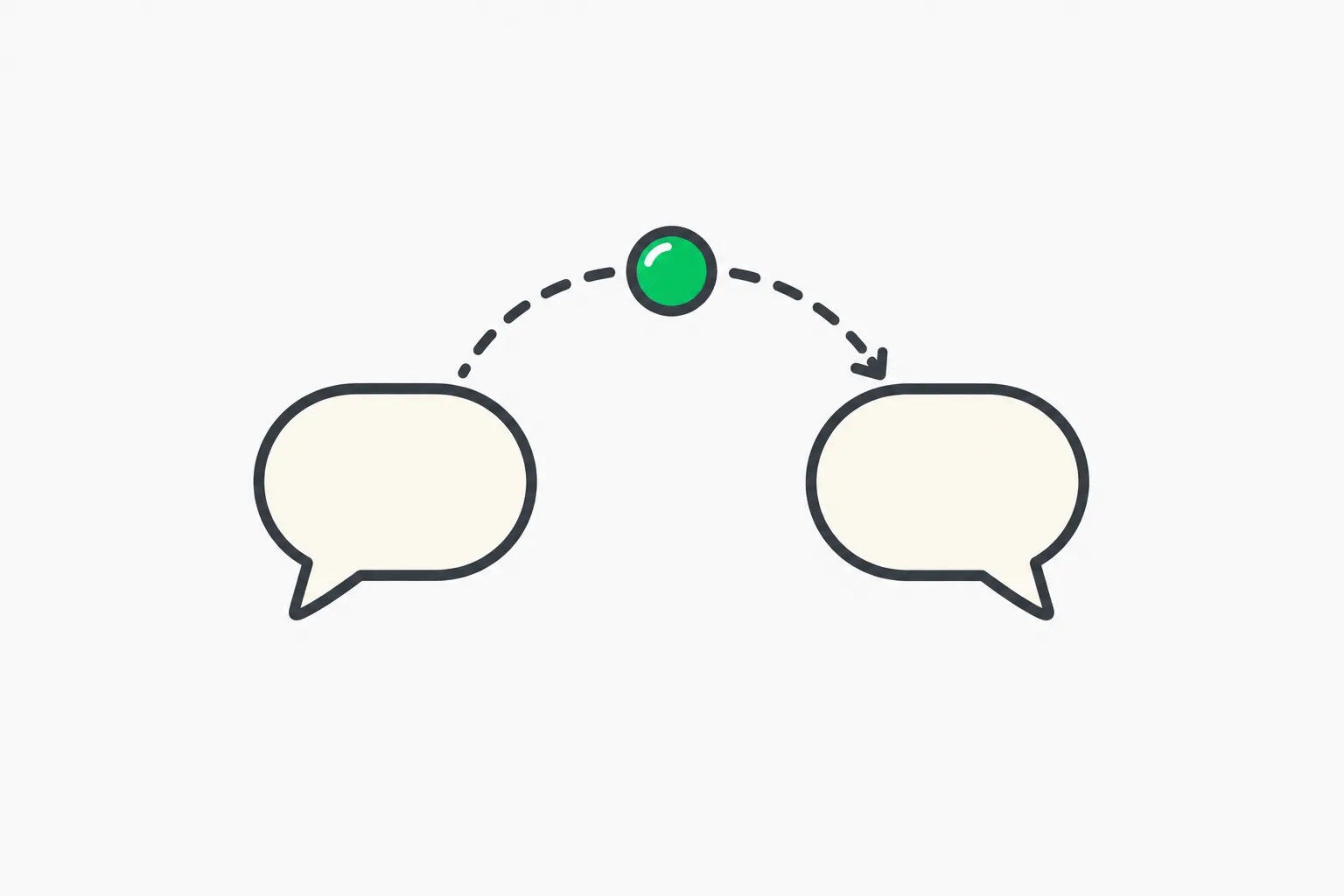 Fish Audio Live 3 full-duplex turn-taking between caller pauses and agent acknowledgments
We have not independently benchmarked 186 ms reactions. Treat it as a vendor latency claim on short interjections, not proof your full RAG + tool stack stays under 200 ms end to end.
 Fish Audio Live 3 full-duplex voice agent waveform for conversational phone calls
Behaviors Fish Audio highlights
The launch post walks three conversational patterns:
Acknowledging without taking over
When a caller reads 415… 555… 0132, Live 3 may say okay, 415 between chunks and wait. The goal is floor control: confirm digits without stealing the turn.
Distinguishing backchannel from interrupt
A listener saying yeah while hours are read aloud should not stop the menu. Wait, I only need Thursday should.
Room to revise mid-order
Pizza orders that change from two to three pies and swap toppings are the canonical test. Fish Audio shows Live 3 waiting through corrections instead of locking the first parse.
The post embeds audio excerpts from test calls. Listen before you assume it generalizes to your accent, noise floor, or compliance script.
How Live 3 fits the Fish Audio product line
explainx.ai already covered Drama 3 open weights for director-style TTS and S2.1 Pro for hosted synthesis. Live 3 is the real-time conversation lane:
| Product | Best for | Duplex? |
|---|---|---|
| Drama 3 | Audiobooks, ads, character reads with word edits | No — text in, audio out |
| S2 / hosted TTS | Streaming narration | One-way unless you bolt on VAD |
| Live 3 | Support, booking, intake calls | Yes — listens while speaking |
If you self-host open-weight voice, you might still pair Drama 3 for polished prompts with Live 3 on Fish''s platform for phone legs — but read license and data residency rules before mixing.
Pricing and platform hooks
Fish Audio''s Live 3 product page lists per-minute pricing with a promotional discount and tooling for call monitoring, latency breakdown, and post-call summaries. Numbers change; pull live pricing before you model COGS.
For builders on LiveKit, community work documented Fish''s streaming chunk pacing improvements that reduced first-word crackle on WebRTC paths. That is integration hardening around Fish streams, not a Live 3 feature list, but it signals production attention beyond demos.
What to test before production
| Test | Pass criteria |
|---|---|
| Digit dictation with mid-pause | Agent holds floor without finishing your number early |
| Backchannel yeah during monologue | Agent continues unless you use a cut-in phrase |
| Noisy mobile line | STT errors do not cascade into wrong confirmations |
| Compliance disclosure | Your legal intro still plays even with fast acks |
| Tool-call latency | LLM + API time does not erase duplex gains |
Compare against your current cascade (STT → LLM → TTS) on the same scripts. Duplex wins are often UX, not raw TTFB.
Voice-agent context on explainx.ai
Live 3 lands beside a wave of low-latency voice posts: Confucius4 streaming ASR for stable prefixes, OpenRouter''s voice-agent how-to on pipeline design, and Otter multilingual transcription on meeting capture.
None of those replace duplex timing; they show how crowded the spoken interface stack is in late 2026.
Limitations the post does not hide
- English only at launch — global support lines need another plan.
- Vendor-trained behaviors may not match regulated scripts without fine-tuning guardrails.
- 186 ms applies to short reactions; long answers still wait on your LLM.
- On-prem is offered but ops burden is on you for GPU, telephony, and logging.
Related reading
- Fish Audio Drama 3 open weights
- Fish Audio $52M seed and S2.1 Pro
- Confucius4 stable-prefix streaming ASR
- OpenRouter enterprise guide
- Semantic caching for LLM apps
- What are agent skills
Duplex vs cascade: architecture cheat sheet
Most production voice stacks today are cascades:
| Stage | Typical vendor | Failure mode |
|---|---|---|
| VAD / endpointer | Cloud STT | Cuts off thoughtful pauses |
| LLM planner | Any host | Adds seconds before speech starts |
| TTS stream | Fish, ElevenLabs, others | Cannot revise until playback ends |
| Barge-in | Custom logic | Confuses yeah with stop |
Live 3 claims to fold listening into the speech model so acknowledgment policy is not only a state machine on top. Whether that holds under noisy PSTN is your job to test.
If you already run Confucius4 streaming ASR for stable prefixes, you might hybridize: keep your STT for logging and compliance while Live 3 handles spoken rhythm. Document which subsystem owns consent prompts and PCI scope.
Telephony integration checklist
| Step | Detail |
|---|---|
| SIP or WebRTC trunk | Measure one-way vs round-trip latency separately from Fish''s 186 ms claim |
| Codec choice | Wideband vs narrowband changes barge-in feel |
| Record and retain | HIPAA and GDPR may require retention even if Fish stores nothing |
| Fallback human | Duplex agents still need warm transfer when confidence drops |
| Load test | Duplex multiplies concurrent streams vs half-duplex batch TTS |
Pricing math for a 10-minute support call
Fish''s per-minute promo pricing on fish.audio/live3 is only one line item. Add:
- LLM tokens for tool calls and retrieval
- STT if you log transcripts separately
- Telephony per-minute carrier fees
- Compliance redaction if you store audio
Our semantic caching guide helps on the LLM side; duplex savings show up as shorter calls when users do not repeat themselves.
When Live 3 is the wrong tool
Skip duplex if you need:
- Polished narration with director tags — use Drama 3
- 32-language outbound IVR today — Live 3 is English-only at launch
- On-device privacy with no cloud audio — Live 3 targets hosted and on-prem enterprise, not phone-edge tiny models
- Deterministic scripts where every word is legal-approved — learned timing can drift
Evaluation prompts to steal
Run these on fish.audio/agents before you port scripts:
- Read a credit card number with a three-second pause mid-sequence.
- Say yeah three times while the agent reads a long policy.
- Change quantity twice in one pizza order.
- Interrupt with actually cancel that after the agent starts confirming.
Score false stops and talk-over separately. A model that is fast but rude fails CX reviews.
Competitive landscape in November 2026
OpenRouter''s November announcements include a voice agent how-to that still assumes cascaded parts. Live 3 is Fish betting timing belongs in audio, not only in orchestration code.
Watch LiveKit plugin release notes for Fish chunk pacing fixes — community PRs document WebRTC headroom when Fish streams first chunks. That integration hygiene matters as much as model quality for first-word crackle.
Enterprise on-prem note
Fish advertises on-premises Live 3 for regulated buyers. Plan GPU footprint, active-active telephony, and model patch cadence the way you would for any hosted LLM. Duplex does not remove SOC2 scope; it may increase real-time monitoring needs.
Glossary for procurement calls
| Term | Meaning in this launch |
|---|---|
| Full duplex | Model listens while speaking |
| Backchannel | Short yeah or mm-hmm without intent to interrupt |
| Floor control | Who may speak next in the dialog |
| End-of-utterance | Classic cascade trigger Live 3 tries to soften |
Use the glossary when security reviewers ask whether Live 3 is always recording. Answer: treat it like any hosted voice API — your retention policy and notice strings still apply.
If your legal team asks for a model card, Fish has not published an arXiv entry for Live 3 alongside the blog. Request datasheet items — languages, training data summary, and logging — directly from enterprise sales before you bid a government RFP.
Live 3 capabilities and latency figures follow Fish Audio''s November 10, 2026 announcement. Benchmark on your own telephony path before promising sub-200 ms experiences to customers.