



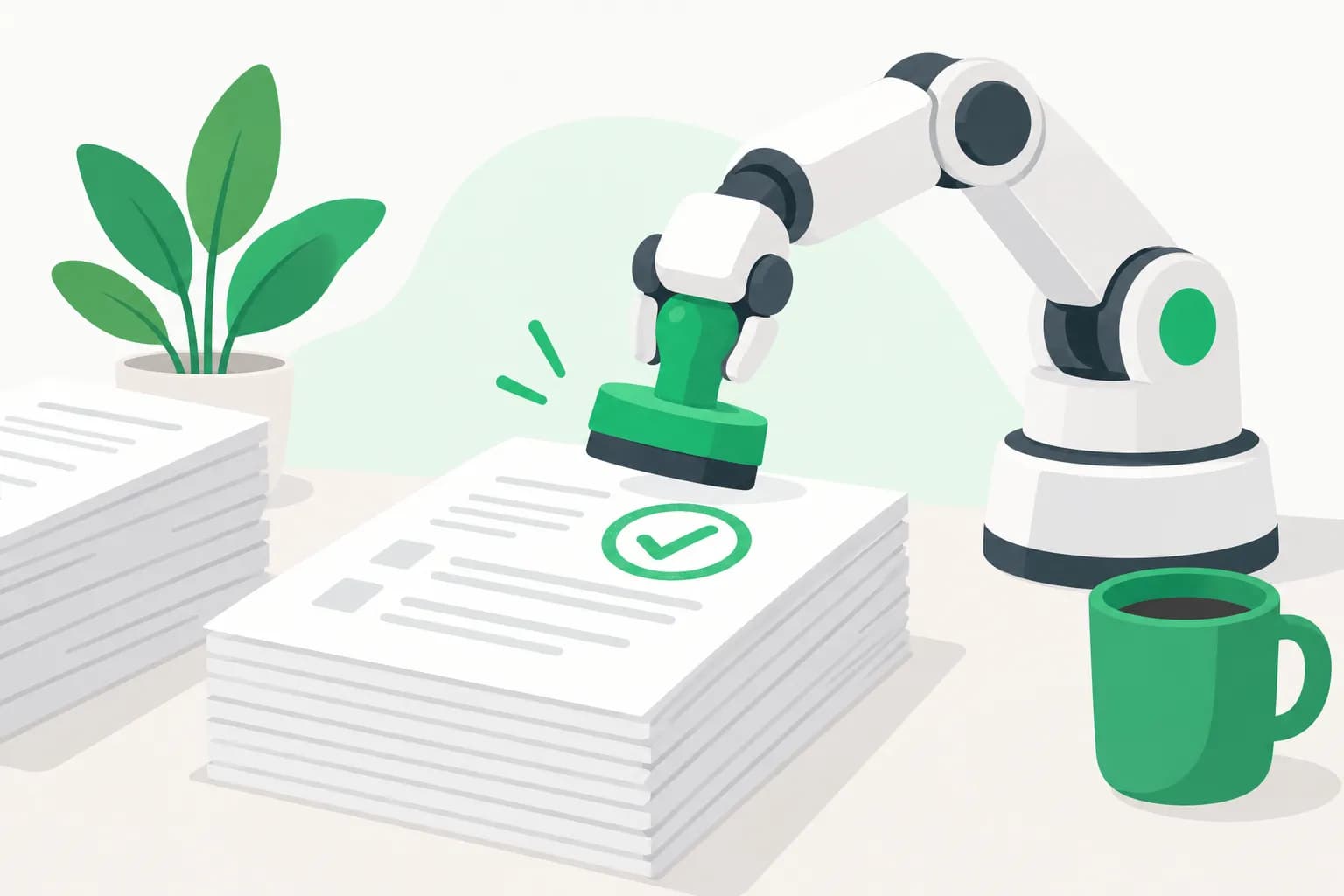
Robot models have mostly come with a catch: to make a new robot useful, you first collect hours of data from that exact robot. On October 19, 2026, a startup called Dream Labs came out of stealth claiming to remove that step. Its model, Dream-1, is offered through a public API at $3 an hour and, according to the company, can drive two-armed robots it has never seen, on tasks it was never shown. Alongside it Dream Labs announced a $90M seed round led by B Capital with Kindred Ventures, as reported by Unite.AI.
This post sticks to what Dream Labs published on its launch page, adds context from our earlier robotics coverage, and separates the claims that come from the company from the things you can check yourself.
TL;DR: Dream-1 at a glance
| Question | Answer |
|---|---|
| What is it? | A World Action Model (WAM) served by a public API that outputs actions for bimanual robots |
| Who made it? | Dream Labs, a San Francisco startup describing itself as built by former NVIDIA robotics researchers |
| Price? | $3 per hour for Dream-1, $2 per hour for Dream-1-flash, hardware not included |
| Which robots? | Two arms with parallel grippers; mobile bases and dexterous hands are not supported yet |
| Does it need robot-specific data? | Not to start (zero-shot); a five-minute fine-tune improves results in the company examples |
| Is it proven? | Company demos and a cited partner report; no outside replication yet |
| Safety status | Research beta, not validated for safety-critical use |
What is a World Action Model?
A World Action Model learns to predict video and actions together. Dream Labs argues that this makes controlling a robot and imagining what that robot will do into the same problem. The company traces the idea to its February 2026 paper DreamZero, which it says introduced WAMs. We covered the same family of ideas in Dyna-2 and its robotics scaling law, which is a good companion read if the term is new.
The practical consequence is in how the model sees robots. Dream-1 takes three camera views: one head or scene view and one on each wrist. To a model that works in pixels, a robot arm it has never met is just shapes moving through a scene. Dream Labs says that is why the model can handle grippers that look nothing like the ones it trained on.
Earlier work on the Universal Manipulation Interface (UMI) showed that policies could transfer between arms when every arm used an identical gripper and only wrist cameras were used. Dream Labs says its approach removes that restriction because the head camera and the video prediction carry the information about the unfamiliar body.
 Robot learning from demonstrations, illustrating a robot foundation model API like Dream-1
How does Dream-1 control a robot it has never seen?
There are two ways to command a robot: joint angles or end-effector poses. Joint angles tie a policy to one body. Dream-1 can output joint angles for robots it supports natively, but for new robots it predicts end-effector poses, meaning where each gripper should be and whether it is open or closed. Every robot with two arms and parallel grippers shares that action space, and each robot own inverse-kinematics (IK) solver turns the target poses into joint commands.
Dream Labs is open about the cost of that choice. In its limitations list:
- Results depend on the quality of each robot IK solver.
- Dream-1 controls where the gripper ends up, not how the arm gets there, which can matter near obstacles and joint limits.
- Robots whose kinematics or dynamics differ sharply from anything the model has seen may get predictions that are physically infeasible.
The company evaluated zero-shot behavior on 27 unseen robots in simulation, with 300 rollouts per robot: 150 rollouts across 50 tasks for language following and 150 across 150 tasks for unseen-task generalization. Scores are given relative to YAM, the robot Dream-1 was actually trained on, so they are not absolute task-success rates. Real-robot clips on the page cover arms from makers including Trossen, Franka, Kinova, UFactory, Universal Robots, KUKA and even the 18-year-old PR2.
What does it cost to run?
Pricing is unusually concrete for a robotics launch, and it is the part of the announcement most useful for planning.
| Model | Price | Per call | Approx. cost per action chunk |
|---|---|---|---|
| Dream-1 | $3 per hour | 1.6 seconds of actions | about $0.0013 |
| Dream-1-flash | $2 per hour | 1.6 seconds of actions | about $0.0009 |
The math is Dream Labs own: one hour is 2,250 calls. The sticker price covers model inference only. You still pay for the robot, cameras, compute on your side and the engineering to connect them. Dream Labs frames the opportunity as a robot operator finding a job someone will pay for, adapting the model, and keeping everything above the hourly cost.
The company page and Unite.AI agree on $3 and $2 per hour. If you see a different hourly figure in secondary coverage, check it against the company page before budgeting around it.
 Pricing tiers ladder comparing Dream-1 and Dream-1-flash hourly robot API costs
How do you actually use it?
The page shows a short Python client that creates a DreamClient, selects the dreamlabs/dream-1 checkpoint, sends an observation and asks for an action. The site also has a Playground section, and the company says it runs internal hackathons every week to keep time-to-deploy short.
If zero-shot is not good enough, Fine-tuning-as-a-Service (FaaS) takes data you collect from your own robot and returns a custom model. In the examples:
- Two partner robots, a reBot B601-DM and a Maker Arm, improved after five minutes of data each.
- A Dexmate robot with Sharpa dexterous hands needed 77 minutes of data.
- A YAM robot with swapped end effectors for a strawberry-cutting task needed 98 minutes.
- Across twelve FaaS beta partner robots, fine-tuning lifted the language-following score on ten of them in simulation.
Dream Labs concedes that one-shot adaptation still outperforms zero-shot, so a gap remains. That is the honest reading of the pitch: plug-and-play is a starting point, and the best results still come from a little robot-specific data.
Why is the hardware price in the pitch?
The launch page argues that robotics is stuck in a chicken-and-egg loop: robots must be useful before people buy them, but usefulness needs data from the robot. Two things have changed, the company says. Capable two-arm setups now cost as little as about $2,000 (a MakerMods Maker Arm, per its footnote), and a model that generalizes could make a new robot useful on day one.
As evidence of cheap hardware demand, the page cites Hugging Face Microduck, a $399 robot it says sold more than 10,000 units within four days of launching in late August. We covered that device in our Microduck explainer, and Dream Labs shows a fine-tuned Dream-1 checkpoint driving multiple bodies including the Microduck.
It is a reasonable thesis, but it is a thesis: cheap consumer robots and tolerant buyers are the assumption the business needs, and the page itself notes that enterprise buyers make spreadsheet decisions that a robot must clear on cost, speed or reliability.
What is claimed and what is verified?
| Claim | Source | Status |
|---|---|---|
| Zero-shot control of unseen bimanual robots | Dream Labs demos, 27 simulated robots and real-robot clips | Shown by the company (27 simulated robots, 21 real-robot clips); no outside replication found |
| Better, faster and cheaper than frontier language models on a robot-control benchmark | Dream Labs page citing an independent Robocurve report on RoboDojo-RC Tier 1 | Report is hosted on the company page; we could not independently check it |
| $3 and $2 per hour | Dream Labs pricing section | Stated by the company; consistent with Unite.AI |
| $90M seed from B Capital and Kindred Ventures | Dream Labs, Unite.AI | Reported by multiple outlets |
| Safe enough to deploy | Not claimed | The company says the opposite: a research beta, not validated for safety-critical use |
The Robocurve comparison deserves caution for a specific reason. Language models are not built to output grippers poses at control-loop speed, so a win against them says Dream-1 is a better fit for a robot task, not that it beats the best purpose-built robot policies. Compare it with specialized models like the ones in our coverage of Physical Intelligence Pi API beta, Generalist Gen-1.5 and Nature Will Natura-1 before drawing conclusions.
How does it compare with other robot model APIs?
The shape of the market is converging. Physical Intelligence opened a hosted fine-tuning API in October, with no published price. Generalist pitched one-shot adaptation. Reka showed a single network handling text, video and robot actions. Dream Labs stands out for publishing an hourly price and for claiming zero-shot transfer to bodies outside its training set, while also naming its limits.
Where those claims differ matters for builders:
- Zero-shot first (Dream-1): fastest to try if you own a two-armed, parallel-gripper robot; quality depends on your IK solver.
- Fine-tune first (hosted APIs from others): more setup, usually better on a single task once data is in.
- Hands and humanoids: not covered by Dream-1 yet; look at dexterous-hand models instead.
What should you do if you own a robot?
- Check your hardware: two arms, parallel grippers, three camera views (head plus wrists) if possible.
- Read the company IK guide first, since zero-shot performance depends on it.
- Start in simulation or a fenced-off area, with an emergency stop within reach, and keep people out of the workspace.
- Log every failure. If a task fails repeatedly, five minutes of your own data through FaaS is the cheapest next experiment according to the company numbers.
- Report unsafe behavior to the safety address Dream Labs lists on its page.
What questions are still open?
- Independent replication. The most important missing piece is a third party running Dream-1 on its own robots and tasks.
- Latency in a real control loop. Each call returns 1.6 seconds of actions over a network, which is workable for slow manipulation and less so for contact-rich, reactive tasks.
- Unit economics. At $3 an hour, a robot has to earn more than that plus its hardware amortization and a human supervisor.
- Training data. The launch material describes the model but gives few details on the datasets behind it, beyond the DreamZero lineage and training on YAM.
- Scope. Mobile bases and dexterous hands are future work, so household chores beyond tabletop tasks remain out of reach for now.
Bottom line
Dream-1 is a credible, clearly priced bet that robot control will be sold by the hour. The company shows its limits more openly than most launches do, but the headline results are still the company own. For anyone with a cheap two-armed robot, a few dollars of API time is an inexpensive experiment; for anyone planning a product, wait for outside evaluations.
Related reading
- Physical Intelligence Pi API beta: fine-tune robot models
- Dyna-2 world action model and the robotics scaling law
- Generalist Gen-1.5: one-shot robot foundation model
- Nature Will Natura-1: dexterous hands foundation model
- Hugging Face Microduck: a $399 open-source robot
- Reka Rho-1: text, video and robot actions in one network
- Official: Dream-1 launch page
Details are accurate as of October 20, 2026; pricing, supported hardware and benchmark claims may change as the beta evolves.