



The Birth of a Legendary Studio
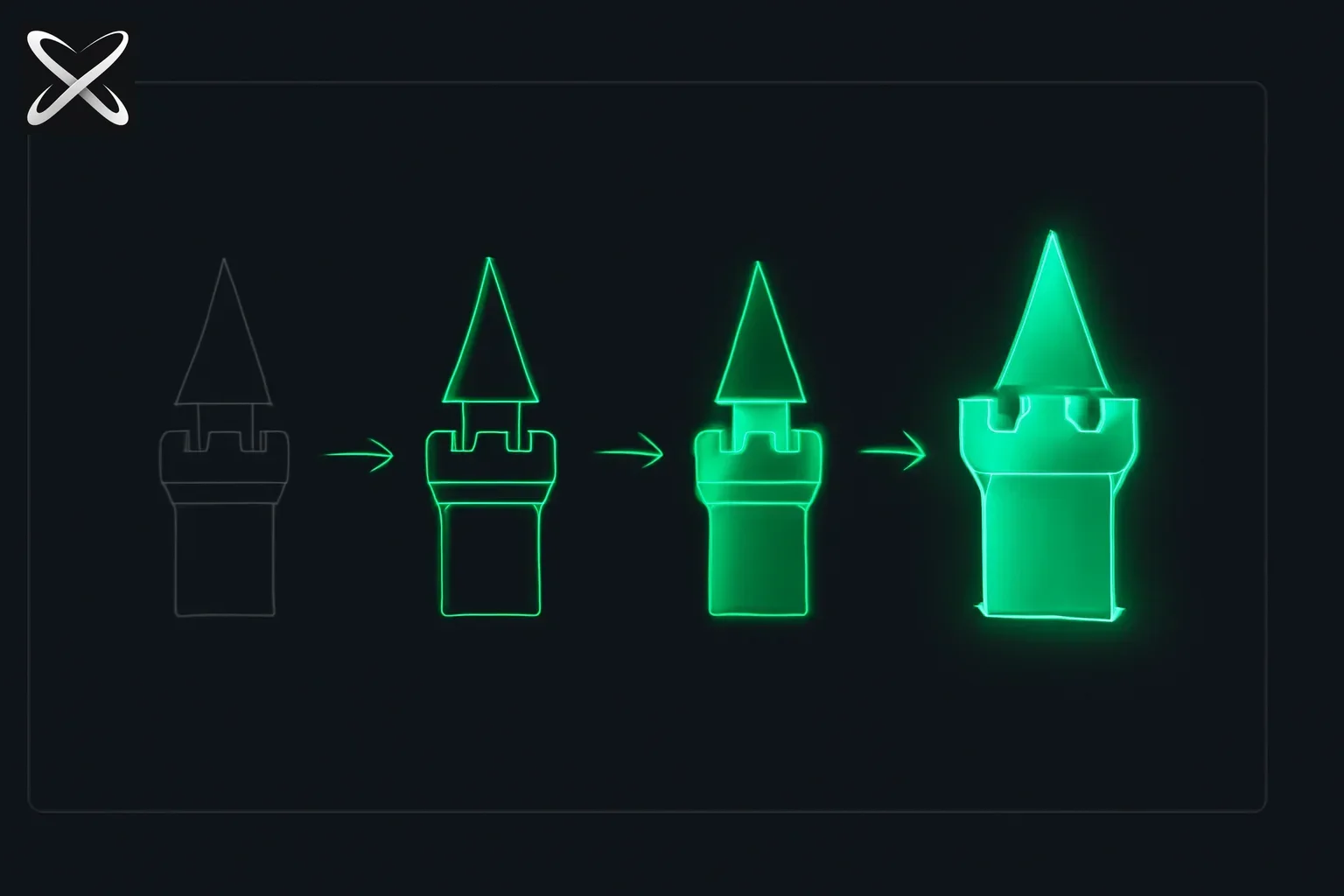 Disney Imagineering process explained — a flat blueprint sketch evolving into a fully rendered three-dimensional structure
In 1952, Walt Disney assembled a team of artists, architects, and engineers with a seemingly impossible task: design and build a theme park unlike anything the world had ever seen. This wasn't just going to be an amusement park with rides—it would be a fully immersive experience where guests could step into stories, meet beloved characters, and explore fantastical worlds.
To accomplish this vision, Walt needed a new kind of organization—one that combined the artistic sensibilities of Hollywood with the precision of industrial engineering. He called this group WED Enterprises (using his initials: Walter Elias Disney), which would later become known as Walt Disney Imagineering, or simply Imagineering.
The name itself—a blend of "imagination" and "engineering"—perfectly captures what makes this organization unique. Walt Disney Imagineering (WDI) is the creative force behind every Disney theme park, attraction, resort, and cruise ship in the world.
2,000+ employees | 14 theme parks | 6 continents | Founded: 1952
🌐 Official Site: Disney Imagineering Careers
What Exactly Is Disney Imagineering?
Walt Disney Imagineering is The Walt Disney Company's research, design, and development arm. Unlike a traditional architecture firm or engineering consultancy, Imagineering is a fully integrated creative studio that handles every aspect of themed entertainment—from initial blue-sky concepts to final construction and opening day operations.
The Imagineering Process
Every Disney attraction goes through a rigorous multi-year development process:
-
Blue Sky Phase: Wild, unconstrained brainstorming. No idea is too big, too expensive, or too impossible. This is where Imagineers ask "What if?" without limitations.
-
Concept Development: Promising ideas are refined. Artists create concept art, writers develop storylines, and technologists assess technical feasibility.
-
Schematic Design: Detailed designs emerge. Architects draft blueprints, engineers calculate load-bearing requirements, and show producers choreograph every moment of the guest experience.
-
Design Development: Full-scale mockups and prototypes are built. This is where Imagineers test ride systems, lighting effects, audio clarity, and sight lines to ensure every detail is perfect.
-
Construction & Installation: Working with construction partners worldwide, Imagineers oversee the physical build, often inventing new construction techniques to achieve their vision.
-
Programming & Testing: Advanced attractions feature hundreds of show effects, animatronics, and interactive elements that must be programmed, tested, and refined.
-
Opening & Iteration: Even after opening, Imagineers monitor attractions, gather guest feedback, and implement continuous improvements.
The Glendale Headquarters: Where Magic is Made
The Grand Central Creative Campus in Glendale, California, is the heart of Disney Imagineering. This 60-acre complex houses over 1,600 Imagineers and contains some of the most advanced design and prototyping facilities in the world.
Inside the Campus
The Blue Sky Think Tank: A dedicated brainstorming space where walls are covered floor-to-ceiling with whiteboards, and every surface can become a canvas for sketching ideas. This is where attractions like Guardians of the Galaxy: Cosmic Rewind and Star Wars: Rise of the Resistance were first conceived.
The Model Shop: A 30,000-square-foot fabrication facility equipped with 3D printers, CNC mills, traditional woodworking tools, and advanced robotics. Imagineers build everything from miniature architectural models to full-scale animatronic prototypes here.
The Digital Immersive Showroom: A cutting-edge VR and AR lab where Imagineers can "walk through" attractions before they're built. Using real-time game engines and motion capture, teams can test sight lines, pacing, and guest flow in virtual environments.
The Archives: Walt Disney Imagineering maintains an extensive archive of original concept art, blueprints, ride vehicle prototypes, and historical documents dating back to Disneyland's opening in 1955. These archives inform modern projects and preserve institutional knowledge.
The Ride & Show Lab: A specialized facility for testing mechanical systems, animatronics, and special effects. This is where engineers push the limits of what's physically possible, creating never-before-seen ride technologies.
Global Imagineering Locations
While Glendale serves as headquarters, Disney Imagineering operates design studios and project offices around the world:
North America
- Glendale, California (HQ): Main design campus, model shop, and executive offices
- Orlando, Florida: Dedicated team for Walt Disney World projects and ongoing park maintenance
- Anaheim, California: Blue Sky Cellar concept development studio near Disneyland
Asia
- Tokyo, Japan: Partnership studio working with Oriental Land Company on Tokyo Disney Resort expansions
- Hong Kong: Design liaison office for Hong Kong Disneyland
- Shanghai, China: Permanent studio overseeing Shanghai Disneyland operations and future expansions
Europe
- Paris, France: Disneyland Paris development team, working on upcoming expansions and refurbishments
Project-Based Offices
During major construction projects (like the opening of Shanghai Disneyland or the Star Wars: Galactic Starcruiser), Imagineering establishes temporary on-site offices to provide direct oversight and rapid problem-solving.
Legendary Projects: What Imagineering Has Built
Disney Imagineering has created some of the most iconic and technologically advanced attractions in the world. Here's a timeline of groundbreaking projects:
The Disneyland Era (1955–1966)
Disneyland (1955) – Anaheim, California The original Magic Kingdom. Imagineers invented the modern theme park here, establishing design principles still used today: themed lands, forced perspective architecture, and seamless storytelling.
Matterhorn Bobsleds (1959) The world's first tubular steel roller coaster. This innovation made modern coasters possible and proved Disney could compete with traditional amusement parks on thrill attractions.
Audio-Animatronics® Debut (1963) The Enchanted Tiki Room introduced the world to Audio-Animatronics—lifelike robotic figures synchronized to audio tracks. This technology would become Disney's signature.
Pirates of the Caribbean (1967) Walt Disney's final major project before his death. This attraction set the standard for immersive dark rides, featuring elaborate sets, dozens of animatronics, and a fully realized narrative environment.
The EPCOT Era (1971–1989)
Walt Disney World Resort (1971) – Orlando, Florida A complete destination resort with theme parks, hotels, golf courses, and shopping. The Magic Kingdom's utilidors (underground tunnels) revolutionized theme park operations.
Space Mountain (1975) Indoor roller coasters in complete darkness had never been attempted at this scale. Imagineers developed computer systems to safely operate the attraction and pioneered onboard audio.
EPCOT Center (1982) An entire theme park dedicated to technology, international culture, and the optimistic future. Attractions like Spaceship Earth and The Land showcased Imagineering's educational storytelling capabilities.
Captain EO (1986) Directed by Francis Ford Coppola and starring Michael Jackson, this 3D film with in-theater effects cost $30 million—the most expensive film per minute ever made at the time.
The Renaissance Era (1989–2005)
Indiana Jones Adventure (1995) Enhanced Motion Vehicles (EMVs) allowed ride vehicles to move in ways never before possible—tilting, spinning, and simulating off-road terrain. This technology is now used in attractions worldwide.
Test Track (1999) Guests design their own virtual vehicles and then test them in a high-speed attraction. This was one of the first examples of integrated digital/physical experiences.
Mission: SPACE (2003) Real centrifuge technology adapted for theme park use, providing guests with genuine G-forces simulating a rocket launch to Mars.
The Modern Era (2005–Present)
Expedition Everest (2006) One of the world's most expensive roller coasters ($100M+), featuring a backwards section, elaborate Himalayan theming, and one of the most advanced animatronics ever built: the Yeti.
Cars Land (2012) A complete land that recreates the fictional town of Radiator Springs with stunning fidelity. Radiator Springs Racers uses slot-car technology to create side-by-side racing.
Pandora – The World of Avatar (2017) Flight of Passage uses motorcycle-style seating, a massive dome screen, and motion simulation to create the sensation of riding a flying banshee. It regularly ranks as the #1 theme park attraction worldwide.
Star Wars: Galaxy's Edge (2019) A 14-acre immersive land where guests live inside the Star Wars universe. Rise of the Resistance features four interconnected ride systems, a walking portion, and over 300 animatronics and effects.
Guardians of the Galaxy: Cosmic Rewind (2022) The world's first "Omnicoaster"—a coaster where vehicles can rotate 360° independently of the track direction, creating a true sensation of space travel. The coaster track is the longest enclosed coaster in the world.
TRON Lightcycle / Run (2023) A high-speed launch coaster where guests ride light cycles in a semi-exposed position. The coaster features a dramatic outdoor launch visible from outside the park.
The Technology Behind the Magic
Disney Imagineering doesn't just use cutting-edge technology—they often invent it.
Audio-Animatronics® Evolution
From the simple birds in the Tiki Room (1963) to the incredibly lifelike Na'vi Shaman in Pandora (2017), Audio-Animatronics have become progressively more sophisticated:
- 1960s: Pneumatic (air-powered) figures with limited movement
- 1980s: Hydraulic systems allowing more complex motions
- 2000s: Electric servo motors providing smoother, more lifelike movements
- 2010s: "A-1000" figures with compliance (ability to react to touch) and incredibly detailed facial expressions
- 2020s: AI-assisted animation and real-time interaction capabilities
Projection Mapping & Augmented Reality
Modern attractions seamlessly blend physical sets with digital projections:
- Mickey & Minnie's Runaway Railway (2020): Projections make 2.5D animated characters interact with dimensional sets
- Millennium Falcon: Smugglers Run (2019): Wrap-around screens create a convincing cockpit environment
- The upcoming Zootopia land: Will feature AR elements integrated with physical environments
Ride Systems Innovation
Imagineering has pioneered numerous ride system technologies:
- Enhanced Motion Vehicles (EMVs): Used in Indiana Jones Adventure, Dinosaur, and more
- Trackless Ride Vehicles: Mystic Manor, Rise of the Resistance, and Ratatouille use LPS (Local Positioning System) for synchronized multi-vehicle choreography
- Omnimover Systems: Continuous-loading dark ride vehicles (Haunted Mansion, Spaceship Earth)
- Robotic Arms: Adapted from industrial robotics for attractions like Ratatouille and the upcoming Avengers attraction
Who Are the Imagineers?
Disney Imagineering employs over 140 different job disciplines, including:
Creative Roles:
- Concept Artists & Illustrators
- Story Writers & Scriptwriters
- Graphic Designers
- Animators & Character Designers
- Show Producers & Directors
Technical Roles:
- Architects & Landscape Architects
- Structural, Mechanical, and Electrical Engineers
- Software Developers & Programmers
- Ride System Engineers
- Audio Engineers & Sound Designers
- Lighting Designers
Specialized Roles:
- Animatronics Engineers
- Model Makers & Sculptors
- Special Effects Designers
- Project Managers
- Cost Estimators & Schedulers
Famous Imagineers
Marc Davis – Disney Legend who designed Pirates of the Caribbean and Haunted Mansion
Rolly Crump – Creator of the Haunted Mansion's iconic wallpaper and the Tower of the Four Winds
Tony Baxter – Lead designer of Big Thunder Mountain, Splash Mountain, Indiana Jones Adventure, and Journey Into Imagination
Joe Rohde – Creative lead for Disney's Animal Kingdom and Pandora – The World of Avatar (recently retired)
Carmen Smith – VP of Creative Development, ensuring cultural authenticity and inclusive storytelling
Lanny Smoot – Disney Research Fellow with 100+ patents, inventor of the "floating" lightsaber technology
The Future of Imagineering
Disney Imagineering continues to push boundaries with upcoming projects:
Confirmed Projects (2024-2027)
Zootopia Land – Shanghai Disneyland (2025) A fully immersive Zootopia environment featuring a major E-ticket attraction using next-generation trackless technology.
World of Frozen – Hong Kong Disneyland (Opened 2023, expanding 2025) The first land dedicated to Frozen, featuring the groundbreaking "Frozen Ever After" boat ride and interactive snow play areas.
Avengers Campus Expansion – Disneyland Paris (2025+) Including an Avengers-themed attraction featuring a custom ride system never seen before.
DinoLand U.S.A. Reimagining – Disney's Animal Kingdom (2026+) Replacing the current area with a new land themed to tropical Americas, featuring an Encanto attraction and an Indiana Jones adventure.
Disney's Beyond Big Thunder – Magic Kingdom (2027+) Expansion into undeveloped land behind Big Thunder Mountain, rumored to include Coco and Villains-themed areas.
Research & Development
Imagineering's R&D teams are currently exploring:
- Haptic feedback suits for immersive VR experiences
- Autonomous character robots that can freely roam parks and interact with guests
- AI-driven dynamic storytelling where attractions adapt based on guest choices
- Volumetric video capture for next-generation show effects
- Sustainable design practices including carbon-neutral attractions and water recycling systems
How Disney Imagineering Influences the Industry
The techniques and technologies pioneered by Imagineering have influenced:
- Universal Creative: Universal Studios' design division, which employs many former Imagineers
- Themed Entertainment Association: Industry organization founded partly by Disney Imagineers
- Museum Design: Institutions like the Museum of the Bible and The Mob Museum use Imagineering-inspired storytelling
- Retail & Hospitality: Immersive store concepts (like the Star Wars: Galactic Starcruiser hotel model)
- Architecture: Forced perspective and visual storytelling techniques are now taught in design schools worldwide
Visiting Imagineering (Sort Of)
While the Glendale campus is closed to the public, you can experience Imagineering through:
The Walt Disney Family Museum
Located in San Francisco's Presidio, this museum features rotating Imagineering exhibits with original concept art, models, and interactive displays.
D23 Expo
Disney's official fan convention (held every two years) includes:
- Imagineering pavilions with attraction models and concept art
- "A Conversation With..." panels featuring lead Imagineers
- Exclusive previews of upcoming projects
Archives & Tours
- The Walt Disney Archives: Occasionally hosts special exhibitions
- "Walk in Walt's Disneyland Footsteps" Tour: Includes Imagineering stories and design philosophy
Books & Documentaries
- "The Imagineering Story" (Disney+): 6-episode documentary series
- "Walt Disney Imagineering: A Behind the Dreams Look at Making More Magic Real": Comprehensive coffee table book
- "The Disney Mountains" by Jason Surrell: Deep dive into coaster design
Summary: The Legacy Continues
For over 70 years, Walt Disney Imagineering has set the gold standard for themed entertainment. Their unique combination of artistry, engineering, and storytelling has created experiences that transport millions of guests into other worlds every single day.
From the hand-drawn concept sketches of 1952 to the AI-assisted design tools of 2026, Imagineering continues to honor Walt Disney's original vision: create places where stories come to life, technology disappears into the magic, and guests of all ages can experience wonder.
The next time you walk through a Disney park, remember: every color choice, every sound effect, every sight line, and every emotional beat was deliberately designed by an Imagineer who obsessed over making your experience perfect.
Next Steps:
- Explore Disney Parks' official website for the latest announcements
- Follow @DisneyParks on X/Twitter for behind-the-scenes content
- Read about Theme Park Design Principles
- Discover The Technology Behind Modern Theme Parks
- Learn about Careers in Themed Entertainment
This article reflects the state of Walt Disney Imagineering as of May 2026. Projects, locations, and employee counts are subject to change.