



OpenAI Codex just left the terminal and picked up a pen.
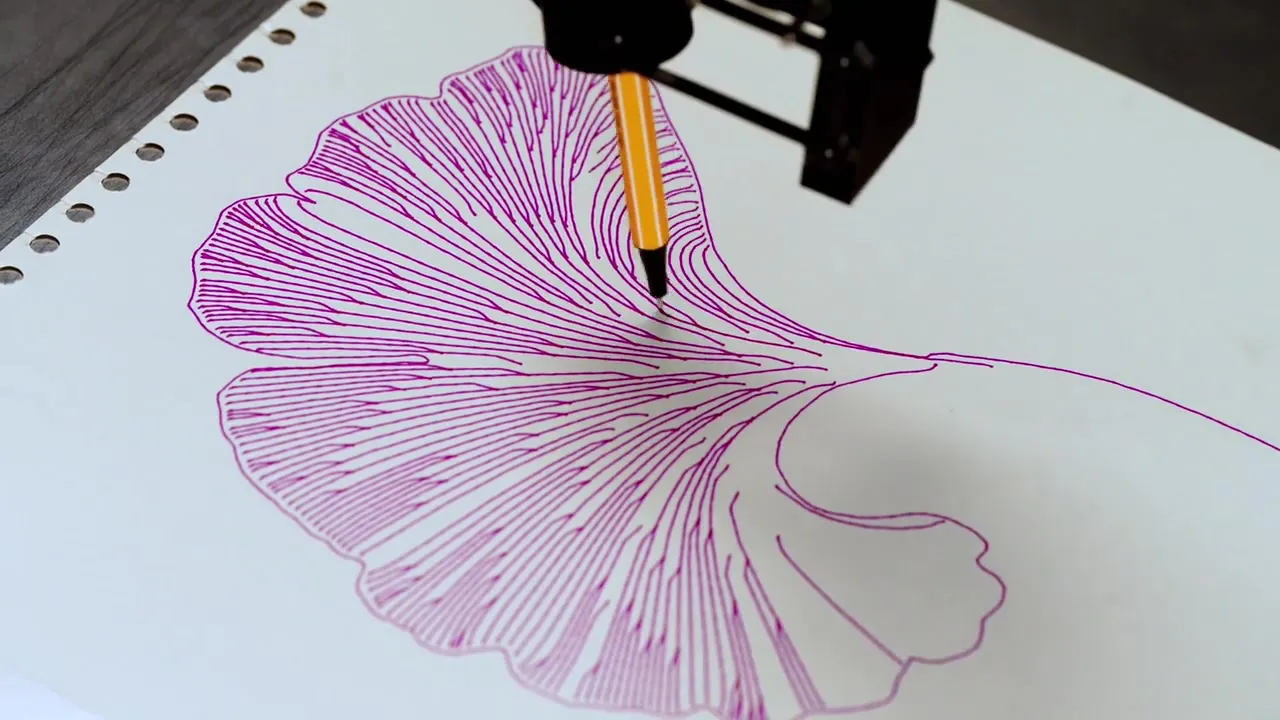
On August 4, 2026, r/codex lit up when u/dhvanil posted a showcase: Codex as the software operator for a real uFactory xArm 7, running a 256-stroke drawing that lands as a flower — organic veins, fan-like lobes, ink that looks nothing like “AI art” screenshots. Hundreds of upvotes in hours. The joke thread wanted a dick pic; the arm delivered a botanical fractal instead.
The claim that matters for builders: Codex wrote the stack — camera capture, calibration, path execution, safety checks, logging — and for this run it prepared the stroke plan, executed it, monitored the controller, and ran safe shutdown. Cameras give the agent eyes on the paper so it can check calibration and the marks it made.
That is not “Codex generated an SVG.” That is a coding agent closing the loop on atoms.
Video from the original r/codex showcase (u/dhvanil) — re-hosted on explainx.ai for playback. © original poster.
TL;DR — what people are asking
| Question | Answer |
|---|---|
| What did it draw? | A flower-like organic form (viewers also said ginkgo / chanterelle underside) |
| How many strokes? | 256 (OP-reported for this run) |
| Who wrote the software? | Codex — capture, calibration, paths, safety, logging |
| What arm? | uFactory xArm 7, second-hand via eBay |
| Feedback? | Cameras on paper / marks / calibration |
| Human role? | Designer OP; no formal robotics training; chose goals + hardware |
| Is it a pen plotter? | No — OP wants paint, brush angle, pressure, cyanotype later |
| Can I do it tonight? | Need arm + safe cell; software half is “ask Codex,” hardware half is not |
What the demo is (and is not)
Is: an agentic coding loop applied to a real manipulator with visual feedback and explicit safety rituals. Same species as loop engineering for coding agents — plan, act, observe, correct — but the actuators leave the laptop.
Is not: a foundation robotics policy like Gemini Robotics or a humanoid product launch like Genesis Eno / 1X NEO hands. There is no claim of warehouse pick rates. There is a claim that one designer + Codex + a used 7-DoF arm can ship a closed drawing cell.
The stack Codex allegedly owns
From the Reddit post (paraphrased into an engineering checklist):
| Layer | Job |
|---|---|
| Camera capture | See paper, arm, marks |
| Calibration | Align vision to robot frame |
| Path execution | Turn a stroke plan into arm motion |
| Controller monitoring | Watch runtime health |
| Safety / shutdown | Stop cleanly when done or when wrong |
| Logging | Replay / debug the run |
That list is exactly what people underestimate when they say “just ask Codex.” The agent can draft drivers and glue; you still validate e-stops, workcell limits, and what happens when a pen snaps mid-stroke 40.
OP’s self-description in-thread: designer entering robotics with zero prior robot/mechanics education — Codex and Claude as tutors for “atoms not bits.” That matches the software-for-one pattern we keep seeing: domain experts + coding agents skipping the traditional apprenticeship curve — with all the risk that implies when the domain can bruise a wrist.
Hardware reality check
| Fact | Detail |
|---|---|
| Model | uFactory xArm 7 |
| Source | Second-hand eBay (OP) |
| Commenter sticker shock | Arm + gripper often cited ~$10K–$45K new |
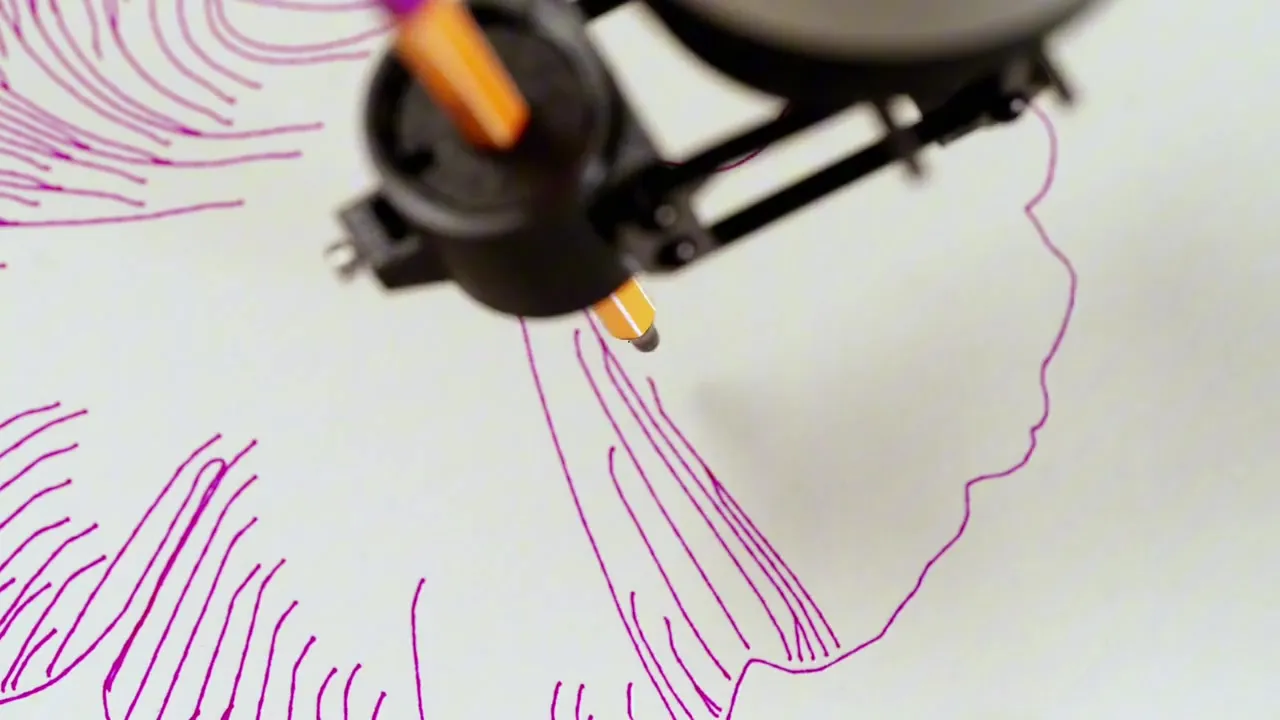
| End effector | Pen held in a tool mount (commenters asked about tool changers; no full BOM in-thread) |
Pen-plotter folks correctly noted: for flat ink, a plotter is faster and cheaper. OP agreed — and said the arm exists for future media plotters cannot do well: acrylic/oil, automatic pen swapping, angled brushes, pressure, impasto, cyanotype. The flower is a capability receipt, not the end product roadmap.
What Reddit argued about (usefully)
“Is this art?”
Thread consensus: if sand pendulums and duct-taped bananas count, ink from an agent-driven arm counts. Stronger take: authorship sits with the human who built the cell even when Codex wrote the code and chose stroke geometry — unless courts invent a new category. See also the wider “is AI art art?” fog; this case is closer to performance + artifact than to Midjourney wallpaper.
“Did it choose the drawing?”
Multiple comments asked whether OP prompted a subject or said “draw what you want.” OP’s public post emphasizes operator duties (prepare, execute, monitor, shutdown) more than the creative brief. Until a log drops, treat “fully unsupervised muse” as unverified. The finished piece is still a flower either way.
“Pre-planned vs closed-loop?”
A pen-plotter commenter asked the right technical question: was the full 256-stroke path planned up front (SVG/G-code style), or did the overhead camera drive in-the-loop edits? OP described cameras for inspect/calibrate/see marks — that can mean verification without mid-stroke replanning. Do not assume reactive drawing until logs say so.
“Make it not rely on Codex at runtime”
High-signal comment: use Codex to design the software, then run a deterministic controller without a live LLM in the loop. That is the difference between a demo that burns weekly Codex quota and a product cell. For production art or lab work, you almost always want the second.
Tibo / reset jokes
r/codex being r/codex, half the comments wanted the arm to draw Tibo begging for resets. That is culture, not robotics — but it marks how deeply Codex usage limits live in the community’s muscle memory (see Codex usage limits / resets).
Why this matters for agent builders
| Shift | Before | After demos like this |
|---|---|---|
| Agent surface | Files, shells, browsers | + manipulators, cameras, e-stops |
| Failure mode | Bad PR | Bad trajectory / crushed fixture |
| Skill file | Markdown playbooks | + kinematics, calibration rituals |
| Cost floor | API tokens | + five-figure hardware |
Coding agents already control computers and write 3D anatomy apps. Physical cells add Moravec’s paradox in reverse for software people: the “easy” ink drawing is hard because the world is continuous and unforgiving. Pair this with Yann LeCun’s physical-agents framing if you want the research arc, not just the meme.
For teams already running multi-agent memory hubs (TencentDB Agent Memory) or internet eyes (Agent Reach), the missing piece in many stacks is still embodiment — and this Reddit post is a DIY proof that embodiment can start as “used arm + cameras + agent,” not only as a $100M humanoid round.
If you want to try a smaller version
You do not need an xArm on day one.
Codex → physical marks ladder
1. Simulate the arm in a physics sandbox; have Codex write the controller there
2. Pen plotter or CNC pen: same “stroke plan + safety” software shape, lower risk
3. Add one webcam; force Codex to verify marks before the next batch of strokes
4. Only then: real cobot / xArm in a fenced cell with hardware e-stop
5. Keep the LLM out of the realtime servo loop; use it for plan + review + repair
Prompt shape that matches OP’s framing (adapt; do not paste blindly into a live robot):
You are the software operator for a uFactory xArm 7 drawing cell.
Goals for this run:
- Plan a N-stroke drawing of <subject> within the paper AABB
- Execute paths with pen-down/up discipline
- Use camera frames to verify calibration and completed marks
- Monitor controller health; abort on fault
- Perform safe shutdown and write a run log
Constraints: never exceed joint limits; never move without calibration OK; human e-stop always wins.
Compare harness choice with Codex vs Claude Code — for long physical sessions, quota and tool reliability matter as much as model taste.
Honest limitations
- One viral run ≠ reproducible paper. No public repo or stroke log in the Reddit post at write-up.
- Cost and liability dwarf API fees; insurance and workcell design are real.
- “All software by Codex” still leaves human judgment on when to power the arm.
- Art/IP questions are unresolved; do not sell prints on a vibe.
- Plotter alternative wins for 2D ink speed; arm thesis is future media.
- Live-LLM-in-the-loop is a quota and latency footgun for production cells.
- Comment claims about brand-new kit pricing vary — verify uFactory list prices yourself.
Closing
Codex drew a flower with a robot arm — more precisely, Codex wrote and operated the software that made a uFactory xArm 7 lay 256 strokes of ink while watching itself through cameras. The Reddit thread is jokes and philosophy; the engineering signal is clearer: coding agents are past “apps on localhost” and into operator roles for machines that move mass.
Watch the video above, then decide whether your next agent project stays in git — or gets an e-stop.
Follow @explainx_ai when the OP drops logs, a repo, or the first acrylic pass.
Related on explainx.ai
- NVIDIA Alpamayo 2 Super — open reasoning model for robotaxis
- Anatomy Atelier — Codex + TripoAI 3D anatomy
- Codex vs Claude Code comparison
- OpenAI Codex computer use
- 1X NEO 25-DoF hands
- Genesis AI Eno agentic robot
- Gemini Robotics 2
- Yann LeCun — LLMs vs physical agents
- Loop engineering for coding agents
- Software for one — personal apps via agents
Sources
- r/codex — “I let Codex operate a robot arm, and this is what it drew” — u/dhvanil, Aug 2026
- uFactory xArm product line — manufacturer site for hardware specs
Facts about stroke count, arm model, software authorship, and camera feedback reflect the public Reddit post and comments as of August 4, 2026. explainx.ai has not independently operated the OP’s cell. Re-hosted video is for documentation; rights remain with the original poster.