



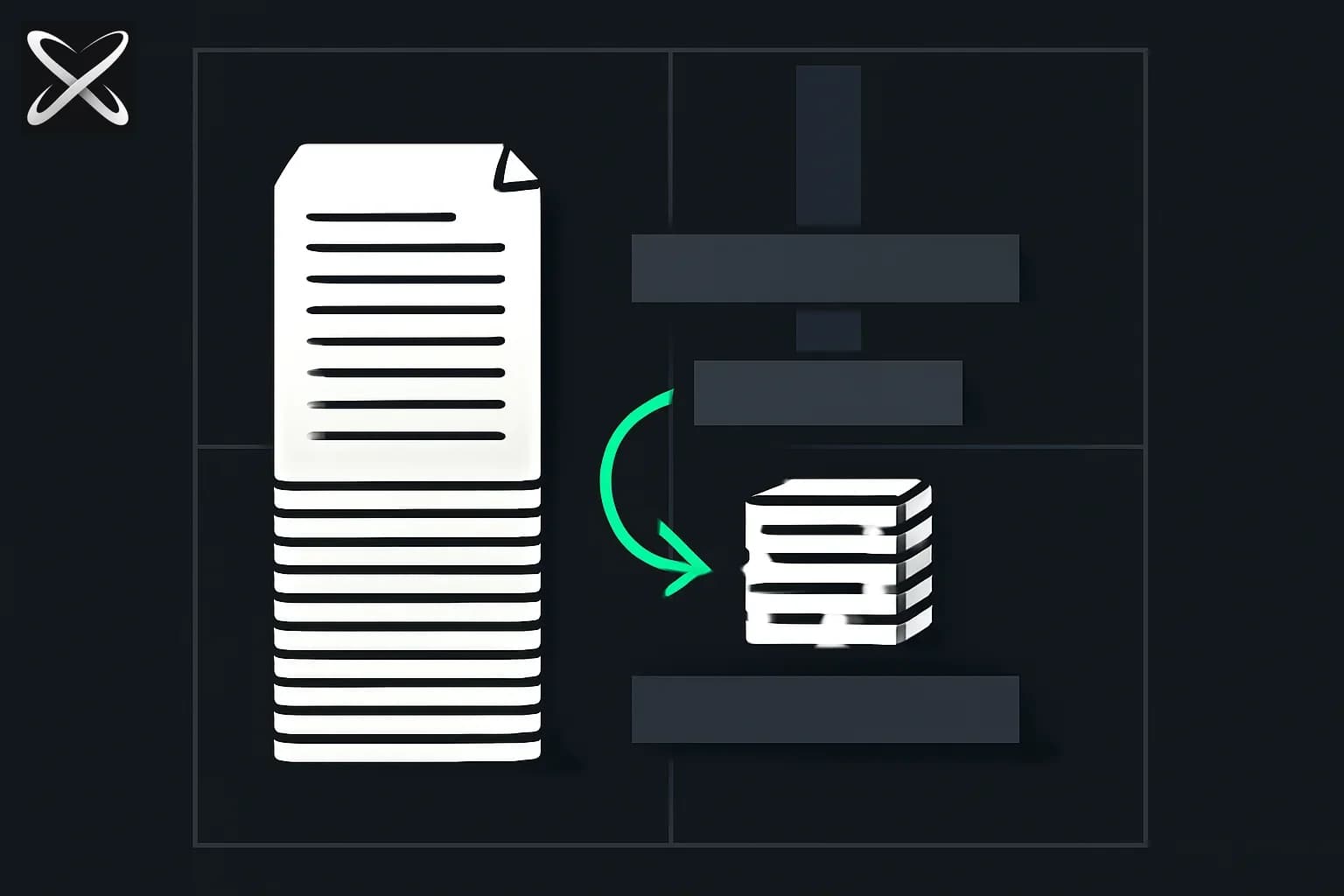
A Reddit post in r/claudeskills pitched a new Claude Code skill with a blunt claim in the title: it "saves more tokens than caveman and ponytail combined." The skill is called Chisle, it picked up 297 upvotes and 28 comments in two days, and the top reply pushed back hard on the premise before the thread even got going.
We've covered Caveman's brevity-mode economics and Headroom's context-compression approach before — Chisle is worth a look because it's explicitly positioned as a descendant of both ideas, not a replacement for either.
TL;DR
| Question | Answer |
|---|---|
| What is it? | A Claude Code skill + npm package combining a terse persona with a tool-output compression hook |
| Who built it? | u/Special_Lie3814 (GitHub: JayPokale) |
| Is it free? | Yes — GitHub + npm, MIT-style open source install |
| What's new vs. Caveman/Ponytail? | A PostToolUse hook that compresses Bash/test output before it enters context, plus a "Context Diet" habit and rule generation for other IDEs |
| Does it touch code edits? | No, per the maintainer — the hook allowlist excludes Read, Edit, Write |
| Is the savings claim verified? | No independent benchmark exists yet; a top comment disputes the framing |
| Works with Codex? | Yes, per the maintainer's reply in the thread |
What Chisle actually claims to do
The pitch breaks into four pieces, per the original post:
- Terse persona. Like Caveman and Ponytail before it, Chisle instructs the model to write in fragments and favor YAGNI-first code — while explicitly keeping commit messages and security warnings verbose, an exception worth noting since those are exactly the outputs where compressed prose would be a liability.
- Tool-output compressor. A hook that shrinks tool results — Bash output, test-runner dumps, log files — before they enter context: stripping ANSI escape codes, keeping head and tail lines plus anything that looks like an error, and deduplicating repeated lines. The maintainer's framing for why this matters: tool output is the majority of a session's token volume, and it gets re-billed on every subsequent turn once it's in context, not charged once.
- "Context Diet." A workflow habit baked into the skill's instructions — grep first, then read the matching slice of a file instead of the whole thing, and don't re-read a file that's already sitting in context. This is prevention rather than compression: fewer tokens enter context in the first place instead of shrinking what's already there.
- Extras. A live token-savings counter, rule-generation output for Cursor, Windsurf, Cline, Copilot, and Kiro, an npm installer that wires up the hooks automatically, and what the maintainer describes as a test suite.
The maintainer's own README explicitly credits Caveman and Ponytail as predecessors and places Chisle's benchmark numbers directly above theirs — an unusually direct comparison for a skill-share post, and part of why the framing drew scrutiny fast.
The pushback: is this actually new?
The top comment, from u/Maxiride, raised two specific objections rather than a vague dismissal:
"Caveman was debunked by JetBrains … So I'm struggling to see a new product here."
The first half references a JetBrains blog post arguing that terse-persona prompting doesn't reliably save tokens the way the "talk like a caveman" trend claimed — a direct challenge to axis one of Chisle's pitch, not just Chisle's framing of it. It's worth noting this cuts against the arXiv brevity-constraint paper we cited in our own Caveman coverage, which found brevity could raise accuracy on part of a benchmark set — the two findings aren't necessarily contradictory (one is about token count, the other about answer quality), but they are about the same underlying technique and reach different practical conclusions.
The second half is the sharper point: on the tool-output compression axis, a comparable project — Headroom — reportedly delivers only "marginal" savings, because output tokens are what's expensive to generate, not input tokens. A compression hook shrinks what goes into context on the next turn (input), but doesn't change how many tokens the model generates in its reply (output) — and per-token, output is typically billed at several times the rate of input across both major API providers. If that critique holds, a hook that only touches tool-output-as-input-context is optimizing the cheaper half of the bill.
Chisle's maintainer replied directly to a comparison question about Simple Man (another terse-output skill), drawing the line between the two projects:
"Simple Man optimizes only the output prose (−32% output tokens). Chisle attacks three axes: Tool output … Code decisions … Prose … In short: Simple Man changes how the model talks; Chisle shrinks the code and cuts the re-billed context cost."
That reply is the clearest statement of Chisle's actual bet: not that terse prose alone saves much (the JetBrains critique may well be right about that axis), but that re-billed context — tool output sitting in the conversation and getting re-tokenized on every later turn — is a bigger, under-addressed cost than either Caveman or Headroom fully solves alone.
What people are asking
Will this work with any agent harness? One commenter asked this directly without a visible answer in the thread. The maintainer confirmed Codex support elsewhere in the comments, and the repo advertises rule-generation for Cursor, Windsurf, Cline, and GitHub Copilot — but "generates a rules file for X" is a different, weaker claim than "the PostToolUse hook runs natively inside X," since hooks are a Claude Code and Codex-specific mechanism, not a cross-harness standard.
Does it degrade output quality? Asked twice in the thread (by u/TopTippityTop and implicitly by the JetBrains-citing top comment) with no maintainer answer visible as of publication. This is the single most important unanswered question for anyone considering it for production use — a token-savings claim without a paired quality-regression check is only half a benchmark.
How do you install it? Per the maintainer, by adding an AGENTS.md file at global or project scope, or via the npm installer (npm install chisle, per the package name), which reportedly wires up the hooks automatically rather than requiring manual hook configuration.
Is a hook safe to run against tool output? The maintainer's description says the compression hook runs "behind a safety allowlist that never touches Read/Edit/Write" — meaning it's scoped to raw command output, not the file-editing tools an agent uses to actually change code. That's a reasonable design boundary if accurate, but it's a maintainer claim, not something independently audited in the thread.
Is this fundamentally different from just using Claude Code's built-in Concise output style? Not entirely — Claude Code shipped a first-party Concise output style that strips narration with no third-party skill required. Chisle's terse-persona axis overlaps with that built-in option; its actual differentiator is the tool-output hook and the Context Diet habit, neither of which the built-in setting addresses.
Honest limitations
- No independent benchmark exists. Every number in the original post — the live token counter, the "beats caveman and ponytail combined" framing — is the maintainer's own measurement on their own workload, the same limitation every skill in this category shares.
- The JetBrains critique targets exactly one of Chisle's three claimed axes (terse persona), and it's the axis Chisle shares with the projects it's benchmarked against, not the one it's differentiated by.
- The output-vs-input-token cost critique is real and not addressed in the thread. If output tokens dominate agent bills the way the top comment argues, a tool-output compression hook — which only shrinks what re-enters context as input — has a structurally capped ceiling on total savings, no matter how well it's implemented.
- Cross-harness support is uneven. Native hook support versus "generates a rules file you can paste in" are different levels of integration, and the post doesn't clearly separate which surfaces get which.
- Quality regression is unmeasured. Until someone runs a matched benchmark (same tasks, Chisle on vs. off, graded output quality), "saves tokens" and "doesn't hurt outcomes" are two separate, currently unverified claims.
The takeaway
Chisle is a real attempt at a genuinely different axis — compressing what re-enters context from tool output, on top of the terse-persona trick Caveman and Ponytail already tried — rather than a rebrand of the same idea. Whether it's a meaningful win depends entirely on whether the critique in the top comment is correct: if output tokens really are the dominant cost, then shrinking re-billed tool-output context is a real but bounded optimization, not the "more than caveman and ponytail combined" headline the title claims. Worth trying if your sessions are heavy on long Bash/test output; worth skepticism until someone runs the quality-regression benchmark nobody has published yet.
Related on explainx.ai
- Caveman skill: token economics and cutting verbose LLM output
- Headroom: context compression for AI agents (complete guide)
- i-have-adhd: the 31K-star skill for action-first agent output
- Claude Code's Concise output style
- Skills vs. hooks vs. prompts: when to use each
- What are agent skills? Complete guide
- Chisle repository
- Chisle on npm
Star counts, comment quotes, and the disputed savings claims in this post reflect the r/claudeskills thread and linked repositories as of the publication date above — verify current numbers against the source before citing them elsewhere.