




A Caltech introductory math professor told Business Insider on November 16, 2026 that he no longer grades homework for accuracy because students use generative AI on typical problem sets. Yi Ni, who the piece says has taught at Caltech for 17 years, now scores homework on completion while proctored exams remain the competence gate.
The story matters because it is a documented classroom policy at an elite STEM school, not a thought experiment about future cheating.
TL;DR
| Question | Answer |
|---|---|
| What changed? | Homework graded for completion, not correctness |
| Why? | Ni says virtually all college math homework is AI-solvable |
| What still counts? | In-person exams for real grades |
| What did the reporter see? | Chalkboard lecture, iPad notes, no observed ChatGPT use in class |
What Business Insider reported from the lecture hall
Reporter Truman Dickerson attended an introductory math class at Caltech in Pasadena on the Friday before the November 16 publish date. Ni taught with chalk on eight blackboards, no laptop projector.
Ni told Dickerson there is a problem in the education process because virtually all college math homework can be completed with AI. His response: grade homework only on whether students did the work, not whether every answer is correct.
The piece notes chatbots that once failed toddler-level counting now reach graduate-student-level math on some tasks, echoing wider coverage about students rethinking math majors when problem sets no longer differentiate skill.
In the room, Dickerson describes a familiar lecture rhythm: late arrivals in hoodies, front-row questions, iPad note-taking, a few students without materials, some eyes closed. No one visibly prompted ChatGPT during the observed session.
Primary source: Business Insider, November 16, 2026.
Why professors move grades to exams
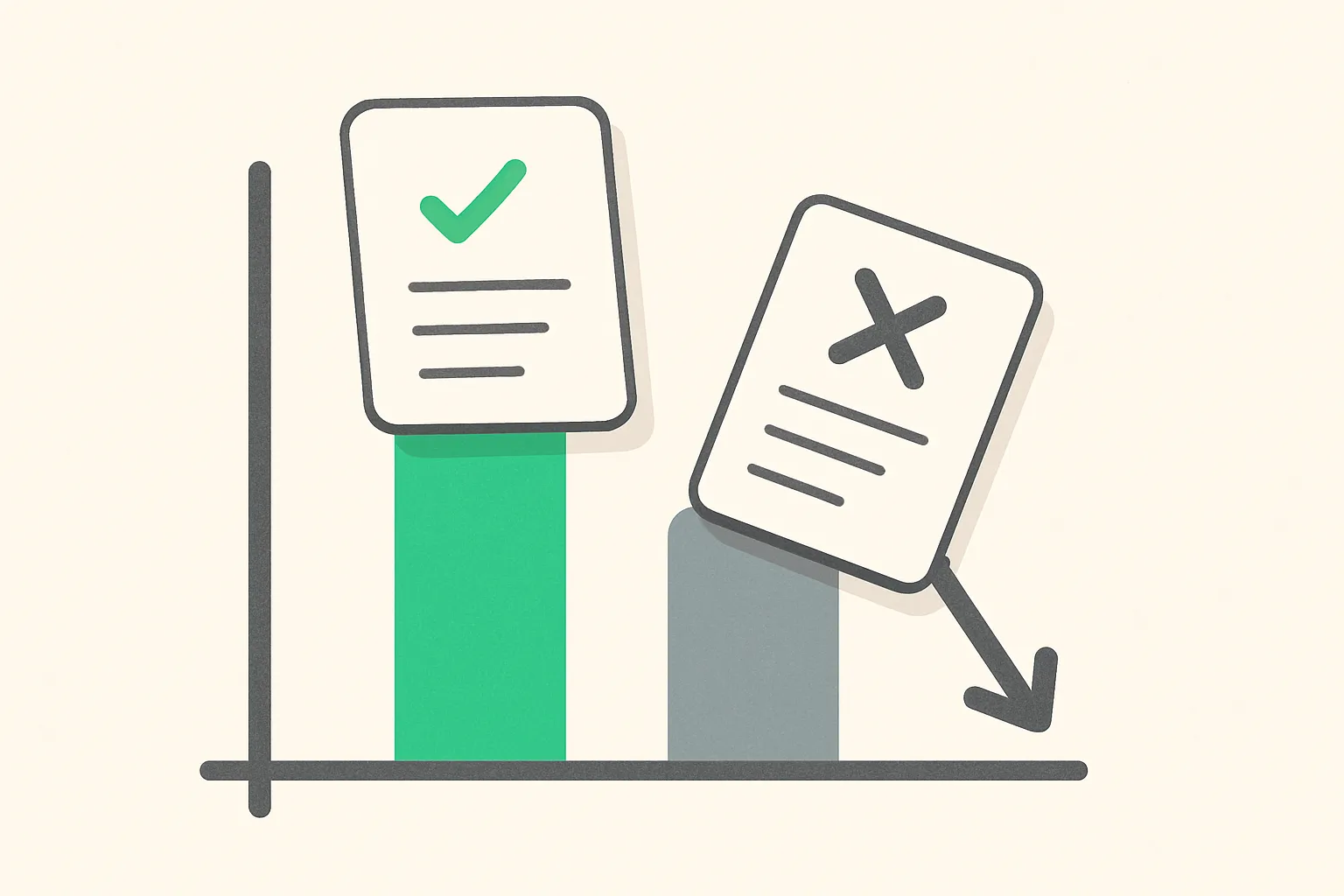 Homework scores rising while exam scores fall when students outsource practice to AI
Ni logic mirrors research explainx.ai summarized in The Generative AI Learning Penalty: when homework becomes easy with AI, exam scores can fall if students skip real practice. A Wharton summary of the PNAS high-school math field experiment reports the same pattern: unguarded GPT access lifted practice scores 48% but left exam scores 17% below the control group.
Grading completion tries to lower the cheat payoff on problem sets while keeping homework as practice reps. The bet: students who want exam scores still work; students who only wanted homework points lose a misleading incentive.
That aligns with house rules for AI and homework we published earlier: separate practice from credentialing.
Parallel pressure in Korea and England
This Caltech anecdote lands the same week as South Korea national exam reform after AI cheating on a tax qualification test. Governments are upgrading proctoring and device rules for high-stakes papers.
England's watchdog has pushed secure assessment shifts for coursework, covered in England OfS AI coursework guidance. The through-line: when take-home work is AI-soluble, institutions re-anchor trust in controlled exams or live demonstrations.
What developers are saying on Hacker News
The Hacker News thread tied to Dickerson's piece mixes sympathy and skepticism.
- my002 notes ungraded problem sets were common before AI in some first-year courses.
- SamBam, identifying as a struggling teacher, argues graded homework increases AI cheating pressure when exams already exist; ungraded practice refocuses homework on learning.
- sempron64 wants a small homework fraction (~10%) so students are not blindsided by exam difficulty.
- tygon paraphrases Ni's exam logic: AI helps on homework only if you know the material for proctored tests.
- Silamoth questions why practice mistakes should hurt final grades when feedback is the point.
These comments are opinions, not Caltech policy. They show practitioners wrestling with the same trade Ni made.
What this is not
Business Insider did not report a Caltech-wide honor code rewrite. It is one professor's course policy from observational reporting.
Nor is it proof every math department should copy completion grading. Courses without strong proctored exams would lose their main signal under this model.
How completion grading changes student incentives
When accuracy no longer moves the GPA needle on problem sets, the remaining incentives are exam performance, optional practice, and intrinsic interest. Ni bet is that dedicated students still do homework because exams punish gaps, while strategic students lose a path to inflate weekly points with AI.
That mirrors econometric work we summarized showing homework scores rise while exam scores fall when AI shortcuts practice. Completion grading tries to detach the misleading homework signal without banning AI outright.
Instructors considering the same move should audit:
- Exam difficulty — if exams are too easy, completion-only homework removes the last honest filter.
- Office hours load — students may arrive with shallower mistake patterns because AI hid errors.
- TA workflow — TAs must still give feedback even when points are binary.
- Honor code — clarify whether AI use on practice is allowed, discouraged, or neutral.
Business Insider notes broader angst about students rethinking math majors when chatbots ace undergraduate-style exercises. Ni policy does not solve career signaling; it reallocates measurement toward the component AI cannot sit through for you today: a proctored seat.
Classroom technology versus take-home policy
 Classroom learning setting where in-room instruction and take-home AI use diverge
Dickerson emphasizes Ni used chalk, not slides. Yet students typed on iPads. The scene highlights a split: in-room instruction can remain analog while out-of-room work is AI-saturated.
Universities experimenting with in-class problem solving or locked-down tablets are probing the same boundary as Korea's CSAT device rules this week. None of that appeared in Ni classroom on Friday, but policy designers should assume dual environments.
Instructor voices beyond Caltech
The HN thread is not a survey, but it surfaces durable disagreements:
- WarmWash frames three camps: people who read the wall, people pretending not to, and people unaware anything was written.
- jasonriddle, training as a high school math teacher, already grades homework for completion at 10% weight because cheating is assumed even before AI.
- ahsgqwr argues academia stays quiet because funding ties to AI labs — a claim we cannot verify from Ni story alone, but it explains why classroom reporters matter.
Link each opinion to HN comment ids when you cite them in seminars; paraphrase, do not treat comments as data.
FAQ for department chairs considering similar policies
Will completion grading reduce cheating reports? Possibly on homework, not necessarily on exams. AI can still coach exam prep if unchecked.
Should we disclose the policy on the syllabus? Ni's approach was visible to a reporter; transparency reduces fairness disputes when exams suddenly dominate grades.
Does AI tutoring count as cheating? Business Insider does not quote a Caltech honor interpretation. Separate allowed tutors from disallowed answer generators in writing.
What about graduate courses? This story covers introductory math; graduate proof-based courses may keep stricter policies because process matters in writeups.
History of ungraded problem sets
HN commenters note ungraded sets existed before ChatGPT. The difference in 2026 is throughput: one student can complete sets faster with AI while learning less. Completion grading assumes speed alone is not the metric.
Connect to workforce surveys
Managers already report harder evaluation of AI-assisted employee output in Nielsen survey coverage. Universities are experiencing the same verification tax earlier in the pipeline.
Practical takeaways for builders and educators
- Separate practice analytics from credentialing in learning products; instructors need exam-aligned drills, not misleading homework leaderboards.
- Instrumentation that shows time-on-task and error patterns helps teachers trust completion grades.
- AI tutors should default to Socratic modes during practice if institutions fear answer dumping.
- For corporate upskilling, the same split appears in manager survey data on evaluating AI-assisted work.
What parents and students should ask
Students should ask whether homework still teaches mistake patterns they will see on midterms. Parents should ask how completion is verified: is turning in a PDF enough, or must students show work in class?
Counselors advising STEM paths should pair this story with honest exam difficulty data, not only homework completion rates.
Open questions Business Insider leaves open
The piece does not quantify how many Ni students used AI, what share of homework points moved to exams, or whether department leadership endorsed the shift. Follow-up reporting may clarify institutional backing.
We also do not know whether Ni uses randomized exam problems or take-home components. Policy design depends on those details.
Research citations to pair in class
Assign alongside this article:
- AI homework vs exam penalty study for quantitative backing.
- House rules for homework AI for family-level norms.
- South Korea exam integrity reforms for high-stakes proctoring contrast.
Debating these together helps students see Caltech as one point in a global assessment redesign, not an isolated quirk.
Bottom line: Ni treats homework as optional practice with light accountability and exams as the credentialing gate in a world where take-home problem sets are AI-complete. Copy the policy only if your exams can carry that weight.
Related reading
- Generative AI learning penalty on homework vs exams
- AI and homework house rules
- South Korea tax exam AI cheating reforms
- England OfS secure assessment and AI coursework
- OpenAI education guidance gap program
- China AI literacy curriculum in schools
- Apple Health AI usage study in education contexts
Sources: Business Insider, Hacker News discussion.