



Ato announced its second-generation device on September 2, 2026. The post did 2.9 million views in under a day, which is an unusual number for a consumer hardware launch and tells you something about how many people are quietly dealing with this problem.
The pitch, in the company's own words: "Ato helps seniors stay independent on their own terms. It gives families a simple way to stay close and the peace of mind that comes from knowing how they're doing, without cameras or tracking." It runs on a realtime voice interface, lives in the home, and pairs with an Ato Family app on iOS and Android. Pre-orders are open; shipping starts in December.
The number that matters more than the views is this one: more than 2,500 older adults used Ato in daily life through the beta programme over the past year, globally. For a category littered with concept videos and Kickstarter renders, a year of real deployment at that scale is the credential.
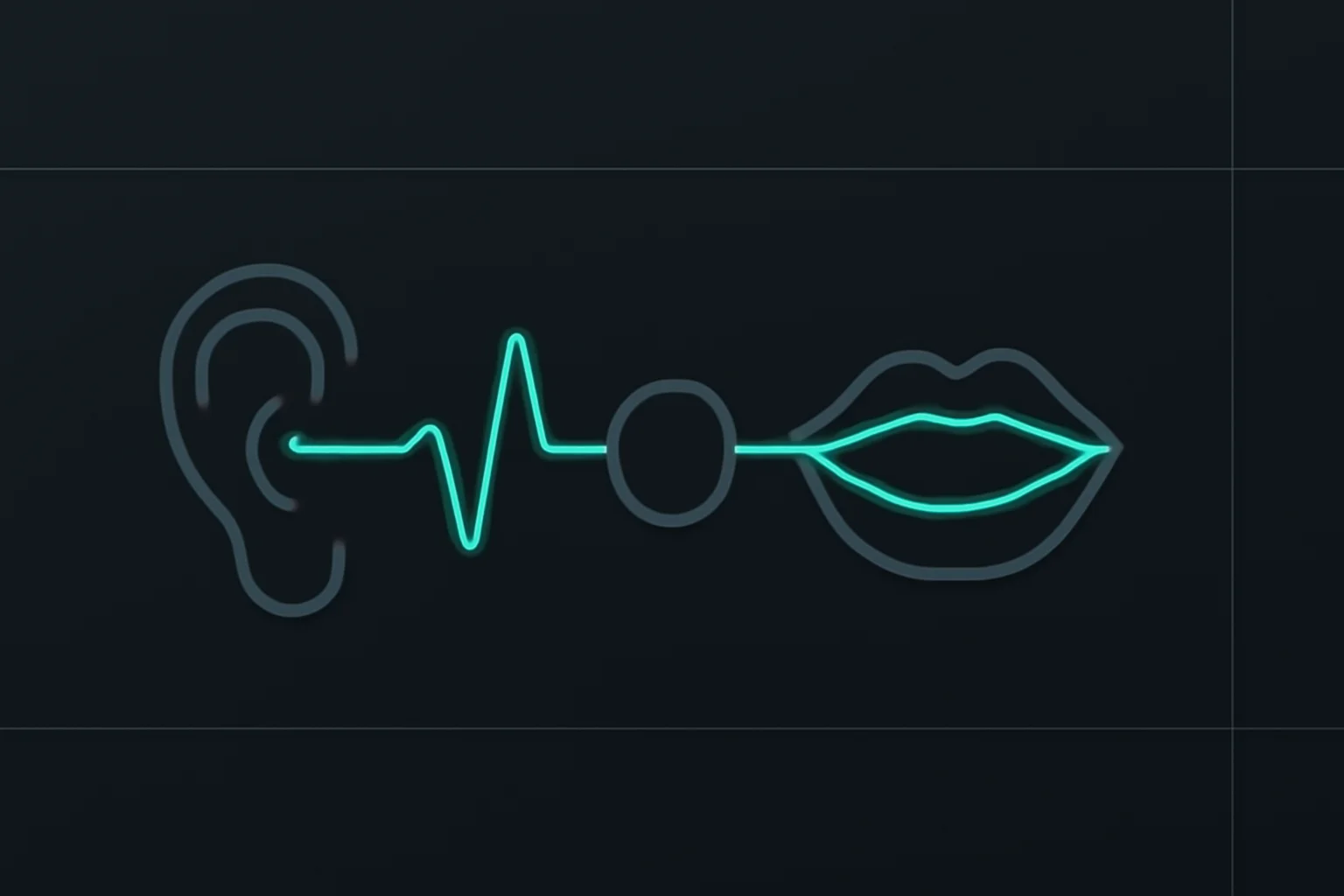 A voice-only interface rendered as sound moving between a person and a simple device, with no screen in the interaction
TL;DR
| Question | Answer |
|---|---|
| What is it? | A screen-free, voice-only AI companion device for older adults, plus a family app. |
| How proven? | 2,500+ older adults used it daily through a year-long global beta. |
| Ship date | December 2026. Pre-orders open now. |
| Cameras? | None. The company states no cameras and no tracking. |
| What families see | Signal derived from interaction, surfaced in the Ato Family app — not video, not location. |
| The real product claim | Not a chatbot — a coordination layer across relatives, caregivers and providers. |
| Pricing model | Device up front; company states unlimited conversations without subscription cost. |
| Biggest open question | Whether "no subscription" survives contact with inference bills. |
The design decisions worth stealing
Strip away the category and there are three product decisions here that generalise to anyone building a realtime voice product.
1. Screen-free is a constraint, not a feature cut
Every failure mode that makes tablets hard for older users is a screen failure mode: the app moved, the update prompt appeared, the mode changed accidentally, the password expired, the icon is too small, the notification covered the button. Removing the display does not remove features — it removes the surface where the user can get lost.
The trade-off is brutal and worth naming: with no visual fallback, voice has to work the first time, every time. There is no "tap here instead" when recognition fails. That is a far higher bar than a voice feature bolted onto an app, and it is why most companies do not take this route.
2. No cameras, as a positioning decision
The obvious way to give families "peace of mind" is a camera. Ato explicitly refuses it, and sells the refusal.
That is a genuine product insight about who the two users are. The buyer is an adult child who wants reassurance. The user is a parent who does not want to be surveilled in their own home. A camera serves the buyer and alienates the user, and the user is the one who has to want the thing in the room. Privacy-by-omission — designing so the sensitive data is never captured rather than captured and protected — is also the only privacy claim that survives a breach.
3. The coordination layer is the actual business
The company is explicit: "Millions of families are trying to help someone they love stay independent while coordinating care across relatives, caregivers, and healthcare providers. We're building Ato into the coordination layer that brings all of them together."
That is a much larger and more defensible claim than "companion device." Companion devices get compared to smart speakers and lose on price. A coordination layer sits between parties who currently coordinate over group chats and phone tag, and it gets stickier the more parties join. The device is the wedge.
What this tells builders about realtime voice
A few things in this launch are the visible tip of technical choices anyone shipping voice will recognise.
| Requirement | Why it's hard here specifically |
|---|---|
| Latency | Conversational turn-taking with an older user tolerates less delay, not more — a pause reads as the device being broken |
| ASR on aged voices | Speech recognition degrades on older speakers, accents, and low-volume speech; the training distribution is skewed young |
| Proactive initiation | The device speaks first for reminders — a fundamentally different interaction model from request/response, with a much higher annoyance cost |
| Graceful failure | With no screen, a misunderstanding has to be recoverable in conversation, which is a dialogue design problem, not an ASR one |
| Always-on privacy | A device listening in a home needs a wake-word boundary users can actually trust and verify |
If you are working on any of this, the mechanics are covered in our speech-to-speech voice agent guide and in the realtime TTS comparison in Miso One and open-source real-time voice models. The elder-care context specifically — what has and hasn't worked in companion robots — is in our AI for elderly care and aging companion robots guide.
Why the previous attempts failed
This category has a graveyard, and the failure patterns are consistent enough to be worth listing — each one is a design decision Ato appears to have made in the opposite direction.
| Prior approach | Why it stalled |
|---|---|
| Tablet with a simplified launcher | Still a screen. Still updates, still modal states, still a thing to lose. |
| Smart speaker repurposed for elders | Built for command-and-control ("set a timer"), not conversation. No proactive layer, no family visibility. |
| Camera-based monitoring | Serves the buyer, alienates the user. Adoption dies when the person in the room resents the device. |
| Humanoid companion robot | Cost, mechanical failure, and an uncanny presence that reads as a toy rather than furniture. |
| App-based check-ins | Requires the older adult to initiate, which is the exact behaviour the product exists to compensate for. |
Two things in that table generalise beyond elder care. First, the buyer and the user being different people is the defining constraint of the category, and any feature that serves one at the other's expense loses. Second, proactive initiation — the device speaking first — is the capability that separates a companion from an assistant, and it is also the one with the highest annoyance cost when it misfires. Getting the cadence of unprompted speech right is a dialogue-design problem that no amount of model quality solves on its own.
The objection the launch has to answer
The most-discussed reply under the announcement was not about the product. It was this:
"Jesus, just visit the poor man, your job is not that important... When the old man is gone I don't want to tell myself 'hey, but I got him a shitty robot to make myself feel better, doesn't that count?'"
It is worth sitting with rather than dismissing, because it identifies the actual risk in the category: a device that lets an adult child feel they have discharged an obligation they have not discharged. Loneliness technology that reduces guilt more than it reduces loneliness is a net negative, and it would sell extremely well.
The defensible counter-position is coverage, not replacement. Nobody visits at 7am to confirm a pill was taken, or at 3pm on a Tuesday when a conversation would help. Those hours are currently empty for a lot of people, and filling them is not competing with a visit — it is competing with nothing.
The honest test is measurable, and it is the one to watch as real usage data emerges: do families using Ato have more contact with the person, or less? A coordination layer that surfaces "she's been quiet for three days" should generate calls. If it generates fewer, the criticism is right.
Another reply cut in the opposite direction, from someone whose grandfather was a Polish watchmaker, noting the clock-and-radio aesthetic and the multilingual support as things that made the device feel like it belonged in that room. That is the other half of this category: for the generation in question, looking like familiar furniture is a functional requirement, not decoration.
Honest limitations
- We have not tested the device. Everything here is from the company's announcement, its app listings, and public materials — not hands-on use.
- "2,500 beta users" is a company-reported figure with no disclosed retention, engagement, or outcome data behind it. Number of users is the easiest metric to state and the least informative.
- Pricing is pre-launch. A hardware business promising unlimited conversation with no subscription is absorbing recurring inference cost against a one-time payment. That model is under permanent pressure; treat today's terms as today's terms.
- No clinical claims are being evaluated here. Medication reminders sit adjacent to healthcare without being healthcare, and the regulatory line in that adjacency is not addressed in the launch materials.
- Privacy claims are unaudited. "No cameras or tracking" is verifiable in principle from the hardware; what is transmitted, retained, and shown to family members is not, without an independent look at the data flows.
- December ship dates slip. Routinely.
Related on explainx.ai
- AI for elderly care and aging companion robots
- Speech-to-speech voice agents — the complete guide
- Miso One — real-time TTS and open-source voice models
- AI for mental health and therapy chatbots
- What are AI agents — the complete beginner's guide
- Top 50 AI concepts for business professionals
- YC's requests for startups, Fall 2026
Product details, beta figures, and the December 2026 ship date reflect Ato's announcement of September 2, 2026 and its public app listings, read on September 3, 2026. We have not tested the device; pricing and availability are pre-launch and subject to change.