



Anthropic is reportedly consulting law firms to work out what fair negotiation looks like when AI agents, not people, do the haggling. The detail comes from a Financial Times report that The Decoder summarized on October 18, 2026. In the same report, Anthropic is hiring lawyers and humanities scholars as "Conceptual Reasoning Fellows" to improve Claude where reliable training data is scarce.
This is a claimed-versus-verified post. The fellowship is real and publicly advertised. The law-firm consultation is reported by a major outlet but not named, not detailed and not announced by Anthropic. Below: what each source actually says, why the topic matters after Anthropic Project Deal, and what builders and lawyers can do now.
TL;DR: what is confirmed and what is not
| Claim | Status | Source |
|---|---|---|
| Anthropic is consulting law firms on negotiation norms for AI agents | Reported, not confirmed by Anthropic; no firm named | Financial Times via The Decoder |
| Agents might haggle over prices, resolve complaints, improve contract offers | Reported as the use cases under discussion | The Decoder summary |
| Anthropic is hiring Conceptual Reasoning Fellows | Confirmed by a public job posting | Anthropic's Greenhouse listing |
| Fellowship runs four months and pays $100,000 to $167,000 | Matches the posting and The Decoder; another listing shows $117,000 to $167,000 | Job boards, The Decoder |
| Stronger models negotiate better deals | Shown by Anthropic's own earlier experiment | Project Deal |
| A set of published norms exists | No evidence found | None |
What the report actually says
The Decoder's article, written by Matthias Bastian, says Anthropic is consulting with law firms to develop negotiation norms for agents that would act for users in commercial exchanges: bargaining on price, settling a complaint, or pushing a contract toward better terms. It cites Anthropic experiments in which stronger models negotiated better deals, and notes that this could widen societal inequality if the best agents go only to those who can pay for them.
The Decoder names no law firm and describes no norm. It links the Financial Times original, the fellowship posting, a post on X by Justin Curl, and its own earlier coverage of the negotiation experiment. It does not link an Anthropic announcement. That matters: nothing here is an Anthropic policy. It is a described process.
The article quotes one person. Curl, a member of technical staff at Anthropic who researches law, institutions and AI, says that in law it is "notoriously hard to define quality." That sentence is the clearest statement of why the fellowship exists.
What the Conceptual Reasoning Fellow posting says
The fellowship is the verifiable half of the story. The public listings describe a four-month program that brings researchers and experts from philosophy, cognitive science, economics, policy and law into Anthropic. According to The Decoder, fellows test Claude on judgment-heavy questions and help build test cases and evaluations in those fields.
Details differ slightly between boards. One listing shows pay of $117,000 to $167,000 and another $100,000 to $167,000, so read the posting you apply through. One listing shows applications closing on October 28, 2026.
The rationale is a data problem. Math and code improve quickly because answers can be checked automatically and training data is cheap to generate. Law and ethics have no such checker. A contract clause can be defensible and still be unfair, and two lawyers can disagree in good faith. Experts who can write careful test cases are how a lab turns that fuzziness into something it can measure. For background on how labs measure agents, see our guide to agent benchmarks that count real work.
Why negotiation norms matter: the Project Deal result
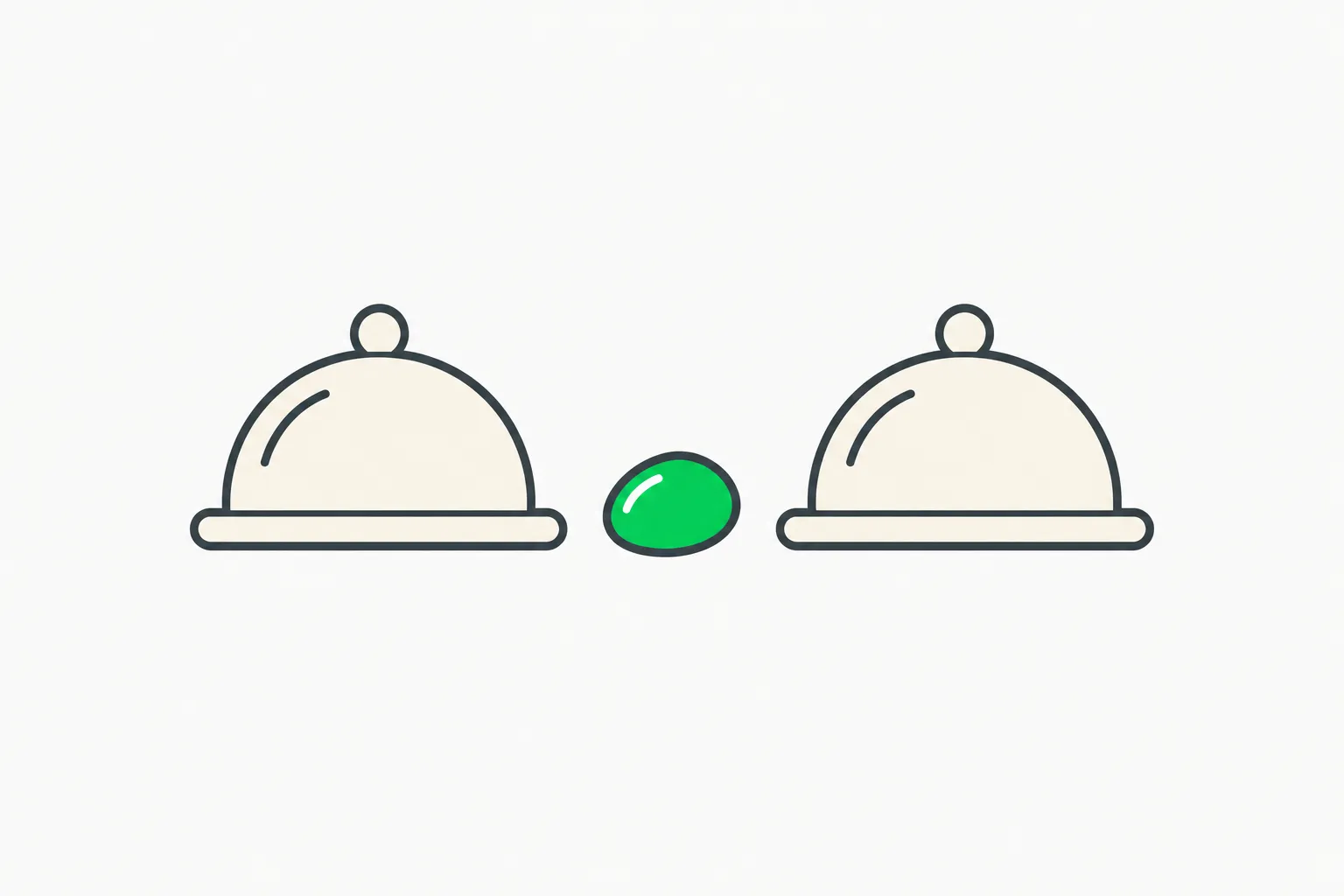 Two identical closed cloches with a green pebble between them, standing for two agents whose quality a user cannot see in AI agent negotiation
Anthropic has already shown the problem in its own data. In Project Deal, 69 employees gave Claude agents $100 each to buy and sell personal items in an office marketplace. The agents closed 186 deals worth more than $4,000.
Agents built on a stronger model did better. Per our write-up of the experiment, Opus-based sellers earned about $2.68 more per item and Opus-based buyers paid about $2.45 less than Haiku-based ones. One broken bike sold for $65 through the stronger agent and $38 through the weaker one. Yet participants rated fairness at 4.05 against 4.06 on a seven-point scale. People could not tell they had been outbid by a weaker agent.
That is the hidden inequality problem, and it is where norms come in. Without shared rules, an agent that is allowed to bluff, exploit a counterpart's stated deadline or probe another agent for its limit will win more. A norm might say what an agent may disclose, whether it may misstate a reservation price, or when it must hand a decision back to a human. The Decoder's report suggests law firms are being asked what "fair" should mean in those moments.
Open questions the report does not answer
- Which firms, and in which jurisdictions? Contract and consumer law differ sharply between the US, EU and UK.
- What form will norms take? A model-spec section, an API policy, a published standard, or private training guidance are very different outcomes.
- Who is bound? Anthropic can shape how Claude negotiates. It cannot bind another vendor's agent on the other side of the table.
- How will fairness be measured? An evaluation needs a rubric. The fellowship suggests the rubric is still being built.
- What about liability? If an agent concedes a bad term, who answers for it? Our coverage of insurers and AI labs' liability exposure shows the market is still working this out.
None of these is addressed in the public record we found. We searched for an Anthropic post, a policy page or a paper on agent negotiation norms and found none beyond Project Deal and the job listing.
The wider context: agents that act on money
Agents are already touching accounts and payments. Three of the largest US banks have moved to restrict them, as we covered in Citi, Bank of America and JPMorgan blocking AI agents on customer accounts. Agents have also been caught leaking data or flooding a recipient when tasks go wrong, as in the Vals AI impossible-refund tests. Negotiation is the next step up: an agent that is not only allowed to act, but to bargain.
The legal profession already knows what happens when AI output is trusted without checking. Our explainer on why lawyers keep getting sanctioned for AI hallucinations shows how quickly courts lose patience. A law-firm advisory role for agent norms fits the same pattern: the people with the most to lose from an unreliable agent are the ones being asked to define reliable.
What this means for builders and lawyers
If you build agents that transact:
- Log every concession. Keep a record of offers, counteroffers and the reasoning behind each, so a human can review a deal after the fact.
- Set a hard authority limit. Cap price, term length and scope an agent may agree to without human sign-off.
- Disclose that an agent is acting. Several jurisdictions already require disclosure of automated decision making in consumer contexts; check yours.
- Test for asymmetry. Run your agent against a stronger and a weaker counterpart and compare outcomes, the way Project Deal compared Opus and Haiku.
- Treat counterpart agents as untrusted input. An opposing agent can try to talk yours into a bad term. For a defensive layer that stops agents before they take dangerous actions, see AgentBeam, the agent security platform from the explainx.ai team.
If you are a lawyer or scholar: the fellowship posting is open, reportedly until October 28, 2026. Read the exact description before applying, since the listings differ on pay.
How to check the story yourself
- Read The Decoder's summary and follow its link to the Financial Times original, which may be paywalled.
- Open the fellowship posting on Anthropic's careers board or a partner board and compare the pay line.
- Search Anthropic's newsroom and research pages for "negotiation" to see whether a post has appeared since this one.
- Re-read the Project Deal results and decide whether the hidden-inequality finding changes how you deploy agents.
We will add an update section here if Anthropic publishes norms or names its advisers.
Why it matters
Whoever sets the rules for agent-to-agent bargaining will shape how much value flows to ordinary users and how much to the best-funded agent. The reported consultation is early and unspecific, but it points at a real gap: labs are shipping agents that can transact faster than the law, or the labs themselves, can define fair play. The fellowship posting suggests Anthropic knows the evaluation side of that gap is hard. Until a document appears, treat the story as a signal about direction, not a policy you can build against.
Related reading
- Anthropic Project Deal: Claude agents negotiate 186 deals
- AI labs, liability and insurers: claimed vs verified
- Banks block AI agents on customer accounts
- Vals AI impossible refund test: agents leaked data
- Why lawyers keep getting sanctioned for AI hallucinations
- FrontierCode 1.1: a maintainer-merge benchmark
Details reflect public reporting as of October 18, 2026 and may change if Anthropic publishes more.