



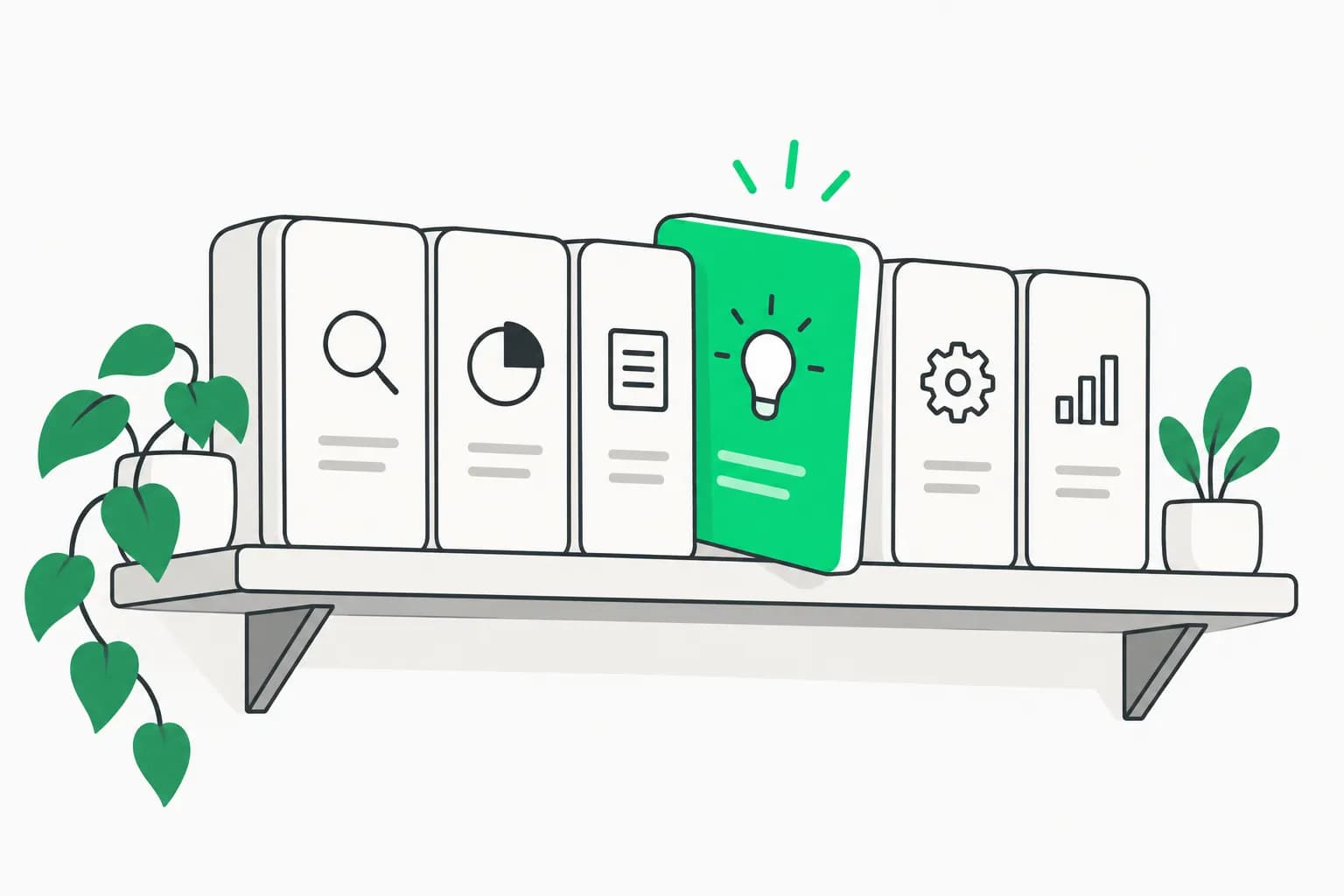
Anthropic is handing the keys of Agent Skills to a neutral foundation. In an announcement on October 22, 2026, the company said it is donating the Agent Skills open standard to the Agentic AI Foundation (AAIF) under the Linux Foundation. The gift includes the name and logo, the GitHub organization and the agentskills.io domain. If you write, install or ship skills, the format you already use stays the same; what changes is who decides where it goes next.
This is the second time Anthropic has taken this route. It donated the Model Context Protocol to the same foundation, which it co-founded with Block and OpenAI last year. Skills now follow MCP into vendor-neutral hands. If you are new to the format, start with our complete guide to agent skills and come back.
TL;DR: what was announced
| Question | Answer (per Anthropic) |
|---|---|
| What is being donated? | The Agent Skills standard, name and logo, GitHub org, and the agentskills.io domain |
| Who receives it? | The Agentic AI Foundation, under the Linux Foundation |
| How widely used is it? | 70+ agent platforms; 1 million skills published; nearly 280 million installs |
| Who maintains it? | Engineers from Anthropic, Google, OpenAI and others, acting as individuals |
| Lead Maintainers | David Soria Parra and Mahesh Murag |
| Do I need to join AAIF? | No, you can use and contribute without joining |
| What is next? | Versioned releases, a formal proposal process, security guidance |
What is an Agent Skill, in one paragraph?
A skill is a folder containing a SKILL.md file. The file has metadata (at minimum a name and a description) and instructions telling an agent how to do one task. The folder can also hold scripts, reference documents and templates. The agentskills.io overview describes three loading stages it calls progressive disclosure: at startup the agent loads only each skill's name and description; when a task matches, it reads the full instructions; then it runs any bundled code or opens referenced files as needed. That keeps the context footprint small even with many skills installed.
my-skill/
├── SKILL.md      # required: metadata + instructions
├── scripts/      # optional: executable code
├── references/   # optional: documentation
└── assets/       # optional: templates, resources
Anthropic says it built skills while working on Claude Code, which handled general knowledge work well but often lacked the procedural knowledge real business tasks need. Within weeks of the October 2025 launch, developers had published thousands of skills on GitHub and written loaders for Codex, Cursor and OpenCode. Anthropic then published the format as an open standard in December 2025, under its own GitHub organization and domain.
Why does donating it to a foundation matter?
An open standard that one company controls has a trust problem. Competing vendors can adopt it, but they cannot steer it, and they know the owner can change course. A foundation fixes that by moving the name, the repository and the domain out of any single company's account. Anthropic is explicit about the intent: it wants to keep Agent Skills "open, community-driven, and vendor-neutral," and says the AAIF gives the community a say in where it goes next.
The practical effect is for platform teams deciding whether to build on skills. Last December, adopting the format meant trusting Anthropic's stewardship. After this donation, the answer is a Linux Foundation project with maintainers from several labs. That is the same logic that made MCP safe for competitors to implement, and our coverage of the MCP roadmap shows how that governance model has played out in practice.
Who is already on board?
Anthropic lists ChatGPT, Cursor, GitHub Copilot and VS Code among the 70-plus platforms that integrated Agent Skills since the December 2025 publication. We have covered several of those integrations: how to use skills in ChatGPT, Gemini app skills replacing Gems, and the Unity Claude Code plugin with 29 skills. The cross-vendor maintainer list in the announcement (Anthropic, Google and OpenAI engineers) matches that adoption pattern.
The adoption numbers are Anthropic's own: 1 million skills published and nearly 280 million installs. The announcement does not say how "installed" is counted or whether the figure is deduplicated across platforms, so treat it as a directional signal rather than an audited metric. Also note that a published skill is not necessarily a maintained or safe one, which brings us to the roadmap.
Timeline: from a Claude Code feature to a foundation project
| Date | Event (per Anthropic's post) |
|---|---|
| October 2025 | Anthropic launches skills; developers publish thousands within weeks |
| Within weeks | Community loaders appear for Codex, Cursor and OpenCode |
| December 2025 | Agent Skills published as an open standard with its own GitHub org and domain |
| October 22, 2026 | Standard donated to the AAIF under the Linux Foundation |
Twelve months from product feature to neutral standard is fast, and it mirrors how the industry treated MCP. The pattern matters for builders: formats that start inside one product can become shared infrastructure quickly, so it pays to learn them early rather than wait for a committee.
What is on the roadmap, and why does security come up?
Anthropic proposed starting with three items: versioned releases, a formal proposal process, and security guidance for people who write and install skills. Each answers a real gap.
Versioned releases. Today the format is a living document. Teams that pin skills for reproducibility have had to invent their own mechanisms; we looked at one in skills-lock.json for reproducible agent skills. A versioned spec gives implementers something stable to target.
A formal proposal process. MCP went through the same step. It turns "someone opened an issue" into a documented path for changes, with a place for objections. Anthropic says the project will keep prioritizing community input and transparent decision-making, and points to Discord and GitHub for feedback on proposed changes.
Security guidance. This is the one to watch. A skill is instructions plus, often, executable scripts that an agent runs with your permissions. Installing a stranger's skill is closer to running a stranger's shell script than to adding a bookmark. We have written about the threat model in agent skills security and verification, and NVIDIA released a scanner we covered in SkillSpector. Official guidance from the standard's home would give authors and platforms a shared baseline. The announcement does not yet say what the guidance contains or when it ships.
What should skill authors and platform teams do now?
Nothing breaks. The format, the file layout and the loaders are unchanged by the announcement. But a few moves make sense:
- Keep authoring to the spec. Read the specification at agentskills.io and stay within the required
nameanddescriptionmetadata. Vendor-specific extras are the first thing a versioned spec will either bless or leave out. - Pin what you install. Until the guidance lands, treat third-party skills as code. Review scripts, and pin versions where your tooling allows.
- Watch the repository. The GitHub organization is moving to the foundation. If you track the old org or the old domain in automation, check where redirects land.
- Decide on skills versus MCP deliberately. The two standards are now siblings under one foundation. Our comparison of CLAUDE.md, SKILL.md and MCP explains which layer solves which problem, and skills vs hooks vs prompts covers the tradeoffs inside the skills layer.
- Give feedback early. Anthropic points to the project Discord for feedback on spec changes. Early input before a first versioned release carries the most weight.
If you are looking for skills to try, our roundup of agent skills directories and the explainx.ai skills registry are good starting points.
What is claimed versus what is confirmed?
| Claim | Status |
|---|---|
| Skills donated to AAIF, including name, logo, GitHub org and domain | Stated in Anthropic's own post; confirmed by the primary source |
| 70+ platforms, 1M skills, ~280M installs | Anthropic's figures; no methodology given |
| Engineers from Google and OpenAI will maintain it | Stated by Anthropic as individual maintainers; we did not find a separate statement from either company |
| Roadmap of releases, proposals, security guidance | A proposal, not a commitment with dates |
We will add an update section when the foundation publishes its own post or the first roadmap items land.
The bigger picture: agents need shared plumbing
Skills and MCP solve different halves of the same problem. MCP connects an agent to tools and data. Skills teach an agent how to use them for a particular job. As more of the industry builds agents, the cost of every vendor inventing its own packaging format climbs, and the benefit of one shared folder format climbs with it. A skill written once for one agent now loads in dozens.
For learners, the signal is simple: the skill format is no longer a Claude feature, it is infrastructure. Writing good skills (clear descriptions, tight instructions, small scripts, tested behavior) is a portable skill for people building with AI. Our guide to turning agent skills into loops shows one way to put them to work.
Caveats apply. Governance does not by itself deliver quality: a million skills includes plenty of duplicates and untested ones, and the announcement offers no quality or curation mechanism. Neutral stewardship also depends on how maintainers are chosen and how disputes are resolved, which the post only sketches. Judge the foundation by its first versioned release and the content of its security guidance.
Related reading
Details are accurate as of October 22, 2026; the roadmap and repository locations may change as the foundation takes over.