




Adobe and The Walt Disney Company announced a multi-year strategic alliance on November 9, 2026, at Adobe MAX in Miami Beach, naming Adobe the Official AI Innovation Partner for Disney. Reuters reported that the companies will co-develop custom generative models on Disney intellectual property, starting with faster concept work in Disney Experiences (parks, resorts, cruises) and StudioLAB, and expanding to ESPN fan engagement and archive use.
The release builds on a June 2026 Imagineering collaboration we covered indirectly through EditAgent and Adobe Research: sketch-to-image, franchise-accurate 2D assets, and 2D-to-3D prototyping on Imagineering's catalog. Monday's alliance widens the contract to company-level innovation, marketing activations, and production tools — not only park design.
What Disney gets from Adobe
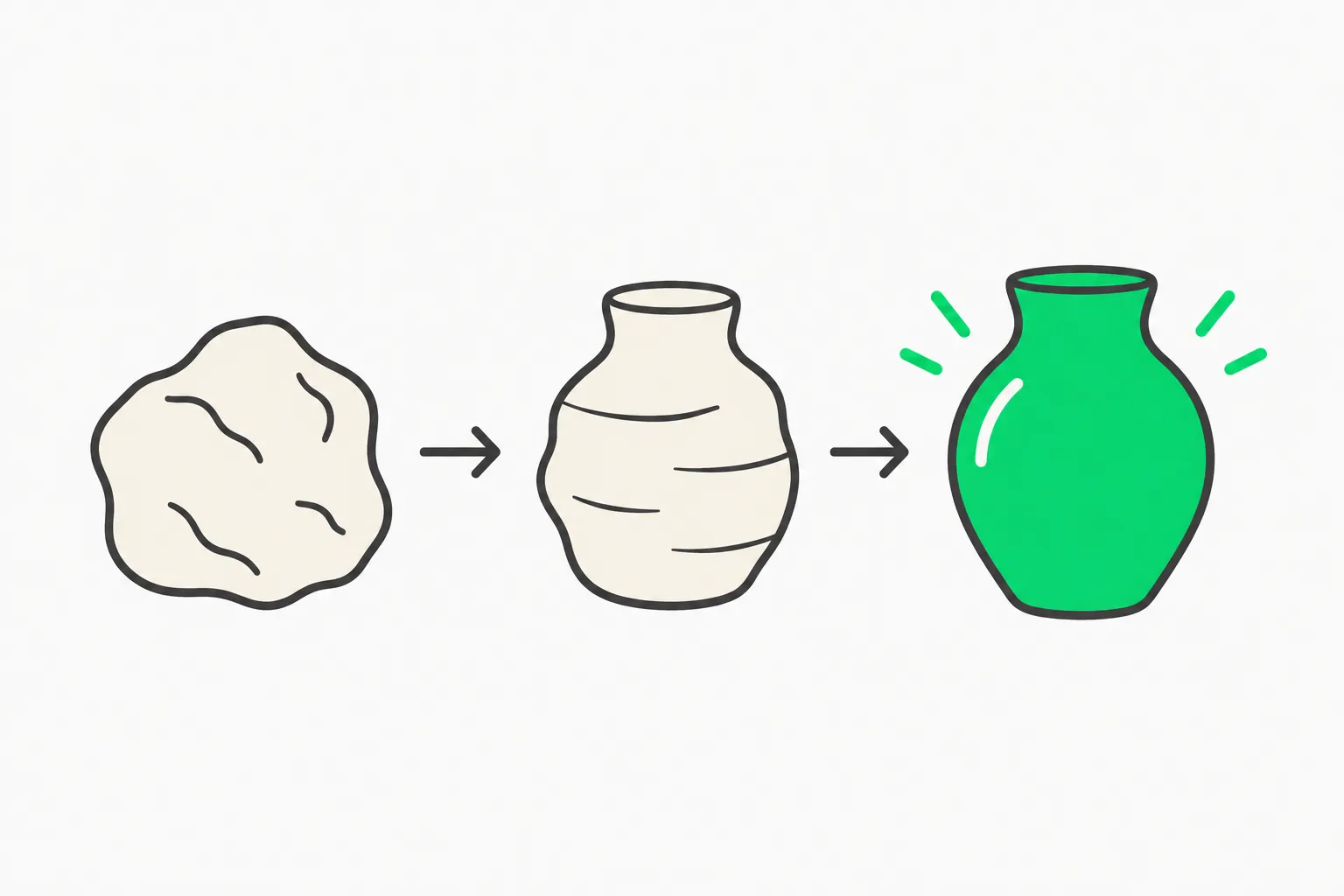 Concept refinement stages from sketch to finished creative asset
Press summaries of the Business Wire announcement describe four technology lanes:
| Product | Stated role |
|---|---|
| Adobe Firefly | Generative AI for creatives in familiar Adobe apps |
| Adobe Firefly Foundry | Custom models trained on Disney properties and proprietary visual assets |
| Adobe Premiere | Video editing in the production pipeline |
| Adobe Photoshop | Imaging and concept refinement |
Disney also receives dedicated engineering and research resources from Adobe, not only SKU licenses.
Foundry is the differentiator. Disney's models are human-centered and artist-led, trained on unique world knowledge — character attributes, environments, visual styles — to generate outputs both companies describe as commercially safe and production-ready. That language targets the same IP anxiety that drove Epic's AI-first Disney game reporting and Character.AI's bankruptcy saga.
Reuters adds that models stay private and proprietary to Disney, not a shared foundation others can call.
Parks, cruises, studios, and sports: where it lands first
 Generative brush strokes forming structured creative assets
Reuters says the deal starts with Experiences — global theme parks, resorts, and cruise lines — for shorter development timelines, and with StudioLAB for concept exploration.
Imagineering workflows named in earlier Adobe materials remain the visible builder story:
- Sketch-to-image from hand-drawn concepts to rendered 2D art.
- Franchise-accurate image generation across Mickey and Friends, Frozen, Moana, Lilo and Stitch, Cars, and similar brands.
- 2D-to-3D prototyping for planning, materials, and engineering handoff.
For ESPN, alliance language covers fan engagement and surfacing more of the content archive with AI-assisted tools. That is a different compliance surface from park CAD — likeness, stats, and broadcast rights — but the same Foundry pattern: models tuned on owned media.
Why November 2026 is a step up from June
The June Imagineering post was a collaboration on Foundry for park visualization. November's alliance adds:
- Official partner status across Disney lines of business.
- Global marketing and event collaboration between the brands.
- Early access to new Adobe AI and media technology for Disney production teams.
- A multi-year horizon tying parks, cruises, film, and sports.
Disney is under pressure to accelerate Experiences capital plans while protecting brand fidelity. AI that compresses concept iteration from months toward days — language Imagineering leaders used in earlier interviews relayed by Fast Company — is an operational lever, not only a lab demo.
What builders and media teams should take away
Custom models on owned catalogs are becoming the enterprise default for rights-heavy brands. Disney is not asking Imagineers to prompt a public scrape-trained model and hope Mickey's ears stay on-model. It is paying for Foundry training on licensed assets, much like other studios exploring proprietary visual pipelines.
Artist-in-the-loop remains the public positioning: generation accelerates iteration; humans keep creative authority. That matches Adobe's research direction in EditAgent verification records, even though EditAgent is not a shipping product.
Vendor concentration: one strategic partner for generative imaging, video, and custom training reduces integration sprawl but ties roadmap risk to Adobe releases. Teams elsewhere should compare Foundry-style offerings from cloud vendors before they lock IP into a single stack.
Limits and what we did not see
The Business Wire page timed out in our automated fetch; facts above cross-check against Reuters and earlier Adobe Imagineering PDF language cited in search snippets. We did not see public dollar figures, exclusivity clauses, or model parameter counts.
No consumer Disney app changes were announced. Guests will not prompt Firefly in the My Disney Experience app from this press release alone.
Training on decades of internal art raises familiar labor questions — speed for Imagineers versus attribution for legacy artists — but the November release does not publish new workforce metrics.
How this fits explainx.ai's wider coverage
Disney joins other franchise holders using closed custom models instead of open weights for hero characters. If you build tools for creative teams, the actionable lesson is to evaluate reference-grounded benchmarks such as LongBanana when your users drag large boards into an agent, not only single-prompt scores.
For enterprise procurement, pair this news with Meta's enterprise push through systems integrators — another route big vendors use to reach regulated buyers.
StudioLAB, ESPN, and production pipelines
Press language treats StudioLAB as the film-side innovation funnel and ESPN Edge as the sports fan surface. For filmmakers, early-access Premiere and Photoshop features matter as much as Foundry checkpoints: generative fill on licensed stills, rough-cut assembly from text prompts, and versioning that survives Legal review. None of the November releases specify which Adobe MAX demos move into Disney dailies first; assume a phased rollout tied to title risk.
ESPN's archive angle is strategically different from Imagineering CAD. Sports footage carries talent likeness, betting-adjacent graphics policies, and rapid turnaround for live events. Custom models trained on Disney-owned angles help, but broadcast partners still impose clearance workflows Adobe cannot eliminate. Builders selling into media should expect human clearance queues even when generation is instant.
Procurement questions Disney-scale buyers ask
Rights holders evaluating Foundry deals typically probe:
- Training data lineage — only licensed Disney artifacts, not contributor scrapes.
- Output ownership — work-for-hire terms for generated concepts.
- Model isolation — no weight sharing across tenants on hosted Foundry.
- Deletion and audit — can a character be unlearned if talent contracts change?
- On-prem vs cloud — parks and cruises may demand air-gapped inference for unreleased lands.
Adobe's marketing leans on commercially safe outputs; your legal team still validates contract definitions of safe.
Competitive landscape for creative AI platforms
Disney could have partnered with cloud-hyperscaler image APIs. Choosing Adobe keeps artists inside Creative Cloud muscle memory and ties generative steps to timeline-based video tooling. That blocks a clean win for standalone video models unless they integrate through Premiere.
Meanwhile ByteDance Seedream and open diffusion stacks keep improving multi-round editing. Disney's bet is brand-locked Foundry, not highest generic FID. Measure success in review rounds removed, not leaderboard aesthetics.
Guest experience and brand risk
 Stencil keeping leaf shapes consistent across repeated designs
Park guests rarely see Adobe logos on attractions, but they feel when character proportions drift. Foundry's franchise-tuned models aim to keep Mickey ears, Frozen palette, and Cars typography inside tolerances Imagineering already documents. When AI accelerates concept art, the failure mode shifts from slow human mistakes to fast systematic drift if someone swaps the wrong checkpoint.
Disney's public story keeps imagineers in the loop — sketches become renders, renders become 3D, 3D becomes engineering packages. Your team should copy that stage-gate pattern even on smaller brands: never ship Foundry output directly to structural engineers without human structural review.
Marketing activations mentioned in the alliance also matter for AI disclosure. Guests may soon see campaigns that mix human and generated art. Regulators and fan communities increasingly ask which pixels were model-made. Disney has not published a guest-facing label standard in the materials we read; watch MAX sessions for product demos that clarify metadata.
For indie creators, this deal is a signal that IP-heavy industries will pay premiums for vendor indemnification and private weights, not for the cheapest per-token API. If you compete in creative SaaS, expect RFP questions about training provenance to tighten after Disney-Adobe headlines.
Adobe MAX context and what to watch next
Adobe MAX is where Adobe typically ships Firefly feature flags and partner case studies. Disney's stage time signals enterprise Foundry is a growth pillar, not a labs experiment. Sessions worth tracking include Premiere generative video, Firefly vector workflows, and any legal indemnity wording changes in enterprise terms.
Disney may publish Imagineering timelapses that mix hand sketch, Foundry render, and CAD — useful references for teams documenting human-AI collaboration policies. None replace structural engineering sign-off on ride systems.
If you are benchmarking creative agents, combine this news with LongBanana for reference-heavy composition tests, not only single-prompt leaderboards.
Disney has not said whether generated concept art will carry C2PA or Adobe Content Credentials in park planning tools. If MAX demos show credentials, that becomes a practical checklist item for any studio licensing Foundry.
Related reading
- EditAgent: Adobe image-editing agent research
- Epic Games Disney shooter AI-first reporting
- Character.AI bankruptcy and Disney bid
- LongBanana multi-reference image benchmark
- Multimodal vision token budgeting
- How to read a Hugging Face model card
Sources
- Reuters, Disney, Adobe to co-develop custom AI models, November 9, 2026.
- Business Wire, Adobe and The Walt Disney Company strategic alliance, November 9, 2026 (cited via search-indexed text where direct fetch was blocked).
- Adobe, Walt Disney Imagineering scales with Firefly Foundry, June 2026.