



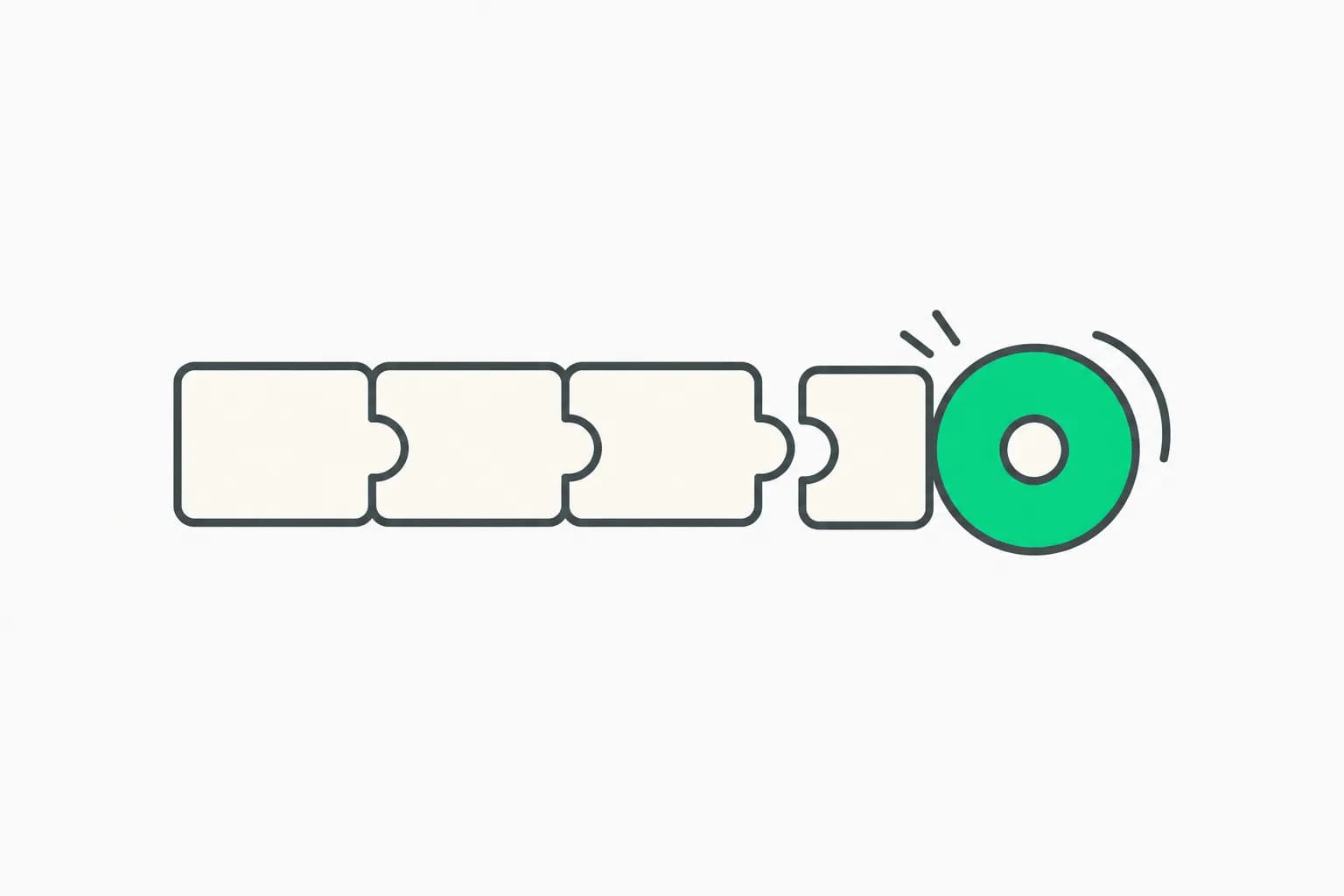
Accenture has told many employees it will now fund only $29 a month per person for Claude, according to a 404 Media report by Joseph Cox published October 15, 2026. Staff who had been spending as much as $1,000 a month are, in the report's words, scrambling to keep their access. The detail that makes this a story is not the number itself but the contrast: Accenture is a consulting giant that has urged clients to invest heavily in AI.
Everything below is attributed. The memo is internal and we have not seen it; the facts come from 404 Media, the Accenture spokesperson's quoted statement, and the earlier public partnership with Anthropic.
TL;DR: what is reported
| Question | Answer | Source |
|---|---|---|
| What changed? | Central funding for Claude Enterprise limited to $29 per person per month | 404 Media, quoting an internal announcement |
| When? | Effective October 1 | 404 Media |
| How are costs charged? | "All costs are consumption-based"; overage must be funded by a project or team (a Work Breakdown Structure, WBS) | 404 Media |
| Who is exempt? | Premium plans reportedly include $250 of token usage per week; many employees are not on Premium | 404 Media |
| Is access guaranteed? | No; licenses are reviewed periodically and may be reallocated | Memo text quoted by 404 Media |
| Accenture response | "We make AI available to all our people" and "the right tool for the right work" | Spokesperson, via 404 Media |
What the memo says
 Enterprise AI rollout concept showing tool access scaled across a large organization, relevant to the Accenture Claude cap
The announcement is titled "Claude Enterprise Users: Important Updates to Licensing and Usage Costs," per 404 Media. It says that from October 1 Accenture changed how Claude Enterprise costs are funded and charged. The key sentence, as quoted, is that the company centrally funds only $29 a month per person and that "all costs are consumption-based." If an employee goes over, they must find a specific project or team budget to pay for the rest.
It also includes a caution that matters for anyone planning around access: "Providing a WBS and obtaining a license does not guarantee indefinite or ongoing access to Claude." Licenses, it says, are reviewed periodically and "may be reassessed based on business priorities, role requirements, usage patterns, and evolving workforce needs."
Who is hit, in their own words
404 Media quotes internal messages from employees, whom it does not name:
- One person said their usage already costs more than $500 and has for several months, and asked how to speed up an upgrade to Premium, noting the upgrade appeared blocked on the support page and that the cost "has a significant impact on project costs."
- Another called the change "disappointing" and said they use Claude Code "extensively" to build and test an AI accelerator being developed for multiple Accenture clients, with monthly usage usually $500 to $1,000.
- A third message shows an employee saying their Claude access was revoked entirely.
These are individual messages relayed by a reporter. They show the shape of the problem, not its scale: we do not know how many Accenture employees are affected, because the report does not say.
Why a $29 allowance and not a hard ban
The structure is a classic charge-back. A small central allowance covers light users, and anything heavier lands on the budget of the project that benefits. That keeps AI broadly available while pushing cost visibility to the people who decide whether the work is worth it. It also changes incentives: a team lead now sees a line item for an agent that previously came out of a central pool.
For readers who run agentic coding tools, this is the same pattern that has been showing up in several places. Our post on Microsoft's "token wars" and cutting cost per answer covers routing and caching, and the Ramp AI Index write-up shows how spend is concentrating in a few models. Heavy agent usage is the thing that breaks flat budgets, as seen in our guide to parallel Claude Code sessions in the desktop app, where several long-running sessions can run at once.
The irony, and the limits of the reading
404 Media frames the story as a snapshot of something happening across industries: companies spent heavily on AI tools, found that many users are burning through tokens quickly, and responded by curbing use. The reporting notes "a special irony" in Accenture doing so given its advice to clients. That framing is the outlet's.
There are things the report does not establish:
- Scope. It says "many employees," not all, and gives no headcount.
- Reason. The memo as quoted describes funding mechanics, not why. The cost-curbing explanation is 404 Media's interpretation of a broader trend.
- Anthropic's role. Nothing says Anthropic changed pricing or contract terms. We have not seen a statement from Anthropic.
- Contract terms. How Accenture's enterprise agreement prices usage is not public.
Accenture and Anthropic have a public relationship. In September we covered the Anthropic and Accenture $1B-each commitment to embedded evaluation. Reporter Joseph Cox summarized his scoop on X as a sign of "the continuing crack down" on AI spending. A partnership to train staff and a tighter internal budget can both be true; they answer different questions, one about capability and one about cost.
What this means for what you build or pay
 Building gate illustration for budget approval before enterprise AI usage, Claude Enterprise cost control
If you manage an AI budget, the practical lessons are plain:
- Separate seat from consumption. A per-seat licence tells you almost nothing about monthly cost once agents are involved. Read your plan's consumption terms, not just the seat price.
- Set per-user or per-project budgets before the bill arrives. A $29 central allowance is a policy; the alternative is discovering a four-figure monthly spend per developer later.
- Measure cost per outcome. An employee spending $500 to $1,000 a month building a client accelerator may be the best-value use of the tool. The chargeback forces the question to be asked, and answered, per project.
- Plan for tiered access. The memo's Premium tier, reportedly with $250 of weekly token usage, suggests a structure where heavy users move to a plan sized for them instead of everyone sharing a flat pool.
- Reduce waste first. Routing easy tasks to cheaper models, caching prompts and trimming context all lower the same bill. See the Microsoft post above.
A practical template for an AI usage budget
The Accenture memo is a useful skeleton even if you never see the full text. A workable version for a mid-sized team looks like this:
- Tier 1, shared allowance. Everyone gets a small central amount, enough for drafting, summarizing and light coding help. This keeps adoption broad and cheap.
- Tier 2, project charge-back. Anyone whose usage exceeds the allowance names a project code that pays the difference. This is the WBS idea in the memo: the cost lands where the value is claimed.
- Tier 3, premium seats. For a small group of builders who run agents all day, a plan sized for heavy consumption can be cheaper and simpler than metered overage on a general plan. The memo's reported $250 weekly token allowance on Premium suggests Accenture sees it the same way.
- Periodic review. The memo reserves the right to reallocate licences based on usage patterns. Publish the criteria in advance, otherwise a revoked seat feels arbitrary, as the reported employee messages suggest.
Two metrics make the conversation easier than raw dollars. First, cost per merged change or per delivered artifact, so a $1,000 month that ships a client accelerator can be compared with a $30 month that ships nothing. Second, the share of spend on the most expensive model: if most requests are simple, routing them to a cheaper model cuts the bill without touching access.
What is verified and what is not
| Item | Status |
|---|---|
| $29 per person monthly central funding from October 1 | Reported by 404 Media from an internal announcement it saw; not published by Accenture |
| Consumption-based costs charged to WBS | Quoted from the announcement |
| Premium plan with $250 weekly token usage | Reported; plan details not published |
| Employees spending $500 to $1,000 monthly | Employee messages, unnamed and unverified |
| Access revoked for at least one employee | One employee message seen by 404 Media |
| Accenture statement | Provided by a spokesperson, confirms AI remains available, does not address the cap directly |
| Anthropic involvement | None reported |
Bottom line
Accenture's reported move is a small policy with a large signal: even a company selling AI transformation is learning that agent usage is consumption, not a seat. The honest summary is that a memo seen by one outlet says central funding is $29 a month, overage moves to project budgets, and some heavy users have lost or are at risk of losing access, while Accenture's public statement says AI stays available. Watch for Accenture or Anthropic adding detail, and for other large firms making similar changes.
Details are as reported by 404 Media on October 15, 2026 and may change.